Ethics Hero: Boston Red Sox Pitcher Steven Wright

beaning

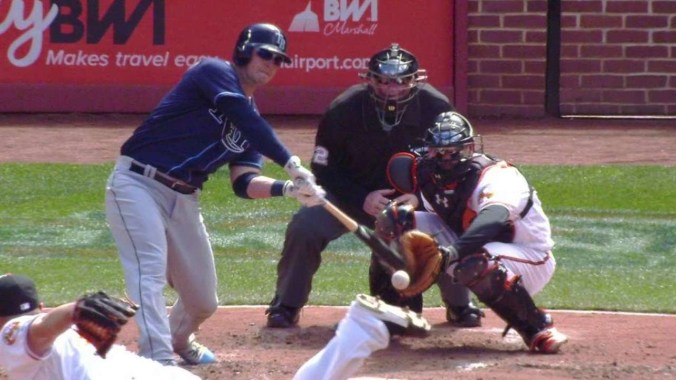
On Sunday, Boston Red Sox knuckleballer Steven Wright hit Toronto first baseman Chris Colabello square in the helmet, and not with his usual floating trick pitch, but with an 87 mph fastball, making a frightening sound and causing  Colabello to collapse on the field.  After being checked out by the team trainer and allowing the replay of his life that flashed before his eyes to wind up, Wright’s beanee took first base and remained in the game.

Wright appeared visibly upset on the mound,and apologized to Colabello when he made his way to first.

The next morning, Colabello found an expensive bottle of liquor in his locker, a present from Wright. He was surprised. “He went above and beyond in my eyes,” the player with the sore head said. “It was pretty obvious there was no intent [to throw a beanball]. You could see by his reaction.” Continue reading

“Ick” Or Unethical: The NBA Decides To Let Its Players Be Human Billboards

Classy. I can't wait.

Classy. I can’t wait.

News Item, from ESPN:

The NBA announced… that the board of governors has approved a three-year pilot program to allow teams to sell a corporate logo on their jerseys.

Teams can now start pitching companies on buying a 2.5-inch-by-2.5-inch space as the NBA becomes the first of the four major U.S. sports leagues to put ads on regular game-day jerseys. In an era when virtually every facet of the sports experience is advertised or sponsored, the uniform had been the last ad-free haven.

The first season of the program will be in 2017-18…

“It’s my hope, independent of whatever additional revenues are generated through this patch program, that the greatest impact will be in this amplifying effect of companies choosing to associate directly with a team jersey, then going out and promoting that relationship to the largest market,” NBA commissioner Adam Silver said.

Silver said the league had calculated that the program will be worth about $100 million a year.

Well, ick.

It’s not bad enough that a city’s sports teams have to play in arenas and stadiums named after pet food retailers, banks, car insurance companies and fraudulent corporations rather than local landmarks and community heroes. Now our kids’ heroes will be branded with commerce too…not literally, of course. Not yet.

The NBA has always been the crassest of the major league sports, so the identity of the first league to break one of the last barriers of money-grubbing indignity was preordained. Most of the NBA’s fans, who already don’t mind that the league corrupts college sports and glorifies men who collect illegitimate children the way normal people collect matchbooks, don’t care, so this was not a hard call for the NBA, I would guess.

It’s gross, but is anything wrong with it? After all, NBA players already accept money to put their names on products. It isn’t as if they have an aura of purity about them, and their obvious venality pales in the shadow of game-winning three-pointers and spectacular dunks. What ethical principle is being violated by the NBA turning its players into walking, jumping, shooting billboards? Continue reading

As Usual When Gender Discrimination In Wages Is The Issue, There Is More To The Women’s Soccer Lawsuit Than The Media Wants You To Know

women's soccer

The gender wage discrimination issue makes my head start to hurt every time it is raised, which, I admit, has made me grateful that Hillary and Bernie have been concentrating on the other progressive issues they fill with half-truths and deceit. Some of those are the wealth gap, mass incarceration, the evil of big banks, discrimination against Muslims, trigger-happy police, campus sexual assault, climate change, gun violence  and the minimum wage. As with these pet progressive agenda items, it isn’t that there aren’t real problems there that require effective policy initiatives, but that advocates are so infuriatingly dishonest when debating them—exaggerating statistics, demonizing opponents, and persisting in using false facts, studies and myths long after they have been definitively disproved.

If the new media was competent and even-handed, challenging the false assertions as they should, this would not be such an impediment to rational debate. The news media is seldom objective, however. On all of these issues and more, it plays the role of advocate and partisan ally with depressing regularity. An activist on the keft has to make a truly outrageous statement to even be challenged, as when Black Lives Matter organizer Aaron Goggans suggested on CNN yesterday that black on black crime is a “myth.”

There is gender discrimination in wages; I have seen it up close, in my family and in companies and organizations I have worked for. I have personally taken action to address it. The issue is complicated, however, and not close to the absurd “77 cents on the dollar” figure that has been employed, unchanged and virtually unchallenged, for decades, nor is it fairly represented by studies that show how men in the same careers make more over their working lives than women.

Never mind; the news media allows the issue to be debated in an atmosphere dominated by misrepresentations. My reflex approach is that  until advocates for a position are willing to stop lying, spinning, and demonizing, I will pointedly avoid supporting them. Call it the Clean Hands Doctrine. Gun control is one example. Climate change is another.

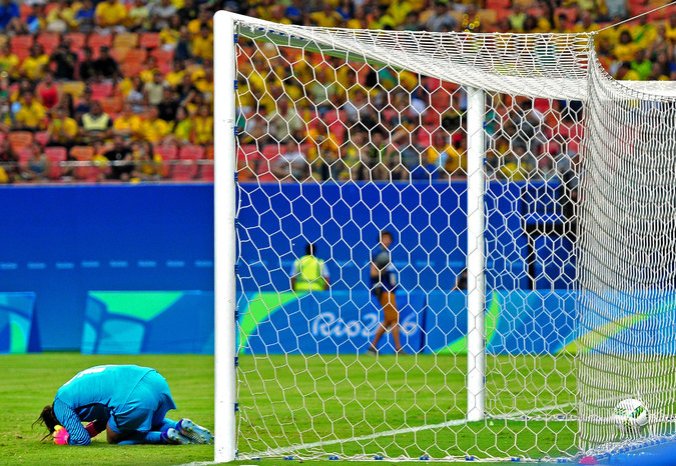
When  five players on the U.S. Women’s Soccer team filed a federal complaint last week accusing U.S. Soccer of wage discrimination because, they said, they earned as little as 40% of what players on the United States men’s national team earned despite reaching the team’s third World Cup championship last year, I read and heard nothing but cheers from women’s advocates, Democrats, pundits and Facebook posters I also read nothing but sexist snorting from the conservative side. (“Wanna know how to get paid the same as men for playing soccer? Try out for the men’s team! HAR!” ). The truth, as usual, is somewhere in the middle, but you wouldn’t know that from reading most accounts or watching the news channels. Continue reading

Three Strong Links: NCAA Cheating, Minimum Wage Delusions, Journalism Standards and Teammate Betrayal

three-links

Here are three essays on current ethics issues, all worth reading and pondering.

1. At Slate, the topic is what constitutes legitimate news, and consequentialism: if a news source publishing non-news creates a real news event because of that publication, does this justify the original publication?

No, of course not. The incident in question involves a gossip site that posted a video shoing Los Angeles Laker Nick Young admitting to cheating on his fiancée, pop star Iggy Azalea. The video was surreptitiously recorded by Young’s teammate, D’Angelo Russell, and now the Lakers are shunning Russell, causing a problem for the team on and off the court. Now is the video newsworthy. Yes, but yecchhh.

The story is here.

2. Commentary discusses the strange trend of liberal legislators pushing extreme minimum wage increases on their cities and states despite risks of serious job losses. California is the latest example. Here is the head exploding quote:

“Why shouldn’t we in fact accept job loss?” asks New School economics and urban policy professor David Howell, who’s about to publish a white paper on the subject. “What’s so bad about getting rid of crappy jobs, forcing employers to upgrade, and having a serious program to compensate anyone who is in the slightest way harmed by that?”

Kaboom. Continue reading

From The “Everybody Does It” Files: “Welcome to Chico’s Bail Bonds Park!”

Bad News Bears

The Washington Nationals announced this week that it has partnered with Major League Baseball Advanced Media and the consulting firm Korn Ferry to sell naming rights to Nationals Park, as the team’s home field has been known since it opened in 2008.

After all, the team explains, plastering a corporation’s name on the ballpark could add between ten and twenty million dollars a year to the team’s revenue, and imagine how much better the team will be with another starting pitcher or slugging outfielder. Why wouldn’t a team sell its home’s name, and a large chunk of its identity, to a bank, a website, or a pet supplies company?

I admit it: being a life-time fan of the Boston Red Sox, who play in one of the the ten major league parks ( the others: Angel Stadium of Anaheim, Dodger Stadium, Fenway Park, Kauffman Stadium, Marlins Park, Nationals Park, Oriole Park at Camden Yards, Turner Field, Wrigley Field, and Yankee Stadium ) belonging to teams that have not accepted filthy lucre to mar their stadium entrances with the names of companies Bernie Sanders would hate, I find the idea revolting.  A baseball team represents its community; its lore becomes part of the culture and shared memories passed downfthrough generations.. That has value, and symbolic significance. How much is it worth? It’s priceless, or should be. Continue reading

Ethics Quiz: The Smokeless Tobacco Ban

Chicago recently became the fourth city—Boston, Los Angeles and San Francisco—to enact a ban on using smokeless tobacco in sports stadiums. I initially ignored it, in part because I never use the stuff and have never known anyone who did, and in part because I knew that Major League Baseball has been trying, with some success, to discourage its ballplayers from chewing and especially spitting on camera, since it is a) disgusting and b) encourages impressionable tykes to take up an ugly and perilous habit. I’m inspired to make the issue an ethics quiz because of the pronouncements of law professor-blogger Jonathan Turley on the issue and the vociferous debate his comments sparked on his blog.

Turley wrote…

This is a lawful product like smoking tobacco. People have a right to make choices about their lifestyle so long as they do not harm others. That is why I always supported the bans on smoking in public areas due to the second-hand smoke research. That is an externalized harm. What is the externalized harm of smokeless tobacco?

…I happen to deeply dislike smoking and I find chewing tobacco disgusting. I also do not question the link to serious health problems like cancer. However, that should be the subject of an educational campaign by the government and MLB. Yet, in the end, people need to be able to make choices in our society rather than go down the path to paternalistic legislation regulating our good and bad choices.

His supporters on the blog were typified by this comment by Beth (not our Beth, I presume)…

“Tobacco, in all forms, is NOT a singular activity that affects no one else. Tobacco use weighs very heavily on the public at large in the form of health care costs, higher insurance premiums, toxic litter, poisoned air and ground spit. To suggest that limiting tobacco, smokeless tobacco and e-cigarettes should not be controlled substances goes against all manner of policy for the public good. Wrong stance, Mr. Turley.”

This comment, from “wonderer,” is a fair summation of the other side, which mostly came from the libertarian side of the metaphorical aisle:

“The efforts to ban “icky” behaviors are of a piece with the bans or taxes on sugared beverages. What seems to be happening is that some people want to push bans on behaviors of “out of favor” groups. Those “big soda” people are Walmart denizens, so they clearly need to be told what to do. But keep hands off urban bicycling. As risky as that is, it’s one of the things “enlightened” people do. Bans (at least here in California) seem to be all about the condescension.”

Your Ethics Alarms Ethics Quiz of the Day:

Is a ban on smokeless tobacco in ballparks an abuse of government power and an unethical breach of personal choice, autonomy and liberty, or is it a responsible use of government power to encourage public health and safety?

I’ll hold my fire on this one until sufficient numbers weigh in. Remember, the issue here isn’t policy, but ethics.


Adam LaRoche Drama Epilogue: A Reflection On Life, Kids, Baseball And Ethics

drake-adam-laroche-

Well, I don’t recall anyone leaving baseball like this before.

When last we visited Adam LaRoche a couple of days ago, he was retiring from baseball (and abandoning his 13 million dollar 2016 contract  to play for the Chicago White Sox) because team executive Kenny Williams asked that he not have his 14-year-old son Drake living and traveling with the team, as well as being being perpetually in the clubhouse, as he was all last year. Today LaRoche released a remarkable statement explaining his decision.

It is well worth reading. I’ll have some comments at the end about the bolded sections, marked by me with letters. Now, here’s Adam:
Continue reading

Loyalty Drama: The Strange, Sudden, Ethical, Unethical Retirement Of White Sox First Baseman Adam LaRoche

chi-adam-laroche

Yesterday,  baseball’s Spring Training was shaken when Chicago White Sox first baseman Adam LaRoche unexpectedly announced that he was retiring, effectively giving up his guaranteed 13 million dollar salary. LaRoche had suffered a down year in 2015, but he was healthy, and assured of a place in the ChiSox line-up. The reason for the precipitous decision was mysteriously and ominously reported as caused by a “personal matter.”  Was there dire illness in the family? What would make a healthy athlete walk away from his team mates and so much money?

Today, the club revealed the surprisng answer. Last year, LaRoche’s son, Drake, 14, spent most of the season with his father and the team and even had his own locker in the home clubhouse at U.S. Cellular Field. Drake was with also with the team in this year’s spring training. White Sox executive vice president Ken Williams told LaRoche that he would have to limit the amount of time his son spent in the clubhouse this season, and in response, LaRoche announced he was quitting.

Again, the threshold question to so much ethical analysis is crucial: What’s going on here?
Continue reading

Ethics Quote Of The Week: Washington Post Sports Columnist Norman Chad On “March Madness”

printable-march-madness-bracket

“People often ask me, “Why do you ignore college basketball?” Really? That’s like asking a vegan, “Why do you ignore cattle farms?…Why wouldn’t I ignore college basketball? They just round up the usual suspects every year, and, believe you me, these people are awfully suspect. The game is rotten at its core; it’s only cheating if you get caught, and if you get caught, you’re only liable if you’re losing.”

—- Sports columnist Norman Chad, on why he doesn’t follow the NCAA basketball tournament.

To which I reply, “Exactly.”

As Chad notes in his column, big-time college basketball is pure dribbling corruption. The players are exploited and tossed aside, few of them graduating and most leaving with little real education. The athletic programs warp school priorities and eat up institution resources that should be devoted to the curriculum,  the typically coaches are paid more than any three faculty members combined, and they teach their charges that cheating pays. Continues Chad in his inimitable style:

But the players don’t bother me – they are like cattle, used for two percent milk and tenderloins until their services are exhausted. It’s the coaches that bother me – the See No Evil Hear No Evil Do No Evil Block/Charge No Evil shim sham flimflam riffraff sitting on the bench in those fine suits with their fat wallets.

Jim Boeheim? A bum. John Calipari? Bum. Rick Pitino? Bum. Roy Williams? Bum. If these fellas are earning big paychecks from institutions of higher learning, institutions of higher learning must be in a different business than they once were.

Boeheim and Co. run the whole shooting match, and no matter what they do, you can’t run ‘em out of town unless they miss March Madness three straight times. Which brings us to Larry Brown. He’s at his third college coaching stop – UCLA, Kansas and now SMU – and he’s three-for-three for NCAA infractions. If there were a Recruiting Violators Anonymous program, he’d be John Calipari’s sponsor!

Bingo. Continue reading

The Manager, The Hot Reporter, Conflicts and Professionalism

moranfarrell

It’s nice of my favorite baseball team to supply me with ethics stories, don’t you think? This one has management ethics, relationship ethics, journalism ethics, sexual harassment and professionalism.

The Boston Globe reported last week that Boston Red Sox manager John  Farrell and Comcast SportsNet New England reporter Jessica Moran, who covered the team,  were romantically involved. Moran promptly resigned. This quickly degenerated into the usual ethically muddled discussion by members of the public who watch George Stephanopoulos interview Hillary Clinton and see nothing amiss, and have been so badly taught the ethics basics that they couldn’t identify a conflict of interest if they tripped on one, and members of the news media, who, if anything, are worse.  Among the questions being floated, and their somehow elusive answers…

These are consenting adults. Why aren’t they free to have a relationship?

Because they are professionals, with special duties to their constituencies and stakeholders, and the relationship between a reporter and her subject undermines independence, loyalty, trust and competence.

Why is it always the woman the one who has to lose her job?

It isn’t. The journalist has to lose her job, because the journalist breached the basic ethics of the profession. The baseball manager’s conduct is wrong,  but comparatively tangential to his duties at worst. It is still seriously unethical, however, and undermines team culture and the status of other women who have duties involving the team.  Farrell, by dating Moran, was sending a message to his players and other team personnel that these women are legitimate targets for sexual courtship rather than workplace colleagues.  The relationship may have constituted third party sexual harassment, making other women feel as if team leadership had sent the message that they weren’t to be taken seriously as professionals.

Why is everyone making a big deal about this? She’s a beautiful young woman, covering a team of men. Isn’t this to be expected? Continue reading