Self-Serving Twitter Plagiarism From Shia LaBeouf

"How To Be A Jerk"

“How To Be A Jerk”

Actor Shia LaBeouf has two impressive achievements, neither anything to be proud of, but impressive nonetheless. In a showdown with World Champion Hollywood creep Alec Baldwin, LaBeouf, against all odds. managed to come off as the bigger jerk. In the process, he created, or at least gave unprecedented publicity to a new ethical transgression: Twitter plagiarism.

You will recall LaBeouf, if you recall him at all, as the former Disney Channel child star who had movie hits with “Disturbia” and the “Transformers” franchise, as well as gaining a form of lasting notoriety as Indiana Jones’ son in the fourth and lamest installment of that classic series. He also has established a reputation for being trouble, and this week it was revealed that he had been fired (the old “artistic differences” excuse) from what was supposed to be his Broadway debut in the new play “Orphans,” starring Baldwin. The exact reasons are unclear, but incompatibility with Baldwin was part of it.

How do I know that LaBeouf, rather than the famously volatile Baldwin was at fault? Simple, really. Baldwin is the show’s star; he has theater credentials; he’s an established pro. It is part of LaBeouf’s job to get along with him, not the other way around. He could also learn something from Baldwin, who, though it seems hard to imagine, was once an even bigger jerk than he is now—so big, that at one point his career had gone from losing the Jack Ryan franchise (to Harrison Ford) to playing the conductor in the sad and awful movie version of “Thomas the Tank Engine.” Baldwin knows where Shia is headed, and could help stop him from going there.

In the wake of his canning, LaBeouf took to his Twitter feed and posted various e-mails leading up to his fate. One of them was erudite and almost poetic:

“A man can tell you he was wrong. That he did wrong. That he planned to. He can tell you when he is lost. He can apologize, even if sometimes it’s just to put an end to the bickering.”

Hey! Jerk or not, this guy can write! He has a brain!

Well, no, not really: he has a computer, and can cut and paste. His words were lifted from Tom Chiarella’s essay in Esquire, “How To Be A Man.” Continue reading

Ethics Note To Paul Krugman: The News Media Isn’t Your Toy

Not bankrupt, at least, not financially...

Not bankrupt, at least, not financially…

The crippling lack of respect and contempt our warring ideological factions have for those on the other side is never better illustrated that when one partisan believes a satirical negative story about an adversary stalwart that any unbiased observer whose brain wasn’t partially melted by hatred would have flagged as false in a heartbeat. Thus do our biases make us stupid. The phenomenon was the basis of some well-derived mockery  last month, when Washington Post blogger Suzy Parker fell for the silly published on the parody website The Daily Currant that Sarah Palin had joined Al-Jazeera, and used the obviously phony tale to hammer Palin for hypocrisy.  I suggested that a journalist this gullible and biased wasn’t qualified to practice her craft, as she was obviously incapable of overcoming her prejudices and personal dislikes so that she could distinguish truth from comforting fiction.

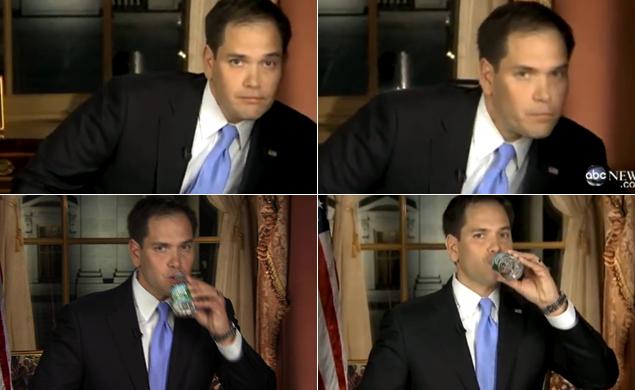
The Right mocked Parker and the Post hardest of all—suuure there’s no liberal bias in the media!—- especially the Bad Boy of rightward blogs, Breitbart. Then along comes another gag story from the same source, The Daily Currant, announcing that New York Times tax-and-spend advocate, progressive cheerleader and Pulitzer prize-winning economist Paul Krugman has declared for bankruptcy, and Brietbart, for exactly the same reasons Parker believed that Palin would go to work for the Arabs,  couldn’t figure out that it wasn’t  true. Breitbart published this: Continue reading

“House of Cards” Ethics: Zoe’s Unethical Tweet And The Right To Talk To Just One Person

house_of_cards

At the risk of stirring up the incorrigible defenders of the vigilante Applebee’s waitress, I must again point out that using social media to make a private indiscretion a public disgrace is terrible, grossly unethical conduct that threatens our freedom, trust,privacy and quality of life. The fact that the practice is gaining acceptance as something to be feared and expected is a frightening cultural development, and we are all obligated to do what we can to condemn it and eradicate it before it becomes a toxic social norm.

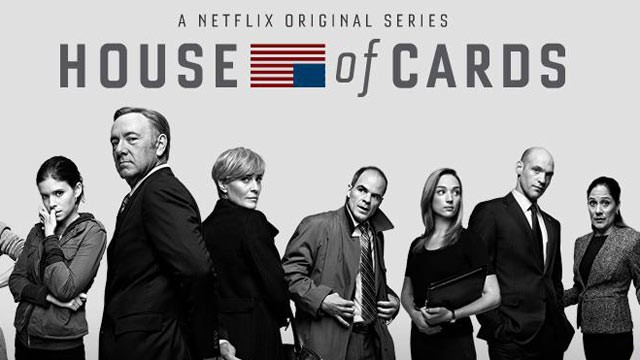
The Netflix political drama “House of Cards” provided a perfect example of what is wrong with this despicable trend in its fourth episode.  Zoe Barnes, the ambitious, unethical reporter in league with Kevin Spacey’s deliciously diabolical House Majority Whip, has brought her newspaper’s editor to the point of apoplexy in a confrontation in his office.  Already considering leaving for greener pastures, the reporter goads her sputtering boss into calling her a misogynistic epithet that she senses is just on the tip of his tongue. “Go ahead,” she taunts. “Say it.”

“You’re a cunt,” he finally replies. Zoe whips out her smart phone and tweets this exchange to her thousands of followers. “Call me whatever you want, “she sneers, “but remember, these days, when you’re talking to one person, you’re talking to a thousand.”

Wrong—not unless the person you’re talking to is unethical, vindictive, has rejected the social conventions of private conversation and is consigning the Golden Rule to the cultural trash heap. Continue reading

Ethics Hero: Michael Arrington

michaelarrington

Michael Arrington is a tech publisher and blogger who made a good amount of money selling his previous blog, Techcrunch. He bought a boat with some of it, a nice one, with state of the art electronics. On the day his new toy was to be delivered, he had to work through customs and Homeland Security paperwork, since the boat was built in Canada.  Something went wrong, something stupid.  He writes,

“My job was to show up and sign forms and then leave with Buddy (WA sales tax and registration fees come a week later). DHS takes documents supplied by the builder and creates a government form that includes basic information about the boat, including the price. The primary form, prepared by the government, had an error. The price was copied from the invoice, but DHS changed the currency from Canadian to U.S. dollars. It has language at the bottom with serious sounding statements that the information is true and correct, and a signature block.”

It’s serious all right. It is a government form, and signing it is a legal attest that the information is correct. Arrington continues, Continue reading

Tales From The “Ick!” Files: If Luke Married Leia…

Luke and Leia

Emily Yoffe, who is not Ethics Alarms’ favorite advice columnist, gets one right at Slate—a weird one, but then, that’s the only kind of question she usually chooses to answer. If I had to bet, I’d place my money on this question being a fake. Emily acknowledges that possibility, but couldn’t pass this one up, and neither can I.

A loving husband who already knew that both he and his wife (it was virtually love at first sight when they met in college) were raised by lesbian parent couples who conceived via sperm donors found out that they both have the same donor to thank for their conception. Now he thinks “sister” every time he sees his spouse, and ask 1) what should he do? and 2) should he tell his wife that he has learned that they are half-siblings? Yoffe tells this poor guy to stop feeling guilty, and that he hasn’t done anything wrong. She also advises him to get some counseling, and to suck it up and tell sis about their dilemma….but not to reveal the secret to their kids, Anteater Boy and Tilly the Boneless. Continue reading

Manatee Reflections: How Can We Tell Right From Wrong When We Can’t Think Straight At All?

Interestingly, not the slowest participant in this situation...

Interestingly, not the slowest participant in this situation…

I think the greatest impediment to building an ethical culture is the relentless dumbing down of the culture, a process now driven as much by political factors as educational ones and Honey Boo-Boo. The last election showed that ours politicians fhave decisied that they only benefit from misleading and frightening the ignorant and logically impaired among us—all the better to persuade them to elect leaders not much smarter than they are, but probably more ruthless and dishonest. In so many corners of our society, there are no consequences for demonstrated intellectual incompetence.

The news media is a prime example. CNN’s Deborah Feyeric actually asked, on the air, whether the approaching asteroid last week was “the effect of, perhaps, global warming.” She is too ignorant to be on television: this is signature significance. I know science isn’t her usual beat, but nobody this incapable of basic logic should be interpreting news on the airwaves about anything. If she had announced the moon was made of cheese, or asked if anyone had ever found that pot of gold at the end of the rainbow, it could not have been any worse. CNN doesn’t care: she still has a job. Being jaw-droppingly stupid—the worse kind of stupid, so stupid you don’t even know how stupid you are—is no longer a bar to permanent employment in national media, in teaching, in business, in government.  Probably Feyeric’s bosses thought she asked a reasonable question. Continue reading

Tricking Yourself Into Being More Ethical

Cracked 5 waysOver at Cracked, the website that excels at developing clever factoid lists and debunking conventional wisdom, they have posted a list of “5 Scientific Ways To Trick Yourself Into Being A Good Person.”

Uh-huh. As usual for this site, the headline is just a bit overstated. “Trick” is a misleading word here: most of the devices involve the phenomenon of priming, which basically means that we are more ethical the more something focuses our attention on the ethical implications of what we are doing. By Cracked’s definition of “trick,” Ben Franklin’s morning and evening questions are tricks.

Skepticism is also warranted because we are just getting summaries of studies, and brief, non-technical, non-critical ones at that. It is impossible to know what extraneous factors might have polluted the results, or what biases the researchers brought to their research. Social science research is notoriously fallible and subject to design flaws, particularly regarding sample size. Such research is also prone to confuse cause and effect. I am especially dubious of #2 on the list, “Washing Your Hands Makes You Less Prejudiced.” Yes, researchers found that those who chose to use sanitary wipes on their hands when given the option during a flu epidemic scored better after doing so than those who declined to sanitize when they were asked to answer a survey designed to measure prejudice. I think it is a logical stretch to conclude that the act of ridding their hands of germs washed away the subjects’ biases; it is more likely that those who were more considerate of people around them, as indicated by their interest in sanitizing their hands during a flu outbreak, were also the most empathetic, tolerant and unbiased to begin with. That result isn’t nearly as startling as the claim that handwashing magically heals one’s prejudices, but Cracked apparently needed something to fill out a list of four.

It’s still an interesting article, even though ethical conduct takes a lot more cognitive effort than “tricks.”. You can read the whole thing here.

Judge Ken Anderson: A Judge With An Ethical Obligation To Resign

Ken Anderson

Regret isn’t enough.

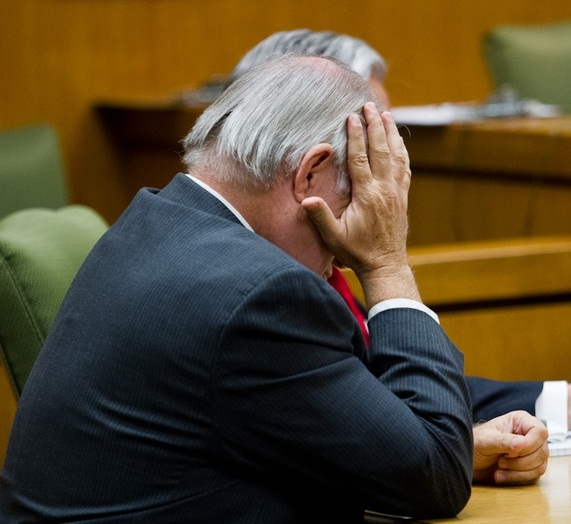
Ken Anderson has been a Williamson County (Texas) district judge since 2002, but in 1987  he was the district attorney who prosecuted Michael Morton for fatally beating his wife to death. Morton was convicted and served 25 years in prison before DNA tests proved he was innocent. (This is yet another triumph of The Innocence Project.) Another man has been arrested for the murder of Morton’s wife Christine, as well as a second woman he allegedly killed in similar fashion while Morton was behind bars.

Last week, a five day hearing examined Judge Anderson regarding his conduct in the case, in a special court of inquiry to determine whether he engaged in criminal wrongdoing as well as unethical prosecution. Among the questions raised was why Anderson never divulged to Morton’s defense team a police report that Morton’s neighbors had said that they saw a suspicious man walking into the woods behind the Morton home shortly before the murder, and why Morton’s three-year-old son’s statement that “a monster,” not his father, beat the child’s mother to death was similarly withheld. On the stand enduring five hours of questioning, a tearful Anderson could only say that he didn’t remember not turning over the evidence to the defense, while defense attorneys adamantly insisted that they never received it. The hearing also revealed that Anderson kept his lead investigator from testifying at trial, when his testimony would have ensured that the child’s statement and the report about the stranger were raised in court, as well as allowing defense attorneys to cross-examine the investigator regarding his peculiar theory of the case.The theory, which was subsequently endorsed by DA Anderson, was that Morton become homicidal after his wife fell asleep when he sought to have sex with her, and donned his scuba wet suit so his son wouldn’t know it was him beating her to death. Continue reading

Easiest Ethics Question Of The Month

" Dear Ellie: The firm seems a little shady to me, but I need the experience. Should I take the offer?"

” Dear Ellie: The firm seems a little shady to me, but I need the experience. Should I take the offer?”

Over at Above the Law, Ellie Mystal posts a request for advice from a desperate job-seeking lawyer, and polls readers for their response. The lawyer has an offer from a local attorney she says has a reputation for being unethical and untrustworthy. He has filed for bankruptcy once; he is being investigated by the local bar and the government, and former employees say he’s atrocious to work for. The inexperienced lawyer asks,

“Is this really bad for an entry-level lawyer to work for an (arguably) bad lawyer? Is it an absolute NO? Which one is more important: get some experience or working at a right/good firm? To put it another way, which one is worse: having no experience or working at a bad firm? I keep searching job postings and there is no opening for entry-level. Everyone looks for experienced lawyers. So I get the impression that no experience is the worst.

“I don’t know what to do with this offer. Feels not right to accept this offer but cannot just forgo. So give me some advice — should I accept his offer?”

Well, let me th—NOOOOOOOO!!!! Absolutely NOT! Never in a million years! NEVER!

And yet, almost 20% of Above the Law’s mostly lawyer readers voted for the choice reading, “Yes. Beggars can’t be choosers.”

That is disturbing. Continue reading

The “So What?” Follies

So what?

So what?

Reluctant to report actual news, in many cases, that makes their favorite politicians and elected leaders look bad, or perhaps as they really are, our sad, inept and juvenile news media attempts to balance its lack of diligence by promoting other stories as brewing scandals that have no legitimacy whatsoever, and are similarly fueled by bias. Two particularly offensive examples: Continue reading