Ethics Dunce: The Daily Beast

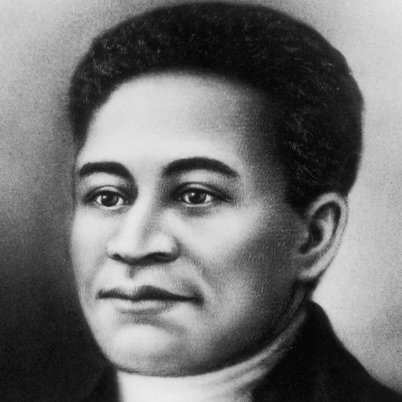
Does this look like a Panamanian fisherman to you?

The American public is cynical and mean-spirited enough, I think. It doesn’t need any more shoves in that direction from the crass hipsters at The Daily Beast.

Tina Brown’s site, recently named as the Web’s top news agregator, noted the follow-up to a story highlighted on Ethics Alarms, the stranded fishermen who were ignored by a passing cruise ship even though its passengers had alerted the crew. Two of the fishermen subsequently died; one of the survivors is suing Princess Cruises. The Beast intro to the story began this way:

“One U.S. cruise line has a litigious Robinson Crusoe on its hands.”

The story is sub-headlined: “Wilson!”, a reference to Tom Hanks’ volleyball companion in the film “Castaway,” who meets his end at sea.* Continue reading

The Romney “Pranks” Smear and Fairness Blindness

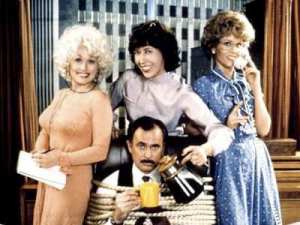
Amazingly, the real Doug Neidermeyer grew up to be a hell of a nice guy. But by all means, let’s judge him by the jerk he was in 1962. That’s fair.

Occasionally I am genuinely shocked at how blatantly unfair people are on certain topics. Sometimes it is people generally; sometimes the people shocking me are those who I respect, and their unfairness outbreak sets me running to the mirror to check for tell-tale symptoms in my own visage, like a righteousness rash or bias buboes. I am never surprised by the unfairness of the media, politicians, or Lawrence O’Donnell, but even with them, I persist in the silly hope that some shred of decency survives.

The Washington Post’s despicable exposition of ancient recollections of Mitt Romney’s mean-spirited and boorish conduct while being enrolled in that well-known cauldron of mean-spirited and boorish conduct—prep school—has caused me serial episodes of shock. The blatant unfairness of dredging up pre-majority incidents to denigrate a presidential candidate should be so obvious that would expect writers, pundits and readers of all ideological persuasions to toss such swill back in the face of the incompetent waiter who served it…but no. Far and wide, people who should know better, think better and be better are waving the Post’s front page like a bloody flag. I’m embarrassed for them, and for any political affiliation that removes basic ethics alarms so effectively.

The story was offensive and unforgivable enough online, where I saw it yesterday, but on the front page of the Washington Post, where it appeared today, it is beyond belief. The story takes up almost half the front page: you would think the Martians had invaded. My first thought was: “Wow…the liberal establishment must really think Obama’s in trouble!” And so he is. But that’s no excuse.

All the usual suspects have seized on the Post’s hit job to paint Mitt Romney as some kind of a closet monster—again, on the basis of his actions as a spoiled, rich kid with a famous father going to school at a snooty prep school where they breed the kind of creeps represented by Greg Marmalard and Doug Neidermeyer in “Animal House.”

I should mention, in passing, that I am fairly certain that in college I knew personally one of the models for both Marmalard and Neidermeyer, an arrogant, ultra-preppy, ultra-conservative, tall, handsome student who was an outspoken supporter of Richard Nixon and who was known and roundly detested by the Harvard Lampoon types that wrote the “Animal House” screenplay. And guess what? He grew up. He was not “raped in prison” after Watergate, like Greg, or “shot by his own men” in Viet Nam, like Doug. He became a dedicated philanthropist and a courageous father, and has accomplished more good since college than all the fine liberals who ridiculed him combined. Citing his college conduct (when he was older that 17) as indicia of his character today makes about as much sense as—no exactly as much sense as—using Mitt Romney’s prep school actions to judge him now. That is to say, none.

Rick Jones, the smart and sensitive teacher and blogger who sometimes weighs in here, shocked me with his own boarding of the anti-Romney train in the wake of the Post smear. Still, his post on the topic, which you can read here, is more persuasive, fair and articulate than the others around the web written by those with names you might know better, so let me focus on Rick’s well-stated versions of their arguments. Rick writes: Continue reading

Web Hoaxes: Not Funny, Always Unethical

P.T. Barnum’s “Fiji Mermaid:. At least in 1842,. it wasn’t on the web.

Ethics Alarms is swearing off “angry ex-boyfriend/girlfriend takes cruel outrageous revenge” stories, no matter how juicy the ethics lesson may be. First it was the tattoo artist who defaced his ex’s back with a huge and ugly drawing of steaming dog excrement that was fantasy masquerading as news, and now it’s the Polish dentist scorned…remember? The one who pulled out her cheating boyfriend’s teeth? Yes, it seems that horror story was a hoax too.

A lot of people who should know better think that web hoaxes are funny and hoaxers are clever. I regard them as the ethical equivalent of  chefs and waiters who spit in restaurant customers’ food. The web creates—a web!—of information and communication across nations and cultures, and poisoning that web with bogus stories creates a chain of unpredictable harm. At very least, hoaxes make every trusting source that passes along the lie an unwitting accomplice in a despicable act. It harms long-nurtured relationships of mutual trust between those who post on blogs and websites and those who read them. Continue reading

The Schizo Principal’s Facebook Dilemma

Principal Losos, a.k.a Suzy Harriston. Don’t ever call  her “Sooz”.

In Clayton, Missouri, the high school principal has resigned after being outed as a fake student on Facebook. Posing as Clayton High student Suzy Harriston, Principal Louise Losos amassed over 300 student friends from her school, until a former student pierced her false identity and urged everyone to de-friend it. Poor, fictional Suzy vanished, and shortly afterward so did Louise, who was placed on a leave of absence. Now she has resigned.

Can anyone think of a good reason why Losos should not have lost her job? In addition to being creepy, her posing as a student was a lie, and hardly proper conduct for the head of a school, a role model, and an ethical exemplar. If she were investigating a murder, or a series of unexplained thefts, or a suspected Al Qaeda cell working out of the Science Club, she might have some ammunition on her side, but the only use she seems to have put Suzy to was building student support for a friend of hers, a physical education teacher, whose job was in jeopardy.

There was one note in the Yahoo! report that complicates the analysis: Continue reading

Is Buzz Bissenger Right? Should College Football Be Banned? Is He KIDDING? Of Course It Should. And Everybody Knows It.

Scholars all, I’m sure.

Not for the first time, sportswriter and commentator Buzz Bissinger has everybody buzzing about one of his frank opinion pieces, this one launched in the Wall Street Journal. His provocative title: “Why College Football Should Be Banned.”

Bissinger deserves credit for being willing to bite the hands that feed him: he is the author of “Friday Night Lights,” and many of Bissinger fans, at least up to now, tend to be football fans too. His article, however, is also one of those periodic slaps in the face of cultural apathy that occasionally causes a shift, as when Harriet Beecher Stowe wrote a little novel that alerted a lot of people to the obvious fact that a system in which human beings were bought, sold, and bred like cattle might not be consistent with civilized morality. It doesn’t take a genius, a revolutionary or a careful analyst to conclude that big time college football is corrupt and corrupting to the core. It only takes a willingness to brush aside rationalizations and face the truth.

Here are the arguments Bissinger presents to support his thesis:

  1. Football has nothing to do with academics.
  2. It is a distraction from both the purpose of higher education and attention to the serious problems facing the university system.
  3. With college tuition reaching outrageous levels and the college loan system teetering, university expenditures on pricey football programs are unconscionable.
  4. The major beneficiaries from college football are the NFL, which uses it as its minor league system at minimal cost; pathetic alumni, who wrap their self-esteem up with the fortunes of their alma mater’s football fortunes; and obscenely-compensated football coaches.
  5. Football programs, contrary to what the public might think, often lose money and become a drag on tuition funds.
  6. Colleges like Maryland have cut other varsity sports (eight of them, in Maryland’s case) to allow it to pay for football.
  7. The representation that the athletes are students is largely a sham, with many of them failing to graduate and the majority spending minimal time on substantive course study.
  8. The athletes are exploited.
  9. The game entails serious health effects, primarily head trauma, that are only now being recognized.

I’m sure we can come up with a #10, too. Oh! I have one: Penn State. We were just given a front row seat to a frightening display of how even a “model” football program could warp the priorities and ethical values of an entire campus culture.

Of course Bissinger’s attack has college football supporters scrambling into a defense formation. What can they come up with? Not much, but it’s a fascinating study of how rationalizations rush into voids caused by the lack of substantive arguments. One college football-hyping blog’s first response was this: Continue reading

Savage Nightmare: Into the Valley Of Spin, Deceit and Lies

When Perez Hilton is the MOST ethical participant in a chain of internet lies, spin and deceit, you know you’re in trouble.

The dishonesty in the world of blogs and partisan websites is so pervasive, the determination to deceive so great, and the willingness to distort, confuse and misinform so ingrained and shameless, that an objective understanding of some politically-charged events become literally—and I mean literally literally, and what Joe Biden means when he says literally, which is “figuratively”—impossible. Does this fuel the destructive partisanship that causes public discourse to be about “gotchas” and point scoring rather than collaboratively addressing societal problems? Absolutely.

I fell into this muck today when I made the mistake of visiting the Breitbart website for the first time in months, to see what it was evolving into now that Andrew has left us. Eureka! Here was a post by Ben Shapiro saluting Perez Hilton, the petty and reliably ethics-challenged gossip columnist (there is no such thing as an ethical gossip columnist) for breaking ranks and criticizing Dan Savage for his anti-Christian, abusive rant to high school journalists in what was supposed to be a speech about anti-bullying initiatives. This signaled to me that Hilton had an Ethics Hero designation in his immediate future, for properly chastising unethical conduct by an ally: like Savage, Hilton is gay and active in anti-bullying efforts.

Shapiro wrote:

“Hilton has long been an advocate of anti-bullying, and it is heroic of him to stand apart from the rest of the media, which has buried Savage’s bully tactics or brushed them off as unimportant. Savage, as Hilton points out, has lost his credibility as an anti-bullying advocate with such actions. And yes, Hilton has cut a video on behalf of the It Gets Better Project.

“It wasn’t any of the big time celebrities who have endorsed and supported Savage’s It Gets Better Project who stood up against him. It wasn’t folks like Jane Lynch or Neil Patrick Harris or Josh Duhamel or James Marsden or Janet Jackson or Jennifer Love Hewitt or any of the dozens of other stars who could have done so. It wasn’t the folks in the mainstream media, who have completely ignored the story, or justified Savage’s behavior. It wasn’t the elected leaders who have used government resources to direct traffic to Savage’s program who stood up to Savage’s bullying here. It wasn’t President Obama or Vice President Biden or Secretary of State Hillary Clinton or Secretary of Agriculture Tom Vilsack or the Department of Justice or the White House Staff or Secretary of Health and Human Services Kathleen Sebelius.

“It was a gossip columnist.”

The Perez quote cited by Shapiro to justify this extravagant praise was this:

 “UGH ….Savage later called the walk-out “pansy-a**ed” which, from someone who helms an anti-bullying campaign, is obviously a very negative thing to say ….Can’t we just be good and kind to each other? Isn’t faith in love and honesty and kindness all any of us really need?” Continue reading

Credit Ethics: New Ethics Alarms Policy

The sound of my palm belatedly smacking my expansive forehead

What will heretofore be referred to as “The Mary Frances Prevost Affair” has its silver lining. Watching another blogger incorporate the main body of my blog post into her own by-lined essay without credit or attribution has caused me to do a lot of thinking about the inadequacy of credit and attribution in the blogosphere  generally, with a relatively  few exceptions. Most of these are blogs written by academics who hold to the standards of their profession rather than the much looser practices of the internet. It also caused me to wake up to the inadequacy of my own attribution practices on Ethics Alarms. I have never taken an entire post from another source and represented it as my own, but I have frequently taken a factual account of a story from another website that itself was essentially  republishing, for example, an AP story, put the facts in my own words, sometimes with a stray phrase remaining, and not credited either source. I have often derived information in a post from multiple news sources but only linked to the one that I felt related the event the most thoroughly and clearly. Another writer’s work has sometimes sparked an idea for a post that was substantially different, and I have not credited the source of that spark.

All of this is common practice in blogging, but it is still wrong, and sloppiness is always a slippery slope. In the wake of “The Mary Frances Prevost Affair,” a colleague alerted me that I had included one complete sentence and part of another in an Ethics Alarms post that were identical to the post of another writer on the same subject. I didn’t even recall using the source, but upon going over my notes, I found that the earlier post had supplied me with the bulk of the facts I relied upon, though not the analysis of them. . I immediately contacted the author to apologize, and he was gracious and understanding. Nonetheless, this should never happen, especially on an ethics blog.

Therefore, as of today, Ethics Alarms will maintain a strict policy of crediting all sources that go into the inspiration, research and writing of the posts here. Links in the body of the text will be either be for informational purposes only, such as when I make a gratuitous cultural reference that nobody under the age of 50 is likely to recognize, or to back up direct quotes. At the end of each post, there will be credits and/or links listed, when appropriate, in some or all of the following categories: Continue reading

The Perplexing Law and Ethics of Copyright Violations On The Web

For once I’m not going to try to summarize a useful article, but will just suggest that you read it. From the future (the article is mysteriously dated May 1, 2012), journalist Eriq Gardner tells of his experience with Righthaven, the organization that was created explicitly to sue bloggers and others for copyright violations on the web. He tells of how he came to believe that the defenders of copyright law, not those who would destroy it, had fairness, logic and ethics on their side.

The article is well-timed, given my current travails with an unapologetic plagiarist, and my own position on copyright, which is consistent with the author’s. It also features a guest appearance by attorney Marc Randazza, the First Amendment specialist who came to my aid when  I was threatened with a lawsuit over an opinion someone didn’t like.

The article, titled The Righthaven Experiment: A Journalist Wonders If a Copyright Troll Was Right to Sue Him, is well worth your time.

The Plagiarist Strikes Back!

Move along, Atticus. Nothing to see here, and I wouldn't want you to barf.

Well, some of you called it. I was a sap. I expected better.

Mary Frances Prevost, the California criminal law attorney who substantially expropriated an Ethics Alarms post and placed her name on it, responded to my request for an explanation, and failing that, an apology, a retraction, and proper credit, with this (on her Facebook page), in which she said, in part:

“I received a histrionic run-on-sentence email from someone named “Jack Marshall” today accusing me of committing crimes, threatening to report me to my bar association(s), the Inns of Court, and essentially spend your days and nights harassing me.” I have also viewed a a highly unethical rant published purportedly by you on a blog suggesting strongly that I have engaged in unethical conduct throughout the entire course of my career. I have counseled with one of the country’s premiere ethics attorneys. Here’s the result: 1) accusing me of a crime is defamation per se and unethical; 2) suggesting that my entire law practice has been based on unethical conduct is defamatory and unethical. I maintained copies both of your email and blog. It is clear that you are hell bent on engaging in systematic harassment and unethical conduct, the likes of which can, and most likely will, develop into a lawsuit unless rescinded forthwith. It is clear you have little to do in your life besides sent me emails accusing me of crimes, and writing poorly written blog posts accusing me of immoral behavior. Interesting how one making such claims, engages in most egregious conduct himself….But the sheer amount of energy really suggests something more: a lack of work; too much time; off your meds. I suggest you take a look inward and remove your defamatory and unethical blog post regarding me. Indeed, you should come clean on your blog. You’ve practiced law only two weeks before giving up. Yet, your resume suggests far more experience. I think you should rethink what you’ve done.”

Now how do you like that? Continue reading

Is a Plagiarist a Trustworthy Attorney? Let’s Ask Mary Frances Prevost!

This is me, apparently.

San Diego criminal defense attorney Mary Frances Prevost has an interesting post on her blog about the ethics of George Zimmerman’s first set of attorneys.

MINE.

You wouldn’t know it was mine, of course, because blogger/attorney/ former Washington Post journalist Prevost has slapped her own name on it. There it is, right at the beginning: “by Mary Francis Prevost.” I think that’s interesting.

Her post, entitled “The Trayvon Martin Case Trainwreck: George Zimmerman’s Attorneys Need To Shut Up!”, was posted the same day as the Ethics Alarms post, “Next To Board The Trayvon Martin Ethics Train Wreck? Why, The Lawyers, Of Course!”, which began, coincidentally enough, by quoting John Steel’s post from the Legal Ethics Forum that read, “[S]hut up, guys. Shut the h*** up.”  It was two introductory paragraphs later, however, when “her” post got into the substance of “her” analysis of the ethical problems with the farewell press conference given by George Zimmerman’s attorneys shortly before the shooter of Trayvon Martin was charged, however, that I really began getting a serious dose of deja vu, also known as “Holy crap! This woman stole my article!” Continue reading