Harvard! Ethicists! Experts! What’s Not To Trust?

From Financial Times:

Francesca Gino is one of HBS’s best-known behavioral scientists and author of Rebel Talent, a 2018 book with the subtitle “Why It Pays to Break the Rules at Work and in Life”…[The ]high-profile expert on ethics and dishonesty is facing allegations of dishonesty in her own work and has taken administrative leave from Harvard Business School… Gino, whose work has been widely cited, including in the Financial Times, has been a professor of business administration at HBS since 2014. Her HBS profile was recently altered to indicate that she is on administrative leave. She did not respond to FT requests for comment via email and social media.

A Harvard Business School spokesman said: “We have no comment at this time.” A group of academics who compile the Data Colada blog about the evidence behind behavioural science has started publishing a series of posts in which they say they will detail “evidence of fraud in four academic papers” co-authored by Gino. “We believe that many more Gino-authored papers contain fake data,” they wrote in the first post of the series, which appeared on June 17.

See? She really is an expert in dishonesty!

That The Washington Post, New York Times And The Rest Of The MSM Refused To Report This Story Is More Significant Than The Story Itself [Expanded]

I want to apologize in advance for the tone of this post. This issue makes me frightened, angry, frustrated and depressed. It is appropriate that I convey that, but this is not my favorite mode of expression.

Last month, Amazon blocked a Baltimore, Maryland-based Microsoft engineer named Brandon Jackson from accessing his “smart home” features. It disabled his Alexa and Echo Show, which managed his other smart devices. The justification for this intrusion was that an Amazon delivery driver thought he heard a racist remark from Jackson’s automated Eufy audio message when the driver rang the doorbell, which would have been odd indeed, since Jackson is black and he wasn’t at home at the time. The driver, good little Orwellian that he is, reported the imagined offense to Big Brother Amazon, which then exacted its revenge for Jackson’s WrongThink.

There was no racist comment. Jackson has multiple security cameras, and confirmed that fact, as did Amazon’s investigation. The Eufy doorbell had issued its programed response: “Excuse me, can I help you?” and the driver, walking away and wearing headphones, must have misinterpreted the message as “Bite me, you mocha-colored product of second-rate evolutionary processes!” or something similar. A completely understandable mistake on the driver’s part that resulted in Jackson’s Amazon account, his Alexa and Echo Show locking him out the next day. It took a week to undo it all.

Amazon confirmed the episode, and issued a statement promising that it was working to prevent similar incidents from happening in future. That’s nice. Everything is groovy, then!

Continue reading

Open Forum: Raiders Of The Lost Ethics Stories

More than the usual number of major or potentially major ethics tales swirling around that Ethics Alarms hasn’t gotten around to (yet), and having been chastised yesterday by a veteran commenter for “all this e-ink on Bud Light” (marketing is one of my many past and present occupations and special interests, so bite me), I am even more interested than usual in what issues the commentariat wants to discuss.

I think my favorite news item that I’m not going to write about is the Mississippi state Senator who says it’s time to revive the old Confederate-themed state flag. I’ll just mention that by pure coincidence, Grace and I re-watched “Mississippi Burning” last night.

I wonder if that senator has seen it?

(And no, I will not be seeing an 80-year-old Harrison Form reprise Indiana Jones. I care about the integrity of the character even if he and Disney don’t.)

Where Reporting Ends And Propaganda Takes Over: The NYT On Affirmative Action

Dominating today’s New York Times front page (above) is a report headlined “How It Feels to Have Your Life Changed By Affirmative Action” online and “Inside the Lives Changed by Affirmative Action” in the print version of the Times. The piece is naked and blatant advocacy for the Constitution- and U.S. law-violating policy that has been given temporary pass by a conflicted Supreme Court multiple times despite an unavoidable fact: it’s discrimination, and the Constitution doesn’t distinguish between good discrimination and bad discrimination. By the principles and values this nation was founded upon, all discrimination on the basis of qualities like religion, race, gender and ethnicity is wrong.

The Times approach to the subject is similar to its coverage of the illegal immigration controversy. In that matter, as periodically pointed out by Ethics Alarms, the Times has given readers frequent heart-warming tales of “the good illegal immigrant,” a hard-working immigration law violator who is the salt of the earth, a wonderful parent, and yet cruelly held accountable for his or her law-breaking anyway. The motive of such articles seems clear: use emotions to overcome and blot out law, ethics, fairness and common sense. As the Supreme Court seems poised to finally call college and university affirmative action programs what they are: illegal, the Times is trying to build support for its favorite party’s inevitable accusations of racism and illegitimacy against the five or six justices who will have simply done their jobs.

The headlines tell it all. Affirmative action changed the lives of its beneficiaries for the better, so obviously, affirmative action is good, and ending it would be unethical. What is striking about the article is that none of the affirmative action beneficiaries—all black—interviewed appear to have given a second’s thought to the individual whose opportunity they seized because of their “better” color. Some express regrets because they faced, or felt like they faced, skepticism about their degrees or career accomplishments because they were presumed to be “undeserving” affirmative action beneficiaries. None hint at any regret that someone who deserved to be accepted to an elite school or program was not so they could be.

Continue reading

The Rogan-Kennedy-Hotez Controversy: Is It Ever Unethical To Debate?

A controversy among three people I usually have no interest in paying attention to raises fascinating ethics issues.

Joe Rogan is a giant in the podcaster universe despite having risen to fame as the host of the disgusting reality show “Fear Factor” and having little education beyond high school. Last week he had Robert Kennedy as a guest on his show to his Presidential run and his views as an anti-vaxxer. Dr. Peter Hotez, one of the more obnoxious and arrogant scientists with an addiction to the media spotlight tweeted to his 400,000+ Twitter followers that the podcast was “nonsense” and “misinformation.” This prompted Rogan—who is a giant in the podcaster universe because he knows how to “stir the pot”— to challenge Hotez to come on his show and debate Kennedy (or, failing that, Rogan), offering to give $100,000 to a charity of Hotez’s choice if he agreed. Hotez refused, saying that scientists don’t debate ignoramuses and charlatans (or words to the effect), Elon Musk tweeted in to support Rogan, and pundits left and right began taking sides.

The episode immediately called to mind the battle between Holocaust historian Deborah E. Lipstadt and Holocaust denier David Irving, a story recounted in the film “Denial.” Lipstadt took the unshakable position that a debate on this topic automatically gave dangerous credibility to a position that has none. If there is a debate, she reasoned, then uninformed people will think, ‘So—maybe the Holocaust happened, and maybe it didn’t!’ “Some things happened, just like we say they do. Slavery happened, the Black Death happened. The Earth is round, the ice caps are melting, and Elvis is not alive, ” her character, played by Rachel Weisz, says in the film. (Maybe that’s an actual quote from Lipstadt, but I can’t find it.)

Continue reading

Very Interesting Points On The Trump Indictment From Will Sharf

Will Scharf is a former federal prosecutor a Republican candidate for Missouri Attorney General; take that last part as you will. In a piec for The Federalist, he ticks off six problems for prosecutors trying to prove the alleged crimes in the Justice Department’s case against Donald Trump. Few of them have been explained thoroughly in the mainstrem media by an analyst not obviously inclined to declare Trump guilty, at least none that I have found.

Here are Scharf’s six; my few comments are in italics:

1. Interplay Between the Espionage Act and the Presidential Records Act: “…The Presidential Records Act sets up a system where the president designates all records that he creates either as presidential or personal records (44 U.S.C. § 2203(b)). A former president is supposed to turn over his presidential records to the National Archives and Records Administration (NARA), and he has the right to keep his personal records.  Based on the documents I’ve read and his actions I’ve read about, I believe Trump viewed his “boxes” as his personal records under the PRA. There are statements he made, quoted in the indictment, that support that view. If Trump considered the contents of these boxes to be of purely personal interest, hence his designation of them as personal records, did he knowingly retain National Defebse Information? Did he really think these documents, like years-old briefing notes and random maps, jumbled together with his letters, news clippings, scribbled notes, and random miscellaneous items, “could be used to the injury of the United States”? Or did he just think of them as mementos of his time in office, his personal records of the four years, akin to a journal or diary?”

2. Classification and National Defense Information: “…Trump’s legal team needs to drive home this point over and over again: Classification is not dispositive in this case. Harm to America or benefit to foreign countries is the standard.  Anyone who has worked around government knows that overclassification is a huge problem. A ton of documents end up being classified because of arcane technical rules that may not reflect the real world. If the president were to ask the Navy what’s for lunch for the next week at Coronado, for example, there is a good chance the answer comes back with a classification marker on it.”

Continue reading

The White House Breast-Flashing Trans Activist Offers Authentic Frontier Gibberish And A Non-Apology Apology

Ugh.

I wouldn’t expect the individual who thought this…

…was a reasonable or ethical way to behave at the White House or to thank President Biden for inviting her and other LGBTQ activists to attend a political suck-up event would be revealed as a smart, articulate, ethical force in civic discourse. That three-minute babble-fest above, however, is special. I’m not even certain what the transsexual’s intention was. I can determine what it communicated, however:

Continue reading

Juneteenth Weekend Ethics Picnic Continued, 6/17/2023: A Happy Dance Gone Wrong, Japan Figures Out The Obvious At Last, And More

I decided to restrict yesterday’s installment to the national divisions theme, and realized this morning that there are all sorts of random items hanging around that deserve some consideration.

Such as…

1. The angry banned commenter who has been leaving comment on various posts like a suspended junior high school student drawing penises on the school basketball court as revenge just wrote this in a comment you’ll never see: “Your blog is basically a torrent of hate speech.” No further analysis from me is necessary, I presume. I occasionally have regrets about banning commenters. This jerk I regret allowing to comment in the first place.

2. Speaking of fractured thought processes, an occasional commenter here wrote a Facebook post criticizing the fact that a male “identifying” as female won the “Miss San Francisco” title. Me, I wouldn’t care if an inanimate carbon rod got the crown, but one of my friend’s critics, a Woke World Warrior, wrote (and later too down) this response: “What impact does this have on your life?” I immediately flagged it as an exquisite expression of dead ethics alarms and the absence of comprehension of the principles of ethics generally. What a wonderful world we would build if we all only cared about conduct that affected us directly and personally! And that is the flaw in the logic behind the question.

3. Here’s an ancient but still common baseball rationalization that drives me crazy, but that isn’t used sufficiently in the real world to justify inclusion on the list. When a home plate umpire makes an obviously wrong strike call, a baseball “color” announcer, usually an ex-player, will say, “He’s been calling that pitch a strike all day. That’s all hitter and players want, consistency. It’s his strike zone today, and as long as it doesn’t change, nobody can complain.” That’s idiotic. It’s like saying, “Yeah, that cop always tickets pedestrians for chewing gum, but as long as he’s consistent about it, it’s OK.” The umpires’ job is to enforce the strike zone in the rule book, which is very specific. They don’t have the authority to decide what is “their” strike zone.

Continue reading

Juneteenth Weekend Ethics Picnic, 6/16/2023

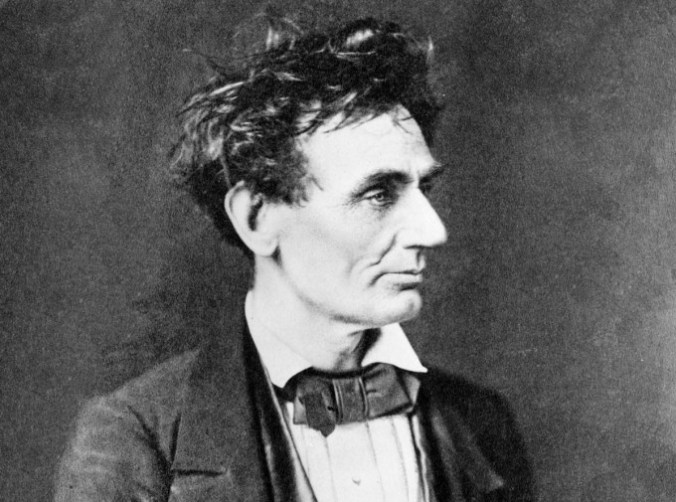
This was the day, in 1858, that Abraham Lincoln, just-nominated as the Republican Illinois candidate for the U.S. Senate, addressed the state Republican Convention in Springfield and, speaking to more than 1,000 delegates, crafted a warning for the nation adapted from the New Testament: “A house divided against itself cannot stand.” It’s ironic, or perhaps appropriate, that the anniversary of the prophetic speech occurs as “Juneteenth,” the federal holiday designed to pander to African-Americans in the aftermath of the George Floyd Freakout makes this a long weekend. Juneteenth is a divisive holiday, based on race alone.

As A.M. Golden asked two years ago at the end of his guest column here, “Any thoughts on how easily America is going to transition into two Independence Days, one for whites, one for blacks?” My thought, based on the two years since: It is likely to transition into a permanently racially-conflicted and divided society, which is apparently just what progressives and Democrats want, only relived by further divisions. I fully expect, for example, for the next push by the increasingly bold and insatiable LGBTQ lobby is for a national holiday honoring the Stonewall riots that began on June 28, 1969. That one, like the federal holiday arriving on June 19, will also be celebrated by only one segment of the public while the others metaphorically scratch their collective heads, or, in the case of weenies, celebrate just to appear sufficiently woke.

I wonder what Abe would say about the dangers of today’s divided house?

1. On the topic of divided houses: NPR host Teran Powell used Flag Day to trash the American Flag and to discuss her anxiety when “surrounded by excessive American Flags.”

“For example, I’m Black American, and over the past few years, I’ve continued to analyze what the American Flag means to me,” Powell said. “Especially considering the growth in extremism in the post-Trump-presidency and those extremists using the American Flag against people of color to say they’re the real Americans.” Then she an anecdote about seeing American flags in Illinois when she was traveling with a friend, saying, “And both of us were like, ‘Yeah, we need to hurry up and leave. And I thought about it like, ‘why did we feel like that?”

Oh, I can answer that one. You feel like that because you live and anti-American, anti-white racist bubble, because you have swallowed Black Lives Matter propaganda whole, facts don’t matter to you because you like the benefits of being a perpetual victim. If NPR wasn’t practicing “diversity,” another bit of George Floyd reparations, I greatly doubt that any radio host who says “like” in consecutive sentences would have a job in radio.

Then, as supporting authority—don’t expect NPR to put on anyone who might say, “That’s bullshit, you know,”—Marquette University philosophy professor Grant Silva got the floor to agree with Powell, though more articulately:

“I also get a little bit anxious around the excessive imagery of the flag in part because in my experience, patriotism quickly slips into nationalism. Especially the simplistic version of patriotism, the flag waving, my country love it or leave it kind of attitude. That is just a hop, skip and a jump away from becoming nationalism.As much as I would like to see the flag displayed in a proud manner, it all too quickly takes on the stakes that, as a non-white person, can mean a lot, right? It can mean a sense of inclusion or exclusion. A sense of belonging or the ascription of perpetual foreigner, perpetual outsider status; that that flag is not for me unless I’m willing to abide by the assimilatory paradigm that some of these individuals that you’re talking about tend to put forward.

Oh nooooooooooooo! Not the assimilatory paradigm! Then he compared the experience of seeing American flags to how he felt when he saw “Immigrant Hunting License” stickers for sale.

We pay taxes to support junk like this. We allow people who reason like Silva to teach the next generation.

2. A racial ethics train wreck that started rolling five years ago has finally ground to a halt. As described here at Ethics Alarms, it all began after police were called to a Philadelphia Starbucks after two African American men refused to leave the coffee store after they were told that they could not use the rest room and needed to buy something in order to stay there. The men were waiting to meet a companion to have a meeting. The store management then summoned the police. Activists turned the incident into a racial grievance, and called for a boycott of Starbucks.The self-consciously Social Justice Warrior-friendly corporation immediately groveled an apology, and even though the store’s staff were following company policy, it promised heads would roll. The company also announced that anyone could use the bathroom in its stores, which became a disaster, but that’s another story.

Shannon Phillips, who worked for Starbucks for 13 years, was the regional director responsible for overseeing 100 stores in Delaware, Maryland, New Jersey, and Pennsylvania. Various white employees were suspended or fired as Starbucks set out to prove to the black community that it was determined to fight racism…by engaging in it. Soon after the Philadelphia incident happened, was ordered to place a white 15 year veteran manager on administrative leave for alleged racial discrimination. When Phillips protested, insisting that the man had done nothing to justify punishment, she was fired. Meanwhile, the district manager of the store where the incident occurred was black, yet he wasn’t reprimanded or disciplined. Phillips sued Starbucks for racial discrimination, claiming she was fired because of the color of her skin.

This week, a federal jury agreed, awarding her $25 million in punitive damages and $600,000 in compensatory damages.

Open Ethics Forum…Can You Find Something To Talk About Besides Trump? Please?

On Mediaite this morning–that’s the useful if still left-biased news media headline aggregator–there are 38 main stories and 17 of them involve Donald Trump. Quite a few also involve ethics issues, unless you consider the man’s very existence in our world an ethics issue, I have to deal with sorting this out every single day: if I give the constant tsunami of ethics issues raised by this persistent celebrity from Hell the attention and analysis they require, the blog ends up being as much about politics as ethics. Worse, the Trump Deranged apparently can’t process the concept that people can be unethical themselves and still have a right to be treated fairly, so any post delving into that situation, which has been an ongoing ethics scandal since at least 2016 (The 2016 Post-Election Ethics Train Wreck) is immediately attacked as “supporting” Trump. This, in turn, leads to a repetitive scenario like the one we saw twice this week, with two new and prolific single issue commenters flogging their hatred of the man refusing to move on to other topics, getting antagonistic, and forcing me to ban them.

Of course, non-Trump ethics news hasn’t been great lately either. Yesterday, I had to decide if this story—“Penn State professor arrested for having sex with dog”—was worthy of a post. I decided against it, even though I had a great line to use: “His horrified colleagues finally learned what he really meant when he told them, “I’ll be in the lab…”

Over to you, Clarence…