Morning Ethics Warm-Up, 7/9/2018: Searching For Something Positive In The Ethics News, Failing

Good morning.

1. Is it unethical to never be satisfied, or just human? Or just American? The Boston Red Sox are winning too much, and I don’t recognize my team.  Over the weekend, literally for the first time in my life, I found myself feeling sorry for an opposing team and its fans. The poor Kansas City Royals (who are, I know, in the process of tanking) looked hopeless as the Red Sox swept a three game series. KC, not long ago a World Series champion, looks like it will lose 105 games or more. My team has always been the underdog. I don’t want to root for crypto-Yankees.

2. Yeah, I wish the President would just announce his SCOTUS pick and not make it into a circus.

3. Another Ethics Alarms Lost Post…A Carolyn Hax advice column from March missed  getting the post I intended at the time, and I just stumbled across the old file. A woman who had planned a huge wedding was jilted by her fiance shortly before the big date, as he ran off with an old flame. She asked Carolyn if she was wrong to be angry at invited friends and relatives who wanted her to reimburse them for non-refundable airline tickets, and to never want to have any contact with them again. Hax said that such people don’t deserve anything better, and ought to be written off in perpetuity.

That was an easy call for the relationship columnist, but I found  myself reflecting on other matters, like whether I have any friends and relatives who could be expected to behave that atrociously, venally and compassionlessly (relatives yes, friends, no, I think). Another question: what’s the matter with people, and how do they get this way? Someone you care about is slammed with a life catastrophe, and your first reaction is to demand that she pay for your inconvenience?

4. Yes, “enemy of the people” is accurate…From Glenn Greenwald (via Althouse): Continue reading

Where Have You Gone, Ernest Hemingway? Of Baseball, Tanking, Winning, Trying, And Life…

This essay is only incidentally about baseball, but like so many things that sieve through my brain, it was sparked by a conversation about baseball. On the satellite radio MLB channel, one of the interchangeable hosts—I really have trouble telling them apart: some are ex-general managers who nobody will hire, some are ex-players, and a few are sportswriters, but they all seem to say the same things, though one says them with a bilateral lisp—was interviewing a New York sportswriter. That alone would normally prompt me to switch to the Beatles Channel (or the weather), but as I reached for the dial I caught one of the writer’s comments. He was talking about the fact that the New York Yankees’ opponent at the time, the Tampa Bay Rays, were almost a .500 team, and were competing despite a tiny payroll, unlike many other teams this year, which have adopted the controversial strategy of fielding cheap and crummy teams (called “tanking’) in the hopes of getting high draft choices as a reward for  miserable won-lost records.

“I guess you have to admire the Rays,” he said, “though in this day and age, it makes no sense to try to be a .500 team.”

What a nauseating, unethical position, and how characteristic of the downward trend in American values and spirituality!  It makes no sense to try be a .500 team? This sentiment warps so much in American life today. It translates into the envy, resentment and anger that typical, normal, healthy Americans lug around on their souls all day because they aren’t rich like the people they see on TV, or the neighbor down the street who had wealthy parents and left him a bundle.

It makes sense for the Rays to try to be a .500 team because it means the team is doing the best it can, despite limitations beyond its control, to give its fans something to cheer and care about. It makes sense to try to be a .500 team for the same reason it makes sense to aspire to be the kind of steady, honest, hard-working middle class American who raises happy and well-adjusted children in a stable home but will never win any major awards or be the subject of features in their local newspapers. It makes sense to try to be a .500 team for the same reason it is right to work hard and well no matter what your salary, or whether you are being paid at all.

Ambition is a great motivator, as long as one understands that achieving one’s goals is often as dependent on chance and chaos as it is on industry and talent, and if you prepare yourself to be bitter about that, bitter is how you are likely to wind up.

I learned to love baseball passionately following a .500 baseball team–indeed a sub-.500 baseball team— that seemed like it would never be anything but. This was in an era where the New York Yankees literally won the pennant every year, with a rare exception now and then. The system was rigged to favor them, and had been for decades. The Boston Red Sox began every season knowing that getting to the World Series was a pipe dream, and their fans knew it too. Nevertheless, they tried. As an almost good team, they had a chance to win every game—not a great chance, when they were playing the Yankees, but a chance. Often the Sox made a good fight of it while going down: our hopes were raised, and there was that wonderful-horrible moment that is the beating heart of baseball where anything can happen from a miracle to a tragedy as the ball is hurtling toward the plate and fate’s resolution. Life is like that, and the sooner you realize and accept it, the better off you are.

The best hitters make outs 60% of the time, and the best teams still lose at least 35% of their games. The typical players and teams do worse than that, just like the typical American, indeed human being, loses a lot more often than he or she wins. The important thing, the thing that undergirds ethics, and integrity, and responsibility, and honor, is that you do the best you can, and pick yourself up when you fail, and try again. It’s not a bromide. It’s the only way to live without going crazy, becoming a serial killer, or surrendering to despair. Continue reading

Saturday Afternoon Ethics Smorgasbord, 7/7/2018

God ettermiddag!

Yeah, I know smorgasbord is Swedish and god ettermiddag is Norwegian. I just woke up feeling Scandinavian today. I even had a Danish for breakfast…

1. Trump Tweets. Our President’s petty and juvenile tweets insulting Maxine Waters’ IQ and Senator Elizabeth Warren’s Native American fantasy are so obviously self-destructive, necessary and irresponsible. Why why why? These outbursts are literally like the President of the United States going on the roof of the White House and screaming, “You’re all poopy heads!”

Who needs to be told that Waters is an idiot? Res ipsa loquitur applies, and anyone who thinks she is the voice of wisdom and moderation is beyond helping.  Trolling Warren by offering her a million dollars to get a DNA test is even more idiotic. Her fake claims of Cherokee heritage already have frozen her political ambitions, and she knows it.  If the Senator is not eager to take the test for free (Does anyone smarter than Maxine Waters believe she hasn’t taken such a test?), why would she do it for money? And Warren doesn’t need a million dollars: like most socialists in power, she’s rich already. It’s this kind of thing that drove George Will, William Kristol and Jeff Flake nuts.

2. Proof that the New York Times has also lost it. Here’s an inflammatory quote from yesterday’s editorial from the New York Times editorial board, in a screed urging Democrats to use any means necessary to block the President from appointing whomever he wants for the Supreme Court—you know, like the Constitution says he can:

“This is all the more reason for Democrats and progressives to take a page from “The Godfather” and go to the mattresses on this issue.”

Nice. This is a direct call to violence and literal warfare. I assume the Times editors have seen “The Godfather.” Don Corleone’s Family went “to the mattresses” when it started a gang war.

I hope Americans realize the values it will be voting for when they decide to put the New York Times’ editors’ chosen party back in power. Hint: it’s not democracy.

Since November 2016, Democrats and their allies have been courting revolution because they didn’t like the way the election turned out. No matter how loathsome the Republican Party has shown itself to be, it has never done that. Continue reading

Morning Ethics Warm-Up, 7/6/2018: I See Unethical People…

Good morning, everyone!

1. Good, but better if it had happened six months ago. Ethically-challenged EPA chief Scott Pruitt finally “resigned” yesterday.  He was actually fired, and President Trump should have fired him as soon as it became clear that his pal couldn’t break himself of the bad habits he developed as a lawyer and a politician, including taking advantage of his position for personal gain. There were 14 separate investigations of Pruitt’s conduct, and his continued presence with Trump’s leave undermined the President’s pledge to “drain the swamp.” As several wags said with utter accuracy, Pruitt personified the swamp, but Trump does not place ethics or avoiding the appearance of impropriety high on his list of priorities, and never has. Pruitt’s conduct was also as stupid as it was wrong. He was a villain of the environmental Left, and had bullseyes and laser targets metaphorically covering his body. In such a situation, a prudent individual knows that he or she must be otherwise beyond reproach. Not Pruitt!

The National Review neatly summed up his demise:

“EPA administrator Scott Pruitt had enemies who were out to get him because he is a Republican, a conservative, a high-ranking member of the Trump administration, and an environmental deregulator. But it wasn’t liberals, the media, or deep staters who made him get large raises for his top aides, deny that he knew about it, and then admit that he did. It wasn’t they who made him have an aide find him a discount mattress, or run sirens so he could get to a French restaurant on time. The aides who told journalists, or congressional investigators, or both about Pruitt’s misbehavior weren’t all or even mostly liberals or deep staters. Several of them were conservative Trump supporters who were disturbed by Pruitt’s behavior and thought he was serving both the president and taxpayers poorly. Some of them had come with Pruitt from Oklahoma because they believed in him. The more they saw him in action in D.C., the less they did. Today it caught up with him.”

Good riddance.

2. Wait, haven’t we seen this movie before? Many commenters here expressed skepticism at the accusation that GOP Congressman Jim Jordan had turned a blind eye to sexual abuse  of student wrestlers when he was an assistant wrestling coach at Ohio State almost 40 years ago. Indeed the timing of the story looked like a political hit job, and it may be one whether the allegations are true or not. But now, as I noted in the first post about the controversy, the issue is Jordan’s denials. They rang false to my trained ear, and now there are four former wrestlers who say Jordan knew a team doctor was abusing the students.

It’s still their word against his, but it doesn’t matter. My position, as in the Harvey Weinstein mess, as in cases where fathers are molesting daughters, and in the Penn State scandal and so, so many others, is that those close to the situation either knew or should have known, and often deliberately avoid “knowing.”  Even if Jordan didn’t know, he should have and could have, and if he immediately accepted responsibility when the issue arose, he might have preserved some level of trustworthiness. He didn’t. They never do.

And we know how this movie ends. Continue reading

Morning Ethics Warm-Up, 7/5/18: Dinosaurs, Savages, And Censors

Good Morning!

1. Jurassic World II. I can’t honestly call this ethics, but as I posted about the film’s bad reviews earlier, I feel obligated to close the loop. I saw the movie last night, and as I knew I would, enjoyed it thoroughly, beginning to end. To those who did, I feel a bit the way I do about people who don’t like baseball, Westerns, Gilbert & Sullivan, and the United States of America: I’m sorry for you. This one even has a moment that seems to be written for those who don’t to help explain those who do, when Bryce Dallas Howard talks about her sense of wonder the first time she saw a dinosaur. Of course, the original movie better expressed the same sense of wonder in the iconic scene where Sam Neill is struck dumb by his first sight of  the brachiosaurus (and the lawyer’s only reaction is “We’re going to make a fortune with this place!”), but the Howard’s speech is no less an accurate description of how we dinosaur-lovers feel when we see these creatures on-screen.

No, it’s not the equal of the first “Jurassic World,” but it is excellent for the sequel, and better, I think, than either sequel to “Jurassic Park.” A vicious mutant raptor chasing a child through Victorian mansion is the stuff of nightmares, and a new concept; the dinosaur auction to a bunch of international bad-guys was a weird cross between “Goldfinger” and “Taken,” and several scenes, including the dinosaur stampede away from the erupting volcano, were worth seeing the film all by themselves. There were also more “Awww!” scenes than in all of the previous films combined: Chris Pratt’s home movies of bonding with the raptor babies; a mother triceratops and her adorable little one, and a haunting evocation of on of Charles Addams. best, but least funny, cartoons. I’ll leave it at that.

My biggest complaints would be that there was not enough of a role for the T-Rex, some of the deliberate homages to the earlier films were ham-handed and predictable, and that there was a fatal decision by one of the villains that made no sense to me at all. These flaws were more than compensated for by the star turn of the Pachycephalosaurus,  a species that had only cameos in “The Lost World” and “Jurassic World,” a terrific fight between a new species in the series, a Carnotaurus, and a Styracosaurus, (one of my mother’s best ceramic models in my collection) and several laugh-out loud moments authored by the dinosaurs. The film’s ending also sets up a final installment that should conclude the series, unless a “Jurassic Planet” is in the cards.

There are some ethics issues in the film, as in all of the films: respect for life, cloning, betrayal, and accountability for unforeseeable consequences. Michael Crichton had no qualms in his original novel with solving the problem of living dinosaurs by nuking the whole park, but Spielberg’s ending was better.

2. An Ethics Quiz That Is Too Minor To Justify A Whole Post. Do you find anything wrong with Donald Trump Jr. parading his new girlfriend in front of cameras at the White House before he is even divorced from his current wife? Writes Ann Althouse, “He and his wife have 5 children. He should be more discreet. Which, I know, obviously doesn’t sound like a Trump concept.” Let’s have a poll!

Continue reading

Phony Casting Ethics Controversies Reach A New Low: Scarlett Johansson and “Rub & Tug”

“Tex” Gill and Scarlett


I have to congratulate the political correctness bullies and hypocritical casting ethics scolds, I really do. I thought that their absurd  caterwauling over the casting of Scarlett Johansson to star in “Ghost in the Machine”  was as ridiculous and contrived as casting ethics complaining could get. Not only have they topped themselves with their attacks on “Rub & Tug,” they are unfairly targeting Johansson again. Impressive.

You may recall that the previous casting controversy involving Johansson occurred last year when she was cast as the lead in “Ghost in the Shell,” an adaptation of a Japanese anime tale. Then, her crime was supposedly “white-washing”: since the character was originally Japanese, it was somehow wrong to cast the white actress to play her. This, of course, is an outrageous double standard, because minority actors have been calling for Hollywood to be open to casting them in roles traditionally played by whites for decades. As I wrote in the post about “Ghost in the Shell,”

“…movie makers can’t win. If a black actor isn’t cast to play a white character in the source material, Hollywood is engaging in bias by eschewing “non-traditional casting,” which is necessary to remedy de facto segregation and prejudice in movies. If Charlton Heston is cast as a Mexican, as in “Touch of Evil,” it’s “whitewashing”—prejudicial and racist casting of whites to play non-whites. Of course, when Morgan Freeman, an African American, is cast to play a dark-skinned Semitic character in “Ben Hur,” nobody calls that “blackwashing,” for there is no such thing as blackwashing. Casting Denzel Washington as a white character from “The Pelican Brief”: great! Who doesn’t like Denzel? Casting Denzel as the white hero of “The Magnificent Seven” in the remake, when the white hero was non-traditionally cast with the sort-of Eurasian Yul Brenner in the original, was also great, because—who doesn’t like Denzel?  Casting  Andy Garcia, a Cuban-American, as member of the Italian Corleone family in “Godfather III” was also fine and dandy, but not the casting of sort-of Eurasian Brenner as the King of Siam in “The King and I,” (even though he won the Tony and the Academy Award for an iconic performance)—, especially with all those great Thai musical comedy stars available. So that was–what, “sort-of-whitewashing”?

All right: how about a musical conceived with the novel conceit of having the Founding Fathers played by young black and Hispanic performers? Is that non-traditional casting? Minority-washing? Is it racist to stay with the original (brilliant) concept and tell white actors they can’t audition to be Hamilton, Jefferson, and Aaron Burr? Of course it’s not racist. After all, those actors are white. Screw ’em.

Are you seeing a theme here? Neither am I. What matters in casting a play, film or writing an adaptation is whether the final result works: How well do the actors play their roles? Is it entertaining? Does it make money?

Now the casting of Johansson as an originally Japanese character in a Japanese manga comic and animated film is being attacked as racist. Whitewashing, you know. No, in fact the words applicable here are “adaptations,” “movies,” “cultural cross-pollination” and “commerce.” 

Do you sense a bit of pique on my part? Correctomundo, and that was a year ago. I’m far more disgusted now, perhaps because I just spoke at the Smithsonian about the manufactured controversy over the supposedly “racist” Gilbert & Sullivan masterpiece, “The Mikado.”  The latest attack on a Johansson role, however, takes the cake. Continue reading

July Fourth 2018 Post Red Sox Victory Over The Nationals Ethics Warm-Up: Patriotic Births And Deaths, Siri, Affirmative Action, And A GOP Rep. Wants To Forget The Past…

Happy

Fourth of July!

Sorry for the late Warm-Up: I had to root the Red Sox to victory in an 11 AM game, and will soon celebrate Independence Day by seeing “Jurassic World II”…

1. Ethics Dunce: Siri.  A speech by British Defense Secretary Gavin Williamson  in the House of Commons  yesterday was interrupted when Apple’s smartphone digital assistant, which heard her master mention terrorists in Syria, blurted out,  “I found something on the web for Syria!”

2. Good. Let it never be said that the Trump administration didn’t accomplish anything positive. Yesterday the Administration withdrew several Obama Administration policy documents designed to push universities toward admissions policies that involved preferences based on race. Affirmative action, which is government sanctioned race discrimination (because the ends justify the means) has always defied the Constitution, and the Supreme Court has consistently warned that the leash was short, and the breach would not be tolerated forever.  With higher education flagship Harvard University being exposed as grossly discrimination against deserving Asian-American applicants in the interest of “diversity,” and an affirmative action-tender majority on the Supreme Court looking like a thing of the past with Justice Kennedy’s retirement, this relic of the Seventies, a policy that exacerbated racial divisions as much as any factor in U.S. society, needs to be rejected completely and finally, and the announcement from the Education Department is an excellent start. In a related statement, as in the earlier withdrawal of the “Dear Colleague letter” that extorted universities into dispensing with due process and a presumption of innocence in student sexual assault cases, Attorney General Jeff Sessions pointedly rejected this method of abusing power that the Obama Administration fine tuned to an art, saying,

The American people deserve to have their voices heard and a government that is accountable to them. When issuing regulations, federal agencies must abide by constitutional principles and follow the rules set forth by Congress and the President. In previous administrations, however, agencies often tried to impose new rules on the American people without any public notice or comment period, simply by sending a letter or posting a guidance document on a website. That’s wrong, and it’s not good government.”

Exactly. Continue reading

Gay Stereotype Ethics

I admit it: I no longer understand gay stereotypes, or even if they are gay stereotypes anymore. What are the rules, and the ethics, now?

Take Jamie, the newish character in the Progressive insurance commercials, as longtime spokes-character Flo (Stephanie Courtney) approaches late middle age  and viewer fatigue. Everything about Jamie is stereotypically gay, and on top of that, he’s a silly character. (The actor is excellent and funny. Boy, will I be impressed to learn that he is straight. …let’s see…HOLY COW! His name is Jim Cashman, and apparently he IS straight! Wait…then he is deliberately playing a transparently gay man? And making him both funny and goofy? Silly gay characters were standards fair in Hollywood for decades, but the message was that gay men were ridiculous and laughable.

I don’t see how Jamie is any different from the outrageous gay stereotypes that were ridiculing gay men right up until  recently. Like Martin Short, in “Father of the Bride”: Continue reading

Morning Ethics Warm-Up, 7/3/2018: Remember Pickett’s Charge! Edition [UPDATED]

Good Morning!

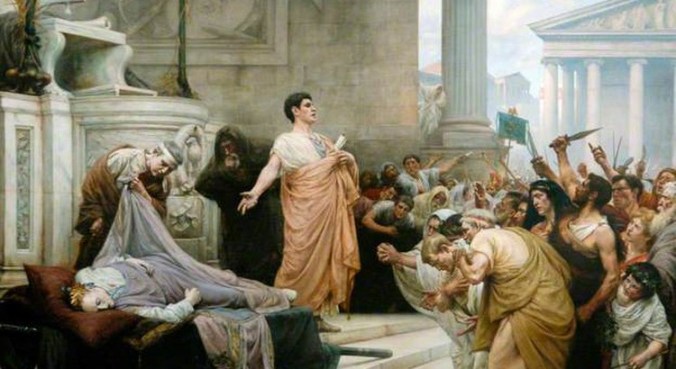
1. “General, I have no division!” At about 2:00 pm, , July 3, 1863, by the little Pennsylvania town of Gettysburg, Robert E. Lee launched his last, desperate and audacious stratagem to win the pivotal battle of the American Civil War, a massed Napoleonic assault on the entrenched Union position on Cemetary Ridge, with a “copse of trees” at its center. The doomed march into artillery and rifle fire, across an open field and over fences, lasted less than an hour. The Union forces suffered 1,500 casualties,, while at least 1,123 Confederates were killed on the battlefield, 4,019 were wounded, and nearly 4000 Rebel soldiers were captured. Lee’s bold stroke had failed spectacularly, and would go down in history as one of the worst military blunders of all time.

That verdict is debatable, but this is not: Pickett’s Charge, as the attack came to be called, holds as many fascinating ethics lessons as any event in American history, and this blog has returned to it for enlightenment time and time again.

There is the matter of the duty to prevent a disaster that you know is going to occur, the whistleblower’s duty, and the theme of Barbara Tuchman’s work, “The March of Folly.” There was Robert E. Lee’s noble and unequivocal acceptance of accountability for the disaster, telling the returning and defeated warriors that “It is all my fault.” The defeat also turned on moral luck, with many unpredictable factors, such as the intervention of a brave and intrepid Union cavalry officer named George Armstrong Custer, who also teaches that our greatest strengths and most deadly flaws are often the same thing, and that the Seven Enabling Virtues can be employed for both good and wrongful objectives.  Pickett’s Charge shows how, as Bill James explained, nature conspires to make us unethical.

Pickett’s Charge also teaches that leadership requires pro-active decision-making, and the willingness to fail, to be excoriated, to be blamed, as an essential element of succeeding. Most of all, perhaps, it illustrates the peril’s of hindsight bias, for without a few random turns of fate, Robert E. Lee’s gamble might have worked.

2. Funny how if you continually denigrate someone based on his color and gender, he will eventually stop respecting you. Stanford University has established a Men and Masculinities Project  that aims to help men develop “healthy and inclusive male identities”—because they obviously don’t have those now.  “We acknowledge that male identity is a social privilege, and the aim for this project is to provide the education and support needed to better the actions of the male community rather than marginalize others,” anti-man-splains Stanford’s gurus. Stanford, of course, is not alone in pushing the ubiquitous progressive narrative that men are toxic, along with whites, making white men the worst of all. Perhaps this might explain why support for Democrats among young white men is falling fast.

Nah, it must be because they are sexist and racist…

3. But..but…settled science! The Economist estimates that as many as 400,000 papers published in supposedly peer-reviewed journals were not peer-reviewed at all. Scientists, scholars and academics are no more trustworthy or alien to unethical conduct than anyone else, but because most of the public (and journalists) don’t  understand what they write about and have to accept what they claim on faith, they are presumed to be trustworthy.

Think of them as the equivalent of auto mechanics. Continue reading

Sunday Ethics Warm-Up, “Welcome July And Hope It’s Better Than June” Edition [UPDATED]

Happy July!

(On an especially dead weekend on Ethics Alarms. But ethics never sleeps…)

1. But I thought everyone wants open borders! The Harvard-Harris poll on illegal immigration, North Korea, trade and tariffs, and the Russia investigation certainly isn’t reflected in the news reports. But then, we can’t trust polls, and we certainly can’t trust Harvard.

I suppose the theory behind yesterday’s protests is that the squeaky, angry wheel gets the insane national policy. My guess is that this particularly squeaky, angry wheel  gets a Republican Congress.

2. Nah, there’s no mainstream media bias! (Cont.)  Yesterday’s New York Times op-ed page managed to contain two of the more outrageous anti-Trump screed of recent vintage. One, by Dave Eggers, attacks “the cultural vacuum in the White House.” I suggest reading this one as a template for anti-Trump propaganda, and the kind of dishonesty underlying so much of it.  He begins,

Since his inauguration in January 2017, there have been no official concerts at the White House (the Reagans had one every few weeks). No poetry readings (the Obamas regularly celebrated young poets). The Carters began a televised series, “In Performance at the White House,” which last aired in 2016, where artists as varied as Mikhail Baryshnikov and Patricia McBride performed in the East Room. The Clintons continued the series with Aretha Franklin and B. B. King, Alison Krauss and Linda Ronstadt.

But aside from occasional performances by “The President’s Own” United States Marine Band, the White House is now virtually free of music. Never have we had a president not just indifferent to the arts, but actively oppositional to artists. Mr. Trump disparaged the play “Hamilton” and a few weeks later attacked Meryl Streep.

Normally, this is where I’d quit reading—when the writer deliberately distorts the facts and employs deceit to make his case. The President disparaged the cast of “Hamilton,” not the show itself, after its performers unethically ambushed Vice President Mike Pence, who was then only another audience member, and should have been respected as one. I have launched (let’s see) three theater companies and two professional performing groups, and I disparaged that cast as well. Meryl Streep, the well-known pal of Harvey Weinstien, went on national television and gratuitously insulted the President, who does not turn the other cheek. He didn’t  attack Streep because she is an artist. He attacked her for being a grandstanding partisan shill.

He engages in this kind of deceit throughout, such as when he writes, in conclusion,

“Admittedly, at a time when Mr. Trump’s policies have forcibly separated children from their asylum-seeking parents — taking the most vulnerable children from the most vulnerable adults — the White House’s attitude toward the arts seems relatively unimportant. But with art comes empathy. It allows us to look through someone else’s eyes and know their strivings and struggles. It expands the moral imagination and makes it impossible to accept the dehumanization of others. When we are without art, we are a diminished people — myopic, unlearned and cruel.”

Funny: art hasn’t made Eggers less dishonest and deceitful. The illegal immigrants at the border were not “asylum-seeking,” because they didn’t follow the procedures for seeking asylum. They were apprehended foreign citizens trying to sneak into our country and claiming that they were seeking asylum to hamstring border enforcement,  and were using their children as human shields, placing the Trump administration into the Catch-22 of either waiving the laws or giving open-borders activists a club to beat it with—as the Times knows, since it has explained this dilemma itself. To attribute  pure law enforcement decisions to the dearth of piano and cello concerts in the White House is forced even by the Times’ standards. Mostly Eggers is just revealing the classist snobbery underlying much of the elitist attacks on President Trump.

As an artist, and someone who has worked in the arts and indeed would have made it my career if it were financially feasible, I could not care less how many concerts a President hosts, or how many artists he fetes. I want him to do his job, and I don’t particularly care to be paying for his glitterati  nights, either.

A President’s taste in art and culture doesn’t affect the public one whit. I don’t think I would pay a dime to hear any of President Obama’s hip-hop artists or rappers. Meanwhile, Clinton having “Aretha Franklin and B. B. King, Alison Krauss and Linda Ronstadt” at the White House didn’t make him empathetic enough not to exploit Monica Lewinsky. Jack Kennedy was a  stone-cold sociopath: what did he learn from dining with “Arthur Miller, Tennessee Williams, Robert Lowell, Geraldine Page and George Balanchine”?

Hitler loved fine culture so much he had his Nazis steal thousands upon thousands of invaluable works of art across Europe, because he wanted a new explosion of creativity among the German people. Boy, if that made the Germans less “cruel,” imagine what they might have been like without their art!

And Nixon played the piano! Continue reading