Voter IDs And The “Don’t Lock The Barn Door Because The Horse Hasn’t Escaped Yet” Argument

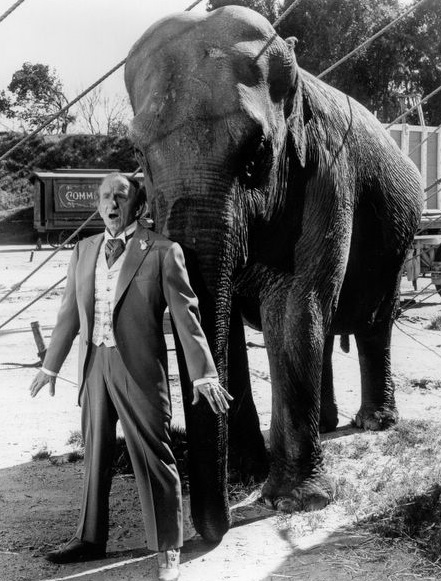
horse-in-barn-door

There are some political and partisan controversies in which I just cannot comprehend, from an ethical perspective, why there is any serious disagreement. Illegal immigration is one of them. Of course we need to control immigration; of course it is madness to encourage illegal immigrants to enter the country; and of course we have to enforce our laws. The arguments against these obvious and undeniable facts are entirely based on rationalizations, emotion, cynical political strategies and group loyalties. The advocates for illegal immigrants have  one valid argument that only applies to those who currently live here: it’s too late and too difficult to get rid of them now. I agree, but that doesn’t mean it is responsible to keep adding to the problem.

Voter identification requirements is another one of those debates. Of course it makes sense to protect the integrity of elections by requiring valid IDs. The last time the Supreme Court visited the issue, an ideologically-mixed court found a voter ID requirement reasonable, necessary and constitutional. Writing for the 6-3 majority in 2008, Justice Stevens (who in retirement has become something of a progressive icon), wrote,

“The relevant burdens here are those imposed on eligible voters who lack photo identification cards that comply with [the Indiana law.] Because Indiana’s cards are free, the inconvenience of going to the Bureau of Motor Vehicles, gathering required documents, and posing for a photograph does not qualify as a substantial burden on most voters’ right to vote, or represent a significant increase over the usual burdens of voting. The severity of the somewhat heavier burden that may be placed on a limited number of persons—e.g., elderly persons born out-of-state, who may have difficulty obtaining a birth certificate—is mitigated by the fact that eligible voters without photo identification may cast provisional ballots that will be counted if they execute the required affidavit at the circuit court clerk’s office. Even assuming that the burden may not be justified as to a few voters, that conclusion is by no means sufficient to establish petitioners’ right to the relief they seek.”

Of course.  Our government is entirely dependent on elections. Nobody questions the reasonableness of requiring IDs to buy liquor, open a bank account, rent a car or check into a hotel, yet we’re going to rely on the honor system for our elections? The idea is madness, though, to be fair, two current members of the Court, Justice Ginsberg and Breyer,  argued that avoiding “disparate impact” justified allowing a gaping vulnerability in the integrity of elections to go unaddressed. Breyer wrote:

“Indiana’s statute requires registered voters to present photo identification at the polls. It imposes a burden upon some voters, but it does so in order to prevent fraud, to build confidence in the voting system, and thereby to maintain the integrity of the voting process. In determining whether this statute violates the Federal Constitution, I would balance the voting-related interests that the statute affects, asking “whether the statute burdens any one such interest in a manner out of proportion to the statute’s salutary effects upon the others (perhaps, but not necessarily, because of the existence of a clearly superior, less restrictive alternative)…”

Justice Breyer concluded that the alleged “burden” to some groups outweighed the integrity of the democratic system, thus embodying the current delusion of modern liberalism: race is more important that anything else, especially when that race is a reliable and uncritical source of power for Democrats.

It wasn’t until several political and judicial factors changed that the Ginsberg-Breyer rationale became politically weaponized, among them the increasing employment of the dubious “disparate impact” doctrine, the Democratic party strategists’ realization that painting Republicans as racists was an excellent way to get minorities to the polls; the growing tendency of African Americans to automatically vote a straight Democratic ticket regardless of who the candidates were and what they had accomplished; an aggressively political and partisan Justice Department and, yes, the realization that all those illegal immigrants here who are counting on keeping the borders as porous as possible might somehow find ways to vote, that requiring IDs became controversial.

Do some, even many, Republican legislators and conservative pundits promote state voter ID laws because they believe there would be a disparate impact on Democratic voting blocs? Absolutely; I have no doubts whatsoever. Does responsible and necessary legislation become magically irresponsible and unconstitutional because unethical motives merge with the ethical ones in passing it? Again, of course not. It is a principle of ethical analysis discussed here many times: many actions have both ethical and unethical motives, but the ethical nature of the conduct must be judged on its intended purpose, reasonably anticipated results, and effect on society as a whole. In the case of voter identification, the obvious and reasonable approach is to pass legislation to protect the integrity of the system and then seek to mitigate any inequities by separate means. In an ethical, reasonable system where one party didn’t see itself gaining power by allowing loose enforcement of voting requirements and the other party didn’t similarly see happy side-effect of enforcing them vigorously, this wouldn’t be a partisan issue at all. Of course we should have laws making sure that voters are who they say they are. Of course we should make sure that every citizen has access to such identification.

The current ascendant argument against voter ID laws is articulated by the New York Times in an editorial today titled, The Success of the Voter Fraud Myth.  Continue reading

Unethical Quote Of The Week: President Barack Obama

“If I hear anybody saying their vote does not matter, that it doesn’t matter who we elect — read up on your history. It matters. We’ve got to get people to vote,” Obama said. “I will consider it a personal insult — an insult to my legacy — if this community lets down its guard and fails to activate itself in this election. You want to give me a good sendoff? Go vote.”


President Obama's argument for electing Hillary Clinton...

President Obama’s argument for electing Hillary Clinton…

—-President Barack Obama, addressing the Congressional Black Caucus gala in a speech excoriating Donald Trump and praising Hillary Clinton as the candidate of black America. Obama warned that while his name would not be on the ballot in November, all of the progress that the country has made over the last eight years was on the line. 

Observations: 

1. What progress? This is the Big Lie that has been repeated from the beginning? The greatest progress made in the last eight years has been the stock market, which is not, I assume, the progress the Congressional Black Caucus cares about. Divisions in American society have been exacerbated, and grossly so. Racial trust is at its lowest level in decades. The schools? Higher education? The debt? The nation’s leadership abroad? The Affordable Care Act, which has helped health insurance become less affordable for anyone not receiving government subsidies? Gross incompetence, malfeasance and lack of accountability in one federal department and agency after another: is that progress?  Has there been progress in dealing with the threat of terrorism? Murder rates are up after years of decline. There have been more mass shootings in this administration than in the last three combined. More Americans are on public assistance: is that progress to Obama? A majority of the public thinks the country is off the tracks; public trust in government is at its lowest point in history, far lower than after Watergate. First Amendment, Second Amendment, and Fourth Amendment rights are under assault as never before. Progress?

The question isn’t political, it’s ethical: if there isn’t progress, then Obama’s statement is a lie. By his own benchmarks when he ran for office, the major one being governing as neither white or black, liberal or conservative, but for the welfare of the entire nation, he has failed disastrously, and the signs are everywhere. No, his spinners don’t get to argue that there would have been progress if the evil Republicans in Congress hadn’t foiled Obama (in part because he hasn’t the political skills to negotiate or the political courage to compromise), because Obama said there IS progress. Continue reading

Ethics Heroes: American Journalists. Finally.

"Wait, I didn't hear you say, 'Thank-you, sir, may I have another!"

“Wait, I didn’t hear you say, ‘Thank-you, sir, may I have another!”

It is heartening, I suppose, that the subjugation of independent journalism to the Democratic party and its leadership is not yet total, and that there are still limits to how much toadying and boot-licking the once-principled  professional will tolerate.

Incredibly, White House spokesperson Josh Earnest wrote a letter to the New York Times complaining that the  paper “did not acknowledge the important and unprecedented steps that the Obama administration has taken to fulfill the president’s promise to lead the most transparent White House in history.” He concluded, “If President Obama’s government transparency effort is not even noted by The Times’s media columnist, then why would future presidential candidates make it a priority?”

This required breath-taking gall. Indeed, journalists and others do remember the President’s transparency pledge, which he has breached at every turn. Indeed, the lack of transparency in the administration has been a topic of discussion, complaint and anger for nearly eight years. It is especially bold for Earnest to make such an absurd claim—and indignantly!— as the President stumps for his former Secretary of State, who risked national security and breached protocol by employing a private server in order to avoid Freedom of Information Act access to her communications.

Assessments of journalists across the political spectrum, who can agree on little else, agree on this: Barack Obama’s administration is among the least open and transparent in history, and perhaps the least. A sample demonstrates the fact: CNN, The Atlantic, The Daily Caller, Democracy Now, Truth Revolt, Associated Press, The Washington Post, The National Journal’s Ron Fournier, the Wall Street Journal, and too many others to list.

How could Earnest (which is to say, his boss) even attempt to squeeze a statement from the press that would be the exact opposite of the truth, and have the chutzpah to  demand that it be in the form of praise? The answer should be obvious: the President has no reason to respect the news media, which has been incompetent, timid, fearful and compliant with Administration propaganda and spin from the start.

In addition, a theme of this administration has been to employ Orwellian interpretations of the administration’s performance at every turn, usually with media assistance. Failures are successes, marginal improvements are miraculous victories. An epic decline in racial trust and comity qualifies as improved race relations.  An irresponsible deal with a rogue state determined to fry Israel makes the world safer. A doubled national debt shows progress in fiscal management. We are winning the war against terrorism, and Bowe Bergdahl was a military hero. Day is night and white is black. No wonder Earnest felt that a President who has consistently defied his transparency promise could  get away with claiming that he had kept it, and could command applause.

But eventually even the most lowly worms can turn if you abuse them enough, and the journalists, to their credit, decided this was one filthy boot they would not lick clean while crying out on cue, “YUM YUM!” In a letter sent to Earnest (and copied to the President) the Society of Professional Journalists and a coalition of 40 groups set the record straight: Continue reading

Ethics Quote Of The Month: Hillary’s “Basket Of Deplorables”

basket-of-deplorables

“You know, to just be grossly generalistic, you could put half of Trump’s supporters into what I call the basket of deplorables. Right? The racist, sexist, homophobic, xenophobic, Islamophobic — you name it. And unfortunately there are people like that. And he has lifted them up. He has given voice to their websites that used to only have 11,000 people — now 11 million. He tweets and retweets their offensive, hateful, mean-spirited rhetoric. Now some of those folks — they are irredeemable, but thankfully they are not America.”

—-Democratic nominee Hillary Clinton during a fundraiser—just as Mitt Romney’s infamous “47%”  comment in 2012 was made at a fundraiser!—the LGBT for Hillary Gala in New York City on Sept. 9, 2016.

One of the consistent features of both Clintons is that they engage in so much problematic conduct that often one incident worthy of serious criticism will be knocked out of the headlines by another.

Hillary’s 9/11 “over-heating, well, dehydration, well, ok, since it’s on video, she has pneumonia” fiasco,  demonstrating that suspicions that she and her campaign aren’t being truthful about the state of her health are not “conspiracy theories,” effectively muted discussion about her “basket of deplorables” classic, complete with an imaginary word, “generalistic,” that if it had been uttered by George W. Bush would have been mocked far and wide.

I categorize this as an ethics quote rather than an unethical quote, because it is both ethical and unethical simultaneously. (The Clinton’\s seldom say things that aren’t adaptable to multiple interpretations; this allows them to leap from one to the other, like they are ice floes, when one meaning is justly condemned or found to be false.)

On the ethical side, it is completely fair and accurate to diagnose Trump supporters as deplorable, defined as “lamentable, or deserving censure or contempt.” This doesn’t apply to those conflicted potential voters who have reluctantly decided that in the terrible binary choice Americans have had shoved down their civic gullets by the two incompetent political parties, Donald Trump is preferable to Hillary Clinton. That is not the most responsible choice—it can’t ever be responsible to give such power to an unstable and ignorant boor—but it is an excusable mistake, given the horrible dilemma.

Supporting Trump, however, as in actively wanting him to become President, is as good a definition of “deplorable” as I can imagine. In this respect, Hillary was too generous. 100%, not merely 50%, of Trump’s supporters are deplorable. They lack the values, civic responsibility, understanding of their own nation and its history, or sufficient intelligence to be competent voters.

You know: deplorable. Continue reading

“Flipping A Man’s Meat” Ethics

Is this what the culture has accomplished with its hard won respect for and acceptance of gay Americans? Really?

Neil Patrick Harris has done a series of quirky, benign spots  for Heineken Light, perhaps to lure us into a false sense of ease.  For in his most recent commercial,  Harris notes, as he stands next to a man grilling barbecue, that Heineken Light makes it OK “to flip another man’s meat.”

This is another in a long and growing list of TV ads based entirely on the assumption that adults think it’s hilarious to suggest obscene or vulgar innuendos. I’ve written about this phenomenon before, which is merely the normalization of crudeness in our discourse, nothing more, but nothing less either. So now we have gay sexual innuendo  by an openly gay actor to advertise beer. Isn’t that great? Boy, Heineken must be so proud.

The grill guy replies to the puckish—or flirtations?—former-Doogie that no man can do that, but late,  Harris asks him: “Can I flip your meat?”

Wow, that’s just hilarious! Why is it hilarious? Because it’s naughty? Because it’s daring? It’s certainly not clever, and if virtually defines the word “gratuitous.” It it a challenge to viewers, daring them to question the taste of joking about “flipping a man’s meat” when they routinely accept gross commercials with vulgar and gratuitous—you know, like this —heterosexual double entendres?  Is the assumption that gays will giggle, guffaw and slap each other on the back when they see this! “Good own, Neil!” Really? How insulting.

I can’t wait for the masturbation double-entendres in credit card and bank commercials. Continue reading

Thanks For The Memories, Greta Friedman: This Encore’s For You!

kiss

I was puzzled about why an old 2012 Ethics Alarms post was suddenly getting heavy traffic today, and until I read that GretaFriedman had died. She was the nurse famously kissed by a never-identified celebrating sailor on V-J Day, frozen in history forever thanks to a now iconic  Life magazine photograph.  I had written about Greta, that moment, and the determination of a lot of tunnel-visioned feminists and sexual-terrorists to turn what was a beautiful thing into something ugly and sinister in the distorted world they see through their shit-tinted glasses. The post was called “The Times Square Kiss, and Feminist Blogs’ Fanatic Crime Against Joy.”

I’m always a bit nervous when I go back and read old posts I’ve forgotten about; I’m afraid I won’t agree with them, but thankfully, I usually do. I do in this case. In fact, I really like the post, and am proud of it. On the theory that most current Ethics Alarms readers haven’t seen it before, I’m reposting today, in honor of Greta:

The blog posts at issue make me angry. Usually it is silly to be angry about mere opinions, I know. However, the opinion registered by “Lori” on the blog Feministing, taking her cue from another feminist blogger, is a symptom, a symptom of the scourge of pernicious, political-correctness zealots, who refuse to recognize the important distinctions between malice and human beings being human, and seek to wipe out that distinction by distortion, sophistry, historical revisionism and bullying. Continue reading

The Cos Plays The Race Card

race_cardBill Cosby’s lawyer, Brian McMonagle,  issued a statement this week claiming that the comedy legend’s legal problems are the result of racial bias and prejudice. He really did.

“Mr. Cosby is no stranger to discrimination and racial hatred, and throughout his career Mr. Cosby has always used his voice and his celebrity to highlight the commonalities and has portrayed the differences that are not negative — no matter the race, gender and religion of a person. Yet over the last 14 months, Mr. Cosby and those who have supported him have been ignored while lawyers like Gloria Allred hold press conferences to accuse him of crimes for unwitnessed events that allegedly occurred almost a half-century earlier. The time has come to shine a spotlight on the trampling of Mr. Cosby’s civil rights. Gloria Allred apparently loves the media spotlight more than she cares about justice. She calls herself a civil rights attorney, but her campaign against Mr. Cosby builds on racial bias and prejudice that can pollute the court of public opinion. And when the media repeats her accusations — with no evidence, no trial and no jury — we are moved backwards as a country and away from the America that our civil rights leaders sacrificed so much to create.”

I don’t blame McMonagle, and nobody else should. He’s doing what he can to defend his client, who looks about as guilty as a man can. Nor did he say this without the approval of his client. Lawyers discuss their strategy with clients: if Cosby didn’t want to sink this low and look this desperate, he didn’t have to. Then I would have been able to salvage a slim iota of respect for the man.

It isn’t worth much time or thought discussing how ridiculous this accusation is. Bill Cosby? White America’s darling? The Jello pudding man, the charming interviewer of kids, the educator who preached to black families that they need to raise their children to reject hip-hop culture? Whites made Cosby rich, powerful, and once, the most popular, respected and influential celebrity of any color in the nation. And suddenly they turned on him when they realized he was black?

The claim is an insult to African-Americans who really do face bias and discrimination. More important, however, it is so depressing. Is there any prominent African-American in the the public eye who is capable of not playing the race card when he or she is in trouble? I held out hope that Bill Cosby, as loathsome as we now know he is, might be an exception if only because the claim in his case is so, so absurd. Let’s see, which is the reason for Bill’s fall: a hundred women of all races coming forward to detail almost identical accounts of the comedian drugging and sexually assaulting them, or racial prejudice? Gee, let me think; this is a tough one. Never mind, though: apparently this alibi is so ingrained in black culture, so beaten into the brains of American blacks, so exploited by race hucksters and so much a foundation of the left’s politics that it exists as a permanent “In case of a crisis, break glass” last resort that is an African-American’s secret weapon—after all, when whites screw up, they can’t claim anti-white bias, though trends in government, justice and academia may be changing that.

If Roger Ailes were black, he would have attributed his fall at Fox to racial prejudice.

Clarence Thomas played the race card. So has Obama. O.J. Barry Bonds. Herman Cain. Susan Rice. Eric Holder. Kanye West, though in his case it is dwarfed by his other outrages. This is kind of an anti-matter version of “white privilege”: while whites, we are told, are blissfully unaware of all the ways their success, if they have any, is based on systemic advantages in the culture, blacks are immersed in the idea that they are being persecuted because of race and led by role models and leaders to develop a self-image that can render them incapable of ever knowing when the problem might be their own conduct rather than oppression by others. Continue reading

Presenting Three New Rationalizations: “Narcissist Ethics,” “The Dead Horse-Beater’s Dodge,” And “The Doomsday License”

the end of the world

I knew this was going to happen. Even as the Ethics Alarms Rationalizations list approached 70 self-serving lies in all, the cracks and crevices between them were being explored, mined and exploited. All three of today’s new additions turned up in a single, ill-begotten comment to a recent pots, and while I immediately recognized them as rationalizations, I also failed to find an exact fit for any of them on the list. It is by such a process that all rules and laws inevitably expand into near uselessness, because humans are so adept at finding loopholes.

I’m going to have to be vigilant lest the rationalizations become so thinly sliced that the list is too burdensome to be useful: some of the current entries have been criticized as redundant already. Nonetheless, I believe the three being unveiled now cover rationalization territory worth mapping. Here they are:

Rationalization 8A. The Dead Horse-Beater’s Dodge, or “This can’t make things any worse”

Rationalization 8, The Trivial Trap  or “No harm no foul!”, relies on #3. Consequentialism, or  “It Worked Out for the Best” for its dubious logic, but is less demanding. #3 posits that unethical conduct that ends up having beneficial or desirable results has been purged of its unethical nature. #8 argues for an even more lenient standard, holding that as long as the unethical conduct—usually a lie—has no negative effects, it can’t be wrong. The Dead Horse-Beater’s Dodge, carries things even further with the theory that as long as a situation can’t be made worse by wrongful conduct, the conduct itself can’t be wrongful. The most famous invocation of #8A of recent vintage is Hillary Clinton’s exasperated question during the Benghazi hearings, “At this point, what difference does it make?” Her argument: a lack of candor now about the fatal events in Benghazi can’t bring back the dead, so why harp on it?

In ethics, wrongful conduct is usually identifiable by its nature and intent. “This can’t make things any worse” is an assumption that individuals seldom can make with guaranteed accuracy, and it usually presumes consent from the supposedly bottom-lying individual or organization that the unethical act is done to. Get the informed consent, 8A devotees, and then we’ll talk.

No, looters, the fact that a business is a smoldering wreck does not make stealing even damaged merchandise from it “okay.” No, pulling the plug on a comatose patient without his previous consent or that of someone he has authorize to give it is still wrong, both legally and ethically. In most cases, the presumption that conduct unethical in its form and substance will not “make things any worse” is something about which the rationalizing wrong-doer can’t possibly be certain. That’s what makes it a rationalization: it is a lie we tell to ourselves.

Rationalization 50A.  Narcissist Ethics , or “I don’t care” Continue reading

Ethics Observations On The Financial Massacre Of The Aurora Massacre Plaintiffs

James Holmes’s 2012 attack on the Century Aurora 16 movie theater showing “The Dark Knight Rises” killed 12 people and wounded 70 others. Many of the survivors and relatives of those killed sued Cinemark, the theater’s owner, in state and federal court, arguing that lax security was the cause of the attack. Cinemark’s defense was that the shooting was unforeseeable. Two suits went forward, one in state court and one in federal court, with different plaintiffs. Cinemark prevailed in both. After the recent jury verdict for Cinemark in the state court case this summer, the company had sought nearly $700,000 from the victims under the “loser pays” Colorado law, which directs that the winning side in a civil case is entitled to recover its legal costs from the losing side. This is the predominant system in England and Europe. The litigation costs of Cinemark in the federal case are likely to be more than $700,000, maybe a lot more.

What’s going on here (the best question to begin any ethics inquiry)? Well…

1. The law suits were a terrible idea. This was the result, in part, of the increasingly popular ideological virus in our society that is slowly reprogramming previously functioning brains to believe that nobody should have to pay for their misfortunes, and that somebody with deeper pocket and more resources should always be obligated to pay instead. This is increasingly a staple of leftist thought: the government, insurance companies, corporations, people with more money, all of them should be potentially on the hook when misfortune strikes others, because that’s fair.

2. It’s not fair, though.  It is profoundly un-American and unethical.

If those parties have caused the damage, or had the power and responsibility to mitigate it, or promised to pay for it, then there are ethical arguments to support them paying some or all of the expenses. But if something terrible happens to you, those people should have no more obligation to be accountable for your harm than you should have responsibility for taking care of them. That’s not the message sent by the culture though. Lawyers love the message that if you are harmed, somebody else can be found to ease your pain. They love it, because they can share in the bounty if a lawsuit seeking damages prevails, and this attitude guarantees more lawsuits. Continue reading

Pundit Malpractice: NBC Sports Defends Colin Kaepernick By Misrepresenting Jackie Robinson

What does Jackie Robinson's autobiography have to do with Colin Kaepernick, you ask? Well...nothing at all, really.

What does Jackie Robinson’s autobiography have to do with Colin Kaepernick, you ask? Well…nothing at all, really.

It also represents a rationalization for unethical conduct that is not currently represented on the Ethics Alarms Rationalization List.

Someone sent Craig this quote, from Jackie Robinson’s  autobiography,  as baseball’s color-line breaker thought back to the first game of the 1947 World Series:

“There I was, the black grandson of a slave, the son of a black sharecropper, part of a historic occasion, a symbolic hero to my people. The air was sparkling. The sunlight was warm. The band struck up the national anthem. The flag billowed in the wind. It should have been a glorious moment for me as the stirring words of the national anthem poured from the stands. Perhaps, it was, but then again, perhaps, the anthem could be called the theme song for a drama called The Noble Experiment. Today, as I look back on that opening game of my first world series, I must tell you that it was Mr. Rickey’s drama and that I was only a principal actor. As I write this twenty years later, I cannot stand and sing the anthem. I cannot salute the flag; I know that I am a black man in a white world. In 1972, in 1947, at my birth in 1919, I know that I never had it made.”

This naturally made Craig, whose mind sometimes cannot help itself from shifting into progressive cant autopilot, think about Colin Kaepernick’s incoherent grandsitting as he refuses to stand on the field with his team for the National Anthem. He wrote,

“Colin Kaepernick is not Jackie Robinson and America in 2016 is not the same as America in 1919, 1947 or 1972. But it does not take one of Jackie Robinson’s stature or experience to see and take issue with injustice and inequality which manifestly still exists…the First Amendment gives us just as much right to criticize Kaepernick as it gives him a right to protest in the manner in which he chooses. But if and when we do, we should not consider his case in a vacuum or criticize him as some singular or radical actor. Because some other people — people who have been elevated to a level which has largely immunized them from criticism — felt and feel the same way he does. It’s worth asking yourself, if you take issue, whether you take issue with the message or the messenger and why. Such inquiries might complicate one’s feelings on the matter, but they’re quite illuminative as well.”

Let’s begin with the fact that there is nothing similar about Jackie Robinson and the 49ers quarterback, except their race and the broad occupation of “sports” that they shared. Continue reading