Want A Perfect Example Of “Deceit”? Here You Go:

"Believe me, once you get the hang of deceit, you'll wonder how you ever got through a day without it!"

“Believe me, once you get the hang of deceit, you’ll wonder how you ever got through a day without it!”

A substantial number of people don’t understand what “deceit” is, or think that what constitutes deceit isn’t a lie. Deceit, which I used to joke was the official language of Washington, D.C. until it was changed officially to Blatant Mendacity, is when a statement is literally true, but stated in such a way or in a context intended to make the reader or listener believe something that is not true at all. The fact that the statement may have been factual in a pure sense does not diminish its unethical character as a lie. Its intent is to deceive. It is a lie, just a particularly insidious one, aimed at the trusting, unwary, undiscerning and gullible.

I am always looking for a good example of this peculiar form of deception, and they don’t come much better than this.

Drexel University professor Robert Brulle performed a study he eventually called “Institutionalizing delay: foundation funding and the creation of U.S. climate change counter-movement organizations,”  and it was subsequently published  in Climatic Change. Brulle identified 91 organizations that oppose anti-climate change policies, and added up the annual operating budgets of these groups, many of which are active in many issues and that devote a small percentage of their funding to climate change matters at all. He then characterized the resulting total of about $900 million per year from 2003 to 2010 as representing the resources dedicated to blocking the regulation of greenhouse gas production. Brulle’s  study also treats foundation grants to these organizations if every dollar given is earmarked for climate policy opposition. Taking the hand-off from the study’s framing, The Guardian headlined its findings, “Conservative groups spend up to $1bn a year to fight action on climate change.” Notice the “up to,” which would apply if every cent given to organizations like the American Enterprise Institute, The Reason Foundation, The Cato Institute, The Heritage Foundation, the Hoover Institute, the Hudson Institute and many others were only expended or intended to be spent on anti-climate change position papers and advocacy. This isn’t just a gross exaggeration: it’s a lie, intended to be misleading. Continue reading

There May Not Be A War On Christmas, But Whatever It Is, Christmas Is Losing

??????????????????????????????????????????

I don’t think it’s my imagination, or that I’m watching too much Bill O’Reilly (since I almost never watch Bill O’Reilly), but it became very clear to me this year that Christmas, as a society-wide cultural convergence in America, is losing its grip.

The reasons are varied and many, and to pick out any in particular one would betray my own biases. But I am a fairly obsessive observer of the popular culture, and there was markedly less Christmas this year in every way. Religious references to the Christmas story—the manger, the Wise Men, the Star of Bethlehem and the rest, are almost invisible outside of church. On television, that part of Christmas is taboo, apparently; on radio too, traditional carols, which once were standard fare, whether sung by pop singers like Bing Crosby or classical artists, are mostly relegated to the classical music channels. On the other stations, there was less Christmas music than I can ever recall, and perhaps because of that, I was very conscious of how dated virtually all of it is. The last non-frivolous Christmas standard to enter the playlist was 1962’s “Do You Hear What I Hear?, ” and the other newer ones  are either songs about romance using Christmas as a backdrop, anti-Christmas novelties (“Grandma Got Run Over By  A Reindeer”), or just lousy.

Meanwhile, listening to the parade of pop yule classics is an exercise in morbidity. Almost all of them are sung by dead artists that no one under the age of thirty (or forty?) could have ever heard or seen perform live. Bing, Dean Martin, Karen Carpenter, Andy Williams, Burl Ives, Gene Autry, Judy Garland, Nat King Cole, Mel Torme, Frank Sinatra—Andy just left us, but most of the rest, with the lingering exceptions of Johnny Mathis and Harry Belafonte, are not merely dead, but long dead, like Marley. No one has taken their place in this genre, and that means that it’s a dying genre.

It is obvious that Christmas movies are being run on television less than ever before, too. It was once impossible to avoid encountering several versions of “A Christmas Carol,” and sometimes the same one would keep popping up, annoyingly so. Not any more. “It’s A Wonderful Life” had its annual showing, and I stumbled upon “White Christmas” a couple of times, but the pickings were slim.   The lousy Richard Attenborough “Miracle on 34th Street’ turned up; Turner Classics ran through most of the old Christmas classics once, but you had to look for them. There haven’t been any new Christmas movies from Hollywood that have made the grade for a very long time: with the exception of the first “The Santa Clause,” what Hollywood has been churning out are more or less bitter comedies (“Christmas With The Kranks,” “Jingle All The Way,” “Bad Santa,” “Christmas Vacation”–even the “Home Alone” films) that portray Christmas as suburban hell.

Then there are the wan or missing town hall and town center Christmas displays (Gotta watch out for those law suits), the tasteless Christmas TV commercials (the men in boxers jingling their “bells” is gross, in my opinion), and the hesitation you hear in strangers’ voices as they try to guess whether “Merry Christmas” will offend you or not.  I used to encounter carolers several times every Christmas, in shopping malls if nowhere else. The malls are disappearing, and kids don’t go caroling any more. They don’t know carols any more, because if their school teaches them one (because it’s a lovely song) some fanatic will raise a stink and claim its religious indoctrination.  Children, in a more innocent, less cynical age, were allowed to believe in Santa Claus well past the age of 5. (I was 26 before I knew the truth.) No longer. Christmas just feels half-hearted, uncertain, unenthusiastic now. Forced. Dying.

It was a season culminating in a day in which a whole culture, or most of it, engaged in loving deeds, celebrated ethical values, thought the best of their neighbors and species, and tried to make each other happy and hopeful, and perhaps reverent and whimsical too.  I think it was a healthy phenomenon, and I think we will be the worse for its demise. All of us…even those who have worked so diligently and self-righteously to bring it to this diminished state.

But anyway,

Merry Christmas.

For what it’s worth.

________________________________

Graphic: Stacy Gustafson

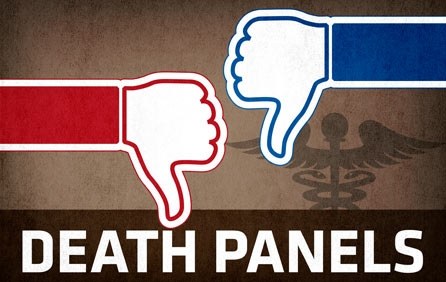
Jahi’s Plight: Why Death Panels Are Inevitable And Necessary If We Are Going To Pay For Each Other’s Health Care

death panels

Even while the Affordable Care Act debacle is mired in other problems, the “death panel” controversy lingers on, as conservatives exploit the public’s visceral reaction against an inevitable result of modern health care cost-sharing, and progressives dishonestly deny and ridicule the reality of that result, because it makes health care reform less attractive.

The case of Jahi McMath is instructive, if anyone bothers to consider its practical and ethical implications. Jahi, 13, underwent a tonsillectomy Dec. 9, and emerged from her post-op recovery legally dead, due to massive swelling in her brain. She was placed on a ventilator, and according to its policy, Children’s Hospital Oakland was preparing to take her off life support when the family strenuously objected. It petitioned a court to keep her technically alive so she could spend Christmas with them. An Alameda County judge Monday ordered hospital officials to keep Jahi on a ventilator until Dec. 30 while an independent neurologist reviews her case. Meanwhile, her mother told CNN and other local media that although she appreciates  the second opinion and court order, she will fight to keep her daughter on life-support as long as possible, saying,

“I’m her mother. I’m going to support her. It’s my job to do it. Any mother would do it. I just want her to have more time. There are so many stories of people waking up in her situation.” Continue reading

Hall of Fame Ethics… Rock and Roll Hall of Fame,That Is

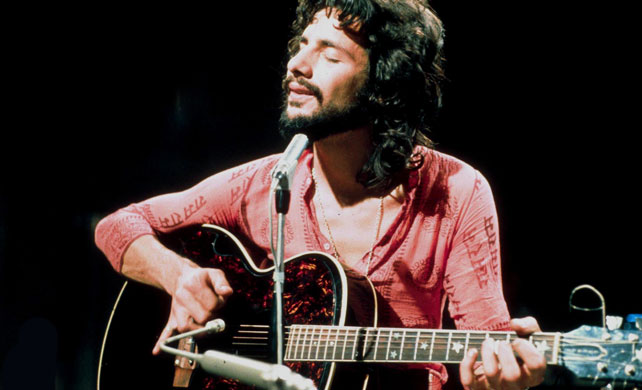
Cat Stevens

Conservative blogress Kathy Shaidle pleaded with voters not to enshrine Yusuf Islam, a.k.a Cat Stevens, into Cleveland’s Rock and Roll Hall of Fame, and then, when they added him anyway, expressed her disgust. Her objections were not based on music criticism (as would be justified with nominees like Yes), nor on Cat’s honor blocking more worthy nominees (like, say, The Zombies). She objects to Yusuf Islam on political and ethical grounds, complaining that during his activist days and perhaps even now, he qualified as a Muslim radical.

It doesn’t matter. Cat Stevens belongs in the Rock and Roll Hall of Fame because of his art, not his character. His character is irrelevant to the reach, influence and value of his art, as are his politics. The Rock and Roll Hall of Fame makes no pretense of making difficult measurements of an artist’s character, unlike the Major League Baseball Hall of Fame in Cooperstown, which has come up on Ethics Alarms frequently. Baseball players are cultural icons and societal heroes, whose symbolic exploits on the field of play evoke and inspire young people as well as the rest of us, embodying positive traits like courage, perseverance, fortitude, sacrifice, team play, loyalty, honor, fairness and honesty. As derided as it is by sportswriters and jaded fans who would like to see both the baseball Hall and its rosters filled with enabled and highly paid cheaters, felons, thugs, miscreants, deadbeat dads, and worse—like those of professional football and basketball—the character clause holds baseball players, at least those who want to be remembered as great ones, to a higher standard. And that higher standard is relevant to the game they play and our appreciation of it.

The character of artists, however, are simply accompanying trivia to the artist’s contributions to society. If there was a character clause in the Crooner’s Hall of Fame, Frank Sinatra and Bing Crosby might be barred from entry, meaning that it would then be the Imitators of Frank Sinatra and Bing Crosby Hall of Fame. For entrance to the Classical Composers Hall of Fame, Mozart and Wagner (and a lot more) would need to buy a ticket. Don’t get me started on the Novelist’s Hall of Fame, or the Hall of Fame for American Playwrights. Beautiful, transcendent, moving and immortal works have issued from ugly, warped, cruel and diseased minds, and it has always been thus, in Rock and Roll as well as every other art form. Picking on Cat Stevens, among all the others, smacks of anti-Muslim bigotry to me. Sure, I hated Cat’s politics; I hated John Lennon’s politics too.

It’s the art, and only the art, that matters.

______________________________

Sources: PJ Media 1, 2

The Unethical Destruction of Justine Sacco

Justine Sacco, victim.

Justine Sacco, victim.

Media executive Justine Sacco tweeted an impulsive, racially provocative joke on the social media site Twitter that a lot of people found offensive, didn’t like, or felt they could justify participating in cyber-bullying as if they found it offensive. As a result, she has lost her job, is being portrayed as a virulent racist across the web,  receiving threats and hate messages from strangers, and has become an international pariah.

It doesn’t matter what the tweet said. It was a tweet–140 characters directed at nobody in particular, that harmed nobody in any way, unlike, say, the tweets by various celebrities trying to direct mobs to where George Zimmerman could be found and beaten. Nobody attacking her knows this woman, what’s in her mind and heart, what she has done in her life or the good works and deeds she may be responsible for. And yet thousands of strangers, many of whom are almost certainly, on balance, less admirable people than Justine Sacco in many ways, have chosen to use her 140 ill-chosen characters as provocation to throw a huge, greasy monkey wrench into the gears of her life. Continue reading

Anti-Smoking Ethics—And A Subversive (But Ethical!) Suggestion

"Sorry, sir, but sort-of-looking-like-you're smoking's not allowed in here, and besides, a phony study will be finding it deadly any day now."

“Sorry, sir, but sort-of-looking-like-you’re smoking’s not allowed in here, and besides, a phony study will be finding it deadly any day now.”

Little noted in the news winds was the fact that a major study reported in the Journal of the National Cancer Institute found “no link between the disease and secondhand smoke.” Oh!  Well, never mind then. The supposed deadly effects of second hand smoke gave hoards of health-policing citizens leave to not only be obnoxious and confrontational–“You have no right to pollute my lungs!”—but also to ban a legal consumer product in public places as well as to stigmatize anyone using the products as selfish sociopaths perpetrating slow-motion serial murder.

The second-hand smoke theory always seemed too convenient to me. Many years ago, I permanently soured my relationship with the head of a large Washington association, a non-smoker (as am I, except that I don’t presume to tell others what legal products to entertain themselves with), by opposing his ban on smoking in meetings and offices (and, eventually, his employees’ own homes) because he thought it was dangerous.  He trumped me by producing a couple of fishy studies that, it appears, were in fact as fishy as I suspected at the time. I would like to see a call for accountability on this: how did data now shown to be completely without factual basis manage to surface, become accepted in the regulatory establishment, and be used to bully smokers for decades?

And if you think this reminds me of the over-hyped scientific “consensus” on global warming and climate change, you are exactly right. Continue reading

Ethics Dunces (“Duck Dynasty” vs Political Correctness Division): Republicans

freedomofspeechLet us be clear: Phil Robertson’s comments about gay Americans in “Gentleman’s Quarterly” were, as matter of fact, profoundly insulting to a large group of citizens who do not deserve to be insulted and have every reason to feel attacked and offended.

That does not mean that the position Phil Robertson holds, which is an unfortunate ancient remnant of traditional religion-based morality that will only be addressed by time, education, patience and dialogue, should be suppressed, declared taboo, or made the basis of job-related sanctions when it is part of the reality of those in his culture, and he is the star of a reality show based on that culture.

Thus the principles of tolerance, diversity, freedom of thought, expression and religious belief can and should be properly defended by raising objections to A&E’s quick capitulation to the pressures of political correctness.

That does not mean that it is appropriate, considerate, reasonable or smart for public officials like Sarah Palin, Ted Cruz and Louisiana Governor Bobby Jindal to declare their support for Robertson himself and his retrograde and destructive beliefs. Calling an entire group of law-abiding Americans “sinners” because one’s religion has chosen to ignore the advances in knowledge of the past century is not the mark of “a great citizen,” to quote Jindal. It is the mark of a sadly misled and ignorant citizen, who nonetheless is representative of another large group of Americans who have the right to express their outmoded views without sanctions even if they are dead, dead wrong. Continue reading

Ethics Quote Of The Day (“Duck Dynasty” vs Political Correctness Division): Reason’s Brian Doherty

“There may have been a good reason why classical tolerance of expression was summed up in the epigram: ‘I disagree with what you say, but will defend to the death your right to say it!’ That has a different feel than: ‘I disagree with what you say, I think you are evil for having said it, I think no one should associate with you and you ought to lose your livelihood, and anyone who doesn’t agree with me about all that is skating on pretty thin ice as well, but hey, I don’t think you should be arrested for it.”

—– Reason Magazine’s Brian Doherty, writing about A&E choosing to punish its reality show star, Phil Robertson, for expressing his religious beliefs about homosexuality in response to a magazine interviewer’s question.

dynasty

Nicely done, Mr. Doherty. Continue reading

A&E’s “Duck Dynasty” Suspension: Reality Show Ethics And Political Correctness

duck-dynasty-gq-

TV’s reality shows, particularly the cable variety, are like 19th Century freak shows. They are guilty pleasures where Americans can go to stare, gawk, snicker, be horrified and repulsed, and often feel superior to the weird mutations of the human species that they see exhibited. The phenomenon doesn’t speak well for the purveyors, the audience or the culture, but the it is popular and profitable.  Yesteryears’s dog-faced boy is today’s Honey Boo-Boo. Viewers aren’t offended by the awful things the stars say and do..they are entertained by them. Sometimes, sadly, they are inspired by them.

The current hot property in the genre is A&E’s “Duck Dynasty,” the saga of Louisiana’s willfully odd Robertson clan, who have become millionaires through their invention of effective duck calls, wear long beards as trademarks and are proud, God-fearing Christian conservatives of the most primitive variety. Their “Deliverance” lifestyle and profoundly counter-Obama Era attitudes are part of the  Robertsons’ “entertainment” package, just as  the late Anna Nicole Smith getting carried through her fat, drunk and stupid days by her greedy sycophants and enablers was part of hers. This is reality TV, Americans! Be proud.

“Duck Dynasty’s” patriarch Phil, however, made the mistake of stepping out of the bayou for an interview with Gentleman’s Quarterly, in which he held forth on, among other topics, his views on homosexuality. Lacking Rick Santorum’s subtle touch, Phil declared:

“It seems like, to me, a vagina—as a man—would be more desirable than a man’s anus. That’s just me. I’m just thinking: There’s more there! She’s got more to offer. I mean, come on, dudes! You know what I’m saying? But hey, sin: It’s not logical, my man. It’s just not logical.”

and on sin…

“Start with homosexual behavior and just morph out from there…Bestiality, sleeping around with this woman and that woman and that woman and those men…Don’t be deceived. Neither the adulterers, the idolaters, the male prostitutes, the homosexual offenders, the greedy, the drunkards, the slanderers, the swindlers — they won’t inherit the kingdom of God. Don’t deceive yourself. It’s not right.”

Horrified that an unsophisticated, ignorant Bible-obeying Christian conservative heterosexual would dare to express the typical views of an unsophisticated, ignorant Bible-obeying Christian conservative heterosexual, GLAAD and other groups attacked Robertson and  pressured A&E to punish him for being exactly what A&E hires him to be. Setting some kind or record for absurd dudgeon, Chad Griffin, the president of the Human Rights Group proclaimed,

“Phil Robertson’s remarks are not consistent with the values of our faith communities or the scientific findings of leading medical organizations. We know that being gay is not a choice someone makes, and that to suggest otherwise can be incredibly harmful. We also know that Americans of faith follow the Golden Rule — treating others with the respect and dignity you’d wish to be treated with. As a role model on a show that attracts millions of viewers, Phil Robertson has a responsibility to set a positive example for young Americans — not shame and ridicule them because of who they are. The A+E Network should take immediate action to condemn Phil Robertson’s remarks and make clear they don’t support his views.”

I know this disrupts the thrust of this post, but I can’t led it pass. Allow me to deconstruct Griffin’s absurd statement, which is—I’m sorry, but sometimes only one word will do—crap: Continue reading

Gallup’s Honesty And Ethics Ratings Of Occupations

shattered-trustThe annual Gallup survey is out. You can read Gallup’s commentary here, and see the details here. (you’ll need an Adobe reader.)

Gallup’s big announcement this time is that the Clergy has declined in perceived trustworthiness since 2012, but that’s a stretch: the percentage of respondents who rated the men and women of God as “high” or “very high” in honesty and ethics declined 5% from last year, but all of the most trusted professions had similar drop-offs, including the perennial winners, Nurses (down 3 points) and Pharmacists (down 5).  The Clergy still is among the most trusted professions, and that’s especially impressive since almost half the country doesn’t believe the basic premise of their calling. I think the Gallup reasonably figured that trumpeting that the clergy’s ratings had hit a new low would garner more publicity than “Car mechanics trusted more now than ever!”, which the data also would support. (They still aren’t trusted much.)

The real surprise is how little any of the professions have changed their public standing. TV reporters, near the bottom, are still as trusted as they were in 1998. Members of Congress, held in even lower esteem, are about where they were in 2009. Lawyers, mirabile dictu, are the most trusted since this survey began, which is not to say they are trusted—they are tied with TV Reporters. The only real head-scratchers are that Ad Executives are at an all-time high—why?—and that lobbyists score so much lower than the people who tell them what to do, Business Executives, and the people they corrupt, Members of Congress. I think it’s because most people have no idea what lobbyists do, but it sounds shady. Continue reading