“It’s A Cook Book!”

Nobody listens to me...

Nobody listens to me…

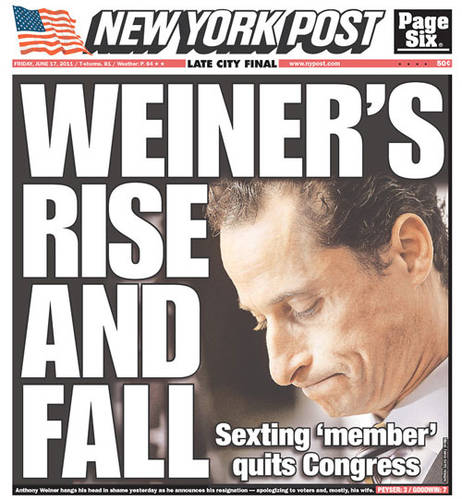
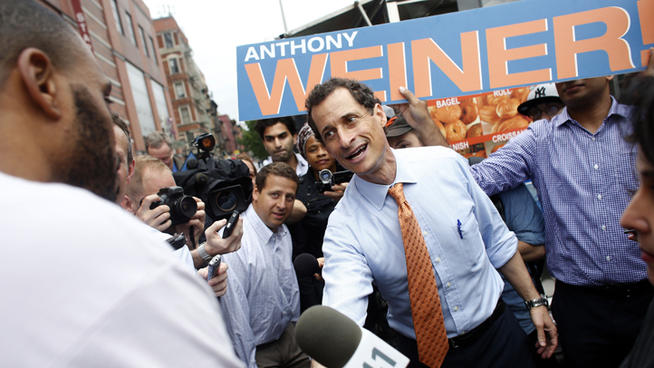
The issues at the core of the Anthony Weiner debacle—which is not the conduct of the ex-Congressman/absurd NYC mayoral candidate/sick puppy, but the fact that so many, like Dan Savage, Huma Abedin (Weiner’s wife, Hillary’s apprentice, carrier of the Clintonian ethisc virus),  Andrew Sullivan, and apparently 16% of New York Democrats still argue that his conduct doesn’t disqualify him from elected office—-are ones which I am especially passionate about, because they are the very issues that launched this blog’s predecessor, the Ethics Scoreboard:

1. There is no division between private unethical conduct and public unethical conduct. It is a false construct designed to assist scoundrels in getting elected. Private conduct is as reliable an indicator of trustworthiness as other prior conduct.

2. Leaders in a democracy should be held to an exemplary level of conduct, not the average or common conduct of those they seek to lead.

3. Some instances of unethical conduct have “signature significance“for the individual involved, meaning that contrary to the common rationalization that “anyone can make a mistake,” there are some things that ethical people never would do even once, and thus the fact that an individual does do it is persuasive evidence that they are generally untrustworthy.

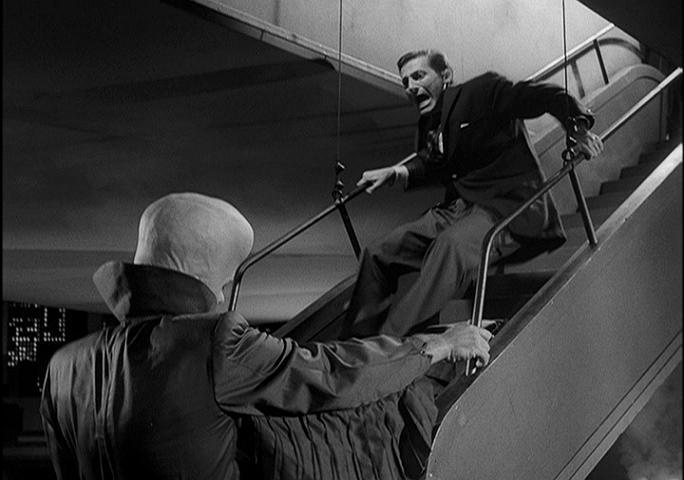
Thus I believe Weiner’s story is more important than the mere sordid political drama involved: if people pay attention, if people learn, if people can get by their partisan biases and convenient ethics misconceptions, maybe we can begin establishing a better, more sensible, beneficial standard for our elected leaders, who, perhaps you have noticed, are, as a group, an embarrassment to the legacy of July 4, 1776. I don’t have illusions that I have any influence, and it is unseemly to say “I told you so,” but sometimes I feel like one of the doomed heroes in science fiction/horror scenarios who end up screaming “They’re already here! You’re next!” or “It’s a cook book!” to unheeding crowds blithely proceeding to their own destruction.

Yesterday the news surfaced that should be the smoking gun on Anthony Weiner’s corrupt character that readers of this blog, at least, did not require to render a verdict—that Weiner’s conduct was not just an irrelevant personal quirk, that his initial lying about it was proof of a corrupt character, and that he is no more trustworthy than John Edwards, Lance Armstrong, Ryan Braun or anyone else who lies to the public to keep its trust. Maybe it will convince Dan, Huma, Andrew and the rest that Anthony Weiner is too corrupt—never mind sick—to lead. If it doesn’t, I think that is signature significance about them. Continue reading

Scapegoating Ethics

Scapegoat

Meet Rick Eckstein. He understands. Really.

As it does predictably and constantly, the daily drip-drip-drama of baseball has given us another ethics quandary to ponder, arising in the context of the sport but with far more significant applications. The issue: is it ethical for an organization to deal with a crisis by firing someone for symbolic value, rather than for cause?

I have written about this traditional phenomenon in baseball before, but the current example is far less defensible on either tactical or public relations grounds. Last season, the Washington Nationals accumulated the best record in the sport, and though they flopped in the play-offs, were almost unanimously expected to be strong pennant contenders in 2013 by baseball prognosticators and more importantly, their fans. So far, at least, those expectations have been dashed. The season is almost two-thirds done, and the Nationals have been uninspiring at best. They have won fewer games than they have lost, and are trailing the Atlanta Braves by an alarming margin. Their pitching has been worse than expected, and their offense has been atrocious.

As is often the case in baseball when teams have a disappointing season after a good one, there is no obvious way to fix the problems mid-season, other than to hope the players start playing better. Unlike the other major team sports, baseball team performance is notoriously quirky, just like the game they play. Excellent players have down years frequently (though not the same players, or they would no longer be considered excellent). Team chemistry evaporates; the ball bounces funny ways. In the case of the Nationals, the most obvious problem has been a flood of sub-par years from almost all the starting position players, with an unhealthy serving of injuries.

The team’s response to its frustration and, really, lack of any substantive way to address it was to fire the team’s batting coach, Rick Eckstein, last week. Continue reading

Ethics Mega-Dunce: The First National Bank in Wellston, Ohio

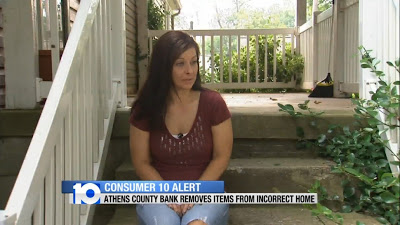
Katie Barnett, the victim.

Katie Barnett, the victim.

As I cull the news to find good topics for ethics discussions, the single thought that goes through my mind most frequently is this: “What is the matter with people?”  This is often followed by “How do people get this way?” and later, “What can we do with them?”

Most ethical decisions are not brain teasers. They are strikingly obvious, unless you are determined to do wrong, an evil super-villain, or were raised in a barn. How people of influence without a serious head injury can make the horrible decisions they do is one of the mysteries of the age, along with the fate of Judge Crater, the elusiveness of Bigfoot, and the continuing popularity of Jimmy Kimmel.

Imagine, for example, that you run a bank. The Three Stooges wannabes who you sent to repossess a home get the address wrong (the lawn hadn’t been mowed, so they “just assume”), and they trash the wrong house. They remove possessions, losing some, auctioning off others, damaging the rest. The innocent owner of the home comes to you and points out that your contractors screwed up outrageously, a fact that is beyond rebuttal. She presents you with a good faith estimate of the property that was lost—never mind the trauma of having her home emptied by strangers and the fact that she has had to live elsewhere for two weeks. What do you do?

If you are the president of the First National Bank in Wellston, here’s what you do, because you have a non-functioning ethics alarm and more than a few screws loose in other places besides: you reject her assessment, and try to low-ball her on the amount.

“What is the matter with people?”

“How do people get this way?” Continue reading

The Weiner Joke Orgy

Conservatives will grandstand about declining standards of dignity and decorum in the U.S., happily blaming the decline of gentility and civil public expression on rappers, Hollywood liberals and Joe “This is a big fuckin’ deal” Biden, until a Democrat with a name ready-made for bad sex puns and double-entendres shows up, and then its a mad stampede to bad taste.

Wow. Clever.

Wow. Clever.

What is it with the Right: is everybody 12? From Rush Limbaugh (“Weiner is hard to swallow…”) to The Daily Caller (“Weiner blows his lead”) to the New York Daily News (“Cuomo Spanks Weiner!”) to dozens of websites that can’t resist versions of “Will Weiner pull out?” and “Weiner Exposed,”  to Drudge (“Weiner Goes Soft”) to CNS (“Boehner Won’t Bite On Weiner”) to, naturally, the reliably crude New York Post ( “Too Hard To Stop!’…”Tip of the Weiner”…”Obama Beats Weiner”…”Weiner: I’ll Stick It Out”…and on, and on–okay, it’s  abrand, I get it ), apparently conservative pundits and headline writers can’t resist seeking naughty snickers from obvious gags.  Continue reading

More Evidence That Nobody Gives A Damn

If you can’t rely on quality control and professionalism at a major league baseball park, then the end is nigh.

At San Francisco’s AT&T Park Wednesday night, the batter’s box was apparently drawn by a drunk groundskeeper, and looked like this….

Bad field


…when it’s supposed to look like this, which is to say, with straight lines:

Batters box


Nobody noticed…not the players, not the umpires, not the managers. Oh, the broadcasters mentioned it, but even though the chalk did not meet the regulation requirements, no effort was made to put it right. On The Blaze, which picked up the story from Yahoo Sports, the baseball-dense commenters’ general response was “Who cares?”  Yeah, keep that attitude up, bozos, it’s probably how you do your job too.

Fans pay from $45 to $100 bucks a ticket for games at big league baseball stadiums, and the clubs rake in many millions of dollars. A batter’s box like that is the equivalent of a new Lexus with a rattle, a 5-star restaurant that never can serve a souffle before it falls, a public school teacher who says “ain’t,” nurses who don’t wash their hands and a Congress that can’t pass a budget. It’s unprofessional. It’s an insult to the consumers. It demonstrates incompetence, laziness, poor training and bad management. And if we tolerate it, the attitude will spread and get worse.

Yes, it’s “only” the chalk lines of a batter’s box. But that’s not the way they are supposed to be, and “professional” is supposed to mean that the way things are supposed to be is the way they will be.

Does anyone in this country know that any more?

________________________________

Sources: The Blaze, Yahoo!


Ethics Dunce: Huma Abedin, a.k.a Mrs. Anthony Weiner

"Carlos Danger," running for an office that won't have anything to do with him if he wins it. Where is Monty Python when we need them?

“Carlos Danger,” running for an office that won’t have anything to do with him if he wins it, he tells us. Where is Monty Python when we need them?

There are periodic moments when I feel I am wasting my life. A recent one occurred when I heard Huma Abedin, the humiliated wife of New York mayoral candidate and serial penis-texter Anthony Weiner, or, as his friend call him when he’s showing his junk, “Carlos Danger,” say that his pathological and gross conduct, bolstered by public lies, deceit and posturing, isn’t a legitimate concern for voters, and that it is just “between us, and our marriage.”

As Stephen King would put it, a muffled scream builds to inevitability deep in my chest. Continue reading

Ethics Hero Emeritus: Willie Reed ( 1937-2013)

Willie Reed

I began the day, to my surprise, with tears in my eyes from reading an obituary on the front page of today’s Washington Post.

The story announced the death of Willie Reed, who as an African American teenager in 1955, risked his life by testifying in a Mississippi court against the white men who had tortured and murdered Emmet Till, another black teenager, for the Jim Crow “crime” of allegedly whistling at a white woman.

The intensity of my emotional reaction surprised me. I think it was the product of being reminded of the horrific tragedy that befell Till and other black citizens at the height of segregation, and being slapped in the face with the reality, known to me but kept deep in the place in my brain where the ugliest things are sealed away to keep me from incurable despair, of the deranged hate that festered so long—and destroyed so many— in the country I love. I was also overcome with admiration and wonder at the almost unimaginable courage of Reed, who knew that by testifying in open court he was simultaneously  guaranteeing that he would be marked for Till’s fate for the rest of his life. Maybe most of all, I wept out of anger at my ignorance and the warped priorities of our culture and educational system, which ensures that we know the names and life stories of insignificant narcissists like Kim Kardashian, embarrassing political leaders like Michele Bachman, greedy athletes like Lance Armstrong, and cynical demagogues like Al Sharpton, but know nothing of the lives and deeds of unglamorous American heroes like Willis Reed. I consider myself an educated man, but I had never heard of him, which means I am not educated enough. I wish I could apologize to Reed. I wish I could shake his hand. I wish I could say, “thank you.” Continue reading

Anthony Weiner, Gov. McDonnell, Mayor Filner and the Rest: Degrading Democracy, Tainting Leadership

Hey, Mayor Filner, if San Diegans decide they have a proble being led by a serial sexual harasser, you can run for Mayor of New York!

Hey, Mayor Filner, if San Diegans decide they have a problem being led by a serial sexual harasser, you can run for Mayor of New York!

The mandate for leaders and potential leaders who have engaged in blatantly dishonest, corrupt, undignified or otherwise unethical conduct to remove themselves from office or consideration for office is not that, as hundreds of foolish pundits (like this guy) will try to convince you, hypocrites with a keyboard or a vote falsely pretend that such conduct is unique. There are two justifications for the unethical to resign from office, both undeniable and ancient. I have written enough, for now, about the first—that such conduct demonstrates untrustworthiness, the quality a leader must not have— and want to focus on the second, which is this: if they do not step down and away, such leaders and potential leaders mock the aspirations of democracy, insult its underlying hopes, and degrade, by their persistence, the standards of future leadership.

Once, this was thoroughly understood. Leaders who were exposed as lacking honesty, integrity, responsibility and respect for their own office resigned or withdrew from public life, as self-executed punishment and their last chance at redemption. Democracy, as John Adams wrote, is supposed to be a system that elevates the most accomplished, the most able, the most trusted and the most ethically sound to leadership, for obvious reasons. They are qualified to be leaders because, bluntly, they are better than the rest of us. They are also, because they are better, supposed to be capable of sacrifice and humility, and to recognize that power is a privilege, not a possession to be retained at all costs. Continue reading

An Inclusive “I Do! I Do!” for A Post-DOMA U.S.

Cup

I wasn’t going to mention my current theater (at Arlington, Virginia’s American Century Theater) project here, until I dropped Ethics Alarms’ conservative warrior Steven Mark Pilling a note on Facebook that I had just posted on the topic he is most passionate about, preventing the abuse of child actors in Hollywood. Steven is not, to say the least, a fan of gay marriage (this might be the topic he is next most passionate about) , and I realized that my Facebook thumbnail, showing two same-sex couples in an intimate moment from my show, might put him off.

The show I just finished directing ( with the assistance of Quinn Anderson and my musical director Tom Fuller)  the old Harvey Schmidt-Tom Jones chestnut, “I Do! I Do!”, ( Remember “My Cup Runneth Over, Ed Ames fans? Hello? ) the tw0-actor Broadway musical based on the 1950 play “The Fourposter.” Back in 1966, when Robert Preston and Mary Martin starred in the musical, it was considered an affectionate and  perceptive look at the institution of marriage, and the show has attracted nostalgic, usually elderly married couples to regional and dinner theaters ever since. Productions of  “I Do! I Do!” are becoming rarer, however, because the societal developments have rendered the tale of the epic marriage of Agnes and Michael Snow increasingly alien to the current American scene. In particular, what was once a musical intended to speak to all married couples and candidates for future nuptials now appears to exclude the very group that comprises musical theater’s hardiest supporters: gays.

In marked abandonment of my theater’s usual principles (we don’t update shows, believing that it is more interesting and fair to the authors to let audiences reflect on what has changed since an original production, and what has not), I decided that for the benefit of audiences, the culture and the show itself, it was time to re-conceive “I Do! I Do!” so it would gain renewed relevance and vitality in a post DOMA age. My approach, courageously and generously approved by the authors, was to show the marriage of the show’s couple through a constantly rotating prism that alternately revealed them as a same-sex female couple, a same-sex male couple, and the traditional heterosexual couple of the 1966 version. This required four very versatile and gutsy actors who could pull off the illusion of showing one marriage three different ways without giving the audience whiplash or confusing them hopelessly. In Steve Lebens, Esther Covington, Chad Fournwalt and Mary Beth Luckenbaugh, I found the dream cast. Continue reading

Ryan Braun’s Unethical Apology

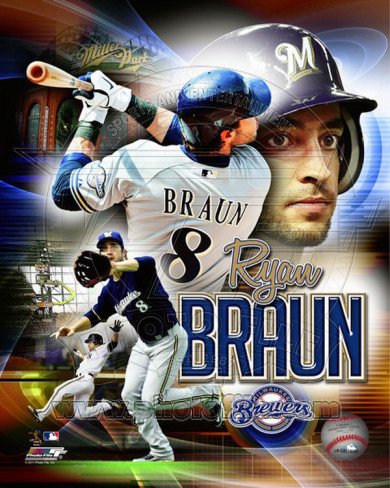
ryan-braun-2011Ryan Braun, the Milwaukee Brewers star who has just accepted MLB’s decision to suspend him without pay for the remainder of the 2013 season for violating baseball’s anti-drug policies, issued the kind of public statement that helps us understand why the athlete thought using banned substances to improve his performance was acceptable. It is the statement of someone’s whose ethical instincts are not merely underdeveloped, but malfunctioning on an epic scale.

Braun released this mea culpa in the wake of the announcement of his disgrace, which also pretty much ends the already faint chances of his team for a successful season:

“As I have acknowledged in the past, I am not perfect. I realize now that I have made some mistakes. I am willing to accept the consequences of those actions. “This situation has taken a toll on me and my entire family, and it is has been a distraction to my teammates and the Brewers organization. I am very grateful for the support I have received from players, ownership and the fans in Milwaukee and around the country. Finally, I wish to apologize to anyone I may have disappointed – all of the baseball fans especially those in Milwaukee, the great Brewers organization, and my teammates. I am glad to have this matter behind me once and for all, and I cannot wait to get back to the game I love.”

This is about what one would expect from a guy who avoided being busted for steroids by the skin of his teeth two years ago on a technicality, and reacted by not only playing the martyr, but also by impugning the character of the man who handled his incriminating urine sample. Let’s look at this non-apology apology’s various and nauseating features. As usual, my comments are in bold : Continue reading