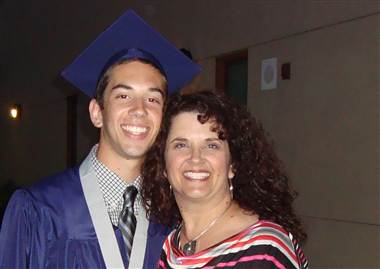
Ethics Hero: Jeffrey Warren

You’ve probably heard or read the story by now.
Wait! Maybe he’s Cherokee!

17-year-old Jeffrey Warren rose to accept the $1,000 college scholarship awarded by the local Martin Luther King Senior Citizens Club during seniors night at Martin Luther King High School in Riverside, California, and provoked both laughter and awkward gasps. He was obviously white—as white as Elizabeth Warren—and the scholarship for intended for black students, though Warren didn’t know that when he applied.

Later, Warren decided to give back the money. His family said they didn’t want the African-American women who gave out the award to be foiled in their attempt to help young black scholars, and that it was the right thing to do. I would say that it was a right thing to do, and showed exemplary kindness, compassion, empathy, generosity, charity and altruism. Jeffrey had every right to accept the money. The Club’s requirements were vague, and did not make it clear that he was not eligible when he applied. If he and his parents had wanted to make a political and philosophical statement about the hypocrisy of a race-based scholarship in the name of Martin Luther King, this was an ideal opportunity, and an argument could be made that this would have been the “right” thing to do as well, if not “righter.” Continue reading

The Importance of American Culture

Pericles delivering his famous funeral oration

By necessity, Ethics Alarms often ventures into the realm of culture, because ethics defines a culture as surely as culture determines ethical standards. This, unfortunately, make politics unavoidable as well, because politics are the means by which laws, primary tools of culture as well as the products of it, get made.

In The New Criterion, Roger Kimball has written a thoughtful essay about the current stakes in America as our culture evolves. He discusses politics and Pericles, and makes his own orientation (classic conservative) clear, and proudly clear at that. It is also an essay with great relevance to ethics. I recommend it highly. Here are some excerpts. The link to the whole article is at the end. Continue reading

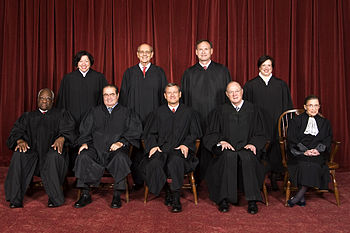
Supreme Court Integrity and the Useless Times-CBS Poll

If you dislike these people,but haven’t read their actual opinions, don’t know their names and are basing your opinion on what other people say, I don’t care what you think, and neither should anyone else.

I suppose there may be could be some uses for the recent New York Times-CBS poll measuring public attitudes about the Supreme Court. It could be used to launch, for example, a discussion about how little the public understands about the Court and how it operates. It might prompt a discussion about the recklessness of the two parties, which regularly attack the integrity of the Court every time it arrives at a decision that one of them doesn’t like. It might even prompt a refresher course on what went on during the 2000 Florida vote recount, and why that case required the Supreme Court to play a unique role that had nothing to do with helping George Bush “steal the election.” All of these would require an unformed and responsible newsmedia. however, so what the poll is prompting instead  misleading debates among talking heads about what the Court needs to do differently.

The Supreme Court needs to do nothing at all differently. Continue reading

Graduation Ethics: the Cheering Mom and the Jerk’s Advantage

Stipulated: for police to arrest proud South Carolina mother Shannon Cooper for loudly cheering during her daughter’s high school graduation over the weekend  was excessive, unreasonable, and stupid.  The graduation crowd  had been asked to hold their cheering until all students’ names had been called, and warned relatives of the graduates that they would be removed from the facility if they disobeyed the rule. As some parents inevitably do at every graduation, Cooper ignored the reasonable request, but this time, the defiant parent paid a steep price. Police charged her with disorderly conduct and placed her in a detention center.

Let me also make this clear, however: Cooper behaved like a selfish jerk. She is being showered with sympathy now, cast as Innocent Parent Abused For Being Proud of Her Baby, but that’s not who she is. She is the theater audience member who ignores the request to turn off her cell phone, and disrupts the actors and the audience when it rings, and the movie audience member who chats loudly during the show. She is the pet owner who doesn’t clean up after her Great Dane at the dog park. She is the able-bodied shopper who parks in  a handicapped parking space to run into the store “for just a minute.” She is the person who breaks into line, who brings 30 items to the “15 items only” checkout station, who takes more than her share of free food at events. She is, in short, the kind of person who doesn’t believe reasonable rules apply to her, and who constantly challenges the rest of us to “make a big deal” out of relatively minor demonstrations of contempt for everyone she comes into contact with. Continue reading

Comment of the Day: “The Ethics of Bloomberg’s Soft Drink Ban”

Peter, who is a physician, a libertarian, and one of my oldest friends (we met in the 6th grade) from Arlington, Massachusetts, generously responded to my request for his professional expertise and philosophical perspective regarding the New York City soda ban.  Here is his thoughtful response, the Comment of the Day, on the post The Ethics of Bloomberg’s Soft Drink Ban: 

“It has become a reflex response to answer adverse circumstances with more regulation. To a lawyer, there is always a law, or regulation for any and every misstep in human behavior. Of course, we forget that we cannot predict the unintended consequences, not even to mention reviewing the effects of the laws we pass to determine if they are even having the INTENDED effect. Somehow, we believe that it is appropriate to pass laws to deny other people’s freedoms due to the “discomfort” of whiny types who have the connections and persistence to keep whining until they can get someone to pass a law. The consequence of such legislation’s continued passage, at ever more confiscatory levels of our liberties, is that we are legislating our way into a police state, and the widespread acceptance of the idea that it’s OK to deny personal liberty because it makes someone else “uncomfortable.” Again, as RR so aptly pointed out, “the government that is big enough to give you everything you want, is big enough to take away everything you have.” And this goes for not just your personal assets, but your freedoms as well.

“That said, in this context, yes, drinking lots of sugary sodas will make you fat, smoking will kill you, too much alcohol will kill you, doing extreme sports can kill you, and so on. And as long as one’s decisions affect only himself, have at it. However, when you want me to pay, through my insurance premiums, and my taxes, for the consequences of your stupidity, you cede the sovereignty of your decision to others beside yourself. If you want to ride your motorcycle without a helmet, while drunk, sure, do it. Just don’t expect me to pay the costs of your head injury. Continue reading

The Ethics of Bloomberg’s Soft Drink Ban

It’s a serious problem.”

“Something needs to be done.”

“This is a public health issue.”

The media defenses of New York Mayor Bloomberg’s controversial decision to ban the sale of large soft drink servings in New York City, and Bloomberg’s defense as well, set up a classic utilitarian argument for a government intrusion into personal choice and lifestyle. It is, simply, that the ends justify the means, and as we all know, sometimes they do.

Sometimes, however, those means sacrifice too much: lives, dignity, fairness, liberty, fun. Sometimes employing those means require crossing lines that have not been crossed before, opening the door to more and greater sacrifices that even advocates of the particular measure would find objectionable and wrong. This leads to the slippery slope dilemma, and invokes absolutism. Some things must never be considered as just means, no matter what the ends being sought may be. Immanuel Kant’s philosophy of absolutism declared that it was always wrong to use human beings against their wills to solve problems, no matter how great the problems are. The Declaration of Independence holds that a human being’s rights to life, liberty and the pursuit of happiness must never be breached by government. Continue reading

Executing an Insane Killer: a Cynical Ethics Controversy

Let’s me get this straight: this is only a “macabre spectacle” if the guy strapped down to be poisoned isn’t crazy. Right?

In the case of Steven Staley, Texas has itself one of those periodic ethical/legal conundrums surrounding capital punishment that leave me feeling  cynical, puzzled, and worried that I am missing an important part of my compassion apparatus.

Staley’s problem, or his perhaps stroke of luck, is that he is a little more crazy now than he was when he committed the crimes that placed him on death row. In September 1989, Staley escaped from a Denver prison  and started robbing everything he encountered, looting nine businesses across four states. Finally he hit the Steak and Ale Restaurant in Tarrant County, Texas. Staley and his accomplices gathered the employees at gunpoint and forced the manager to hand over the contents of all the registers and the store safe. He then took the manager into the getaway car as a hostage, and executed him as Staley tried to elude the police. Continue reading

On Tolerance, Religious Freedom, and “Ain’t No Homos Gonna Make It To Heaven”

It is generally true, as the indignant members of Greensburg, Indiana’s Apostolic Truth Tabernacle Church say, that what they include in their church’s services is nobody’s business, and the fact that the congregation loudly applauded the horrific spectacle of a 3-year-old boy singing the hate anthem, “Ain’t no homos gonna make it to heaven!”would have never bothered a soul if it hadn’t been videorecorded and placed on YouTube. At this point, however, that no longer matters. The cat is out of the bag, the horse has left the barn and the beans are spilled, and now millions of Americans know that this church teaches hate, indoctrinates young and vulnerable children with its poison, and sows the seeds of prejudice and the active deprivation of American citizens of their rights to life, liberty and the pursuit of happiness. Since millions of people know this now, a critical number of them will go out of their way to make life in this country a living hell for members of that church and the church itself by demonstrating at every turn that we don’t want churches like that in America, or people like that in America. They aren’t good for society, they cause positive harm without any compensating benefits, and they need to change their ways or suffer the consequences. And to that I say: Good. Go to it. Continue reading

How To Make A Wanetta Gibson

Reader Fred Davison sent me this video of two teenage girls being interviewed by a Florida TV reporter regarding their theft of a 9 year-old Girl Scout’s proceeds from the sale of cookies. If it went viral in 2009, I missed it; if it didn’t, it should have. And although the crime is old news, it is an enduring warning, and a current cause for alarm:

Those who wonder how a young girl like Wanetta Gibson could have casually fingered an innocent boy with who she had been necking in a school corridor and sent him to jail for rape can get some of their answers from the two frightening creatures shown in the video. They have no comprehension of right and wrong. Their parents obviously couldn’t imbue them with any values, and their teachers, if they mentioned ethics at all, did it so fleetingly, ineptly or incoherently that it made no impression at all. They obviously have never been influenced by any church, religion or moral code. They lack empathy, respect for others, regard for fairness or justice, and most of all, shame. Continue reading

Reporting the Confessed Killer in Your Midst: An Ethical Dilemma That Isn’t

Pedro Hernandez, now under arrest for the murder of Etan Patz, the  6-year-old boy whose 1979 murder was a national mystery, confessed that he had strangled the child just a few years later to his prayer group at St. Anthony of Padua, a Catholic church in Camden, New Jersey.  No one, including Hernandez’s relatives who learned of his confession and the prayer group leader, reported the confession to authorities.

Hernandez’s sister, Milagros Hernandez, confessed what she described as a “family secret” to a reporter for the New York Daily News over the weekend, setting off “What would you do?” internet polls and blog posts, as if there was any question about the proper conduct for a family member or church group member who hears a murder confession. There is no question.  You report it. There are no debate issues, no competing considerations, no claims of loyalty or confidentiality.  It isn’t a Golden Rule dilemma, as in “Would I want someone to report me if I confessed to him in confidence that he had strangled a little boy?”  It isn’t a dilemma at all. There is only one right thing to do, and if you think otherwise, you missed a couple of key meetings when the ethics were being handed out. Continue reading