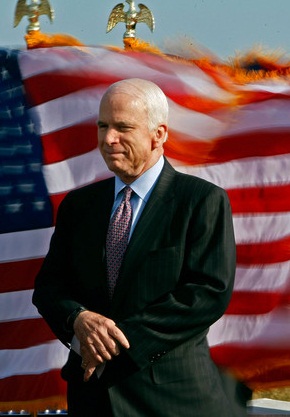
Ethics Hero: Sen. John McCain

Arizona Senator John McCain has seriously tarnished his reputation for integrity  since losing the Presidential election in 2008, particularly during his last campaign for re-election to the Senate. The best of McCain was on display this week, however, as he delivered a strong and eloquent denouncement of torture (a.k.a “enhanced interrogation techniques”) on the Senate floor, in response to the ethically offensive arguments being put forth by many conservatives that the successful elimination of Osama bin Laden somehow magically transformed the evil practice of torture into a respectable tactic of national security. It is an important, courageous and persuasive statement from a U.S. Senator with special qualifications to make it, as one who had been tortured himself, and as fine a legacy as McCain, or any Senator, could aspire to.

Sen. McCain said, in part (you can read the entire text of his speech here)…

“Mr. President, the successful end of the ten-year manhunt to bring Osama bin Laden to justice has appropriately heightened the nation’s appreciation for the diligence, patriotism and courage of our armed forces and our intelligence community.  They are a great credit and inspiration to the country that has asked so much of them, and like all Americans, I am in their debt.

“But their success has also reignited debate over whether the so-called, ‘enhanced interrogation techniques’ of enemy prisoners, including waterboarding, were instrumental in locating bin Laden, and whether they are necessary and justifiable means for securing valuable information that might help prevent future terrorist attacks against us and our allies and lead to the capture or killing of those who would perpetrate them.  Or are they, and should they be, prohibited by our conscience and laws as torture or cruel, inhuman and degrading treatment. Continue reading →

Comment of the Day: “The Jaundiced Eye of Noam Chomsky”

You can find the original post here, and under it, my response to this comment by reader Trafford Gazsik. I’d say that Christopher Hitchens’ rebuttal to Chomsky, linked in the post, and my post about the ethics of bin Laden’s execution address the issues raised, make up your own mind.

“I like Chomsky and as a non-American, I can assure you that rather than filling my head with anti-American sentiments, his writings have reassured me that America remains a country populated with mostly decent people and that the world at large should not give up on the place just yet.

“I’m interested to know which part of Chomsky’s analysis you do not agree with:

– Do you disagree with the assertion that the Bin Laden ‘takedown’ was an assassination?

– Do you reject the assertion that the assassination took place within the territory of another sovereign state without the knowledge or permission of the government of that state, in clear contravention of international law and customs?

– Do you deny that Bin Laden had not been tried in any court, and was for legal purposes, an innocent civilian of Non-US nationality residing in Non-US territory? Continue reading →

Appearance of Impropriety I: Federal Judge in a Whites Only Club? Ethical, As Long As He Doesn’t Like The Policy. Wait…WHAT?

Our Motto: "Trying to find a qualified black member for 110 years...and still looking!"

Is it an ethical violation for a Federal judge to belong to a whites-only country club?

Sure it is. Was that so hard?

Apparently for a judicial appeals panel in Tennessee, it is.

In May of 2008, an anonymous woman complained to the chief judge of the 6th Circuit Court of Appeals that Federal bankruptcy  Judge George Paine II’s  membership in the ritzy Belle Meade Country Club violated the judicial ethics code of conduct that decrees that judges “should not hold membership in any organization that practices invidious discrimination on the basis of race, sex, religion, or national origin.”  This was a reasonable complaint to make, since the judicial codes for both Federal judges and Tennessee judges say that…

 CANON 2: A JUDGE SHOULD AVOID IMPROPRIETY AND THE APPEARANCE OF IMPROPRIETY IN ALL ACTIVITIES

2 C   A judge shall not hold membership in any organization that practices invidious discrimination on the basis of race, sex, religion, or national origin. Continue reading →

Ethics Dunce: Tucson’s NBC Affiliate KVOA

Next  Monday night’s“Law & Order: LA” episode involves “a crazed gunman” who “goes on a rampage at a political rally, killing a state senator.” Sound’s upsetting. Hmmmm...where have I heard of something like that happening?

Oh, right.

Tuscon, Arizona, where the NBC affiliate, KVOA  has decided that residents are not only too traumatized  to view such an episode “ripped from the headlines,” but apparently to be in the same city where anyone else can view it. Station president and general manager Bill Shaw explains that “the Tucson community is still going through the healing process” and NBC’s show has too many similarities to “that horrible day.” KVOA will broadcast the episode on May 17 starting at 1:05 a.m, because…gee, I can’t figure out what the logic is. To make the show as difficult and inconvenient as possible to see for those in the Tucson area who want to see it?  To punish NBC for broadcasting it at all? This is paternalism of the most offensive and insulting kind.

The censorship of the TV episode is an abuse of the station’s responsibility to the community, and if I was in a position to do so, I’d pull KVOA’s license. Who are the station execs to decide what network fare is or isn’t too traumatic for its viewers? Why would a Tuscon resident who would be traumatized by a fictional drama based on January’s tragic events in the city watch the show? Why shouldn’t a viewer who feels up to the task be allowed to see what everyone else in the country is watching? If the episode is a masterpiece, or sets off a national debate, what right does Bill Shaw have to take Tucson citizens—of all people— out of the debate?

The station’s decision is unfair, disrespectful, presumptuous, an abuse of power and, as is often the result of such ingredients, utterly, utterly stupid.

Me, Wrestling With Bias, And Losing

A large part of being ethical involves being aware of your biases and minimizing their impact on your conduct. As I recently was reminded, this sounds easier than it is in practice.

Searching yesterday for an Ethics Alarms topic, I came across an interesting, if not earth-shaking, issue of legal ethics that had obvious applications to other professions. Tracking down the source of the story, I discovered that the original idea was posted by a lawyer-blogger who in the past has gone out of his way to denigrate me professionally and personally on the web. He has also insulted me directly. Outside of that, though, he is by all accounts a terrific lawyer, an astute commentator on the legal profession, and, I’m sure, the salt of the earth.

Still, I don’t feel like sending readers to his site. Not only did the guy, unfairly, set out to harm me professionally, but he probably would do so again. I have no reason to do something that benefits him, nor is there any reason for me to try to curry favor with him: he owes me an apology, and I know I am never getting it.

I could link to one of the blogs and websites that picked up and elaborated on his post, but that would be unfair: I try to link to the originator of a useful ethical discussion as a matter of fairness and recognition. Continue reading →

The Uncommon Common Dilemma

Emily Dickinson, he's not.

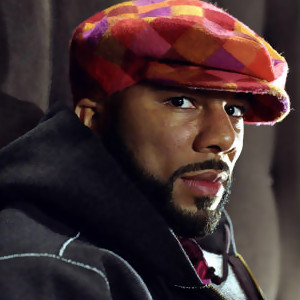
It is unusual to encounter a situation where there is no course that doesn’t violate some legitimate ethical principle. The dilemma involving rapper Common’s controversial invitation to the White House is one of them. None of the options are strictly ethical, and this has led advocates both for and against his inclusion in Michelle Obama’s poetry event, “An Evening of  Poetry at the White House,” to behave unethically themselves. Let’s see: what comes closest to being ethical conduct of the possible outcomes?

Option A: Michelle has her poetry event, but doesn’t invite any mainstream rapper. Ethical breaches: Incompetence, bias, censorship, dishonesty.

Rap is the most dynamic and popular form of poetry in America today. Having an event to “showcase the impact of poetry on American culture” at the White House that excludes popular rappers is absurd on its face; it would be like the White House celebrating the influence of sports in American culture and omitting football. Continue reading →

The Unfair and Dishonest Regulation…of Interior Decorators?

Deadly in the hands of an amateur

I stumbled on this as my wife and I investigated the possibility of her setting up a business as an interior design consultant. 22 States and the District of  Columbia require a license to be an interior decorator, which technically means, as Reason so pointedly puts it, that moving a throw pillow could theoretically get you jailed or fined.

How can this be? All professional licensing creates a bar to membership, making such licenses targets of Libertarians and other critics. But at least most professions requiring a license have a plausible argument for the certification based on health and the protection of the public welfare. Lawyers, doctors, dentists, builders, electricians…that makes sense. Real estate brokers, teachers, personal trainers…er, okay, I guess so. But interior decorators? Isn’t this just an example of nakedly restricting competition, and using the sordid process of buying state legislators to do it? What other justification could there be? Continue reading →

Ethics Quote of the Week: Washington Post Columnist Michael Gerson

“In determining who is a “major” candidate for president, let’s begin here. Those who support the legalization of heroin while mocking addicts are marginal. It is difficult to be a first-tier candidate while holding second-rate values.”

—-Washington Post columnist and former Bush advisor Michael Gerson, pronouncing presidential candidate Rep. Ron Paul’s Libertarian endorsement of drug legalization ethically unacceptable.

Gerson’s deconstruction of the all-too-common and increasingly ominous calls for legalizing addictive drugs nicely captures the trio of ethical flaws of the advocacy: it denies the crucial and legitimate government role defining responsible conduct for society, it embraces the myth that recreational drug use “does no harm,” and it is arrogant and selfish, condemning the poor and reckless to problems that their fragile resources cope with, in order to bestow a dubious “freedom” that the drug advocates do not need. Continue reading →

What Do you Call A Newspaper That Defends Outrageous Journalistic Practices? How About “Di Tzeitung”?

If Di Tzeitung had covered the Civil War

If I could pronounce it, the Brooklyn-based Hasidic newspaper Di Tzeitung would be useful shorthand  for “shamelessly using rationalizations to defend indefensible conduct.”

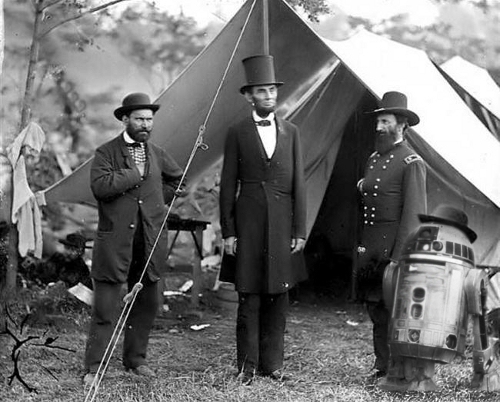
Last week, the newspaper ran the now-familiar photo of President Obama, Secretary of State Hillary Clinton, and others in the White House Situation Room, except that in Di Tzeitung’s version, Clinton  and the only other woman present, Director for Counter-terrorism Audrey Tomason, had magically vanished. Di Tzeitung had airbrushed them out, Politburo-style.

Of course, publishing the photo of a historic news event and altering it to convey misleading or false information (in this case, “Hillary wasn’t there”) is a substantial and wide-ranging violation of core journalism ethics, a breach of the reader’s trust, unfair, dishonest, misleading, incompetent and disrespectful. The altered photo was alternately condemned and mocked all over the media and blogosphere. Yet Di Tzeitung is largely unapologetic, and made it clear that it would do the same thing again if the opportunity arose. In a prepared statement, the editors explained why they did nothing “wrong”…well, almost nothing…challenging the Olympic record for rationalization by a news organization along the way: Continue reading →

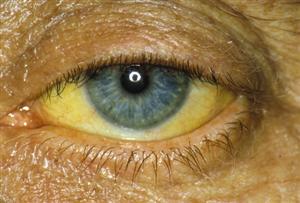
The Jaundiced Eye of Noam Chomsky

I’ve been enduring, teeth gritted, the America-hating propaganda of Noam Chomsky since my college days. He is a brilliant linguistics professor who has credibility as a social critic only because his world view—briefly put, that the United States is evil, and anything that indicates otherwise is the result of a conspiracy–has been so supportive of and nurturing to the extreme Left. It is hard to quantify how much harm he has done to this nation or how many potentially productive minds, foreign and domestic, that he has warped with his bile, but I am sure it is substantial on both counts.

We are fortunate, I guess, to have his assessment of Osama Bin Laden’s death, recently published and available for reading here. The piece is res ipsa loquitur that the man is so consumed with unreasoning hatred for his country that he cannot process the truth or think straight, but I know that plenty of Chomsky followers will be cheering. Thus I am grateful that Christopher Hitchens has authored an admirable take-down of the professor, here.