Is Flogging More Ethical Than Incarceration?

Ah, those were the good old days!

Peter Moskos is about to publish a book entitled “In Defense of Flogging.” He’s not really advocating a return to the Cat O’ Nine Tails, however, but engaging in a so-called “thought experiment”, which Moskos, an assistant professor of law, police science, and criminal-justice administration at the John Jay College of Criminal Justice, summarizes at the end of his article on the topic (in the Chronical of Higher Education) like this:

“So is flogging still too cruel to contemplate? Perhaps it’s not as crazy as you thought. And even if you’re adamant that flogging is a barbaric, inhumane form of punishment, how can offering criminals the choice of the lash in lieu of incarceration be so bad? If flogging were really worse than prison, nobody would choose it. Of course most people would choose the rattan cane over the prison cell. And that’s my point. Faced with the choice between hard time and the lash, the lash is better. What does that say about prison?”

I’ll answer that:  it says that imprisonment is a better and more efficient punishment for serious crimes than flogging, and who didn’t know that? Continue reading →

The Sex and Werewolf-Obsessed Novelist (But NOT Naked!) Teacher Principle

Could YOUR English teacher have written this?

Mild-mannered  Judy Buranich has taught high school English in Pennsylvania’s Midd-West School District for 33 years, always with the accolades of parents and students. Until recently, however, she had successfully kept a very different second occupation secret: under the pen name “Judy Mays,” she has forged a niche in the genre novel field, writing erotic fantasy suspense tales about lusty women who are typically involved in complex love-triangles where one or more participants are outer space aliens, vampires, or especially werewolves. On the Judy Mays website, a synopsis of her latest novel, “Undercover Heat,” reports:

“Melody Gray has a dilemma, two of them really. First, a CIA agent name Nick Price has appeared at her detective agency looking for a former client of hers named Jake Fields….What Nick isn’t telling Melody is that he’s really searching for Jake because his superior believes he’s a werewolf, not that Nick believes in them….What Melody isn’t telling Nick is that Jake Hurley is really Garth Gray, her brother.  She knows exactly why Nick Price is hunting her brother.  After all, Garth is really a werewolf.  So is Melody for that matter…. Continue reading →

Don’t Cheer Mississippi’s Westboro Baptist Tactics Too Loudly: You Never Know Who Might Hear You

"Demonstrators? Just leave them to us."

Sgt. Jason Rogers, who was killed in action in Afghanistan, was buried two weeks ago in Brandon, Mississippi. As is its custom, the Westboro Baptist Church, fresh from U.S. Supreme Court-confirmed constitutional protection, was prepared to sully Sgt. Rogers’ funeral with its usual hateful chants about how God kills our soldiers to punish our sinful, homosexual-loving ways. Its plans were foiled, however, by a little bit of traditional Mississippi social control ingenuity.

A couple of days before the funeral, one of Fred Phelps’ vile cultists boasted about the upcoming protest while visiting a Brandon gas station, and the good citizenry on the scene gave him the sound beating they felt his sentiments warranted. Continue reading →

The Ethicists, Backing Judge Walker and Gay Marriage, At An Unacceptable Price

"Oh, all right...as long as we like the decision."

Thanks to the Judge Walker controversy, now have proof that the best legal ethicists in the nation are human. I suppose that’s something.

My colleagues in the legal ethics field are arguing—decreeing, really— that Judge Vaughn Walker’s decade-long same-sex relationship didn’t need to be disclosed before he ruled against Proposition 8 (California’s voter-approved gay marriage ban) because, they say, it created no reasonable doubts about his impartiality. Coincidentally, they also really, really like his decision. But then, so do I. Continue reading →

The Incredible Self-Disproving Rationalization!

A Chicago scene website is highlighting businesses serving citizens of the Windy City that market lies.  It focuses on three of the breed. The first, The Alibi Network, was one of my Unethical Websites of the Month years ago. For a fee, it will concoct and document elaborate support for excuses, fake illnesses, adulterous getaways masquerading as business trips. It’s the kind of enterprise George Costanza might have started; if you have a strong stomach, you can read about it here.  The second is “Rent-a-Date,” which is less objectionable than it is sad, an escort service with no sex, for guys who can’t get a date and want to impress employers, old classmates and other shallow people by hiring one and pretending that the relationship is real. You know, George would have used this one, too.

The third of these slimy businesses, however, is truly awful, an outfit called “The Reference Store”
The business creates phony former employers, complete with websites and local phone numbers, for job seekers worldwide. (You know, George could have used this service to give credibility to his favorite fake reference, “Vandelay Industries”! It’s a George Costanza Tri-fecta!) Continue reading →

Ten Lessons from the “Dog Wars” Debate

Wait! Calm down! This is a CARTOON dog.

The “Dog Wars” Android phone app is apparently down for the count, the victim of too many complaints, threats and accusations that it was evil and irresponsible and promotes real, live dog-fighting, even though almost nobody sane makes similar claims about other video games. As with the subject of most posts on Ethics Alarms, however, the ethics issue lingers on, whether or not the specific incident that sparked the commentary has been resolved.

The comments, often passionate, that this post elicited have been fascinating, and had much to teach, even when the comments themselves were dubious. Here are ten lessons from the debate over the game and the Ethics Alarms commentary about it.

1. Ethics alarms aren’t always right. So many comments about “Dog Wars”, here and around the web, consist of various versions of, “That’s just wrong!” Well, why is it “just wrong”? Continue reading →

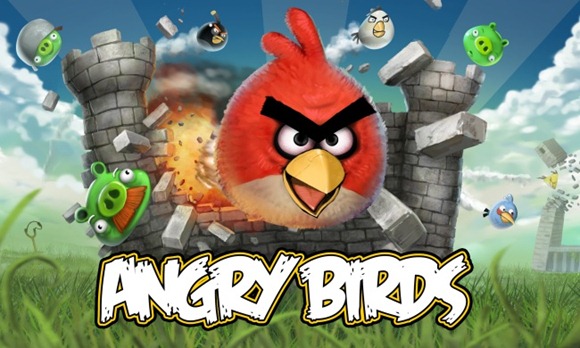
Imaginary Bird Cruelty: Ethical; Imaginary Dog Cruelty….?

If you think the birds are angry, wait til you hear the anti-dog-fighting activists.

We’re just keeping our finger crossed that Michael Vick doesn’t have this app on his phone.

“Dog Wars,” a new video game available free of charge on the Android smart phone market. The game allows players to choose, feed, train and fight virtual dogs against the dogs of other players. Predictably, animal rights, anti-dog fighting groups and social critics want the app dropped.

“Dog Wars” may be in poor taste, but it’s not unethical. Guiding pixels shaped as dogs in tiny phone screen-size battles has no more to do with cruelty to animals than biting the head off of a chocolate Easter Bunny or eating animal crackers.  Critics are saying that the game teaches people how to prepare real dogs for real fights? Right…and “Risk” teaches people how to take over the world. Continue reading →

Comment of the Day: “The Hazing Abuse of Michael Warren”

Frequent commenter and anti-child abuse advocate Steven Mark Pilling catalogues the defenses and rationalizations offered here by collegiate commenters who thought my post was overly hard on pro-hazing Hartwick College. The references to “Hounddog” relate to a thankfully buried film shot five years years back that required a 12-year-old Dakota Fanning to be the victim in a graphic rape scene with an adult actor. Steven, along with Paul Petersen and others, successfully exposed the film’s skirting of laws and exploitation of Fanning. You can read my ethics commentary on that horrible story here and here.

“Jack: In reading those collegian posts and your responses, I almost had a feeling of deja vu. Isn’t it amazing how all the excuses and means of “defending the indefensible”- no matter what the specific issue- have points of commonality that immediately grab at you? When I was involved in the “Hounddog” issue, I ran into them all. I see many of them here… Continue reading →

Loop-Hole Ethics and The New York Times

The NYT’s website paywall plan floats in a sea of holes.

Ariel Kaminer, author of “The Ethicist” column in The New York Times Magazine, made an interesting assertion in her answer to a reader who asked about whether he could exploit several loop-holes in the Times’ new paywall plan for its website.

Noting that he was a struggling freelance journalist who visits the Times website often, he asked if it was unethical for him to use his parents’ free access to the content, since they are subscribers.  Then he Mused about other scenarios. “If I buy online access, can I share the password with my live-in girlfriend, even if I move to New York for the summer? What about our other housemates?” Continue reading →

Ethics Hero: Attorney Paul Clement

John Adams defended the guys in red, and Paul Clement understands why.

Law firm King & Spalding announced Monday that it would no longer represent congressional Republicans regarding the constitutionality of the Defense of Marriage Act (DOMA), the controversial 1996 legislation that defines marriage as being only between a man and a woman.. In response, the firm’s chief appellate lawyer, Paul Clement, who was handling the case, resigned from the firm.

In February, the Obama administration announced that its Justice Department would refuse to defend DOMA in a number of lawsuits, an unusual, controversial and troubling decision. It doesn’t take a lot of imagination to conceive of other federal laws another administration might decide to render dead letters by non-defense despite being duly passed by the people’s representatives. A government has an obligation to duly execute its laws or repeal them. The policy of the Administration regarding DOMA raised issues of governmental integrity quite separate from the provisions of the law itself. Continue reading →