Facebook Wars II: More School Abuse of Power and Privacy

"Hello? ACLU? Anybody there?"

In January, Ethics Alarms weighed in on reports from Illinois and New York about students being disciplined by their high schools for postings on Facebook about the sexual proclivities of female students in the community. The ethics verdict: the schools were abusing their power and the students’ privacy:

“When did schools suddenly acquire disciplinary control over what students do when they aren’t at school? There is no question that the websites involved were inappropriate, disrespectful, cruel and hurtful, just as the rumors and insults included in high school graffiti were, in those glorious days before the internet. Students so abused need to complain to parents, and parents need to talk to the parents of the offending students, and if they can’t or won’t address the problem, then the courts or law enforcement may need to become involved.”

The rationale offered by the schools at the time was that the students had violated rules against cyber-bullying, that ever-vague plague, although there is no more legitimate authority for a school to decree what a student can say about another student on a personal website than there is for a school to restrict what a kid can say at the dinner table.

Naturally, when an institution exceeds the natural limit on its authority, there is nothing to keep it from even more egregious abuse. Thus two Georgia students were just suspended and one another was expelled for negative Facebook postings about a teacher. Continue reading →
Ethics Quote of the Week: Ex-Con John Collins

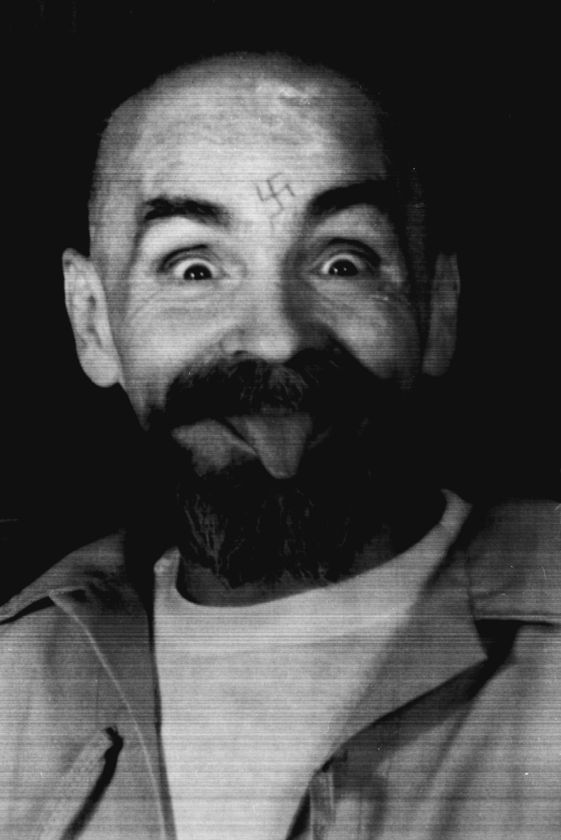
Charlie made a different kind of mistake, too!

“We’re people, we’re not monsters. We’ve just made a different type of mistake than someone else.”

— 34-year-old John Collins, who announced his support for a provision being pushed forward by the Seattle Office For Human Rights, which believes that convicted criminals should be made a protected class.

Collins sure made a different kind of mistake, all right. He served four years in prison for drugging and raping his estranged wife. Continue reading →

Announcing: The Incompetent Elected Official of the Month

"What, me legislate?"

With this post, Ethics Alarms announces a new continuing category for ethics infamy: Incompetent Elected Officials.

We tend to focus on corruption, dishonesty, conflicts of interest and lies when identifying unethical public officials, but it is the wildly incompetent of the breed who might carry the most ethics baggage of all. An incompetent elected official not only is irresponsible for taking on leadership that he or she is unable to deliver due to a lack of brains, skill, experience or judgment, but also keeps a more deserving and able individual from a distinguished position that needs him, jeopardizes the public, and undermines trust in the government generally. The public’s ethics are also implicated by the incompetent official’s ascension to power, as the truly inept can usually be identified with a modicum of diligence and care. Incompetent and irresponsible officials require the assistance of incompetent and irresponsible voters.

Thus incompetent elected officials warrant special attention. And the first incompetent elected official to be honored as the Ethics Alarms Incompetent Elected Official of the Month is….Alabama Republican State Senator Gerald Allen! Continue reading →

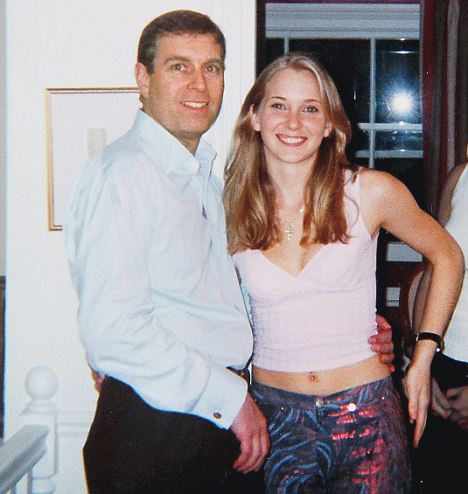
The Prince, The Sex Offender, and the Ethics of Friendship

Prince Andrew with one of his friend's victims in 2001

The ethics of friendship is complicated.

President Bush claimed to be friends with Vladimir Putin. F.D.R. once said that Josef Stalin was his friend. President Obama was famously friendly with dubious characters like Rev. Wright and William Ayres.

History is full of heroes and near-heroes who had infamous friends, though the extent of the often friendship is difficult to know. Sammy Davis, Jr. and Elvis were supposedly buddies with Richard Nixon. Bill and Hillary Clinton were close friends with Dick Morris. Wyatt Earp was a life-long friend of “Doc” Holliday; Andrew Jackson may have been friends with pirate Jean Lafitte, who helped him win the Battle of New Orleans. We simultaneously celebrate loyal friends, and yet we also judge people by the company they keep. Should we condemn individuals who have friends with serious character flaws or a history of unsavory acts? Or should we admire them for sticking with their friends when everyone else is turning against them? Continue reading →

The War On Gays: “Fair and Equitable” in Corpus Christi

Some day, one hopes not too far in the future, when U.S. culture has unequivocally abandoned the ancient fear of gay human beings, when understanding, fairness and respect has banished ignorance and hate, when same sex marriages are recognized as manifestations of loyalty, commitment and love rather than perversions of nature, and when no American feels the need to hide his or her sexuality, and thus feels no compulsion to trumpet it either, we will look back on such societal embarrassments as the Flour Bluff Intermediate School District as we do now on past purveyors of child labor, forced sterilization, involuntary human experimentation, mistreatment of women, and racism, and wonder, “What was the matter with those people? How did they get that way?”

Or, come to think of it, we could ask that question right now.

Seventeen-year-old Bianca “Nikki” Peet, a senior at Flour Bluffs High School in Corpus Christi, Texas, high school senior requested the she be permitted to launch a Gay-Straight Alliance in her school. The Equal Access Act, a federal law passed in 1984, requires schools receiving federal funding to offer “fair opportunities for students to form student-led  groups, regardless of their religious, political and philosophical leanings.” If the school district was going to allow any extracurricular groups, it had to allow Nikki’s.

So it shut down all extracurricular clubs at the school. Continue reading →

The Ethics of Singing For Muammar

Sing, Nelly---and charge him through the nose.

Singer Nelly Furtado has been attacked recently for accepting a million dollars in 2007 to entertain Muammar Gaddafi and his family. The idea seems to be that, as ringingly put by screenwriter Mark Tapper,

“It is quite simply willful blindness to claim that there is no moral dimension in the choice to perform privately for a monster like Gaddafi, and in being paid exorbitantly from funds no doubt stolen from his own people, or misappropriated from foreign aid or dirty deals.”

Furtado isn’t the only one who crooned for the Libyan dictator, apparently. Mariah Carey, Usher, Lionel Richie, Beyoncé and other performers also accepted big bucks to give Muammar and his family a good time.Furtado is donating her fee to charity in the wake of criticism like Tapper’s and Beyoncé has also donated the million that she received to charity, apologizing profusely. Mariah Carey is begging for forgiveness.

I’m glad that the stars are giving their money to worthy causes, and no doubt it is a good public relations move in a society where half-baked ethical notions become conventional wisdom before much thought has been applied to them. Nevertheless, Furtado and the rest did nothing wrong by entertaining Gaddafi. Continue reading →

Liar of the Week: Mike Huckabee, as He Fails The Integrity Test

A Mike Huckabee advisor?

…and also the courage test.

Speaking unpopular truths and backing down once they prove unpopular is worse than what most politicians do, which is to avoid speaking the truth at all. In Huckabee’s case, he compounded the villainy by not only backing down, but by absurdly lying about what he had said, despite the fact that his words were recorded and his meaning was clear as a bell.

Huckabee, in case you don’t follow the remarks of former state governors under the delusion that he can they can be  elected President, had criticized Oscar winner Natalie Portman’s proud single mother-to-be act, saying, Continue reading →

Frank Buckles, Speaker Boehner, and the Duty To Remember

Frank Buckles is our last chance to remember...

They fought overseas in battles with strange names like the Meuse-Argonne Offensive. They sang charmingly upbeat songs like “Over There!” and “Inky-Dinky Parley-Voo.” A lot of them were gassed, about 200,000 were wounded, 120,000 died, and many of them who  came home were never the same, dubbed “the lost generation” by Ernest Hemingway. They were America’s “doughboys,” the young homegrown heroes of World War I, who arrived late to a pointless war they didn’t start, and became the first American soldiers to die in large numbers in foreign lands.

The last of them died last week. His name was Frank Buckles, and he had lied about his age to become a soldier at the tender age of 16. In his 110 years, Buckles took part in a lot of history, sailing for the Continent on the Carpathia, the very same ship that rescued the Titanic’s survivors; traveling the world by sea as ship’s purser, which afforded him an accidental encounter with Adolf Hitler, and having the bad luck to be in the Philippines when the Japanese invaded, ending up as a prisoner for most of World War II.

Sen. Jay Rockefeller (D-W.Va.), and Rep. Shelley Moore Capito, (R-W.Va.) have introduced resolutions to allow fellow West Virginian Buckles to lie in honor in the Rotunda of the U.S. Capitol, where the public could pay their respects to him by filing past his casket. Though usually reserved for former presidents and distinguished members of Congress, unelected American citizens of distinction have laid in state in the Rotunda, such as civil rights icon Rosa Parks and Gen. Douglas MacArthur.

Apparently Speaker of the House John Boehner doesn’t think Buckles makes the grade, for he has rejected the idea and decreed that the last World War I soldier in a special ceremony at Arlington National Cemetery, but not at the Capitol. Continue reading →

The Comment of the Day: Another On “The White Male Scholarship”

John-Baptiste Clamence reacts to yesterday’s post with a crucial point (that I happen to agree with) about the role of law in setting cultural values and societal ethics. Here is his Comment of the Day, on “The White Male Scholarship”:

“It’s a hard line to draw sometimes; the line between your right to have the wrong opinion, and how much the law should push you to have the right opinion.
In the UK, since 1996 it has been illegal for B&Bs to refuse rooms to gay couples. These are private businesses – should they have the right to offer their services in a discriminatory way also?

“The situation you describe is, in my view, unethical for the reason that it perpetuates the idea in society that racial discrimination for an academic award is OK. The sooner and stronger the message given by the law is, then the sooner the views of society change.

“To paraphrase Cesar Millan: Change the behaviour, change the thoughts.”

The Compassion Thieves

From The Guardian:

“Anyone following her updates online could see that Mandy Wilson had been having a terrible few years. She was diagnosed with leukaemia at 37, shortly after her husband abandoned her to bring up their five-year-old daughter and baby son on her own. Chemotherapy damaged her immune system, liver and heart so badly she eventually had a stroke and went into a coma. She spent weeks recovering in intensive care where nurses treated her roughly, leaving her covered in bruises.

“Mandy was frightened and vulnerable, but she wasn’t alone. As she suffered at home in Australia, women offered their support throughout America, Britain, New Zealand and Canada. She’d been posting on a website called Connected Moms, a paid online community for mothers, and its members were following every detail of her progress – through updates posted by Mandy herself, and also by Gemma, Sophie, Pete and Janet, Mandy’s real-life friends, who’d pass on news whenever she was too weak. The virtual community rallied round through three painful years of surgeries, seizures and life-threatening infections. Until March this year, when one of them discovered Mandy wasn’t sick at all. Gemma, Sophie, Pete and Janet had never existed. Mandy had made up the whole story.”

Apparently Mandy is a strange, but not so uncommon, variety of internet scam artist, one who uses the anonymity of the online community to steal, not money, not identities, but sympathy, compassion, and time from the most generous and trusting of people across the globe by pretending to be sick. Continue reading →