Worst Ethics Column of the Month: Michelle Goldberg’s “The Lara Logan Media Wars”

There’s nothing so pointless as complaining about a phenomenon that is logical, natural, useful and just, on the grounds that it’s so darn mean. Nevertheless, that is the gist of a Daily Beast column by Michelle Goldberg, another in the increasingly ethics-challenged stable of journalists being assembled at Tina Brown’s slick website.

Ruing the fate that befell journalist Nir Rosen after he not only ridiculed the horrendous attack on ABC reporter Lara Logan by an Egyptian mob, but implied that as a ‘war-monger” she deserved it, Goldberg wrote…

“…it indicated that Rosen has deep, unexamined problems with women, particularly women who are his more-celebrated competitors. But it was also appalling to realize that this brief, ugly outburst was going to eclipse an often-heroic career. The media’s modern panopticon has an awful way of reducing us all to the worst thing we’ve ever done…Again and again, we see people who make one mistake either forced out of their jobs or held up for brutal public excoriation. But the more we live in public, the more we need to develop some sort of mercy for those who briefly let the dark parts of themselves slip out, particularly when they’re truly sorry afterward.”

Ah, yes, the old “one mistake” plea! Continue reading →

Ethics Lost in Dallas Lost and Found Policy

Texas schoolteacher Gwen Patterson in Dallas found $470 cash and turned it in to the police as lost. The police said they would make the usual efforts to locate the owner. Gwen assumed she would hear if the money was claimed, and if it was not, that she would be contacted to pick up the cash herself. “I didn’t plan a big party, but I thought I could donate to some animal charities, and a relative is out of work,” she said. After four months of futile calls and being given the runaround, she was told that Dallas’ official policy is not to return lost money and valuables to the honest finder who turned it in, but to keep it. Continue reading →

Ethics Dunce: Crane Interiors in Woodbury, Tenn.

"Hi! I can't answer the phone now, but please leave a message!"

Teresa Danford’s son, Lance Cpl. Mark Rhyne, is deployed in Afghanistan, where he is only able to call home once or twice a month. He has been overseas for seven months. On Valentine’s Day, Teresa, an employee of Crane Interiors in Woodbury, Tennessee, received one of her son’s precious phone calls at her job, on her personal cell phone. She was promptly suspended for three days without pay, for Crane has a no cell phone call policy for employees. Her manager informed her that she would be fired if it ever happened again. Continue reading →

Presidents Day Ethics: The Presidents of the United States on Ethics and Leadership

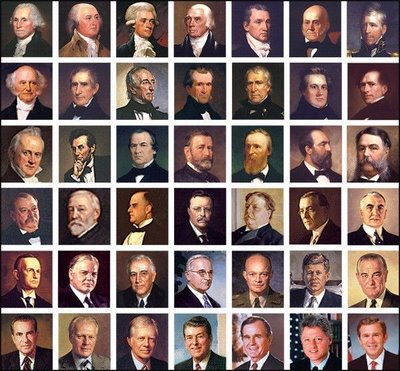
In commemoration of President’s Day, Ethics Alarms presents the ethics wisdom of the remarkable men who have served their country in the most challenging, difficult, and ethically complicated of all jobs, the U.S. Presidency.

Ladies and Gentlemen, the Presidents of the United States:

George Washington: “I hope I shall possess firmness and virtue enough to maintain what I consider the most enviable of all titles, the character of an honest man.” Continue reading →

The Wrestler, the Girl, and Cultural Confusion

"Wanna wrestle?"

Sixteen-year-old high school sophomore wrestler Joel Northrup forfeited his match against a fourteen-year-old wrestler with two X chromosomes, Cassy Herkelman, at the Iowa state wrestling championships, saying that “As a matter of conscience and my faith I do not believe that it is appropriate for a boy to engage a girl in this manner.” Obviously Herkelman didn’t require protection from anyone or anything. She was her district’s 112-pound champion wrestler, and she won the Iowa championship for her class as well.  Cassie had won 20 of 33 matches, all against male wrestlers, on her way to the state championship. Maybe Northrup didn’t want to risk being ridiculed for losing to a girl; maybe he was uncomfortable with the sexual overtones of an inter-gender contest. All we can do is assess his conduct by taking him at his word: he believes a young man wrestling a young woman is morally wrong, and was willing to forfeit a match he might have won. Joel was, after all, the fifth-ranked wrestler in the state at 112 pounds, and had a 35-4 record.

Was his decision admirable, or sexist? Was it gentlemanly, or demeaning? Continue reading →

Ethics Carnage in Wisconsin: The Ethics Grades So Far

The battleground

The story to date: Wisconsin’s Republican Gov. Scott Walker announced a budget-repair measure to address  looming budget deficits (in a state with a balanced budget mandate in its constitution) by requiring state employees to contribute a larger proportion of their pensions and health care plans, and  restricting their long-standing  collective bargaining rights. Wisconsin’s deficit is projected at $30 million for the remainder of the 2011, with a shortfall of $1.5 billion projected for next year. In response to Walker’s announcement and the near certainty of his plan being passed by the Republican dominated state legislature, 14 Democratic legislators fled the state to prevent a quorum and block a vote, teachers left their classes to protest in Madison, where they were joined by thousands of pro-union protesters, many of whom were organized and bused in by Organizing for America, a White House operated political group.

Let’s try to separate the ethics wheat from the chaff—amazingly, there is actually some wheat–and get an early line on the heroes, dunces, villains, and the rest as the Wisconsin budget battle threatens to become a full-fledged Ethics Train Wreck. Continue reading →

“The Strange Case of the Threatening Hypothetical”, Continued: The Verdict Is In!

The Victim

Lawrence Connell, the Widener School of Law criminal law professor placed on administrative leave for using the school Dean in a “violent scenario” to illustrate legal principles to his class, has given a revealing and clarifying interview to the National Association of Scholars website.

This section is most relevant to his current plight, and the fairness of complaints leveled against him by some of his students. It’s also about one of my favorite topics in criminal law, attempt law, which has a significant ethical component, as you will see. But the main point of interest is that includes one of the supposedly racist, sexist, threatening hypotheticals he used.

Q: Can you give me an example of a hypothetical you might have used in class, to which the students who complained might have been referring? Can you describe the context in which you would have used it? Continue reading →

A Strong Consequentialist Argument for Steve Jobs’ Liver…But Is It Right?

Steve Jobs and friend

Back in June of 2009, when “Ethics Alarms” was but a twinkle in my eye, there was a momentary controversy when ailing Apple CEO Steve Jobs was able to use his enormous wealth to land on multiple regional organ transplant lists, thus vastly improving his chances of getting a precious liver transplant in time to save his life. The California native ultimately got a Tennessee liver, but critics cried ethics foul. The organ transplant distribution system is not supposed to be based on wealth: otherwise, why not just auction off livers to the highest bidders? Because most insurance companies won’t cover multiple listings, only the richest patients can afford to employ this strategy, meaning that a system that is supposed to be means-neutral favors the wealthy after all. Continue reading →

Good-bye and Good Riddance to Bush’s Unethical “Conscience Clause”

The Obama Administration has deep-sixed a controversial Bush Administration rule that permitted a wide variety of health care workers to  refuse to administer treatments they found morally repugnant, what the Bush administration termed workers’ “right of conscience.”

Hospitals and clinics faced a loss of federal funds if they failed to uphold the rule, which itself was ethically repugnant. Kudos, thanks and hosannas to President Obama for getting rid of the Federal variety; some states, regrettably, still have them.

The American Medical Association’s position on the matter, embodied in a resolution passed by its membership, is clear and well-reasoned. Its reasoning applies to health care workers though the specific subject of the resolution was pharmacist conscience clauses.

The AMA’s resolution, “Preserving Patients’ Ability To Have Legally Valid Prescriptions Filled,” states: Continue reading →

Take “The Natalie Munroe Ethics Challenge”! Today’s Challenge: Who’s A More Unethical Educator—School or Mom?

Your mission, should you choose to accept it: Decide which of these stories from today’s newswires show more unethical conduct.

First, the Mom:

Tampa mother Ronda Holder was at her wit’s end trying to get her son, James Mond III, 15, to take school seriously. Neither she nor this father finished high school, and she told reporters she wasn’t going to let her son end up begging for spare change. She said they have offered James help, asked to see his homework, grounded him, lectured him and taken away his cell phone. Still he fails. “He’d tell us, ‘That school doesn’t give homework’ or ‘That teacher has a problem with me,’ ” Mond Jr. said. James did poorly in math, poorly in history, and when his latest report card showed an F in physical education, his mother felt it was the final straw.

So, naturally, she forced her son to stand near an East Tampa street corner for nearly four hours on a Wednesday afternoon, wearing a large sign around his neck with the message:

“I did 4 questions on my FCAT and said I wasn’t going to do it … GPA 1.22 … honk if I need  education.” Continue reading →