The Wake-Up Call And The Power Cord

As you may have noticed, your host has been involuntarily separated from Ethics Alarms for about 24 hours. Several things occurred that under normal circumstances would have had me dashing off a post while waiting for flights or preparing to check out of my hotel—and there were definitely several comments that had me reaching for a phantom keyboard—but I was without laptop, thanks to leaving the power cord behind in my previous hotel.

So I have a little story to tell. I stayed at a decent Boston hotel last night, not a 4 star hotel like the one I just left  in Atlanta (The Four Seasons), but a nice one, professionally run, dependable. Yet this morning this was my wake-up call, via recording:

“It’s 7 AM. This is your wake-up call for March 8, 2018.”

Almost at the same time, David Hogg was on CNN, explaining how darned easy it was to create a system that would prevent school shootings forevermore.

Wrong. Systems break down, you experience-free, arrogant, disrespectful, know-nothing puppet.  The belief that human beings can devise systems that will solve every problem, or any problem, and do what they are designed to do without failing miserably at the worst possible times and in the worst imaginable ways is signature significance for a fool, or a child. O-Rings fail. Police don’t act on warnings that a kid is violent. Obamacare raises health care premiums.  Political parties end up nominating Hillary Clinton and Donald Trump. Jack Ruby breaks past police security. Communism ends up killing hundreds of millions rather than creating a worker paradise. The Titanic hits the wrong iceberg exactly where it’s weakest. Hitler takes a sleeping pill during the Normandy invasion.

The T-Rex gets loose. Continue reading

Comment Of The Day: “Of COURSE! “Think Of The Children!” Takes The Next Irresponsible Step!”

More Stoneman High students, including the ubiquitous David Hogg,  appeared on the talking head Sunday show this morning, and I admit my reaction was the same as in my original post about the exploitation and hyping of these young Americans, who are both legitimately objects of sympathy and also inherently ill-equipped by education and life experience to add substance to the policy debate over guns besides visceral and simplistic reactions. I detest the concept of “moral authority,” when a particular experience is deemed sufficient to imbue a figure with prominence in a debate that the quality of his or her reasoning and knowledge does not. “You would feel the same way they do if you went through what they did” is not an argument, but a rationalization, and a stand-in for, “How dare you? Have you no heart?”

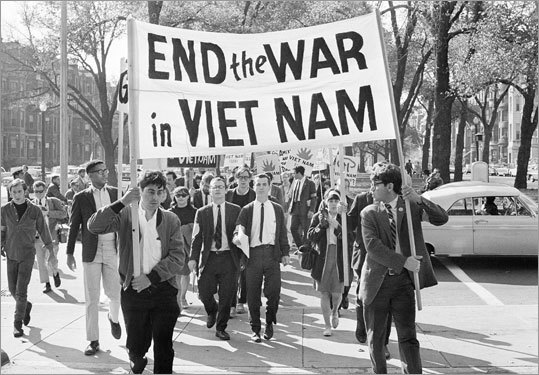
The news media loves bestowing moral authority, because giving a platform to victimes combines sentiment and drama—almost as good as sex and scandal. The grieving Sandy Hook parents similarly became instant experts in law and policy, just as grieving mother Cindy Sheehan had suddenly become an expert in warfare and Middle East policy a decade before. I never accepted the logic of this, even when my peers and classmates were closing down my campus, taking over buildings and dictating national policy in Southeast Asia using chants that would have been at home on any grade-school play ground. Their moral authority arose from the fact that they were facing the draft. So did much of their interest in stopping the Vietnam war. So yes, I am conditioned to view the latest edition of self-righteous, articulate, indignant and angry minors with all the answers with skepticism, and I confess, the urge to roll my eyes.

At least some of the protesters in the Sixties were pre-law. [ Otter: Take it easy, I’m pre-law. Boon: I thought you were pre-med. Otter: What’s the difference?*]

Michael has a different, less biased perspective. Here is his Comment of the Day on the post, Of COURSE! “Think Of The Children!” Takes The Next Irresponsible Step!:

Most of this analysis is “right on” logically, and we both operate on that scale. However, it is also not illogical to expect an emotional response from these children, who did experience the tragedy either directly or by connection. Nor is it illogical to expect them to react the way they are reacting,

BUT it would be illogical and ignoring (for them, perhaps ignorance of) history if we did. Those of us who lived through the protests of the ‘60s recognize that responding by calling them immature is not an effective answer. Yes, they are immature. Yes, they are ignorant of the Constitution, the Second Amendment (including its background and its interpretation by the Supremes), and the logic of either the gun rights or the gun control advocates (which, based on Heller, I do not believe have to be mutually exclusive). The power of their emotional response can be ignored only at the risk of erosion of Constitutional principles based on emotional reaction to them and to the condescension dripping from some of the strongest advocates for unfettered gun rights ostensibly based on the Second Amendment. Now, my own emotional response is no doubt devoid of logic.

Bless them for getting engaged in the shadow of another tragedy. Try to educate them on the applicable law and principles so that their own approach can mature. Listen to them. Maybe there is one or more prodigy who will then teach us something.

*“Animal House.”

Morning Ethics Warm-Up, 2/9/2018: Post 2016 Election Ethics Train Wreck Update Edition. Sorry.


Good Morning.

I don’t say “I told you so” as often as I could or would like to. One continuing theme at Ethics Alarms since the 2016 election that drove progressives mad has been the accusation leveled at me that I have been under-emphasizing the existentially perilous character and conduct of the President while concentrating too much on the conduct of his critics. My answer has been that I believe that the reaction of progressives, Democrats and the news media to President Trump’s election has been, by far, the most disturbing ethics story of the past year, and in historical context one of the most serious and dangerous periods in U.S. history. That conclusion has been reinforced as the year progressed. I was and am right.

None of that makes the ethical conduct of the Trump Presidency any better than it is; as I made clear in last year’s ethics audit,  he has largely behaved as I expected he would when I declared him, over and over again, unfit and unqualified. However, if our institutions and the public’s trust in them remain as strong as they have through-out U.S. history, a single odd-ball President, even for two terms, will not do irreparable damage. What the resistance and its allies in the Democratic Party and the news media are doing, however, threatens to wreck many of those institutions and tear down public trust to a point of no return. That’s my professional assessment. It is not one based on partisan politics or ideology, but on American history, cultural history, and ethics.

1 Fake news and fake history. I knew it was manufactured nonsense when my Facebook friends, Democrats, pundits and the mainstream news media began once again screaming “Fascist!” and claiming that the President’s expressed desire for a major military parade was a terrifying departure from American tradition. I knew a little research would prove it so, but then, I thought, surely some news source would have the integrity to do its job, and some “nationally recognized historian,” like go-to Democratic shills like CNN’s Douglas Brinkley, would set the record straight. Why should I have to do the work for free that these people are paid handsome fees to do, and have a duty to do besides?

Yet few corrections from these supposedly objective sources were registered while Rep. Adam Smith (D-CA) said, “A military parade of this kind would also be a departure from the values of our constitutional democracy,” and Rep, Ted Lieu (D-CA) sneered, “Because authoritarian regimes like Russia and North Korea hold massive military parades does not mean that we must as well. Politico headlined, “Trump’s Military Parade Draws Bipartisan Rebuke.” The Washington Post told readers,  “Military Parades Are About Ego and Power. Of Course Trump Wants One.”  Normally reasonable bloggers were similarly triggered, like Prof. Jonathan Turley, who wrote, “The United States has long rejected the holding of military parades featuring tanks, missiles and other heavy weapons as a symbol of authoritarian regimes like the Soviet Union, North Korea and other countries.”

I guess this depends on what one’s definition of “long” is. Such parades have been out of style since the Vietnam War caused much of the public and the political class to turn against the military, though politicians still give deceit-laden lip-service to “supporting the troops,” just not what they do. Military parades featuring heavy weaponry were not uncommon between the end of the Civil War in 1865 through 1961 during the peak of the Cold War, when it was arguably strategically beneficial to remind the USSR that if it was going to bury us, there would be a fight.  Many of these parades, in 1919, 1942, 1946, 1953, 1957, 1961, and as recently as 1991, featured tanks, missiles, and sometimes many thousands of troops  Let’s see: that’s Presidents Wilson, Roosevelt, Truman, Eisenhower, Kennedy, and George H.W. Bush…Hitlers all. That there is Chuck Schumer, a leader of the party having the vapors over the President’s suggestion, saying this: Continue reading

Those “Dissent Is Patriotic” Signs

My Alexandria, Virginia neighbors are fond of simple-minded and obnoxious virtue-signalling signs, as I discussed here.

Another one has started popping up, this one proclaiming “Dissent is Patriotic.” As a general proposition, little of value can be stated in three words, especially those with “is” in the middle. “Dissent is Patriotic” is a gross generality, and a sign like this bolsters the delusions of smug absolutists and the historically ignorant.

The ACLU has been pushing this slogan (to sell T-shirts, it seems), and it had a re-birth thanks to the NFL kneelers, who are in truth a perfect example of when dissent isn’t patriotic. Incoherent dissent isn’t patriotic: it makes all dissent look bad. Dissent based on hate, lies, or a desire to divide isn’t patriotic: it’s hateful, dishonest and divisive, which is to say harmful, and thus unethical.

Speaking of dishonesty, many of these signs use the phrasing you see on the left, which is a fake quote attributed to Thomas Jefferson. Attaching a dubious assertion to a much-admired historical figure is an unethical propaganda tactic employing a dishonest appeal to authority.  (This is a famous example.)

As Ethan Epstein wrote in The Weekly Standard,

Few if any Americans are associated with more apocryphal quotes than Thomas Jefferson, but the false notion that he said, “dissent is the highest form of patriotism” is among the easiest to dispel. Because Jefferson never would have said something so idiotic. Of course dissent can be patriotic, but it isn’t inherently so. What one is dissenting from matters. Were members of the German American Bund, who protested the U.S.’s anti-Nazi policies in the 1930s and ‘40s, enacting the “highest form of patriotism?”

Continue reading

Comment Of The Day: “Morning Ethics Warm-Up, 1/14/18: Comfort Women…”

Sam Halverson’s 6th comment to Ethics Alarms is a Comment of the Day, and a fascinating one. It comes in response to Item #2 in the 1/14/18 Warm-up, which involved the seemingly endless argument between South Korea and Japan over the Korean women forced be sex slaves by their Japanese captors during World War II. One of the pleasure of operating this blog is that its readers teach me so much. This is a prime example.

Here is the Comment of the Day by Sam Halverson on the post, Morning Ethics Warm-Up, 1/14/18: Comfort Women, Presidential Health Lies, Pit Bulls And No “Goodbye Columbus”…Yet

Let start this comment by saying; this is not what it looks like.

My dog (a mutt, maybe a little bull terrier, who knows?) is not in this fight between Japan and the Republic of Korea. To categorize it as a fight probably isn’t correct either as the facts have been settled and there has obviously been a huge evil committed by Japan against the people of Korea, one I am not writing this to convince anyone of anything but rather to inform people of something they may not of known before hand. Whataboutism this is not, anger, disgust and a bit of shame it is.

Everyone loves a hypocrite; watching someone fall always delight the side of us that craves spectacle and someone who betrays themselves only raises the precipice higher. Which is why I want to talk about the massive human trafficking problem that goes on in The Republic of Korea.

The Korean people are polite. They do not talk about scandalous things in public, not with strangers and definitely not with foreigners. They would rather ignore a problem in their polite society than admit it exists. Getting an average South Korean to self criticize the culture is like pulling teeth and just as likely to end in blood loss.

For example, it is a blatantly open secret that while prostitution is illegal (as well as pornography) in Korea, it is rampant. There are literal whorehouses that display their wares in the open on the street behind pink curtains and glass walls, police walk by without comment. These are known as “glass houses” and the implied metaphor for the country is apt.

While the Korean government is chastising the Japanese for refusing to apologize for atrocities committed over half a century ago, they are practicing the very same evils today.

Every year an unknown number of women are forced into prostitution and domestic servitude on a country that is rated as a TIER I nation on the U.S. Office to Monitor and Combat Trafficking in Persons, TIER I being reserved that nation’s that comply with international laws on human trafficking.

I wonder if South Korea is afforded leniency because of it’s strategic position in advancing US interests in the region, a reclassification would bring sanctions and weaken US Korean relations. I can personally tell you that that status is crap, unlike the US where human trafficking is hidden behind closed doors there it is as mentioned visible from the street.

How do I know? I was stationed at Camp Hovey, South Korea for a period of one year while serving in the army as an 11B. It’s a smaller camp connected to Camp Casey which is one of the largest and furthest north of the primary American installations. I was stationed there in 2010 and witnessed this with my own eyes. Comfort women still exist, but they are being sold willingly by the Korean public to friends not Invaders. Continue reading

Public Confidence And Trust (2): Observations On Gallup’s Confidence In Institutions Poll

In Part 1, we looked at the implications of Gallup’s 2017 polling on Americans’ beliefs in the trustworthiness and honesty of various occupations.  This post looks at institutions, and what Gallup’s research shows us when those polled answer the question, “Now I am going to read you a list of institutions in American society. Please tell me how much confidence you, yourself, have in each one — a great deal, quite a lot, some or very little?”

As with the occupations poll results, what is most interesting—or depressing— is how the public’s attitude has changed over time. Gallup has been taking this poll at the end of every year since 1993, and in some years, for some institutions, before that.

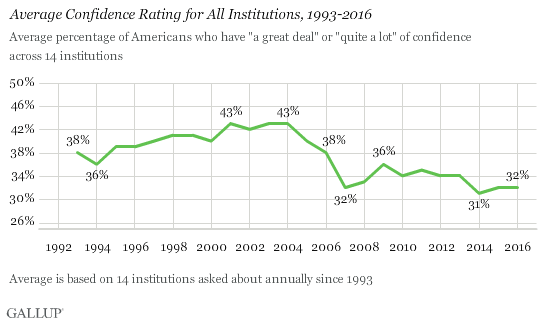
The most important finding is that Americans have less trust and confidence in our institutions than ever before, and have been in this state for three straight years. (See chart above.) The 32% average confidence level in all institutions measured was one point above 2016, which came in at a record low 31%, but that difference is not statistically significant. This is the third straight year that the number has been under 33%. That has never happened before.

I have written about this issue in the past (and discussed it with professional groups, like newly elected state legislators, in ethics seminars), with the same alarm. For a democracy to lack confidence and trust in its institutions portends disaster, and the danger cannot be understated. Of all forms of government, it is democracy that is most built on a foundation of public trust. This erosion in public trust—the average level of trust has fallen about 26% in just ten years—is collectively frightening. Look at the first line and the last in many of these charts: Continue reading

Morning Ethics Warm-Up, 12/7/17: Al Franken’s Day That Will Live In Infamy [UPDATED]

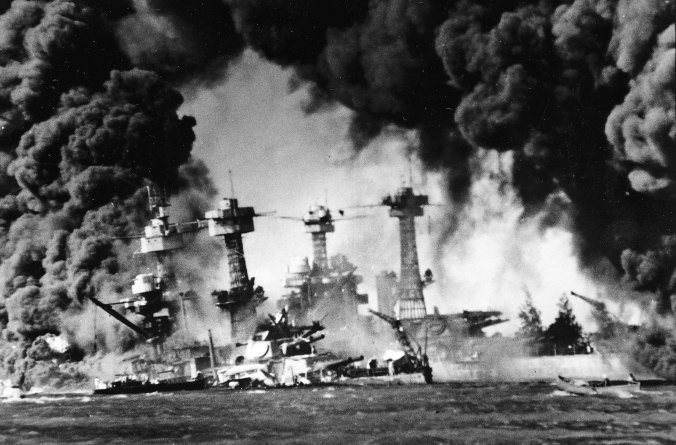
Battleship USS West Virginia sunk and burning at Pearl Harbor on Dec. 7, 1941. In background is the battleship USS Tennessee.

Good Morning, Bad Memories…

1 The duty to remember…The most amazing thing about Pearl Harbor was perhaps how lucky the United States was that the sneak attack by Japan, as devastating as it was, didn’t permanently cripple our ability to defend ourselves. Two links lead to explanations why. Here is a letter written by Admiral Nimitz, then in his eightieth year. to Admiral David L. McDonald, the present Chief of Naval Operations. The National Review provides the tale of how a forgotten Georgia Congressman, Democrat Carl Vinson saved the country and probably the world.  An excerpt:

For nearly a decade before Pearl Harbor, Vinson had schemed and politicked in brilliant fashion to ensure that America was building a two-ocean navy larger than all the major navies of the world combined. Vinson had assumed in the mid-1930s that fascist Japan and Germany posed existential threats to the United States. For America to survive, he saw that America would need mastery of the seas to transport its armies across the Pacific and Atlantic.

This is Thank You Carl Day. Read it all.

2. ‘I wasn’t good enough, I wasn’t smart enough, and doggone it, nobody likes me!’ This appears to be the end for Senator Al Franken. If it’s not, the end is near and inevitable. His seventh new accuser was the tipping point, for some reason, though her story Franken denies—especially the part where the anonymous woman claims that after she ducked his attempt at a spontaneous kiss in 2006, he  protested, “It’s my right as an entertainer! ” The soon-to-be-former Senator told Politico,

“This allegation is categorically not true and the idea that I would claim this as my right as an entertainer is preposterous. I look forward to fully cooperating with the ongoing ethics committee investigation.”

That “It’s my right” comment sounds to me like a desperate attempt to save face by making a joke out of an awkward situation, not a serious claim. If I’m right, then Franken’s statement is deceit: he’s saying that he would never claim such a right, but he isn’t saying that those words never came out of his mouth. Al’s slippery, mealy-mouthed, not-quite apologies are a large part of why he’s in this mess, as I wrote here. 

Still, no one should be presumed guilty or face negative consequences for a public accusation by an accuser who refuses to go on the record. This is basic fairness and due process. Never mind: the Democratic women in the U.S. Senate are less interested in due process and fairness than grandstanding and standing for the proposition that women must be believed in cases of sexual assault, unless they were assaulted by Bill Clinton. I think that’s the rule, right?

They led a coordinated attack on Franken yesterday by 16 U.S. Senators, including Sen. Kirsten Gillibrand of New York—you know, the one who championed “Mattress Girl”?–who  wrote in a 650-word statement,”While Senator Franken is entitled to have the Ethics Committee conclude its review, I believe it would be better for our country if he sent a clear message that any kind of mistreatment of women in our society isn’t acceptable by stepping aside to let someone else serve.”

That’s right, Senator, it’s better to send the message that due process is just a sham to make doing what you want to do look fair.

For example, how do you like this (from Politico):

Two former colleagues of the woman independently corroborated her version of events, including Franken telling her he had the right to try to kiss her because he was “an entertainer.” The first former colleague interviewed by POLITICO said she was told of the incident in 2006, shortly after it happened. The second former co-worker said she was made aware of the encounter sometime in 2009 or 2010.

What? Those women didn’t corroborate the the accuser’s “version of events”! How can any journalist write such junk? How could an editor let it pass? All they can do is corroborate that the woman said this happened, not that her account is accurate or true.

But again, never mind. This is The Terror. Al’s a man, Democrats have been caught in the web of hypocrisy they started spinning when Clinton was President, and his metaphorical blood must cleanse them. Continue reading

Comment of the Day: “‘White Christmas’ Ethics Addendum: Battlefield Incompetence, Insubordination And More In The Holiday Classic”

To kick off the Not-Too-Early-To-Play-Christmas-Music Season, here is a Comment of the Day that adds another chapter to the Ethics Alarms commentary on “White Christmas,” the Bing Crosby-Danny Kaye musical film that is one of the five or six most resilient of the Christmas classics. The initial ethics analysis is here.

The post that spawned the latest take was a rare guest essay by Ethics Alarms veteran texagg04.

Now comes new commenter SykesFive to provide insight into the pivotal character of General Waverly, played by Dean Jagger. Among other things, he argues that one reason the general was so beloved was that he was poor general, treating the lives of his men as more important than his mission.

Here is his Comment of the Day on tex’s post, “White Christmas” Ethics Addendum: Battlefield Incompetence, Insubordination And More In The Holiday Classic:

I have a somewhat different take on this. I sometimes think I am the only person who thinks so much about the Waverly character.

As the scene opens, Major General Waverly is being relieved for frankly the only reason American unit commanders were relieved during the war: he didn’t take the objectives. That is failure. It could be lack of aggression or poor coordination or anything else, but ultimately it is failure and the commanding officer will pay the price. He will be shuffled off to a rear area command, or maybe just left to bum around the theater, and be out of the Army by the end of 1945 because his record will be so tarnished. He will be lucky not to revert to his prewar rank.

Waverly’s age suggests he was a company-grade officer during WWI and may or may not have seen combat during that conflict’s closing weeks, then spent decades idling in the interwar army. Apart from whatever happened in 1918, Waverly has no more combat experience than anyone else in the division. He is not an experienced commander by any measure. He had the right credentials–a few articles in service journals, no serious problems on his posts, and of course a West Point Ring–but had never really been tested as a field-grade officer. Again this is a common profile.This is a very common profile for WWII US Army division commanders.

So in 1940, let’s say Colonel Waverly seemed like a likely candidate for command of an infantry division in the expanding army. He did well enough with some trial commands–all during stateside training and expansion–and was promoted to one and then two stars. He seemed competent enough when the 151st Division was formed and went through let’s say nearly two years of intensive training in Texas or California or wherever. And so the division was sent to Europe in let’s say August 1944, then spent a couple months languishing in Normandy or the Pas de Calais region, during which time Waverly was a friendly presence at other officers’ headquarters as well as around his division. Bear in mind that at this point, and really for the whole war after the breakout from Normandy, the limit on American frontline strength was providing fuel and artillery shells. There were more men and tanks than could be sustained at the front. Continue reading

An Ethics Hero Epic: Johnny Bobbitt, Jr, Kate McClure, And Americans

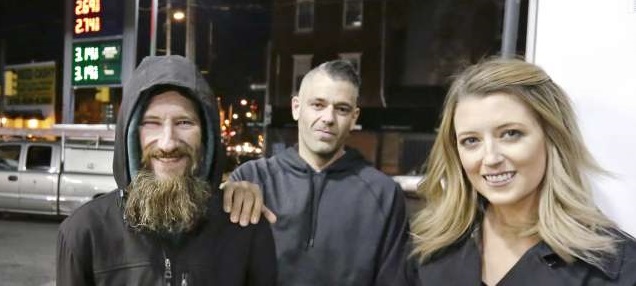
Kate, Johnny, and Kate’s boyfriend. I bet you can tell which is which…

I learned about this story days ago, and got so distracted by all the nauseating ethics news that I neglected to write it up. I apologize. This kind of story should always be the top priority.

Kate McClure of Bordentown, New Jersey, was driving through Philadelphia to visit a friend when her car ran out of gas in a tough section of the city. McClure pulled over, got out of her vehicle and began to walk to the nearest gas station. But Johnny Bobbitt, Jr, an ex-Marine who lives on the streets, saw her plight and immediately took charge. The neighborhood was a dangerous place for a woman to walk alone, he told her, and suggested that she get back in her car, lock the doors, and leave matters to him.

A few minutes later, Bobbitt was back with a full gas can, and gave Kate  20 dollars, the only money he had to his name,  to make sure she could get home safely.

McClure said she did not have money to pay Bobbitt back that night, but she returned several times to the spot where he sits, offering him a few dollars and useful items.. Then McClure started a GoFundMe for her rescuer. She wrote,

I would like to get him first and last month’s rent at an apartment, a reliable vehicle, and 4-6 months worth of expenses. He is very interested in finding a job, and I believe that with a place to be able to clean up every night and get a good night’s rest, his life can get back to being normal.

So far, her campaign has attracted donations totalling almost $380,000 for Bobbitt.

The veteran has been homeless for over a year because of real problems. He has battled drugs, bad choices and probably emotional issues as well. I hope this story has a happy ending. So far so good, though. Johnny demonstrated exemplary ethics, sacrificing his own well-being for a stranger. Kate demonstrated genuine gratitude, empathy and concern, and took affirmative action to try to pay him back. And the American public, as it usually does, showed that when sufficiently alert, it knows how to reward good and selfless deeds.

Comment Of The Day: “The West Point Communist, How Cultures Rot, And The Whistleblower’s Letter…”

I was hoping one of the Ethics Alarms military vets would on the issues raised by the recent West Point scandal, and frequent commenter Steve, among others obliged.

Here is Steve’s Comment of the Day on the post, The West Point Communist, How Cultures Rot, And The Whistleblower’s Letter…

These issues are the result of the PC culture that civilian leadership has foisted on all things military. Results are demanded, not those of honor and integrity but of achievement of feminist and progressive goals.

I am retiring from the Marine Corps, things have changed and in terms of accomplishing the mission only a few changes have been good. The core of our military is the infantry, the best of the best of our officers strove to become infantry officers, the most demanding and dynamic job a young officer can have. To be successful you have to be in the top 10 percent of physical performance, be mature, have heart and character. The service academies strove to develop those types of leaders, the type that could be successful infantry officers. With that as the bar, our academies, all of them, have provided the nation with some of the best leaders has given the nation a steel core that helps strengthen the whole country and provides us with resolve and honor that has helped to drive the nation during times of strife.

Civilian control of our military is essential but is also the cause of the rot. Many of the issues such as DADT and the official acceptance of gays in the service doesn’t matter much, the fight and dissent on this issue was due to concerns of political correctness and social engineering effecting the performance of the military, creating a distraction from, in terms of gays in the military it has never hurt us and we have all know some, as a leader I don’t give a shit who you sleep with so long as conformity and uniformity is achieved where it matters most, that the chemistry of the unit is stable. That is that issue in a nut shell.

Now the issue that is very much hurting our academies and the military is the unattainable push for equality, again the core of our military is the infantry, the pinnacle of being a good soldier is to be an infantryman, it is where the bar is set the highest, success requires achieving and maintaining peak mental and physical condition. The infantry is the essence of the military and women can only be artificially successful as an infantryman.

Over the last couple of decades the push has been focused of the individual achievement of women, for achievements sake, not as a multiplier of available manpower or enhancement of performance but to be able to lay claim to being just as effective soldiers as men, it is a desire to be able to make a claim, not to realize it. Standards remain different, there is an acceptance that requirements must be flexible to the individual so as not to become the focus of ire from civilian leadership. It all flows from the top, civilian authorities select generals not solely based on merit or performance but more and more on politics, those who are willing to tow the political correctness line are promoted, those who focus on effectiveness and strive to be apolitical are shown the door or are passed over. Continue reading