Fourth Of July Ethics: The Signers, Snopes, And Fact-Checking

stone.tif

I received  this inspiring bit of Americana from an old friend, a Marine and lawyer with a love of history. It’s a screed of unknown origin that has been circulating the internet since the 20th Century. Maybe you’ve seen it too:

The Price They Paid

Have you ever wondered what happened to the 56men who signed the Declaration of Independence?

Five signers were captured by the British as traitors, and tortured before they died.

Twelve had their homes ransacked and burned.

Two lost their sons serving in the Revolutionary Army; another had two sons captured.

Nine of the 56 fought and died from wounds or hardships of the Revolutionary War.

They signed and they pledged their lives, their fortunes, and their sacred honor.

What kind of men were they?

Twenty-four were lawyers and jurists.

Eleven were merchants, nine were farmers and large plantation owners; men of means, well-educated, but they signed the Declaration of Independence knowing full well that the penalty would be death if they were captured.

Carter Braxton of Virginia, a wealthy planter and trader, saw his ships swept from the seas by the British Navy. He sold his home and properties to pay his debts, and died in rags.

Thomas McKean was so hounded by British that he was forced to move his family almost constantly. He served in the Congress without pay, his family was kept in hiding. His possessions were taken from him – poverty was his reward.

Vandals or soldiers looted properties of Ellery, Hall, Clymer, Walton, Gwinnett, Heyward, Rutledge, and Middleton.

At Battle of Yorktown, Thomas Nelson,Jr., noted that the British General Cornwallis had taken over the Nelson home for his headquarters. He quietly urged General George Washington to open fire. The home was destroyed, and Nelson died bankrupt.

Francis Lewis had his home and properties destroyed. The enemy jailed his wife, and she died within a few months.

John Hart was driven from his wife’s bedside as she was dying. Their 13 children fled for their lives. His fields and his  gristmill were laid to waste. For more than a year he lived in forests and caves, returning home to find his wife dead and his children vanished.

So, take a few minutes while enjoying your 4th of July holiday and silently thank these patriots.  It’s not much to ask for the price they paid.

Remember: freedom is never free! We thank these early patriots, as well as those patriots now fighting to KEEP our freedom!

I hope you will show your support by sending this to as many people as you can, please. It’s time we get the word out that patriotism is NOT a sin, and the Fourth of July has more MEANING to it than beer, fireworks, HOT DOGS,  and picnics……

image002

The purpose and primary message of the post is irrefutably true. Those who signed the Declaration did so at great personal risk and sacrifice. Had the new nation failed in its revolution—and really, it is amazing that it didn’t—all of them would have been hanged as traitors. It was an act of principle and courage, and what happened later is entirely moral luck. The signers would have been no less honorable, remarkable and heroic if every single one of them, by various strokes of good fortune, had become wealthy, powerful, prospered in everything they did and died in advanced years, like Franklin, Adams and Jefferson. Unfortunately, most citizens lack the education, acumen and tools to figure this out, so we get stuff that equates random and uncontrollable misfortune with enhanced virtue. Continue reading
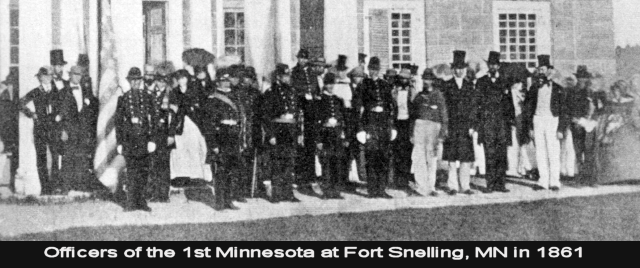
Ethics Quote Of This Day, July 2: The Inscription On the Monument To The First Minnesota Regiment At Gettysburg National Battlefield Park

first-minn-fort-snelling

 “On the afternoon of July 2, 1863 Sickles’ Third Corps, having advanced from this line to the Emmitsburg Road, eight companies of the First Minnesota Regiment, numbering 262 men were sent to this place to support a battery upon Sickles repulse. As his men were passing here in confused retreat, two Confederate brigades in pursuit were crossing the swale. To gain time to bring up the reserves and save this position, Gen Hancock in person ordered the eight companies to charge the rapidly advancing enemy. The order was instantly repeated by Col Wm Colvill. And the charge as instantly made down the slope at full speed through the concentrated fire of the two brigades breaking with the bayonet the enemy’s front line as it was crossing the small brook in the low ground there the remnant of the eight companies, nearly surrounded by the enemy held its entire force at bay for a considerable time and till it retired on the approach of the reserve the charge successfully accomplished its object. It saved this position and probably the battlefield. The loss of the eight companies in the charge was 215 killed & wounded. More than 83% percent. 47 men were still in line and no man missing. In self sacrificing desperate valor this charge has no parallel in any war. Among the severely wounded were Col Wm Colvill, Lt Col Chas P Adams & Maj Mark W. Downie. Among the killed Capt Joseph Periam, Capt Louis Muller & Lt Waldo Farrar. The next day the regiment participated in repelling Pickett’s charge losing 17 more men killed and wounded.”

On July 2, 1863, in Gettysburg, Pennsylvania, 262 Union soldiers in the First Minnesota Regiment rushed—which apparently specialized in desperate fighting-–to throw themselves into a breach in the Union line at Cemetery against a greatly superior force, knowing that they were almost surely to die. 215 of them did, but the regiment bought crucial minutes that allowed reinforcements to arrive.

It is perhaps one of the most inspiring of the many acts of courage that day, the second day of the battle that changed the course of the Civil War. I first wrote about the sacrifice of the First Minnesota five years ago, here.

Let’s try to remember.

(A recommendation: Sometime between July 1 and the Fourth ever year, we always watch Ted Turner’s excellent film, which also has one of my favorite film scores.  It  helps.)

Gene Autry Misinformation Update: Believe It Or Not, It Happened Again!

"Wild Bill" Donovan, who should have had nothing whatever to do with my ethics seminar today, but did anyway...

“Wild Bill” Donovan, who should have had nothing whatever to do with my ethics seminar today, but did anyway…

Yesterday I wrote about a lawyer in a legal ethics seminar interrupting me with a revelation about Gene Autry that was completely false.

Today I taught another legal ethics seminar, this time for a government agency. I was discussing was the various government ethics dilemmas in “Bridge of Spies,” the story of how lawyer Jim Donovan helped secure the release of downed U.S. flyer Francis Gary Powers in a famous incident during the Cold War. Many of the issues covered in my presentation were explored in this Ethics Alarms post.

As the film portrays it, Donovan, an insurance lawyer, does such a tenacious job defending an accused Soviet spy from U.S. government prosecution that the CIA recruits him to broker the trade of his now-former client, convicted and in prison, for Powers. In discussing the classic government lawyer dilemma of “who is the client?,”  I noted that the CIA agent who recruited Donovan told him that he would have no client. “Why did the CIA trust Donovan?” I asked socraticly. “Why did Donovan, an insurance lawyer, think he was qualified to engage in this kind of representation, it it was a representation?”

For the second time in nine days, an attendee piped up with an amazing piece of information.

“I suspect some of the answer to both questions is that James Donovan was the son of “Wild Bill” Donovan, who is considered the father of the Central Intelligence Agency,” he said. Continue reading

Not Surprisingly, The Marines Pass An Integrity Test

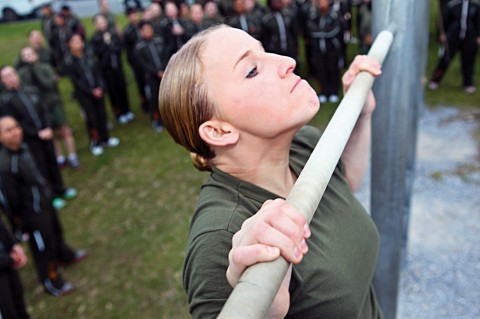
Marines pull-up2

In 2013, I wrote about what appeared to be a retreat by the Marines in the face of pressure to admit more women into the Corps. At the time, it looked like the Marines would be joining a shabby parade.

For example,  some fire departments have allowed political correctness, feminist threats, irrational diversity ideology and fear of “disparate impact” lawsuits  to lead to their lowering of fitness standards to allow more women to be firefighters, if weak and dangerously unqualified ones.

The USMC is having none of that, apparently, despite itys tactical delay in 2013. Accepting the new policy that now allows women to qualify for combat duty, the Marine Corps has established new fitness requirements that have weeded out six of seven female recruits as well as forty out of about 1,500 male recruits who failed to pass the new regimen of pull-ups, ammunition-can lifts, a 3-mile run and combat maneuvers required  to be certified combat-ready.

That’s fine. It would be fine if 6 out of 7 male recruits failed. There should be no affirmative action when diversity for diversity’s sake results in a less effective work force regardless of the tasks involved, but especially when putting thumbs, fists and feet on the scales will get people killed.

In fact, in a decade or so, when gene splicing, changing cultural norms, elective breeding and the unconditional surrender of the male gender in the War Against Women results in the average American woman being 6’2 and looking like this… Continue reading

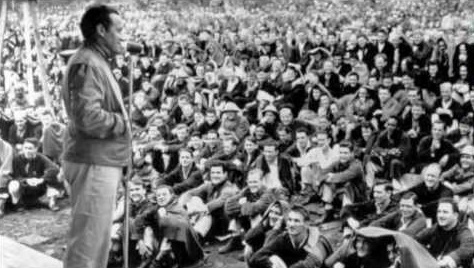
Remembering Bob Hope

hope and troops

I can’t blame the airport officials who voted 8 to 1 last month to eliminate Bob Hope’s name and change the airfield’s label to “Hollywood Burbank Airport.”  It was a business decision based on hard data. Hope’s name wasn’t resonating with passengers outside of Southern California, especially those east of the Colorado Rockies.

The airfield had been  rechristened to honor Hope in 2003, not long after his death at the age of 100. Yet just a bit more than a decade later, the entertainment icon whose theme song was “Thanks for the Memory” is fading from ours at record speed.  The comments on various news reports on the airport’s decision range from stunningly ignorant to disrespectful. Bob Hope deserves better. The culture will be stronger if it remembers him, and so will the nation.

I must admit, I didn’t see this coming, but I should have. The survival or disappearance of once famous figures from our cultural memory fascinates and often horrifies me. One of the definitions of culture is what a society chooses to remember and chooses to forget: these seemingly random decisions have significant long-term consequences. Occasionally there is a last-minute rescue:  just as the Treasury was preparing to remove Alexander Hamilton from the ten-dollar bill, a Broadway musical, of all things, rescued his image and re-established his cultural presence. Usually, however, once a figure drops down the memory hole, he and the public appreciation of his importance is gone, gone, gone. Forever.

The mechanics of this process are chaotic. A single movie that enters classic territory and is featured regularly on television can rescue the memory of a whole career for generations. Ray Bolger, an eccentric dancer who was never regarded as close to Fred Astaire or Gene Kelly in the hierarchy of Hollywood hoofers nonetheless remains a recognizable figure today purely on the basis of “The Wizard of Oz.” Edward G. Robinson was a famous and respected actor mostly on the strength of his gangster films, but his memory survives almost entirely due to his strange ( and strangely miscast)  role as the Hebrew villain in “The Ten Commandments.” Meanwhile, who remembers George Raft?

Hope, I now realize, despite one of the longest and most successful careers in show business history and epic stardom on radio, films, theater and T, despite being the most frequent and most successful MC for the Oscars telecast and while he was alive and regarded for 50 years as the undisputed champion of stand-up comics, has no such marker to keep his image and memory alive. Humor is famously dependent on the times and culture, and Hope’s humor and style were more so than most. He was not a physical or slapstick comedian, and his movies, with the exception of the best of his “Road” movies with Bing Crosby, were at best mildly funny. The later ones, like his films with Phyllis Diller and Lucille Ball, weren’t even that. By the 1960’s, Bob Hope’s reputation as an entertainment icon was so well-established that he didn’t really need to be funny; the fact that he was Bob Hope was enough. He was a living relic of vaudeville, radio comedy and traditional TV skits who never changed his delivery or mildly self-deprecatory yet cocky demeanor. But what was special about him? There’s little available on TV or elsewhere to let new generations in on the secret. Continue reading

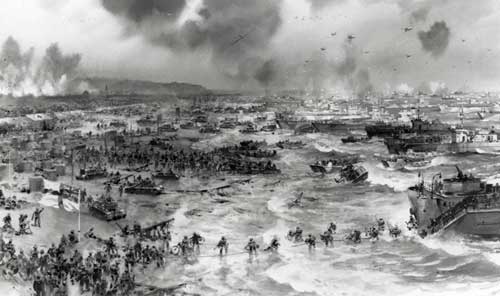
Ethical Quote Of The Day—D-Day, That Is : Gen. Dwight D. Eisenhower, Supreme Allied Commander

dday_landing

“Our landings have failed and I have withdrawn the troops. My decision to attack at this time and place was based on the best information available. The troops, the air and the Navy did all that bravery could do. If any blame or fault attaches to the attempt it is mine alone.”

—–Gen. Dwight D. Eisenhower, Supreme Allied Commander in Europe, as found on a piece of paper he wrote on just before the D-Day invasion began, and just after he ordered it to commence, on June 6, 1944.

Eisenhower wrote these words to be his own apology and acceptance of responsibility had the massive invasion at Normandy been a defeat rather than the history-altering victory it was.

It almost was a defeat, and as the note, which Ike’s naval aide, Captain Harry C. Butcher, found crumpled in his shirt pocket weeks later and saved for posterity, shows, Ike realized all too well that it might be. The secret dry run for the invasion had been a deadly fiasco, the weather was atrocious, and no military operation on this scale had ever been attempted before in the history of man. It took a combination of German mistakes, high command confusion, individual heroics and the usual twists and turns of chaotic fate that decide most battles to allow the Allies to prevail. Continue reading

Comment of the Day (2): “Ethics Hero: Dallas District Attorney Craig Watkins”

jag

The celebration here of Dallas DA Craig Watkins’ installment of an open file policy to ensure that crucial evidence that might exonerate a criminal defendant doesn’t get “inadvertently” left out of the material shared with defense counsel prompted this comment from one of the Ethics Alarms resident Marine vet, THE Bill:

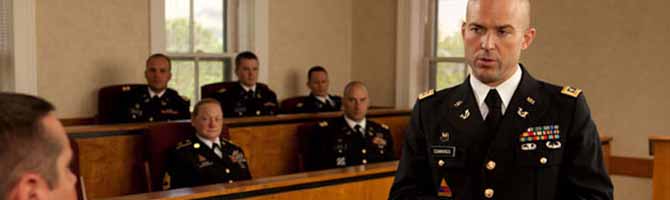
“I’ve always wondered why the civilian courts haven’t adopted the military practice of having both the prosecutor and the defense council in the same office under the same command as they do in JAG. It would seem that this would eliminate the US versus THEM mindset.”

I responded…

“It’s because of loyalty and trust, Bill. The adversarial relationship and the appearance of such assures the accused that the two lawyers aren’t colluding against the defendant, and attorney-client confidentiality is surely at risk if there is not physical distance. That’s why in law firms a lawyer with a client who might be adverse to another lawyer’s client in the same firm has to be screened from substantive contact with the other lawyer.”

(I will note here that the last section about screening is an over-simplification of a very complex and confusing issue, as when and if screening is permitted varies state to state, and in many cases still isn’t enough to deal with an unwaivable conflict of interest.)

texagg04 then added the following discussion of the cultural differences between the military and civilian America, and how this informs the differences between the ways the respective systems deal with criminal prosecutions.

This is an appropriate place to salute tex, who is among the most prolific, serious and vital Ethics Alarms commentators. As his comments are often in an advocacy or adversarial mode rather than an expository one, his percentage of  officially recognize commentary excellence is less than it should be considering the consistent quality and frequency of his participation here. He has long made Ethics Alarms better and sharper, if perhaps scarier for first time swimmers in these waters, since thanks to tex (and others), the tide is swift and merciless.

I hope he realizes how much I value  and appreciate his thoughtful and vigorous contributions.

Here is texagg04’s Comment of the Day on the post, “Ethics Hero: Dallas District Attorney Craig Watkins.”

There is a presumption given the weight of military Commissions combined with the added weight of the Oaths of Office, that barring any obvious corruption, the officers in charge are not corrupted. Whereas in the civilian world, the presumption that so much burden lies on the state and the accused’s innocence until proven guilty, that even a hint of amiability between defense and prosecution is enough to worry about corruption. Continue reading

Ethics Quote Of The Week: Secretary of State John Kerry

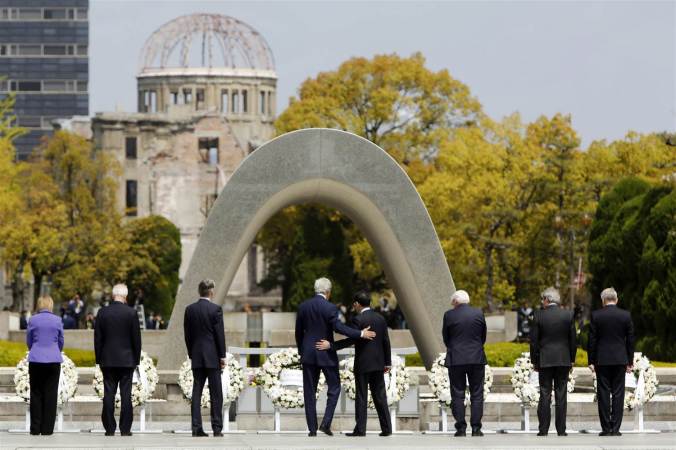
Kerry Hiroshima

“It is a stunning display. It is a gut-wrenching display. It is a reminder of the depth of the obligation every one of us in public life carries … to create and pursue a world free from nuclear weapons.”

—-Secretary of State John Kerry in Japan, as he toured the Hiroshima Peace Memorial and Museum this week before meeting foreign ministers at the G-7 Summit.

I couldn’t quite bring myself to call this an unethical quote, though it is an infuriating one. It is certainly a stupid quote, but we all know John Kerry’s verbal and intellectual deficiencies, and he was indeed in a tough spot. What would have been an appropriate statement to make in this setting, that would not risk insulting his hosts and setting off yet another debate about Hiroshima that would be a distraction from the G-7 Summit’s objectives?

While I agree philosophically with the editors of the Federalist that it would have been more satisfying if Kerry had said that the display was “a reminder of the depth of the obligation every one of us in public life carries to stop extremist regimes like Iran from obtaining nuclear weapons” or perhaps that it was “a reminder of the depth of the obligation every one of us in public life carries to ensure that we are well prepared for the next force that threatens peace,” each carried its own diplomatic and political risks. So would “Sorry you made us do this, but we didn’t bomb ourselves at Pearl Harbor,” which is what I would have been tempted to say. I’m no diplomat, however, as you may have noticed. Continue reading

MSNBC Reporter Tony Dokoupil Explains Why His Profession Is Incompetent And Untrustworthy

softball_dirt_thumb

On his MSNBC show “Last Word,” host Lawrence O’Donnell expressed surprise that Wisconsin radio personality Charlie Sykes, who conducted a tough interview with Donald Trump this  week, was so much more aggressive that the softball  mainstream media interviewers.

His guest, MSNBC reporter Tony Dokoupil, who is assigned the 2016 campaign beat,  explained that Sykes had done a “one and done” style interview with Trump, which, he said,  journalists who want to have access to Trump over the long haul cannot afford to do.

“People who are on the beat, people who work for our network, they have to keep that relationship going for a long, long time,” Dokoupil said. “Charlie did not have that burden.”

O’Donnell was shocked—shocked!—at this statement. “Well, I don’t think the fact that you have to cover Donald Trump means that you have to then play softball with him so that you can guarantee he will speak to you another time,” he said. “Once the mission of the interview is to get the next interview with the same person, we know how soft that interview is going to be.”

This is hilarious coming from O’Donnell, a blazing partisan who has barely given a tough interview to a Democrat or progressive politician in his life. But I digress.

Dokoupil had committed the cardinal sin of speaking the truth, and it explains a lot. Steve Kroft had essentially made the same confession a couple of years ago when he said that President Obama was willing to do interviews for “60 Minutes” because he knew they would be “fair.” (That was also hilarious, because “fair” is a standard “60 Minutes” has never applied to politicians and leaders it wanted to exhibit in a harsh light. Sorry, digressing again.) The soft-ball approach certainly explains why so many reporters refuse to challenge Trump, and Trump’s boycott and attacks on Fox’s Megyn Kelly for daring to challenge him made explicit the conditions that Dokoupil felt were implied. When ratings are driven by which talking head show gets the falshiest guests, of course most interviewers avoid the “one and done” approach. Is it cowardly? Yes. Does it serve the public interests? No. Does it make lying, misrepresentation and an absence of integrity easy, painless and effective for Trump, Clinton, Obama, Cruz, Sanders, etc., etc.? Sure it does. It also undermines democracy, and is a disgraceful breach of journalism’s obligation to view the public, not its leaders and powerbrokers, as its only constituency.

Would an ethical, trustworthy professional allow this? No, but journalism hasn’t been ethical, trustworthy or professional for a very long time, if ever. For example, the Guardian reported German historian Harriet Scharnberg’s claims  this week that the AP made a mutually beneficial pact with the Hitler regime in order to ensure access to Germany throughout the Holocaust and World War II. The deal had the Associated Press promising to abide by  the Schriftleitergesetz, or editor’s law, agreeing not to publish anything that could be “calculated to weaken the strength of the Reich abroad or at home.” .

I’m sure Lawrence O’Donnell is shocked at this, too.

First Up On Anti-Trump Sunday: An Unethical Quote Of The Month

“No more politicians for President!”

— A Donald Trump supporter, on a conservative web site today.

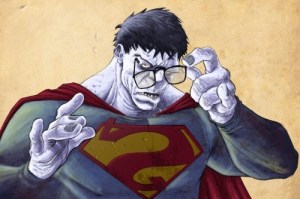
Bizarro has an observation to make...

Bizarro has an observation to make...

I have been reading and periodically shooting down the comments of Trump supporters on a series of websites in my continuing and desperate quest to find a single, substantive, intelligent, informed argument for why anyone should support Donald Trump for President. I’m only looking for one. You would think there would be one. Yet so far, my research hasn’t yielded any more valid that the unethical quote above.Why is it unethical? It is unethical because it shows that the speaker is incompetent at citizenship, and has failed the basic responsibility of those who live and benefit from democracy: understand how the government works, and what leadership in a democracy requires.

No, “He can beat Hillary Clinton” does not make the grade.  First of all, he can’t, for the simple reason that if someone like me, who knows Hillary Clinton’s record and character well, rates ethics and character as prime qualifications for President, and who regards her as approaching Richard Nixon as the most dishonest and flawed individual ever to run for the office (but without his talent and skill), would still vote for her to avoid the disaster of Donald Trump, he can’t beat Hillary. Second of all, it is a Rationalization #22,  “It’s not the worst thing” excuse, and that’s all it is. It is, to evoke “Jurassic World,” like releasing the T-Rex because you want to stop the Indominus. (Actually it is Trump who is the Indominus, the unnatural monster.) Continue reading