Does The Pentagon Hiding Its Waste Of 125 Billion Dollars Qualify As An Obama Administration Scandal? Nah! Don’t You Know That The Obama Administration Is Scandal Free?

the_pentagon

Scandals? In the Obama Administration? Of course not! David Brooks said so, remember?

“President Obama has run an amazingly scandal-free administration, not only he himself, but the people around him. He’s chosen people who have been pretty scandal-free. And so there are people in Washington who do set a standard of integrity, who do seem to attract people of quality.”

The IRS targeting conservative groups to blunt their influence on an election? Not a scandal! HHS rolling out a non-functional website for Obamacare that cost 2 billion dollars? The Veterans Administration being mismanaged at epic proportions while veterans died waiting for care? Jonathan Gruber’s declaration that Obamacare depended upon the “stupidity of American voter”? The Secret Service showing utter incompetence repeatedly? The head of the CIA giving classified information to his mistress? The NSA allowing a low-level contractor to steal and publish crucial secrets? The Office of Personnel Management allowing hundreds of thousands of government employees to have their sensitive information hacked? Unprecedented sexual harassment and assault in the Armed Services? Fast and Furious? Wait, wasn’t there a Secretary of State who violated her own department’s security policies, covered it up, lied about it, and did so with the knowledge of the President? The Attorney General meeting with the husband of a target of an FBI investigation, when that husband was the former President who once promoted that AG? No scandals?

Nah, President Barack Obama administration is scandal free!

I was watching CNN and Headline News this morning specifically to see if the Washington Post’s scoop last night was deemed worthy of mention. Of course, it wasn’t, and so far, almost all of the mainstream news media apparently believes that it’s less important for Americans to know about than, well, just about everything. Here what Google’s software ways are the top stories based on what the web is reporting:

Donald Trump
Oakland
Manchester United F.C.
College football
Westworld
Seattle Seahawks
Manuel Valls
OPEC
New York Jets
Pat McCrory

Clearly, what the  Post’s Craig Whitlock and Bob Woodward  reported last night is trivia—fake news, really, since we know there are no scandals in the Obama Administration: Continue reading

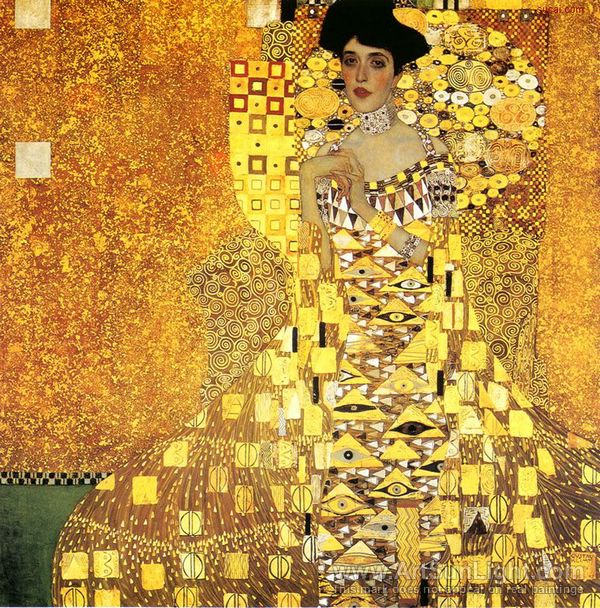
More Ethics Movies For The Holidays: “Woman In Gold”

portrait-of-adele-bloch-bauer-i-by-gustav-klimt

The movie critics site “Rotten Tomatoes”calls “Woman in Gold” dull, which tells you pretty much all you need to know about “Rotten Tomatoes.” No, there are no explosions, no sex scenes, no CGI, just a well-acted, powerful story of how justice can take a long time to prevail, but given enough dedication, integrity and luck, it still does prevail with sufficient frequency to stave off despair.

“Woman in Gold” is a 2015 film starring Ryan Reynolds and Helen Mirren. It is a virtual docudrama telling the true story (mostly accurately) of Maria Altmann (Mirren), a plucky Jewish refugee in Los Angeles, who, assisted by her young lawyer, Randy Schoenberg, battled the government of Austria  to obtain the return of Gustav Klimt’s renowned portrait of her aunt, Adele Bloch-Bauer. That painting, along with more by Klimt and  other painters as well, were among the art treasures stolen by the Nazis  prior to World War II. The legal battle ended up before the Supreme Court of the United States, and the conflict was finally settled by a shocking decision by an Austrian panel of mediators. You can read about the real case here.

It may be dull to dull minds, as Red Smith famously said about baseball, but I have seen the film twice now, and it moved me to tears both times. “Woman in Gold” shows once more, as I fervently believe, that right can and often does triumph over bureaucracies, greed, power and stupidity, and that lawyers, maligned as they are, are often essential to that process. Schoenberg shows us the epitome of a zealous and courageous lawyer, making personal and professional sacrifices for a cause he comes to believe is important both to his client and to humanity. Continue reading

Holiday Ethics Assigment: Quick! Watch These 25 Great Old Ethics Movies Again Before You Go Bonkers Too!

movie-theater

I am compiling a new list of great ethics movies to help those troubled by the recently completed Presidential campaign, the election and its aftermath. I haven’t decided whether to reveal it piecemeal, or collectively as I have before, but I do need to begin by presenting the previous list of 25, actually the combination of several previous posts. Ethics films I have covered individually since those lists debuted, like Spotlight and Bridge of Spies, will eventually be added.

For now, here’s the top 25. Don’t pay attention to the order.

1Spartacus (196o)

The raw history is inspiring enough: an escaped gladiator led an army of slaves to multiple victories over the Roman legions in one of the greatest underdog triumphs ever recorded. Stanley Kubrick’s sword-and-sandal classic has many inspiring sequences, none more so than the moment when Spartacus’s defeated army chooses death rather than to allow him to identify himself to their Roman captors (“I am Spartacus!”)

Ethical issues highlighted: Liberty, slavery, sacrifice, trust, politics, courage, determination, the duty to resist abusive power, revolution, love, loyalty.

Favorite quote: “When a free man dies, he loses the pleasure of life. A slave loses his pain. Death is the only freedom a slave knows. That’s why he’s not afraid of it. That’s why we’ll win.” [Spartacus (Kirk Douglas)]

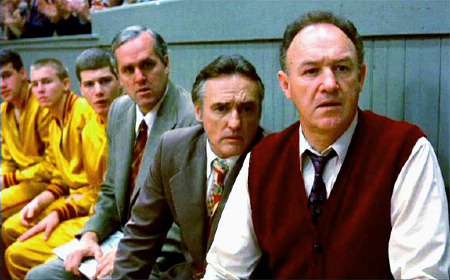
2.  Hoosiers (1986)

“Hoosiers” is loosely based on true story, but its strength is the way it combines classic sports movie clichés—the win-at-all-costs coach down on his luck, the remote superstar, over-achieving team—into a powerful lesson: it isn’t the final victory that matters most, but the journey to achieving it.

Ethical issues highlighted: Forgiveness, generosity, leadership, kindness, courage, loyalty, diligence, redemption.

Favorite quote: “If you put your effort and concentration into playing to your potential, to be the best that you can be, I don’t care what the scoreboard says at the end of the game, in my book we’re gonna be winners.” [ Coach Norman Dale (Gene Hackman)]

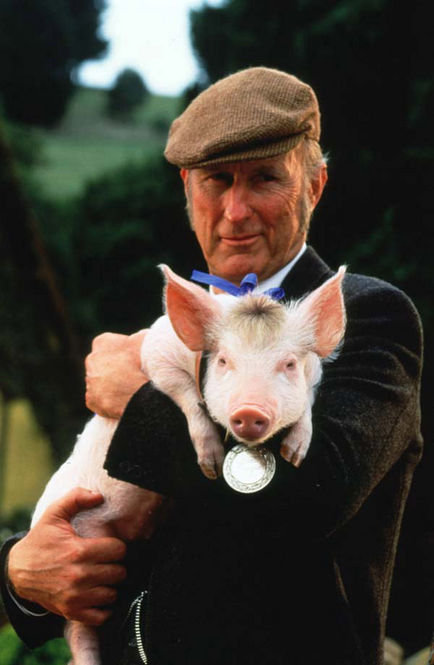
3. Babe (1995)

A wonderful movie about the virtues of being nice, the greatest civility film of all time. Second place: “Harvey.”

Ethical issues highlighted: Civility, kindness, reciprocity, loyalty, courage, love, friendship, bigotry, bias.

Favorite quote: “Fly decided to speak very slowly, for it was a cold fact of nature that sheep were stupid, and there was nothing that could convince her otherwise…The sheep decided to speak very slowly, for it was a cold fact of nature that wolves were ignorant, and there was nothing that could convince them otherwise”  The Narrator (Roscoe Lee Browne) Continue reading

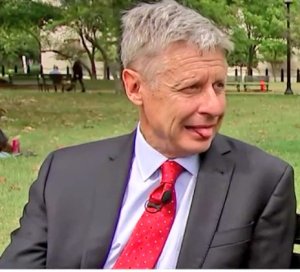
KABOOM! Gary Johnson Argues That His Ignorance Is A Virtue

Bite your tongue, Gary!

Bite your tongue, Gary!

I’m not going to include the traditional KABOOM! graphic of a head exploding, since the explosion that has evidently occurred inside Libertarian Presidential candidate Gary Johnson’s head is the issue here. Normally I wouldn’t care about a third party candidate and few others would either, but many voters who recognize how certifiably disgraceful the choices presented to us by the two major parties. They are desperately looking for an alternative. How nice, and timely, and opportune it would have been if the Libertarian Party had come through in the clutch and  nominated someone who presented themselves as competent, honest, and trustworthy! Unfortunately, it nominated Gary Johnson.

Asked on MSNBC to explain his twin failures to show that he ever reads the World News section (showing complete unfamiliarity with the epicenter of the Syrian disaster in one interview and not being able to name a single world leader  in another—he has yet to offer any explanation for his bizarre tongue episode), Johnson took another leap into weirdness. Instead of offering one of the excuses his supporters defended him with on Ethics Alarms and elsewhere (“It was a simple lapse;” “it wasn’t significant;” Trump and Hillary are so bad that he’d be a better choice if he couldn’t remember his own name…), Johnson came up with the head-exploding argument that it’s good for him to be ignorant. He really did., espousing this original theory to Andrea Mitchell

“The fact that somebody can dot the i’s and cross the t’s on a foreign leader or a geographic location then allows them to put our military in harm’s way,”

Continue reading

A Thoughtful, Rational Entry In The “Give Me An Ethical Reason To Vote For Donald Trump” Contest

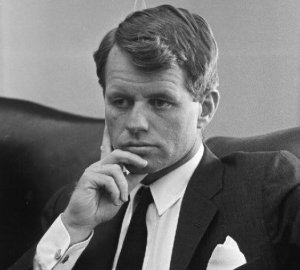
Would Bobby Kennedy have been a Trump supporter?

Would Bobby Kennedy have been a Trump supporter?

As regular readers here know, I have been on a fruitless quest to find a single articulate, informed, unemotional and substantive argument for Donald Trump’s Presidency. Not only have no such arguments surfaced, nothing has come even close. This entry is different. It does not blather on about “elites,” or “tearing it down,” or use rationalizations like “we’re all doomed anyway.” It does not default to reasons why Hillary Clinton is worse, an increasingly plausible theory, but still not a case for Trump. The argument that Trump is a better risk than Hillary because she would get away with her excesses while a biased news media will keep Trump under the scrutiny that they should subject every President  to but reserve only for Republicans  is too pretzelian to be taken seriously, but otherwise intelligent analysts keep proposing it. They are that desperate.

The article by former Robert Kennedy speechwriter Adam Walinsky is different in kind, and deserves attention. His perspective is interesting, and his gauzy perspective on Jack and Bobby is what I would expect from an ancient True Believer. Call me cynical, but those who extol the commitment to peace of a President who set the fuse for the Vietnam War and whose projction of weakness to the Soviet Union nearly sparked a nuclear war are not credible nor respectable advocates. Still, his argument is novel and his position is sincere, with many valid observations leading to what I judge as an absurd and reckless conclusion.

It is worth reading, though: I Was RFK’s Speechwriter. Now I’m Voting for Trump. Here’s Why….The Democratic Party has become something both JFK and RFK would deplore—the party of war.

Thanks For The Memories, Greta Friedman: This Encore’s For You!

kiss

I was puzzled about why an old 2012 Ethics Alarms post was suddenly getting heavy traffic today, and until I read that GretaFriedman had died. She was the nurse famously kissed by a never-identified celebrating sailor on V-J Day, frozen in history forever thanks to a now iconic  Life magazine photograph.  I had written about Greta, that moment, and the determination of a lot of tunnel-visioned feminists and sexual-terrorists to turn what was a beautiful thing into something ugly and sinister in the distorted world they see through their shit-tinted glasses. The post was called “The Times Square Kiss, and Feminist Blogs’ Fanatic Crime Against Joy.”

I’m always a bit nervous when I go back and read old posts I’ve forgotten about; I’m afraid I won’t agree with them, but thankfully, I usually do. I do in this case. In fact, I really like the post, and am proud of it. On the theory that most current Ethics Alarms readers haven’t seen it before, I’m reposting today, in honor of Greta:

The blog posts at issue make me angry. Usually it is silly to be angry about mere opinions, I know. However, the opinion registered by “Lori” on the blog Feministing, taking her cue from another feminist blogger, is a symptom, a symptom of the scourge of pernicious, political-correctness zealots, who refuse to recognize the important distinctions between malice and human beings being human, and seek to wipe out that distinction by distortion, sophistry, historical revisionism and bullying. Continue reading

A Horror Story From The Law vs. Ethics Files: The Mario Hernandez Saga [UPDATED and BACKDATED!]

Mr. Hernandez? Mr. Unger would like a word with you...

Mr. Hernandez? Mr. Unger would like a word with you…

This is complicated.

Occasionally a trusted source sends me to a link or a news item that turns out to be old, sometimes many years old. I assume it is current (I need to learn to check the dates), write the post, and then find out that what I wrote about took place in 1978. I usually trash the post. There have been a few like this. Now this story came to me from a trusted source, and linked to a current story, or so I thought. The post, on a site called “America Now,” is dated August 25, 2016. But WordPress pointed out, right at the bottom, that I had in fact written about Mario Hernandez’s citizenship problems two years ago. What? For a second I thought there were TWO Marios (Mario brothers?), who had the same problem, but no, they are the same guy.

The story  I was given today, based on this New York Times story from May of 2014, led to the post below. There is an ending to the story, which was explicated by me in the post of two years ago. However my two posts were on two different ethics issues, and today’s though inspired by a stale story, is still ethically useful. Pretend Mario plight isn’t two years old: that doesn’t alter the principles involved, or my analysis. I’ll tell you what happened at the end of the post..

***

Continue reading

Fourth Of July Ethics: The Signers, Snopes, And Fact-Checking

stone.tif

I received  this inspiring bit of Americana from an old friend, a Marine and lawyer with a love of history. It’s a screed of unknown origin that has been circulating the internet since the 20th Century. Maybe you’ve seen it too:

The Price They Paid

Have you ever wondered what happened to the 56men who signed the Declaration of Independence?

Five signers were captured by the British as traitors, and tortured before they died.

Twelve had their homes ransacked and burned.

Two lost their sons serving in the Revolutionary Army; another had two sons captured.

Nine of the 56 fought and died from wounds or hardships of the Revolutionary War.

They signed and they pledged their lives, their fortunes, and their sacred honor.

What kind of men were they?

Twenty-four were lawyers and jurists.

Eleven were merchants, nine were farmers and large plantation owners; men of means, well-educated, but they signed the Declaration of Independence knowing full well that the penalty would be death if they were captured.

Carter Braxton of Virginia, a wealthy planter and trader, saw his ships swept from the seas by the British Navy. He sold his home and properties to pay his debts, and died in rags.

Thomas McKean was so hounded by British that he was forced to move his family almost constantly. He served in the Congress without pay, his family was kept in hiding. His possessions were taken from him – poverty was his reward.

Vandals or soldiers looted properties of Ellery, Hall, Clymer, Walton, Gwinnett, Heyward, Rutledge, and Middleton.

At Battle of Yorktown, Thomas Nelson,Jr., noted that the British General Cornwallis had taken over the Nelson home for his headquarters. He quietly urged General George Washington to open fire. The home was destroyed, and Nelson died bankrupt.

Francis Lewis had his home and properties destroyed. The enemy jailed his wife, and she died within a few months.

John Hart was driven from his wife’s bedside as she was dying. Their 13 children fled for their lives. His fields and his  gristmill were laid to waste. For more than a year he lived in forests and caves, returning home to find his wife dead and his children vanished.

So, take a few minutes while enjoying your 4th of July holiday and silently thank these patriots.  It’s not much to ask for the price they paid.

Remember: freedom is never free! We thank these early patriots, as well as those patriots now fighting to KEEP our freedom!

I hope you will show your support by sending this to as many people as you can, please. It’s time we get the word out that patriotism is NOT a sin, and the Fourth of July has more MEANING to it than beer, fireworks, HOT DOGS,  and picnics……

image002

The purpose and primary message of the post is irrefutably true. Those who signed the Declaration did so at great personal risk and sacrifice. Had the new nation failed in its revolution—and really, it is amazing that it didn’t—all of them would have been hanged as traitors. It was an act of principle and courage, and what happened later is entirely moral luck. The signers would have been no less honorable, remarkable and heroic if every single one of them, by various strokes of good fortune, had become wealthy, powerful, prospered in everything they did and died in advanced years, like Franklin, Adams and Jefferson. Unfortunately, most citizens lack the education, acumen and tools to figure this out, so we get stuff that equates random and uncontrollable misfortune with enhanced virtue. Continue reading

Ethics Quote Of This Day, July 2: The Inscription On the Monument To The First Minnesota Regiment At Gettysburg National Battlefield Park

first-minn-fort-snelling

 “On the afternoon of July 2, 1863 Sickles’ Third Corps, having advanced from this line to the Emmitsburg Road, eight companies of the First Minnesota Regiment, numbering 262 men were sent to this place to support a battery upon Sickles repulse. As his men were passing here in confused retreat, two Confederate brigades in pursuit were crossing the swale. To gain time to bring up the reserves and save this position, Gen Hancock in person ordered the eight companies to charge the rapidly advancing enemy. The order was instantly repeated by Col Wm Colvill. And the charge as instantly made down the slope at full speed through the concentrated fire of the two brigades breaking with the bayonet the enemy’s front line as it was crossing the small brook in the low ground there the remnant of the eight companies, nearly surrounded by the enemy held its entire force at bay for a considerable time and till it retired on the approach of the reserve the charge successfully accomplished its object. It saved this position and probably the battlefield. The loss of the eight companies in the charge was 215 killed & wounded. More than 83% percent. 47 men were still in line and no man missing. In self sacrificing desperate valor this charge has no parallel in any war. Among the severely wounded were Col Wm Colvill, Lt Col Chas P Adams & Maj Mark W. Downie. Among the killed Capt Joseph Periam, Capt Louis Muller & Lt Waldo Farrar. The next day the regiment participated in repelling Pickett’s charge losing 17 more men killed and wounded.”

On July 2, 1863, in Gettysburg, Pennsylvania, 262 Union soldiers in the First Minnesota Regiment rushed—which apparently specialized in desperate fighting-–to throw themselves into a breach in the Union line at Cemetery against a greatly superior force, knowing that they were almost surely to die. 215 of them did, but the regiment bought crucial minutes that allowed reinforcements to arrive.

It is perhaps one of the most inspiring of the many acts of courage that day, the second day of the battle that changed the course of the Civil War. I first wrote about the sacrifice of the First Minnesota five years ago, here.

Let’s try to remember.

(A recommendation: Sometime between July 1 and the Fourth ever year, we always watch Ted Turner’s excellent film, which also has one of my favorite film scores.  It  helps.)

Gene Autry Misinformation Update: Believe It Or Not, It Happened Again!

"Wild Bill" Donovan, who should have had nothing whatever to do with my ethics seminar today, but did anyway...

“Wild Bill” Donovan, who should have had nothing whatever to do with my ethics seminar today, but did anyway…

Yesterday I wrote about a lawyer in a legal ethics seminar interrupting me with a revelation about Gene Autry that was completely false.

Today I taught another legal ethics seminar, this time for a government agency. I was discussing was the various government ethics dilemmas in “Bridge of Spies,” the story of how lawyer Jim Donovan helped secure the release of downed U.S. flyer Francis Gary Powers in a famous incident during the Cold War. Many of the issues covered in my presentation were explored in this Ethics Alarms post.

As the film portrays it, Donovan, an insurance lawyer, does such a tenacious job defending an accused Soviet spy from U.S. government prosecution that the CIA recruits him to broker the trade of his now-former client, convicted and in prison, for Powers. In discussing the classic government lawyer dilemma of “who is the client?,”  I noted that the CIA agent who recruited Donovan told him that he would have no client. “Why did the CIA trust Donovan?” I asked socraticly. “Why did Donovan, an insurance lawyer, think he was qualified to engage in this kind of representation, it it was a representation?”

For the second time in nine days, an attendee piped up with an amazing piece of information.

“I suspect some of the answer to both questions is that James Donovan was the son of “Wild Bill” Donovan, who is considered the father of the Central Intelligence Agency,” he said. Continue reading