“You have to exercise patience with people, but people are not going to understand the subject overnight.”
—-Sgt. Shane Ortega, helicopter crew chief in the Army’s 25th Infantry Division, speaking to the Washington Post about his legal battle with the U.S. military, which continues to classify him as a woman despite his transition to a man.
The reason we say that “hard cases make bad law” is that the toughest cases fall between the cracks in rules and regulations, and they all have cracks. The law seeks consistent precedents, so anomalous fact patterns threaten the integrity and efficiency of otherwise effective laws and rules that work well in the vast majority of situations. Yet those hard cases usually indicate flaws in policies, rules and laws, and sometimes point to the need for change.
Often, an organization, especially a bureaucratic one like the military, will deal with such disruptive cases by simply looking past the actual facts, and treating them “by the book.” Ortega represents a particularly glaring instance of this phenomenon, which in his case not only harms his career, but also makes the military appear rigid to the point of absurdity.
Yet, as his Ethical Quote of the Month indicates, he understands. Change is painful, and it takes time. Continue reading →
So Bowe Bergdahl is being tried as a deserter! Fancy that—and yet Susan Rice, the President’s National Security Advisor, told the nation, as the President was trying to pretend his decision to trade terrorists for the disturbed American POW wasn’t the cynical effort to overshadow the then raging VA scandal and to tamp down veteran groups’ rage that it was, that Bergdahl “…served the United States with honor and distinction…”
Either Rice knew this wasn’t true—and if she were competent in her job, she would have to, wouldn’t she?—and was lying to the American public, or she didn’t know whether it was true or not, but asserted that it was true anyway, which is also lying to the American people. She is, as we already know, willing to do this—lie. And her punishment from the President, who promised transparency, for such a high profile and embarrassing lie? Nothing. What does this tell us? It tells us that Barack Obama doesn’t put a very high priority on being truthful with the public that elected him..
You know, I don’t object to making a prisoner trade to free an American soldier, even an awful one like Bergdahl, if that is the reason why it is done. I can accept it if our leaders level with the public, as in: “Sgt. Bergdahl is far from a model soldier, and may even be facing charges. But he is an American citizen, and we do not abandon our own. Even a flawed American soldier is more precious than five terrorists.” These leaders, however, don’t level, because they fear that if they did, the full disgrace of their incompetence would be known. Just as Obama doesn’t hold Rice accountable, the news media and the President’s party don’t hold him accountable for this putrid, contemptuous treatment of the American people, and Democrats allow incidents like this to rot their values from the inside out.
That’s the revolting culture that the charges against Bergdahl confirm, for those not completely rotted. Continue reading →
Question:Are the seven GOP Senators who did not sign the Iran letter Ethics Heroes?
Answer: I almost designated them as such, but that would have been a mistake. There are too many non-heroic and even unethical reasons Sen. Lamar Alexander (R-Tenn.), Sen. Lisa Murkowski (R-Alaska), Sen. Dan Coats (R-Ind.) and Sen. Thad Cochran (R-Miss.), Sen. Susan Collins (R-Maine), Sen. Jeff Flake (R-Ariz.), and Sen. Bob Corker (R-Tenn.), Senate Foreign Relations Chairman might have chosen to refuse to go along with their colleagues. Based on the explanations I’ve read, that seems to be the case. Collins, for example, says that she didn’t think the letter would work. Wrong answer: the reason to reject the letter is because it’s a flat-out violation of legislative limits imposed on the Constitution. Similarly, Flake says that he didn’t think the letter was necessary, whatever that means. It is also likely that some of the seven felt they could have their cake and eat it too: they want the letter to undermine U.S. diplomacy, but don’t want to take the criticism that goes with signing it.
Question: Do I blame President Obama for the letter?
Answer: A friend who is such a knee-jerking Obama enabler and excuser that it’s a miracle he can walk posted yesterday’s Thirteen Ethics Observations On The GOP’s Letter To Iran on his Facebook page, and one of his knee-jerking friends wrote, “Typical: blame Obama.” I did not and do not blame Obama for the fact that the Republican Senators engaged in a foolish, dangerous and bright-line violation of the separation of powers, and anyone who could read the post otherwise is so deranged by bias that their faculties are impaired…or they just aren’t very bright.
I did write, and it is true, that the President shares significant responsibility for the poisonous and dysfunctional relations with the Congress that led to this fiasco. He is at the top of the government; it’s ultimately his job to make the government and the system work. Obama and his enablers reject accountability at every turn, but the unavoidable facts are that he is in charge, he took the job voluntarily, and whatever doesn’t work, including the government itself, is on his record. He never made a good faith, sincere, dedicated effort to work with the Republicans in Congress; he never worked to develop the negotiation, compromise, horse-trading, cajoling, quid pro quo skills that successful, competent Presidents have used to deal with the same levels of political opposition that he has found impossible to cope with. He took no steps to build trust in Congress, and engaged in serial conduct that was guaranteed to destroy trust, and has.
Finally, his illegal immigration executive order (the illegal accurately modifies both “immigration” and “order”) and his unilateral alterations to his own, incompetent and sloppy, health care law showed exactly the same contempt for constitutional limits as the Senate letter.
Obama is not to blame for the letter. He is absolutely and ultimately accountable for the conditions that prompted the letter and the decision to send it.
Question:Is there an ethical justification for sending the letter?Continue reading →
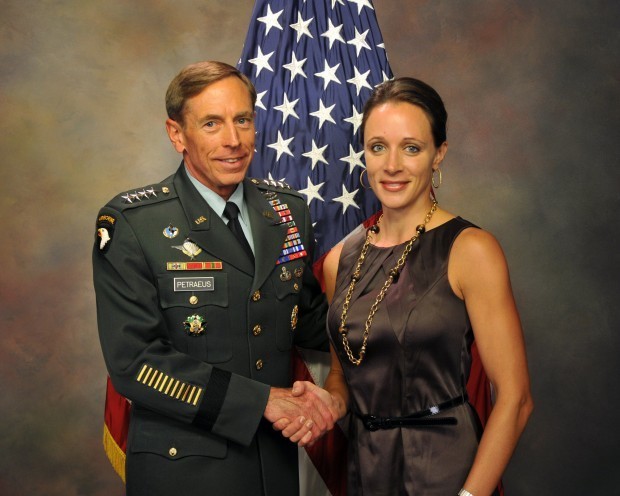
I’m in a rush to get ready for a law firm seminar, so I’m going to mostly let Ken White at Popehat do my work for me, as he is very qualified to do in this case. In his comments on the David Petraeus plea deal, Ken quite appropriately raises questions of why such serious crimes as the acclaimed general and former CIA head engaged in do not warrant prison time, and he answers thusly: Petraeus is rich, famous and has powerful friends.
Ken obvious believes those aren’t good reasons, and I agree with him. Nor are the other rationalizations that the general has suffered enough, that he isn’t really a criminal, that the nation owes him, or that he is a valuable resource for the nation that we are better served by not storing behind bars.
I believe that Petraeus has less excuse for his conduct than the typical defendant, and that as a celebrity, war hero and tole model, his defiance of the law is more serious, and more deserving of punishment, than the majority of non-violent criminals who go to jail. Indeed, Petraeus had styled himself as a moral exemplar. I read yesterday—I don’t have time to find the link—that Edward Snowden’s lawyers sent a cheeky message to prosecutors that Snowden would be happy to accept a similar deal to Petraeus’s. Exactly.
These incidents do terrible damage to the public’s trust in the justice system’s fairness, and they should. Plea deals like this, bought with lawyer fees, bias and influence, are unequivocally wrong.
It’s not a controversy when one side is ignorant, censorious, politically correctness- addled, humorless and wrong and the other side isn’t.
The ad is brilliant black comedy and satire, one of SNL’s all-time best. Those who object to it don’t get black humor and satire, which makes their objections as irrelevant as someone allergic to shellfish saying that Legal Seafoods stinks. Nobody’s making them eat there, and they don’t have to watch Saturday Night Live or think it’s funny either. But I don’t care about their opinion, which is uninformed and useless to anyone who understands and appreciates the issues.
Here’s what was good and funny—and ethical– about the parody:
1. It caught the saccharine tone of its model exactly.
2. Its ending was a surprise.
3. It ridiculed ISIS, which deserves ridicule. President Obama claims that the way to withhold respect for the group is to lie about it being a group of Islamic extremists. This is much better, ethical, and doesn’t mislead anyone.
4. Making fun of evil is a time-honored activity, healthy, useful, and effective. I don’t recall anyone saying that Spike Jones was treading on sacred ground with this song:
or that The Three Stooges were trivializing the death camps with this…
5. The satire even cuts two ways. You know, that sweet young girl is also being sent off to kill people when she’s joining the military in the real ad. Like all great satire, this one is subversive and layered. Continue reading →
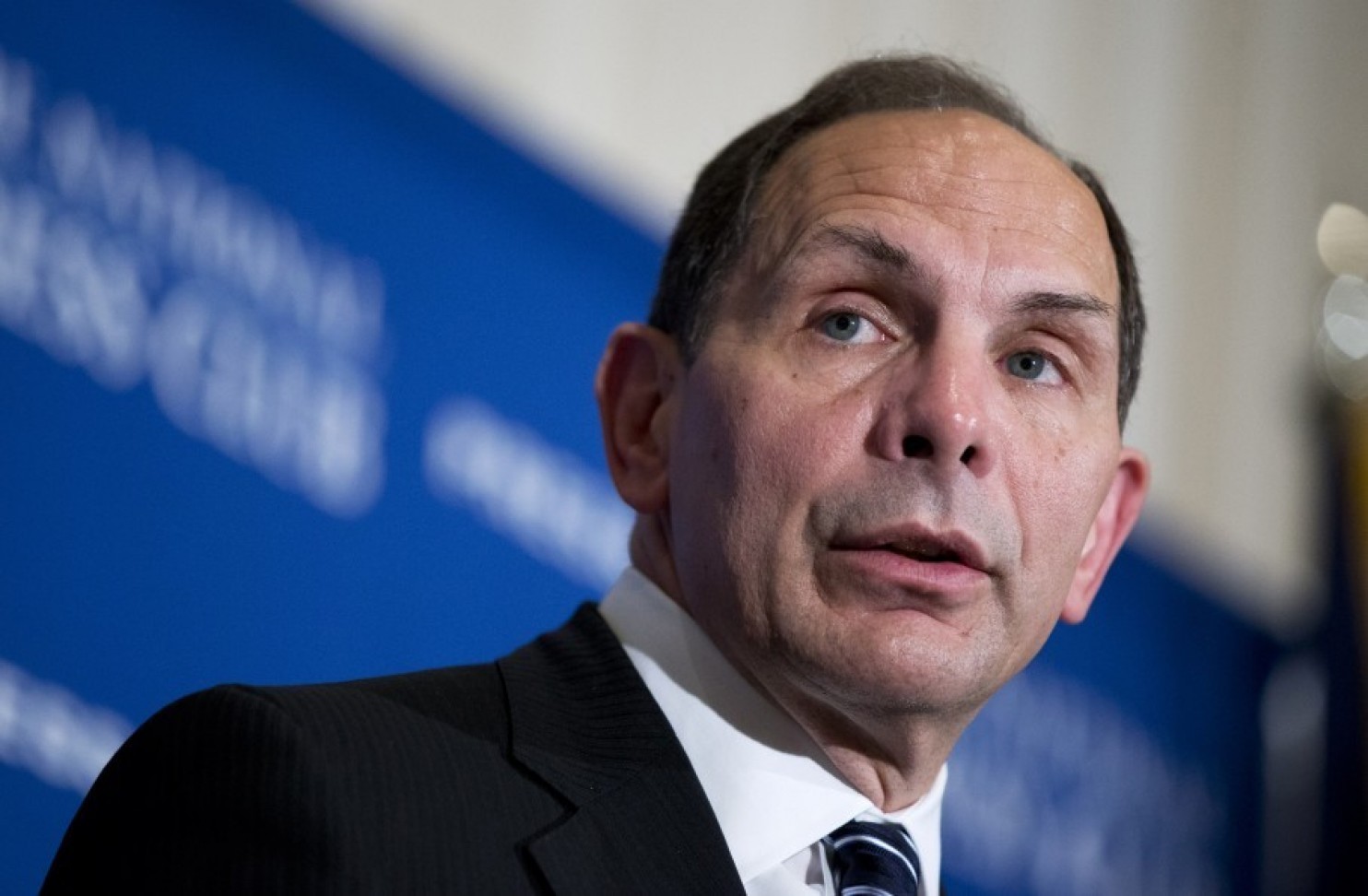
I was going to post this story as an Ethics Quiz when I first saw it yesterday at the Huffington Post. The most recent head of the troubled Veteran’s Affairs Dept., Robert McDonald, falsely claimed in a videotaped comment that he served in the Army’s elite special forces. In fact, his military service of five years was in fact spent almost entirely with the 82nd Airborne Division during the late 1970s. The quiz question was going to be whether this alone required his dismissal.
My conclusion: assuming that he only did something like this only once, and it was not a Sen. Richard Blumenthal or a Brian Williams situation involving repeated self-glorifying falsehoods, I would have been willing to let this pass were he not in the position he is in: Secretary of Veterans Affairs. Veterans are justly sensitive on the topic of stolen valor and imaginary service. The last individual to hold McDonald’s job was asleep on the job and betrayed his constituency: they should not be asked to trust a successor who lies about his military service, even once. I understand that this is a tough verdict, and why others could reasonably argue that one casual remark to cheer a homeless veteran should not be a career catastrophe. In fact, as I write that, I’m thinking that I could be persuaded to adopt that position as well.
However, that is not all there is to this situation. For McDonald had already shown a tendency to play fast and loose with facts, perhaps influenced by his boss, who is similarly inclined, and the Vice -President, of course, when he isn’t harassing women. Continue reading →
(Other than the fact that it’s ridiculous, of course.)
Not THAT again…
As far as preventing terrorist organizations from destroying civilization is concerned, the proposition being repeatedly made by Republicans that “you can’t fight something if you can’t accurately describe it” is also ridiculous. Obama can call ISIS Late For Dinner if he wants to, and still take effective steps to contain the group and others. I can’t remember ever experiencing such a long and intense debate over what something should be called, unless you count the Republican insistence that water-boarding isn’t torture after decades of the United States saying otherwise in legal documents, treaties and places where English is spoken, That, however, was obviously deceitful wordplay to get around the law, lawyering at it’s worst. This is something else…but what is it?
Yesterday, poor Department of Homeland Security Secretary Jeh Johnson did the rounds of the Sunday morning talk shows, and was asked to explain the Administration’s weird rhetorical line in the sand repeatedly. Presumably he was prepared beforehand, yet the best he could do was probably the version he came up with on Fox News, saying on the topic:
” [T]he thing I hear from leaders in the Muslim community in this country is, “ISIL is attempting to hijack my religion. Our religion is about peace and brotherhood and ISIL is attempting to hijack that from us.” And they resent that. Most victims of ISIL are, in fact, Muslims. So it seems to me that to refer to ISIL as occupying any part of the Islamic theology is playing on a — a battlefield that they would like us to be on. I think that to call them — to call them some form of Islam gives the group more dignity than it deserves, frankly.”
Wait..what? That’s it? So this is meant to, like, hurt their feelings? Why not go whole hog, and call them “Smoosh-Face Poopy-Heads,” then, or something similar? We’re officially denying what everyone knows to be true because moderate Muslims don’t like sharing a religion with the radicals, so to be nice, were speaking Fantasy rather than English? Continue reading →
The burning ethics issue of the moment is in the field of broadcast journalism, and Ethics Alarms is obligated to weigh in.
Who is right, the pundits are asking: Fox News, for defiantly posting on its website the 22-minute video from the Islamic State terror group that shows Jordanian pilot Lt. Muath al-Kaseasbeh being burned to death, or all the other U.S. news organizations that have refused to do so?
Fox’s decision has been criticized by its own media ethics watchdog, Howard Kurtz, as excessive and unnecessary, and by anti-terrorism experts, who unanimously say that this plays into the ISIS strategy. Malcolm Nance of the Terror Asymmetrics Project on Strategy, Tactics and Radical Ideology said the Fox was “literally – literally – working for al-Qaida and Isis’s media arm. They might as well start sending them royalty checks.”
Here are the Ethics Alarms observations on the controversy. The short version: I doubt everyone’s motives here, and nobody on any side of the journalism ethics debate is consistent or trustworthy. Unlike me.
The key question in any ethics problem is usually “What’s going on here?” With Brian Williams’ bizarre admission that he had been telling a false story involving his experience covering the Iraq War for over a decade, it’s impossible to say with confidence what is going on.
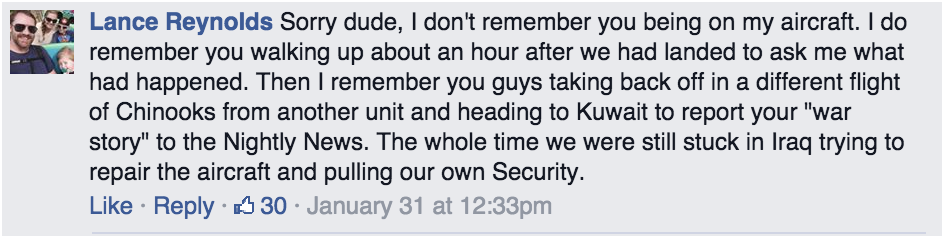
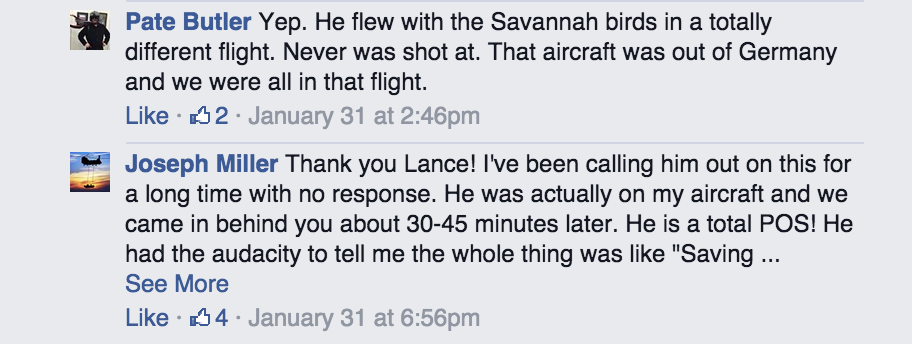
We know this: Williams told viewers on his evening news broadcast last week about an incident when he was covering the Iraq war, saying that a helicopter he was flying in was hit and forced down by an RPG. After the broadcast, soldiers began complaining on Facebook:
“Stars and Stripes” noticed, investigated Williams’ account and found it to be false. Williams quickly apologized, both on Facebook and in his Wednesday broadcast. Here is his Facebook recant:
“To Joseph, Lance, Jonathan, Pate, Michael and all those who have posted: You are absolutely right and I was wrong. In fact, I spent much of the weekend thinking I’d gone crazy. I feel terrible about making this mistake, especially since I found my OWN WRITING about the incident from back in ’08, and I was indeed on the Chinook behind the bird that took the RPG in the tail housing just above the ramp. Because I have no desire to fictionalize my experience (we all saw it happened the first time) and no need to dramatize events as they actually happened, I think the constant viewing of the video showing us inspecting the impact area — and the fog of memory over 12 years — made me conflate the two, and I apologize. I certainly remember the armored mech platoon, meeting Capt. Eric Nye and of course Tim Terpak. Shortly after they arrived, so did the Orange Crush sandstorm, making virtually all outdoor functions impossible. I honestly don’t remember which of the three choppers Gen. Downing and I slept in, but we spent two nights on the stowable web bench seats in one of the three birds. Later in the invasion when Gen. Downing and I reached Baghdad, I remember searching the parade grounds for Tim’s Bradley to no avail. My attempt to pay tribute to CSM Terpak was to honor his 23+ years in service to our nation, and it had been 12 years since I saw him. The ultimate irony is: In writing up the synopsis of the 2 nights and 3 days I spent with him in the desert, I managed to switch aircraft. Nobody’s trying to steal anyone’s valor. Quite the contrary: I was and remain a civilian journalist covering the stories of those who volunteered for duty. This was simply an attempt to thank Tim, our military and Veterans everywhere — those who have served while I did not.”
Research has revealed that Williams has been telling various versions of the story for over a decade, sometimes saying he was in a helicopter behind the one hit by fire, sometimes saying, as he did on the David Letterman show last year, that he was actually a passenger on the helicopter forced down. Thus his Facebook apology is misleading, and the one he gave last night even moreso. At Powerline, John Hinderaker explains:
This is the statement that Williams read on-air tonight:
“After a groundfire incident in the desert during the Iraq war invasion, I made a mistake in recalling the events of 12 years ago….”
No: Williams has been telling the false story since shortly after the incident occurred. He told it for the last time, not the first, last week.
“It did not take long to hear from some brave men and women in the air crews who were also in that desert….”
Not since last Friday, but it took a decade or more since Williams first told the false story.
“I want to apologize. I said I was traveling in an aircraft that was hit by [rocket-propelled grenade] fire. I was instead in a following aircraft. . . .”
Again, Williams tries to mislead: his “following aircraft” landed an hour after the one that took the hit from the RPG.
“This was a bungled attempt by me to thank one special veteran and, by extension, our brave military men and women, veterans everywhere, those who have served while I did not…”
A bungled attempt last Friday evening at the Rangers game. Williams implies, once again, that this was the first time he has told the false story. But he is on video telling the same story at least 13 times since 2003.
Williams’s on-air apology, like the Facebook version, was disingenuous. I doubt that it will help him in the long term.
Hinderaker, a prominent conservative political blogger, believes that Williams is certain to be fired as a result of the controversy, the convoluted details of which you can read about here, here, and here in addition to the Washington Post story linked above.
Detecting and overcoming one’s own biases is one of the most important features of being ethical. “Bias makes you stupid,” after all, and stupidity can make you unethical. As the author of an ethics blog, this is of special concern to me, as I am constantly making choices that bias could seriously affect. Some of those choices include what issues and events have ethics components, which are most important to publicize, how should the ethical issues be analyzed, what conclusions are fair and reasonable, even how long a particular post should be, what authorities and references should be included, and what style—scholarly? humorous? bemused? indignant? outraged?—will best illustrate a point.
As regular readers here know, I can be harsh, often too harsh, when a commenter dismisses my commentary as partisan or ideologically motivated. First of all, it isn’t, and I resent the accusation. Second, it’s a cheap shot, essentially attacking my motives, objectivity and integrity rather than presenting substantive arguments. Third, it is a simpleminded approach to the world in general, and democracy in particular, and life, presuming that “there are two kinds of people,” and one type is always wrong, while the other type is always right. There is nobody I agree with all the time, and I am far from alone in that trait. People who agree with the same people all the time are not really thinking. They are just taking the easy route of picking sides, and letting others think for them.
Obviously, my approach to controversies, problems and ethical analysis are influenced by thousands of factors, including my parents, my upbringing, where I have lived, teachers, friends, and family members, experiences, books, plays, movies and popular culture, interests and passions (like leadership, American history, and baseball), what I’m good or successful at and I’m not, and so much else. These are not biases: once such influences mold your way of looking at the world and passing through life, they are, in fact, who you are. I’m comfortable with who I am. I just don’t want biases making me me stupider than I am.
Thus I am always interested in trying to identify where I stand on a the ideological scale. Some of my conservative friends think I’m liberal; all of my liberal friends think I’m conservative. Two sides again: I am confident that it is their place on the scale that leads to those perceptions. Today I encountered another test that supposedly divides liberals and conservatives sharply. It comes from political scientist and philosopher James Burnham’s 1964 book “The Suicide of the West.” Burnham was one of those radical leftists who did a complete reversal in middle age and became an influential conservative theorist. You are asked to agree or disagree with these 39 statements, and the result reveals your ideological bent.




 Ethics Alarms