Ethics Hero: Thomas McGregor

"Just paying off my student loans..."

“Just paying off my student loans…”

One of the criteria for admission to the practice of law is proof of good character, and what is considered proof of bad character will keep even a stellar law grad out of the courtroom. Bad character can be inferred from many kinds of conduct—criminal convictions, lies under oath, and failing to meet financial obligations, among others. The latter has occasionally blocked an otherwise qualified young lawyer from entering the profession when unpaid debts get out of hand, and that means that the most prominent unpaid debts in recent headlines, student loans, can sometimes foil a legal career. New York law grad Robert Bowman, last I checked, was still trying to convince the New York Bar that being over $400,000 in debt on his student loans didn’t mean he wasn’t fit to practice law. So far, he hasn’t succeeded.

Maybe he should follow the lead of Thomas McGregor.  Continue reading

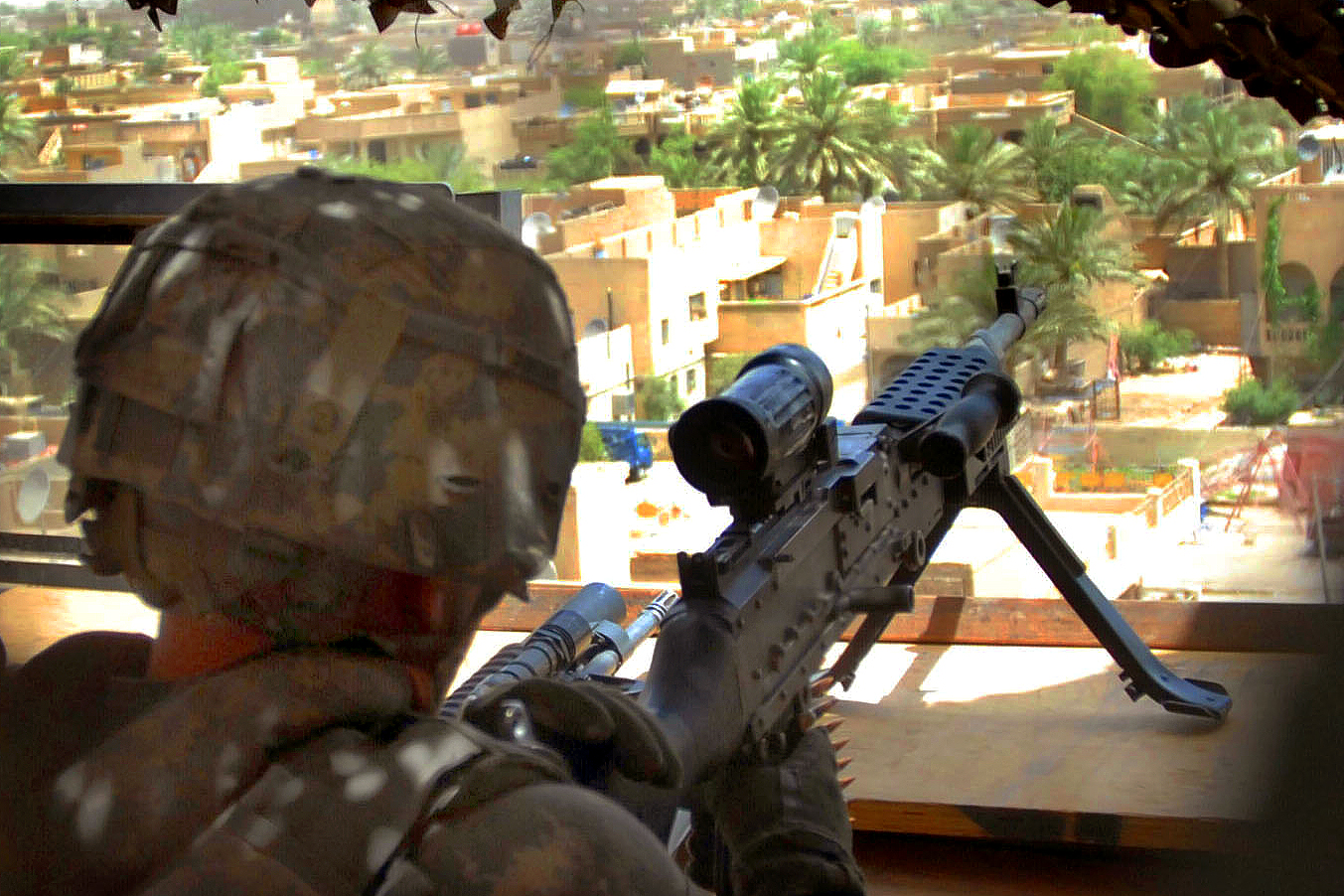
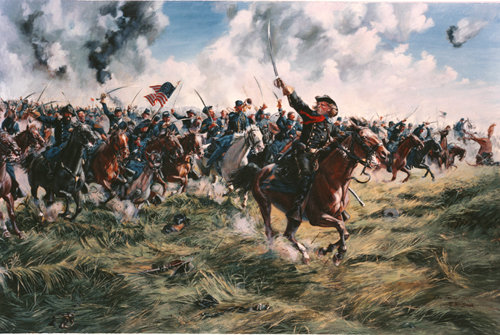
July 3: A Day To Honor Custer’s FIRST Stand, At Gettysburg… And Reflect On How Our Greatest Strengths Can Be Our Fatal Flaws

custercharge

I wrote this post two years ago, concerning my favorite neglected episode of the Civil War, when young George Armstrong Custer shocked Confederate J.E.B. Stuart with his unexpected and furious resistance to Stuart’s attempt at disrupting the Union flank while Gen. Meade’s army defended itself against Pickett’s Charge. As with the First Minnesota’s suicidal stand on the second day of the Battle of Gettysburg, Custer’s crucial moment of truth has been largely neglected in the assembly of the battle’s heroes; I don’t think it has ever been depicted in a Civil War film, for example, though there is at least one book about it.

The incident is especially fascinating to me because of the its multiple ironies. Custer succeeded when his nation needed him most because of the exact same qualities that led him to doom at the Little Big Horn years later. Moreover, this man who for decades was wrongly celebrated in popular culture as an American hero for a shameful botched command that was the culmination of a series of genocidal atrocities actually was an American hero in an earlier, pivotal moment in our history, and almost nobody knows about it.

Thus it is that among the brave soldiers of the Blue and Gray who should be remembered on this 150th anniversary of the greatest battle ever fought on this continent is a figure whose reputation has sunk to the depths, a figure of derision and ridicule, a symbol of America’s mistreatment of its native population. Had George Armstrong Custer perished on July 3, 1863, he might well have become an iconic figure in Gettysburg history. The ethics verdict on a lifetime, however, is never settled until the final heartbeat. His story also commands us to realize this disturbing truth: whether we engage in admirable conduct or wrongful deeds is often less a consequence of our character than of the context in which that character is tested.

Here is the post, slightly lengthened:

July 3, 1863 was the date of Pickett’s Charge, when Confederate General Robert E. Lee ordered a desperate Napoleonic advance against the Union line at Gettysburg in what has come to be a cautionary tale in human bravery and military hubris. The same day marked the zenith of the career of George Armstrong Custer, the head-strong, dashing cavalry officer who would later achieve both martyrdom and infamy as the unwitting architect of the massacre known as Custer’s Last Stand. Continue reading

July 2, 1863: When 262 Minnesotans Saved The United States Of America

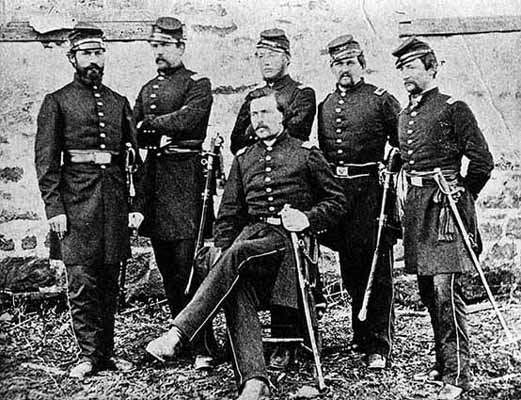
Officers of the First Minnesota Volunteer Regiment

Officers of the First Minnesota Volunteer Regiment

For the last two years, I have posted here about the courage and sacrifice of the men of the First Minnesota Volunteer Regiment at the Battle of Gettysburg. There was more than enough of those qualities, on both sides, to go around that day, and unless you are in the vicinity of that lovely and unbearably sad little Pennsylvania town, it isn’t just the brave Minnesotans who are neglected, but all of the participants. Yesterday was July 1, the anniversary of the beginning of the battle in 1863, and there was scant mention of it in the media. After all, there is the Zimmerman trial, and outrage over Jennifer Lopez accepting a million dollars to sing “Happy Birthday” for a brutal dictator, and whether movie viewers will flock to see Johnny Depp play Tonto. One of the few excellent acknowledgements of the date and its significance was by CBS, which also featured the famous feature on the battle published years ago by the Saturday Evening Post. 

In an ambitious mood, I once resolved to find a different group of battlefield heroes from that day to feature every July 2, the messiest, most important pivotal of the battle that itself has been overshadowed by the tragedy of suicidal Pickett’s Charge on July 3. But I have neither the historical research skills nor time to do justice to such a task, though the injustice of so many forgotten heroes is great. It is best to allow the First Minnesota Volunteer Regiment, who obeyed a desperate order to fill a breach in the Union line, knowing that it meant almost certain death,  “to gain a few minutes’ time and save the position and probably the battlefield,” to stand for all of them.

As for me, I’m going to watch, once again, Ted Turner’s excellent film Gettysburg, and play its soaring score in my home and my car. We have a duty to remember, and honor, every moment of those three days in July, 150 years ago. Continue reading

Flat, Flat, Flat…and Infuriating

This was bound to happen.

A graph of President Obama's leadership learning curve since January, 2009. This is actually a new graph, including data since the last one of these I posted, though I recognize that the difference is hard to see...

A graph of President Obama’s leadership learning curve since January, 2009. This is actually a new graph, including data since the last one of these I posted, though I recognize that the difference is hard to see…

Waaay back in 2009, when the new President improvidently and recklessly commented on a local dispute between a Harvard professor and a Cambridge policeman, I pointed out that Obama needed to learnthe ethical limits on his power and influence. Teddy Roosevelt’s “bully pulpit” is not license for the highest office-holder in the land to try to mold public opinion on every conceivable matter, local or national, and to influence decisions solely within the authority of others. For the President to state his personal verdict on anything he wakes up concerned about risks putting a weighty thumb on the scales of justice. It is an abuse of power—a President behaving like an emperor.

This is not a difficult concept; indeed, with occasional lapses, every other President has grasped it instinctively. Not Barack Obama. Brilliant Barack Obama. “Constitutional scholar” Barack Obama. For while the Gates episode may have been a rookie mistake, he has engaged in exactly the same unethical, arrogant conduct repeatedly, here, and here, and here and here, and here, and especially here—and I’m sure I may have missed a few.

Each time I pointed out this inexcusable habit, I was barraged by glossy-eyed readers who made excuses for Obama  and rationalized his grandstanding remarks, accusing me of being biased and hypercritical. But with each new instance, it should have been progressively clearer that I correctly diagnosed this malady in 2009. Now, after Obama has done it yet again, commenting inappropriately about the military sexual harassment scandal, this proclivity has finally had tangible legal consequences. You can’t say I didn’t warn him. Continue reading

Anti-Terror Surveillance Flip-Flops, Fools, Converts and Heroes

Flag peek

There has been much ink and pixels spilled about the supposed hypocrisy of Republicans and Democrats in their disparate reactions to the revaluation of far more extensive phone and internet data-gathering by the government than those of us not wearing tin-foil on out heads ever suspected. For example, a recent Pew survey shows this...

Pew survey

Naturally, Republicans and Democrats are calling each other hypocrites, suggesting dishonesty and lack of integrity. There are surely some hypocrites in there, but for the most part, the flip-flopping is neither dishonest nor theoretically unreasonable. Even if we assume that the level of NSA intrusion under Bush and Obama administrations are the same (and to be fair, it appears that the current gathering of all domestic phone records goes well beyond what we understood to be the limited surveillance permitted under the Patriot Act), they are materially different in one key aspect, from the perspective of partisan citizens.

Think about it this way: Let’s say on successive days you discover your best friend and your business rival, both of whom visited your home for various reasons, looking through bills and financial papers on your desk. They did the same thing, but while you might be peeved at your friend, if he had a credible explanation like “I think I can save you some taxes,” you would not view his actions as sinister, and might even be grateful for it. When you found your rival looking over the same private papers, however, you would be furious, suspicious, and justly so. The difference is a matter of trust. You trust your friend, his motives and loyalty; you don’t trust your rival. Continue reading

Unethical Quote Of The Week: Strobridge Elementary Principal Charles Hill

“If we want older kids to not think guns are cool, we need to start early.”

-Charles Hill, Principal of the Strobridge Elementary School in Hayward, California, advocating his school’s toy gun buy-back program.

Cool!

Cool!

I would also nominate this as the most chilling quote of the week, the month, and perhaps the year. It is an admission that this principal, and this school—and, like cockroaches, there is never just one rogue school—are interested not in education and the conveyance of knowledge, but indoctrination, compelling children how to think and what to believe, regardless of the desires of their parents and the values of the nation. Continue reading

Ethics Dunces: The Wall Street Journal Editors

nsa-wiretap-eagle_0There may be good arguments to support that massive trolling of Verizon Business phone records by the NSA revealed yesterday, but so far, the justifications are either disingenuous, rationalizations, or leaps down the slippery slope. None exemplified this better than the Wall Street Journal, in its editorial defending the recently revealed surveillance. My favorite paragraph:

“The critics nonetheless say the NSA program is a violation of privacy, or illegal, or unconstitutional, or all of the above. But nobody’s civil liberties are violated by tech companies or banks that constantly run the same kinds of data analysis. We bow to no one in our desire to limit government power, but data-mining is less intrusive on individuals than routine airport security. The data sweep is worth it if it prevents terror attacks that would lead politicians to endorse far greater harm to civil liberties.”

Hmmm.

  • “The critics nonetheless say the NSA program is a violation of privacy, or illegal, or unconstitutional, or all of the above.” “The critics?” Can someone honestly say that taking my personal and private phone communications data without my knowledge or consent is not a violation of privacy?  To argue that is the definition of Orwellian. “We’re not violating your privacy, we’re just secretly examining your private communications.” Oh. Continue reading

Ethics Quote of the Week: The New York Times

Late to the party

“Within hours of the disclosure that the federal authorities routinely collect data on phone calls Americans make, regardless of whether they have any bearing on a counterterrorism investigation, the Obama administration issued the same platitude it has offered every time President Obama has been caught overreaching in the use of his powers: Terrorists are a real menace and you should just trust us to deal with them because we have internal mechanisms (that we are not going to tell you about) to make sure we do not violate your rights. Those reassurances have never been persuasive — whether on secret warrants to scoop up a news agency’s phone records or secret orders to kill an American suspected of terrorism — especially coming from a president who once promised transparency and accountability. The administration has now lost all credibility. Mr. Obama is proving the truism that the executive will use any power it is given and very likely abuse it.”

—–The New York Times, a largely passive Obama cheerleader and enabler for the past four years, in an editorial regarding the revelations of NSA monitoring of personal phone calls of American citizens, The Times approvingly quoted Representative Jim Sensenbrenner, (R-WI), who introduced the Patriot Act in 2001, that “Seizing phone records of millions of innocent people is excessive and un-American.”

There is not much that needs to be added to this, except… Continue reading

Heroes, Dunces, Truthtellers, Liars, Spinners, Incompetents, and Fools: More Ethics Forensics On The Government Scandal Wave

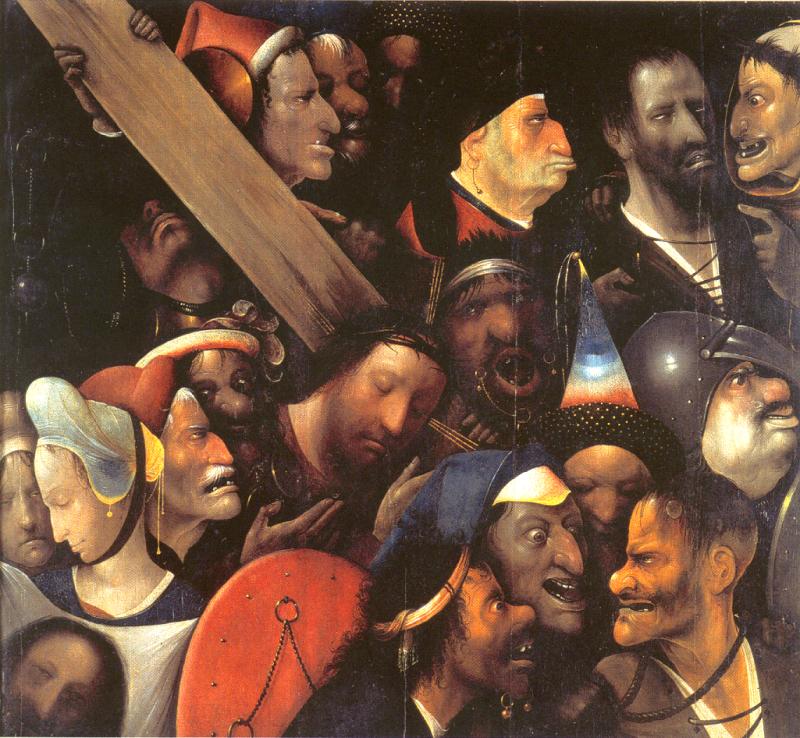
bosch

This is a mercurial story, several in fact, but one of its most valuable uses is to allow us to sort out various individuals and institutions for their trustworthiness and character based upon their words and conduct regarding the multiple scandals hurtling around Washington.

  • Fool: Rep. Michele Bachmann (R-Mn). Bachmann is talking impeachment, which has signature significance: any elected official who brings up impeachment now or anytime before hard evidence turns up proving that President Obama personally delivered  a bag of gold to the IRS leadership to make sure proprietary tax information was leaked is an utter, irresponsible dolt. 1) No President has ever been convicted after their impeachment, and heaven knows we have had multiple Chief Executives factually guilty of “high crimes and misdemeanors.” It is a waste of time, an all-encompassing political warfare glut that this nation can’t afford at this point, especially when the U.S. Senate is in control of the same party the impeached POTUS belongs to. Yes, I agree with the principle that corrupt Presidents should be punished; I’m glad Bill Clinton got his just desserts, but I also know that if he and the rest of the government had been concentrating on what was going on in the world rather than hiding blue dresses, the Twin Towers might be standing today, and 3000—10,000?—-Americans wouldn’t be dead. Impeachment is like using a nuclear bomb: it’s a useful threat, but the reality is too horrible to permit. 2) Anyone who thinks making Joe Biden President is a solution to anything is certifiable. 3) There is nothing at this point that would support a legitimate impeachment. 4) Putting the scandals in that context just supports the agreed-upon White House and media spin that this is all about politics. Shut up, Michele.

Forget Gosnell: This Case Highlights The Real Abortion Issues

John Andrew Weldon, and the mother of his baby, and her property.

John Andrew Weldon, and the mother of his baby, and her property.

John Andrew Welden is being held on first degree murder charges for tricking his girlfriend, pregnant with his child, into taking an abortion bill ( Cyotec, a drug used to induce labor) that she thought was an antibiotic, because he had tampered with the label. The fetus, nearly seven weeks old, miscarried as a result. You can read this ugly story here.

She wanted to have the baby, he didn’t. He arranged his own abortion, deceiving her, betraying her, mistreating her terribly. But how did he commit murder? What he tricked her into aborting wasn’t a human being. NARAL says so. Sandra Fluck says so. President Obama says so.

The ethical and logical problem with our abortion laws, as well as the rhetoric and conduct surrounding them, is that they lack integrity and embarrassingly so. A seven week fetus is not treated as a human life if a mother chooses to have an abortion, and a doctor performs it. This must mean, in any sane, fair and ethical system, that it is not a human life. If it is not a life if a doctor aborts it, it isn’t a life if a boyfriend tricks the mother into aborting it. How can it be? The fetus hasn’t changed, and the conduct hasn’t changed. All that has changed is the agent, and there are only a few ways that can alter the act. “A deceptive killing?” A killing without authority,” perhaps. But the agent can’t make eliminating something first degree murder, if it wasn’t a human being that was eliminated. Continue reading