 The Martin Luther King Memorial was unveiled without the commission responsible for it bothering to fix what has been almost unanimously condemned as an embarrassing mistake, a rephrased, out-of-context quote on the sculpture base (“I was a drum major for justice, peace, and righteousness”) that misrepresents Dr. King’s career and was also something he never said. This is inexcusable, but at least the boob who unilaterally made the decision spelled “righteousness” correctly. The sign above is emblematic of a different ethical problem, the widespread abdication of the shared obligation to speak up when one sees someone else making a really stupid mistake. Continue reading
War and the Military
Ethics Quote of the Week: Charles Krauthammer

Let's see...nope! Still too good for Gaddafi!
“Under the normal rule of law, truth is only a means for achieving justice, not an end in itself. The real end is determining guilt and assigning punishment. But in war and revolution one cannot have everything. Justice might threaten peace. Therefore peace trumps full justice. Gaddafi could have had such a peace-over-justice compromise. He chose instead to fight to the death. He got what he chose. That fateful decision to fight — and kill — is the prism through which to judge the cruel treatment Gaddafi received in his last hours. It is his refusal to forgo those final crimes, those final shellings of civilians, those final executions of prisoners that justifies his rotten death.”
—- Charles Krauthammer, revered conservative columnist and pundit, in his column rebutting the complaints of human rights activists regarding the rebel execution that took Moammar Gaddafi’s life.
Krauthammer is right, and he is wrong. He is right that no one should feel any pity for Gaddafi, a brutal and inhuman despot who had it entirely within his own power to both save his own life and refrain from killing even more of his countrymen than he had killed already. He is wrong that Gaddafi’s crimes and cruelty suspend civilization’s principles of justice and ethics. Continue reading
Integrity, Politics, and Medal of Honor Ethics

The Medal of Honor
Rep. Duncan Hunter of California, a Marine veteran who sits on the House Armed Services Committee, is leading an effort to loosen the standards being applied to the awarding of the Medal of Honor for combat in Afghanistan and Iraq. In an Oct. 4 letter to Defense Secretary Leon Panetta, Hunter argued that Medals of Honor are being denied in cases where they appear to be well-deserved and that the process of approving awards takes too long. He asked the Defense Department to conduct a review of hundreds of such cases. “Properly recognizing these actions through the awards process is not just important to the individuals involved, but it is also essential to upholding the tradition of the armed forces and inspiring others to step forward,” Hunter wrote.
Great: now we have an advocate for heroism inflation. Continue reading
Follow Up and Clarification On The Hiroshima Apology Cable: I Was Wrong, I Apologize…and More
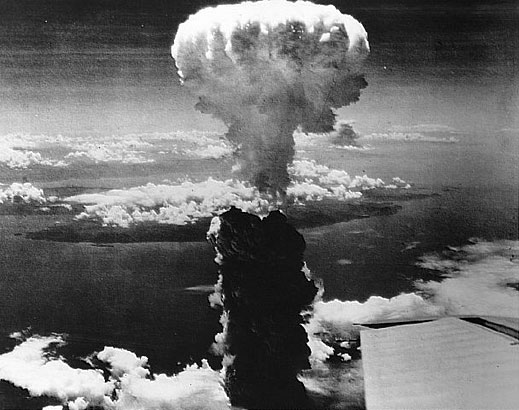
This is my indignation going up in smoke.
There are certain advantages that come from making an incorrect conclusion and publicizing it: sometimes you learn something valuable.
Here’s what I have learned about the diplomatic cable discussed in my post, “How Do I Write A Measured Ethical Analysis When I Am Shaking With Indignation and Rage?“:
1. The officer was reporting a hypothetical situation that the Japanese government official raised during the planning stage of the Obama’s visit.
2. The White House never proposed an apology. The fear of the Japanese was that if he went to Hiroshima, some groups within the country would expect an apology.
3.This key paragraph contains the officer’s assurance to the American Ambassador that the Japanese government would prevent any call, from the Japanese, for a public Presidential apology.
I have all of this from a reliable, credible diplomatic source who I know personally and who was in Japan at the time the cable was sent. This is no credit to me: I received an e-mail that said, in effect, “You Moron! You have no idea how to read diplomatic cables!!! Here’s what really happened…” Continue reading
How Do I Write A Measured Ethical Analysis When I Am Shaking With Indignation and Rage?

None of these men had the arrogance to believe it would be appropriate to apologize for the difficult choices made by their predecessors. They were right.
UPDATE, 10/13 Readers: This post has been proven wrong, based on a misinterpretation of a diplomatic cable that has been clarified to Ethics Alarms by a reliable and objective source. You can read the explanation, and my apology, here.
I will try.
A secret cable dated Sept. 3, 2009 was recently released by WikiLeaks. Sent to Secretary of State Clinton, it reported that Japan’s Vice Foreign Minister Mitoji Yabunaka told U.S. Ambassador John Roos that “the idea of President Obama visiting Hiroshima to apologize for the atomic bombing during World War II is a ‘nonstarter.'”*
The Japanese did President Obama and the United States an enormous favor, but the utter foolishness and lack of comprehension of national principles, American history and the duties of presidential leadership shown by the fact that the idea of such an apology could get to the point where the Japanese had to reject it goes beyond mind-boggling and shocking to frightening, infuriating and offensive. Continue reading
Why Lawrence O’Donnell’s Interview With Herman Cain Wasn’t Unethical Journalism
Lawrence O’Donnell’s unconscionable roast of GOP presidential candidate Herman Cain —-no fair journalist would call it an “interview”—made me realize that broadcast journalism ethics have fractured to the point where it is unfair to apply the same ethics standards to different networks and programs. My initial reaction to seeing O’Donnell’s over-the-top performance was that it represented a new low in broadcast journalism interview ethics. Now I think that is unrealistic and unfair. O’Donnell’s conduct was what MSNBC’s audiences want to see, and what critics should expect to see. Herman Cain, the target in this case, consented to the abuse. Where’s the unethical journalism? There was no journalism. Continue reading
When Unethical Meets Stupid
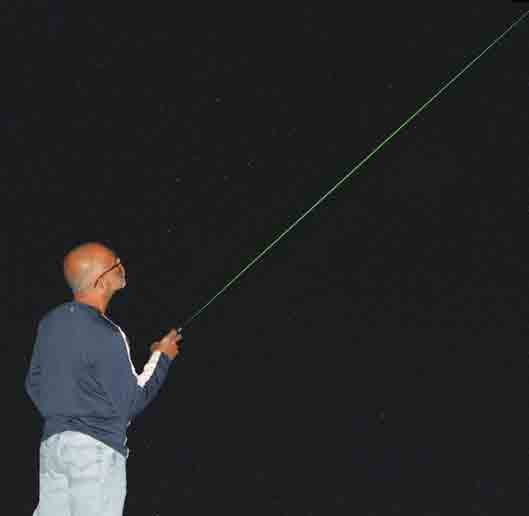
Cuation! Moron at Work.
Pilots flying multi-million dollar aircraft to Navy Air Station Oceana say that beams coming from laser pointers are blinding them as they make their approach. The Navy says there has been a sharp increase in the number of laser sightings within the last 18 months. “You’re getting ready to land–you’re getting ready to go through a number of steps configuring the airplane to touchdown. In the two-seaters, there aren’t any sticks in the back. So if you lose the ability to fly it in proximity to the ground, it gets pretty dangerous,” says Webb. In short, the laser pointers are risking military planes and lives. Continue reading
The Ethically Messy, Legally Muddled, Drone Killing of Anwar al-Awlaki

Ah, those were the good old days: when warfare was simple, fair, brutal and stupid!
The C.I.A. drone killing of Anwar al-Awlaki, an American citizen who was also an Al Qaeda leader, is raising multiple ethical controversies that pollute each other, making ethical coherence all but impossible.
The issues:
- The target was an American citizen. Whatever his crimes, shouldn’t he have the right to a trial before being summarily executed?
- There is no conclusive proof that he actually did anything that resulted in violence against Americans, or posed an imminent threat to national security. Was he targeted for his words, rather than his conduct? How can it be legal or ethical for the U.S. to target a citizen for death because of his political views?
- The United States has officially forsworn assassination as a military or intelligence tactic. Yet this appears to have been one.
- Yemen is not a field of combat, and there was no imminent threat to human life creating an exigency to require U.S. forces to target someone there, whether he was a citizen or not.
- Using unmanned drones in warfare is ethically troubling. Continue reading
Perry, Insomnia, Leadership, and the Death Penalty
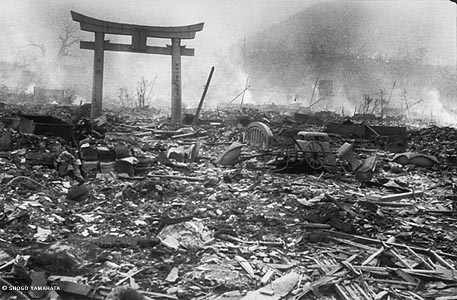
When should a leader lose sleep over a decision?
A lot of ink has been spilled over NBC’s Brian Williams’ question to Rick Perry regarding the death penalty, the Republican candidates debate audience’s strange reaction to it, and Perry’s response. Conservatives see Williams’ question—“Your state has executed 234 death row inmates, more than any other governor in modern times. Have you struggled to sleep at night with the idea that any one of those might have been innocent?”—as a loaded query by a biased questioner who is pressing the progressive anti-death penalty agenda. Liberals see Perry’s answer as proof-positive that he is an unthinking, unfeeling, blood-thirsty monster. Continue reading
Flying the Confederate Flag: Protected Speech? Of Course. Unethical? Absolutely.
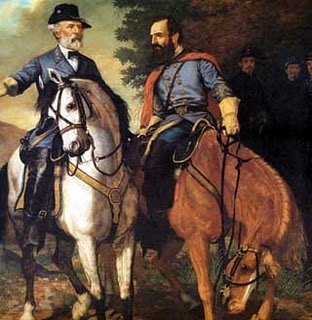
Honor them for their valor if you must, but there was nothing honorable about their cause or their flag.
Once again, emerging from under-ground like a the seven-year locust, a controversy over the flying of the Confederate Flag is raging, this time in Lexington, Virginia, burial place of two Confederate heroes, Stonewall Jackson and Robert E. Lee. A proposed city ordinance would prohibit the flying of the Confederate banner on downtown poles, and some Southern heritage buffs as well as Jackson and Lee fans are upset. “By all means [Jackson and Lee] should be honored,” said Brandon Dorsey, commander of Camp 1296 of the Stonewall Brigade of the Confederate Veterans. “I look at the flag as honoring the veterans.”
The problem is, Brandon, that a large number of Americans look at that same flag as honoring slavery and racism, and for good and historical reasons. Continue reading

