Warped Values and Perverse Incentives: Banning Employers From Asking Whether A Job Applicant Served Time

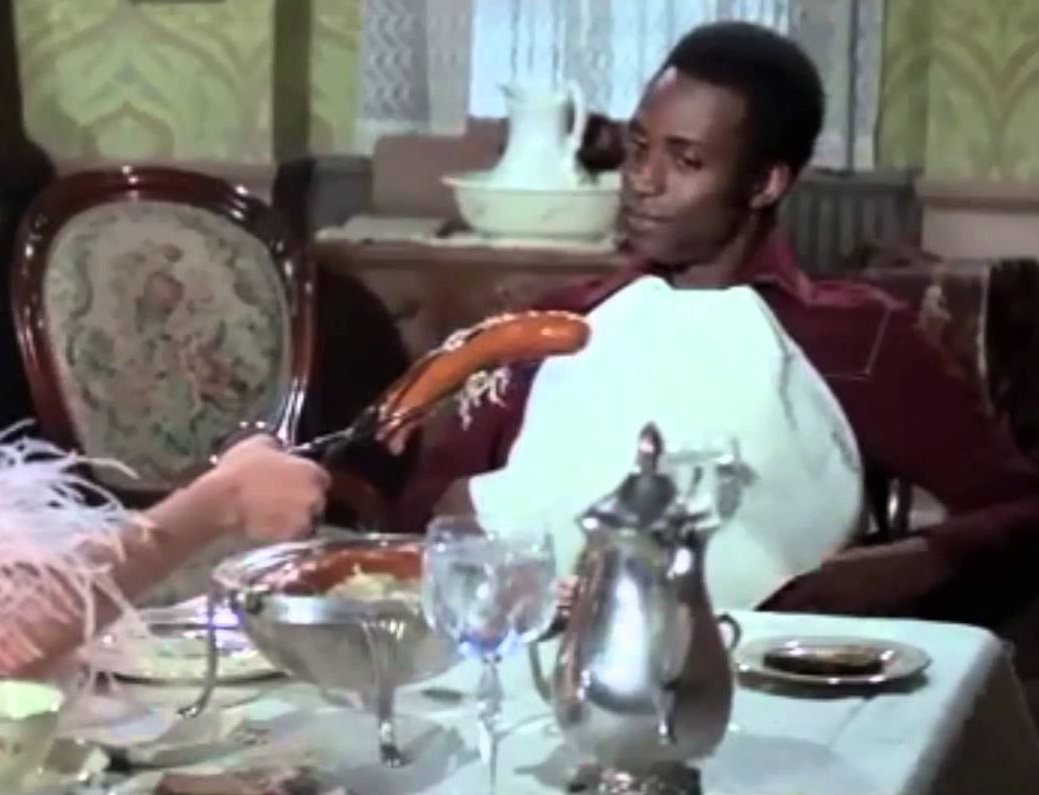
Sorry Hedley---it's unfair to ask a potential employees if they were rustlers, cut throats, murderers, bounty hunters, desperados, mugs, pugs, thugs, nitwits, halfwits, dimwits, vipers, snipers, con men, Indian agents, Mexican bandits, muggers, buggerers, bushwhackers, hornswogglers, horse thieves, bull dykes, train robbers, bank robbers, ass-kickers, shit-kickers...and don't you dare ask if they are Methodists!

Sorry Hedley—it’s unfair to ask a potential employees if they were rustlers, cut throats, murderers, bounty hunters, desperados, mugs, pugs, thugs, nitwits, halfwits, dimwits, vipers, snipers, con men, Indian agents, Mexican bandits, muggers, buggerers, bushwhackers, hornswogglers, horse thieves, bull dykes, train robbers, bank robbers, ass-kickers, shit-kickers…and don’t you dare ask if they are Methodists!

I was unaware that this was a trend: states and cities making it illegal for employers to ask job applicant’s whether they had been convicted of a crime and served jail time.

It is an unethical, foolish and illogical trend, an example of misplaced compassion being used to justify placing risks on law-abiding citizens for the benefit of those who are less trustworthy.

A news article regarding the problems faced by former prisoners re-entering society quotes Zach Hoover, executive director of LA Voice, a multiracial, faith-based organization working to get such a measure passed in Los Angeles:

“Sometimes people think of someone who’s been in prison and they think only of what they did instead of what they’re doing today. They’ve done their time. They served their sentence, and they’re looking for a job.It’s like double jeopardy. You’ve done your time, and now you get a life sentence of joblessness.”

What utter claptrap: Continue reading
Ethics Quiz, “Naked Teacher Principle” Division: The Alleged Naked Naval War College Professor

schnitzengrubenA helpful reader submits this Ethics Quiz question based on the following news item:

The AP reported that U.S. Naval War College professor John Schindler was placed on leave after a photo of a penis with the professor ‘s name over it was posted on Twitter.  It was unclear who sent it and who posted it.

After a blogger sent a complaint to the War College’s administration, the college’s president, Rear Adm. Walter E. “Ted” Carter Jr., ordered an investigation. A college spokeswoman said that investigators would look into whether the photo was not really of Schindler.

Now THAT should be an interesting investigation.

Schindler, a professor of national security affairs and a former National Security Agency intelligence analyst, has deleted his Twitter account. He has said his criticism of NSA leaker Edward Snowden and others has caused him to be the object of harassment on various social media.

Your Ethics Alarms Ethics Quiz of the Day  has two parts:

1. Is it fair for the War College to place Schindler on leave before it has even been established that he sent the photo or that the body part in question belonged to him?

and

2. If he didn’t send the photo himself but it is established that the body part in question does belong to him, should the Naked Teacher Principle* apply?

Continue reading

Animal Abuse, Law, Ethics…And More Cognitive Dissonance

Gothic pets

Some animal abuse issues are ethics slam dunks, some should be, and some are more complicated than the wo people posture over them seem to think. Here are three examples from the news:

1. Tattooed Kittens?

A law about to be passed in New York, S.6769, will make it illegal for pet owners to inflict tattoos or piercings on their pets except for medical purposes or when a tattoo is used strictly for identification purposes. Violations would carry fines of up to one year in jail and a $1,000 fine.

“I believe that if given the choice, animals would decline to having themselves undergo a painful procedure of being either tattooed or pierced,” said New York State Senator Mark Grisanti, a Republican who is supporting the measure introduced by Democratic Assemblywoman Linda Rosentha in 2011.

Ya think? The fact that a law would even be necessary to articulate that tattooing or piercing a pet for the owner’s amusement is horribly wrong and obvious cruelty foretells the approaching apocalypse.  That such a law would take three years to pass also tells us something bad about, oh, New York, politics, partisan warfare, human intelligence…just about everything. The problem, was brought to public attention by the prosecution of this idiot.

2. The Opossum Drop Continue reading

Passenger List On The Deadly General Motors Ethics Train Wreck

"Oops! There goes G.M again!"

“Oops! There goes G.M again!”

That great, big, all-American motor car company that the Obama Administration took bows for saving five years ago has been revealed as a thoroughly corrupt, incompetent and deadly enterprise. As the full extent of the General Motors safety scandal unfolds—and it could get worse—this is a good time to take stock of the ethics lessons and miscreants involved, on the off chance that we are interested in learning something.

Did that sound bitter? It is. There is little in this terrible story of corporate ineptitude and corruption that wasn’t known and understood decades ago. Yet here we are again.

The manifest:

  • G.M. management. It pursued the policy of paying large settlements with confidentiality agreements to those injured by ignition switch defects in their cars, never fixing the defect itself. This is the old Pinto calculation, reasoning that if it is cheaper to pay for the deaths and injuries from a design defect than to fix the defect itself, then it makes good business sense to keep doing that, indefinitely. There are three problems with this logic, of course. First, it kills people. Second, it is stupid: eventually the facts will get out, and the whole company will be endangered. Third, it is wrong.
  • The plaintiffs’ attorneys. The trial lawyers association, way back when I worked for it two decades ago, adopted the unofficial position that the practice of accepting settlements from large corporations in product liability cases that included agreements not to reveal the damages and the defects involved to regulators, the news media, and endangered consumers was unethical. Members were urged to make a rejection of such terms a condition of agreeing to represent injured parties. Speeches were given, pledges were made. All agreed that the practice undermined the mission of the plaintiffs’ bar to make America safer through the civil justice system. What happened? Greed, that’s what. Just as every plaintiff has a price, so do many trial attorneys, who received up to 40% of those secret settlements. Every single one of the lawyers who guided their clients to accepting hush money in exchange for letting unsuspecting owners of G.M. cars risk their lives and those of their families were members of the American Association for Justice, which changed its name from the Association of Trial Lawyers of America because a survey showed the term “trial lawyers” was too negative. This is why the term is negative.

Continue reading

Of The Great Noodle Ordeal, Sweeney Todd, Stressors, and The Importance Of Ethics In Stopping Mass Killings

I have a theory about mass killings, and it is neither original nor exclusive: in fact, it has been proposed in various forms for at least a  century But I think it is worth considering.

I think that the smart, creative, intense, ambitious, restless and entrepreneurial people in this country keep designing an environment, and forcing it on us whether we like or need it or not,  that is increasingly, and ultimately unbearably, hostile to those who are not smart, creative, intense, ambitious, restless and entrepreneurial. I think that as life becomes increasingly stressful and confusing for average people—remember, about half of the public is below average intelligence, and even average intelligence is nothing to jump up and down over—they are more likely to reach what the serial killer profilers on “Criminal Minds” call “stressors”—the final straw, the moment when they see red, and deadly fury takes over. On the TV show, of course, the stressor is the death of a child, or a firing, or the onset of an illness, or financial setbacks. But I can see it simply being the realization that life is hopeless…that it is always going to be a miserable, frustrating struggle, and that powerful, rich, meddling people are at work always finding ways to make sure it gets harder and harder, and ultimately futile, for normal human beings to get through the day.

I entertain delusions that I am smarter than the average bear, and I can barely stand it myself. Yesterday, stuck at La Guardia, I wanted to get some food in the a terminal’s food court. The place I chose had just added computerized self-ordering on iPads. I’m not intimidated by iPads; I use one. The woman in front of me, however, stared at the device—there were no readily available employees to guide her through it—as if it were a space alien. She pushed some buttons, sighed, and gave up. Continue reading

When Ethics Alarms Fail: The (Almost Deadly) Return Of “Johnny”

justkidding

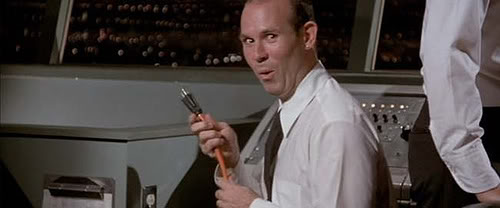
In “Airplane!,” the late Stephen Stucker created an iconic comic character as the chaotic “Johnny,” a deranged but relentlessly cheery air traffic control employee who treated the life-and death emergency of an endangered airliner as an opportunity to pull practical jokes, like pulling a plug to shut off all the runway lights just as the plane was making its desperate approach with a volunteer pilot at the helm. “Just kidding!” he says. This week, we learned that Johnny, or at least his copycat, was alive and well. An air traffic controller at Hartsfield-Jackson Atlanta International Airport instructed the pilot of Delta Flight 630, just over 1,000 feet off the ground and preparing to land, to abort the landing and circle the airport. Seconds later, Johnny II said, “I’m kidding, Delta 630. After you land, I’ve got no one behind you. Expect to exit right.” Continue reading

Ethical Conflict: The Case Of The Confused Cabbie

taxi1Heading to downtown Washington D.C. for an early morning ethics presentation for the Federal Bar (at the GAO building), I encountered an ethical dilemma that got the day off to a challenging start.

Traffic in D.C. is ridiculous, so I arranged to have an Alexandria cab pick me up at 8:15 AM for a 9:30 AM presentation, assuming that I would arrive close to 9:00. I would have too, except that my young, African-accented cab driver had no idea where he, or I was going. I should have foreseen the problem when the cab was ten minutes late (this company knows my address and typically arrives early), but it came into sharp focus when the driver asked “So you know how to get there, right?” (No, I don’t know how to get anywhere, which is why you are the cab  driver, and I’m not) and made it startlingly clear that he didn’t know how to read his GPS. As a result, he made multiple wrong turns, even though the screen in front of him was showing him the way, and I ultimately had to interpret the GPS directions for him. I barely arrived on time, and felt like I had done the driving.

My initial instinct was to call the company and complain. I even took down the cab number.

And my thinking went like this: Continue reading

An Untrustworthy Study About Perceptions Of Untrustworthiness That Shows Something Else Entirely

Research is frequently polluted by confirmation bias; personally, I believe this is the case more often than not. A particularly vivid example is the work on “vocal fry,” described as “slowly fluttering the vocal cords, resulting in a popping or creaking sound at the bottom of the vocal register.” Supposedly a 2011 study determined that two-thirds of college women were doing it, and now a paper by Rindy C. Anderson, Casey A. Klofstad , William J. Mayew, and Mohan Venkatachalam announces the results of further research showing how harmful it is. I admit: I’ve now read a lot of stuff about vocal fry, which I had never heard of until recently, and I’m still unclear on exactly what the hell it is, other than “talking in an annoying fashion.” The Atlantic tells us that this is vocal fry, which means it consists of talking like Zooey Deschanel does here:

Got it? OK, now you can explain it to me.

Anyway, what the exact phenomenon is doesn’t matter to the ethics issue; all you have to know is that a respected, serious, scholarly study has spawned lots of media attention by claiming that its data shows that women and men who exhibit vocal fry in their speech patterns will tend to be hired less often than job interviewees who don’t, because employers view them as untrustworthy, among other things. (The study’s catchy title is “Vocal Fry May Undermine the Success of Young Women in the Labor Market,” because, as we know, women are all that matter these days, having had war declared on them and all.) Continue reading

No, There Is No “Absurdly Bearded Sociology Professor On A Beer Can Principle”

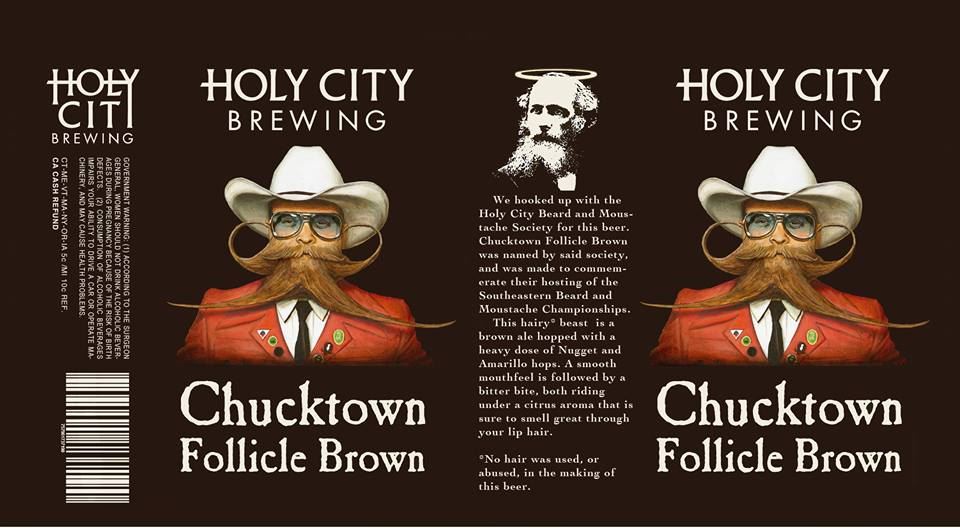
follicle beer

This is just unfair, that’s all.

 Paul Roof, a professor of sociology at Charleston Southern University, a Christian school, learned that a photo of him taken by a professional photographer at a beard contest was about to appear on “Chucktown Follicle Brown” beer cans.  “I’m not compensated for the image, I don’t own the image, and the use of the image was a surprise to me,” the Roof told the media. His (amazing/ outrageous/ ridiculous—choose one) four-section beard has been used for other promotions, including for Christian services. Charleston Southern University never expressed any objection to its employee looking like an escapee from “Ripley’s Believe It or Not!” Nevertheless, the school fired him, saying that a professor having his image on a beer can “was not representative of a Christian environment.” Continue reading

Theater Ethics: The Big Daddy Affair

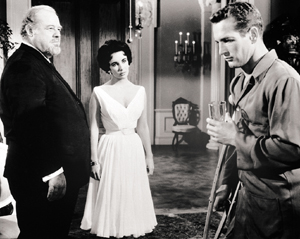
"Yes, why DON'T you want to make love to a young Liz Taylor, Brick? I've been wondering about that myself..."

“Yes, why DON’T you want to make love to a young Liz Taylor, Brick? I’ve been wondering about that myself…”

It is convenient when the perspectives of my longtime dual personas as a stage director and an ethicist are simultaneously relevant, so I couldn’t pass up this juicy story.

From the LGBT blog of the LA Weekly:

A Southern California production of the Tennessee Williams classic “Cat On a Hot Tin Roof” was canceled today after a homophobic outburst in the audience led to a physical confrontation, the firing of an actor, and an apparent cast revolt….the Repertory East Playhouse… announced in a statement today that the run of the play was “suspended” …as a result of “cast members leaving the show with no time to adequately re-cast their parts … “[A] man in the audience was allegedly drunk and heckling the performers during Saturday night’s performance….The heckling had been building up, …with whistling and cat-calling aimed at the character Maggie, as if the heckler and his friend “were at a strip club.”….at the moment Brick is asked why he rejected a kiss from Maggie….the heckler called out something like, “Because he’s a fag,” according to the director. At that point the actor playing Big Daddy, John Lacy, went into the audience to confront the man…”

“It was almost like he [Big Daddy] was still in character,” another actor told the LA Weekly blogger, Dennis Romero. He and a third actor then left the stage, and helped subdue the drunken audience member and his friend. Apparently the audience applauded the scene—does this remind anyone else of “My Favorite Year”?—and the play continued. Said a cast member: “The rest of the play has more resonance than ever.”

The theater fired Lacy after the show.  Anton Troy, the actor playing Brick who had been heckled, then announced on Facebook that he was quitting the production in protest, saying in part, “I will not support homophobia or an establishment that doesn’t support its talent. Hate in any form is not something I choose to subscribe to. John is a seasoned professional and an honorable man. It should never escalate to a point where the talent has to handle an unruly drunk in the audience themselves regardless of the outcome. Producers dropped the ball..”

Other actors quit the production as well, and the entire run, which was to have included a tour, was cancelled.

Wowsers.

Here are some ethics observations: Continue reading