Ethics Dunce: Safeway…Ethics Hero: Ryan Young. Justice? Waiting…

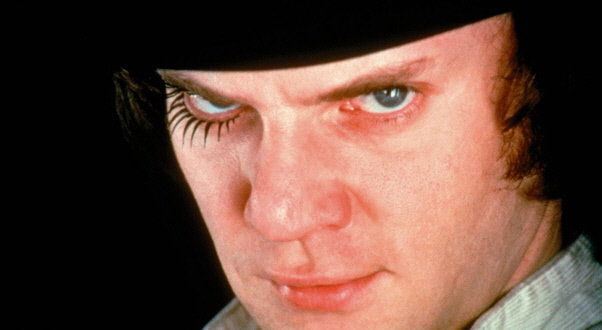
“You’re suspended, Kent.”

I’ve asked many times on Ethics Alarms why so many Americans stand by, inert and passive, when a fellow citizen is in peril.  Maybe the stunning ethics blindness exhibited by Safeway in a recent incident is part of the answer.

Ryan Young, who works in the meat department of a Safeway grocery store in Del Rey Oaks, California, was on the job when he witnessed a man beating a pregnant woman, apparently his girlfriend. Young told the man to stop, but he continued with his assault, shoving and kicking the her.  Young jumped over his counter, pushed him away, and ended the attack.

His reward was to be suspended without pay. Safeway has a policy that directs employees to summon security personnel and not to personally intervene when they see a crime or fight in progress. Even though police confirm that Young may have saved the woman and her unborn child from serious injury, the company is insisting that Young’s conduct warranted discipline, not praise. Continue reading


The Matthew Owens Attack: For Obama, Impossible Choices and Deserved Accountability

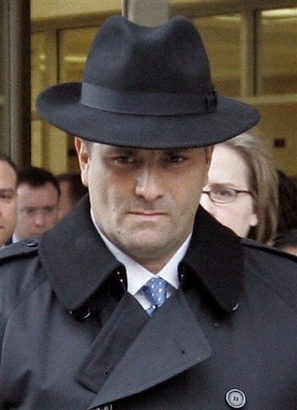
Actually, Matthew Owens DOES look a little like my son...Of course, it's hard to tell...

From the Huffington Post:

“Alabama police are trying to track down a mob that beat a man into critical condition — leaving their battered victim with the words, ‘Now that’s justice for Trayvon.’ Cops told WKRG that Matthew Owens got in an argument with some kids playing basketball at a court in the city of Mobile on Saturday night. The kids left and a group of some 20 adults arrived at Owens’ front doorstep, armed with chairs, brass knuckles, pipes and paint cans. The group, all African American, allegedly beat him into a bloody pulp before someone uttered the words that connected the crime to the death of Trayvon Martin, the unarmed teen who was shot and killed in Florida by neighborhood watch captain George Zimmerman.”

____________________________________________________________

UPDATE (4/25): New reports question some of the details above. The dispute may have started over thefts in the neighborhood witnessed by  Owens’ niece; a neighbor says that Owens had been in disputes frequently; police now say that the beating was administered by only members of the group, with the rest standing by and watching. There has been at least one arrest. Also of note: Owens’ sister’s claim that one of the attackers said “Now that’s justice for Trayvon” may have been corroborated by other neighbors.

____________________________________________________________

This was completely predictable, and indeed it is only the worst, not the first, incident in which an attack on a white victim was linked to “justice” for Trayvon Martin. Now, the reasons I laid out a month ago that made President Obama’s reckless comments about the Sanford, Florida killing divisive and dangerous ought to be obvious to all, but if not, here are some questions to consider: Continue reading

Ethics Chess Lesson: The Tale of the Kidney and the Ungrateful Boss

Ethics chess is complicated, but ignore it at your peril!

Ethics chess is the process by which one considers the likely chain of events that follow from an act, and tries to predict the ethical dilemmas that may result before they occur. Debbie Stevens and Jackie Brucia didn’t play ethics chess. This is what happened to them.

When  Stevens was exploring the possibility of returning to the Atlantic Automotive Group, where she had worked previously, she met with Brucia, her former and potential boss, and somehow got on the topic of Brucia’s health problems. She needed a kidney transplant, and had found a donor, though it was not yet certain that the kidney would be hers. Stevens said that she might be willing to contribute her own kidney if that donor didn’t work out.

Later, Stevens was hired by Brucia,and two months later, in January of 2011,  Brucia called Stevens into her office and told her that she had lost her organ donor. “Were you serious when you said you would be willing to give me one of yours?’ Brucia asked.  “Sure, yeah,” Stevens says now. “She was my boss, I respected her. It’s just who I am. I didn’t want her to die.’’ It wasn’t exactly a direct donation, but Stevens donated her kidney to a stranger who matched up well with it so Brucia could be advanced on the list and get a better matched kidney from another source. Nonetheless, Brucia got a healthy kidney because Steven’s gave up one of her own. Continue reading

Comment of the Day: “A Last Word on the Kevin Coffay Sentence”

Brain chemistry?

Michael, who is the reigning Comment of the Day champion, comes up with another here regarding the Kevin Coffay sentence and the mitigating factor in juvenile crimes, supported by brain chemistry research, that adolescents are not as capable of rational decision-making as adults, and therefor should not be punished as severely for their reckless acts. This is his post regarding A Last Word on the Kevin Coffay Sentence.”

“Don’t go overboard with the studies that show adolescents are incapable of being responsible, thinking rationally, or evaluating risks. If you look at such studies, they are done in a vacuum and merely state that older people are BETTER at evaluating risks (duh). The main point is that our brains continue to develop until 25 or so. Much like Titanic research, however, this research is interpreted wildly and without considering evidence to the contrary. Continue reading

Unethical Ethics: How Business and Government Encourage Unethical Thinking In Their Ethics Training

Show us the way, O Wise and Ethical One!

Jack Abramoff, the corrupt lobbyist turned federal prisoner, then author and now ethics expert, will be giving a lecture on government and personal ethics at The University of Texas at Austin’s business school on May 2. This is not as unusual as it seems. My biggest competitors are felons and disbarred lawyers—they literally step right out of professional disgrace, and sometimes jail, into the lecture circuit. They are draws, and in a field like ethics, which is often prescribed as substitute for barbiturates, this is irresistible to professional development programmers and conference organizers. It also attracts the participants that most need real ethics training, but who seek what these fake ethics presenter usually have to offer:  real life-based advice on what you can’t get away with. This lesson has about as much to do with ethics as it does with Parcheesi, but unfortunately, that’s what is generally regarded as practical ethics.

Characters like Abramoff don’t have ethics alarms; they have survival alarms.  Business schools, politicians and the media still believe that aiming reforms at those alarms, in the form of tougher rules and enforcement, will make business and government more ethical. Think about it: the cultures will still be unethical; the people in them will be just as unethical, but because proven scofflaws and ethics corrupters like  Jack Abramoff will explain where they went wrong, all these people with dead ethics alarms, further deadened by absorbing  the wisdom of the most corrupt of a corrupt breed, will stop behaving unethically.

Good plan. Continue reading

Mirlande Wilson Is My Favorite Ethics Dunce of All Time!

When we last left Mirlande Wilson, she was claiming, improbably, that although she had bought Mega Millions lottery tickets for her workplace pool at McDonald’s, the ticket she bought giving her over $250 million in jackpot winnings was hers alone.

This made her an Ethics Alarms Ethics Dunce. Now she says she has lost the ticket. This opens so many possibilities, all with their own ethical implications:

  • She is lying, and never had the ticket, meaning that she is willing to make her co-workers think she cheated them to try to pull off an audacious scam. Dishonest and shameless.
  • She did lose the ticket, but it was the pool ticket, and she is lying about that part of it. In this case, she was spectacularly irresponsible to lose a ticket worth millions to the persons who collectively bought it. And a liar. Dishonest, careless, greedy, irresponsible and untrustworthy.
  • She did buy the ticket with her own money, and did lose it, and is just telling the truth, hoping to get a little sympathy. In that case, she deserves some. But buying a ticket for a mega-jackpot and losing it is still prima facie evidence that you shouldn’t live alone, or be left in the presence of pointy objects. Honest, careless and pathetic.
  • She bought the ticket with the pool’s money, and knows that she won’t find it and can’t get the cash. She’s saying that the lost ticket was hers alone, hoping that her fellow workers won’t feel as terrible as she does, since it would be pretty terrible to gor back to a fast food job when you know you should be joining country clubs. She’s trying to spare them. Yes, that must be it. Noble, kind, and self-sacrificing.
  • She bought the ticket with the pool’s money, and knows that she won’t find it and can’t get the cash. She’s saying that the lost ticket was hers alone, hoping that her fellow workers won’t try to kill her. Irresponsible, careless, dishonest, but understandable.

I can’t wait to see what happens next.

Burger King, Mary J. Blige and the Political Correctness Double-Bind

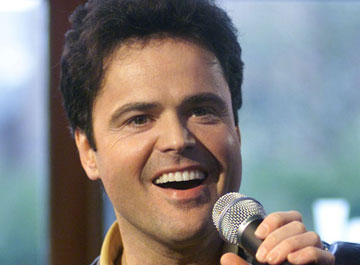
"No, let's give the fried chicken commercial to Donny Osmond. I don't think Mormons even like fried chicken..."

My theater company did a production of the Depression Era comedy “Stage Door,” about a group of young actresses  who stay in a boarding house. There are two roles for “domestics” in the play; the female of the two has quite a few lines. The director felt that it would be perpetuating a stereotype to cast African-Americans in these roles, though that is what the characters were supposed to be, so she cast white actors in both parts. The bottom line is that African-American actors were not cast because of their race, in parts written for actors of their race. No offensive stereotype..and no jobs.

This seems counter-productive and foolish to me. Another example: I was once told by the EEOC specialist at a New York law firm that he never took female associates on travel to meet with clients, because he didn’t want to be vulnerable to sexual harassment claims. “So you’re discriminating against women in your firm to avoid harassing them?” I asked. “Well, I suppose you could say that,” he replied.

Which brings us to Mary J. Blige. The singer was hired by Burger King to sing in a fried chicken commercial, and the result has been attacked as racist stereotyping by several black publications and critics. Burger King has pulled the commercial, muttering some cover-story, along with Blige, about the ad being released “prematurely.” How that would change the fact that she is singing “Crispy chicken, fresh lettuce, three cheeses with dressing!” I don’t really grasp. Anyway, Burger King has officially apologized, which, I suppose, means that just as you can’t use the term “chink in the armor” in discussing anything to do with Jeremy Lin, you can’t hire a black singer to promote fried chicken….even if a black singer wants to promote fried chicken and needs a job. Continue reading

Ethics Dunce: Mirlande Wilson

"Share? Why should I share?"

Mirlande Wilson was part of a lottery pool formed in the Maryland McDonald’s where she works, and claims that she bought one of the three winning tickets that will split the $640 million dollar Mega Millions jackpot. But Wilson told the New York Post that although she did take part in the pool, she bought the winning ticket on her own and has no intention of splitting the winnings. A co-worker who took part in the pool dispute’s Wilson’s story and says Wilson was given additional money late Friday night to buy extra lottery tickets before the Mega Millions drawing.

Why are people like this? Yes, I know, greed…still: does winning a fortune have to turn people into utter, irredeemable jerks? Continue reading

Dr. Z’s Tips to Avoid Unethical Influences in the Workplace and in Life

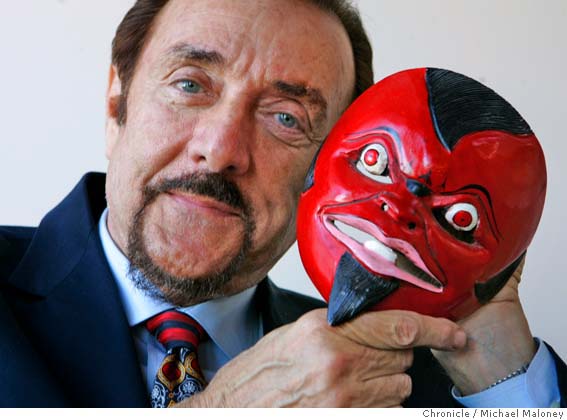
The wise and provocative "Dr. Z" (on the left)

I’m giving ethics seminars to lawyers and accountants today at a non-profit conference in Washington, D.C. While I’m gone, I thought you might want to think about one of the topics I’ll be talking about, the problem of avoiding unethical influences and being co-opted by an unethical culture. What follows are some of the principles advocated by psychologist  Philip Zimbardo, “Dr. Z” to his students, who is best known for devising the infamous Stanford Prison Experiment (it was even made into a movie), that demonstrated to a frightening degree how ethical individuals could engage in horrendous acts when placed in the right (or wrong) environment. Zimbardo has studied, taught and written about this phenomenon extensively, and I find his advice bracing and wise, as well as fodder for debate and discussion. Here it is: Continue reading

Easy Call: Employers Asking For Facebook Passwords? It’s Unethical. So Let’s Stop It.

Ethics Alarms’ predecessor, The Ethics Scoreboard, had a feature known as “Easy Calls,” where I would render periodic ethics verdicts I thought should be obvious. Today’s talk radio and blogosphere sensation, the report that asking for a job applicant’s Facebook password is becoming a common practice of employers, is a classic easy call. And like a lot of those on the Scoreboard, an amazing number of people are getting this easy call wrong anyway.

For example, I heard lawyer-radio talk-show host Laura Ingraham today mock complaints about the practice, saying it was a legal request. Sure, it’s legal. It is still wrong, an indefensible incursion of personal privacy. “You are always free to look for a job somewhere else,” Ingraham says, as if that makes everything fine. Being free to reject an unfair and coercive job requirement doesn’t make it any less unethical. Law professor Orrin Kerr says that the Facebook demand is in the same league as demanding a job applicant’s house keys. Let’s see, what else could a prospective employer ask? Continue reading