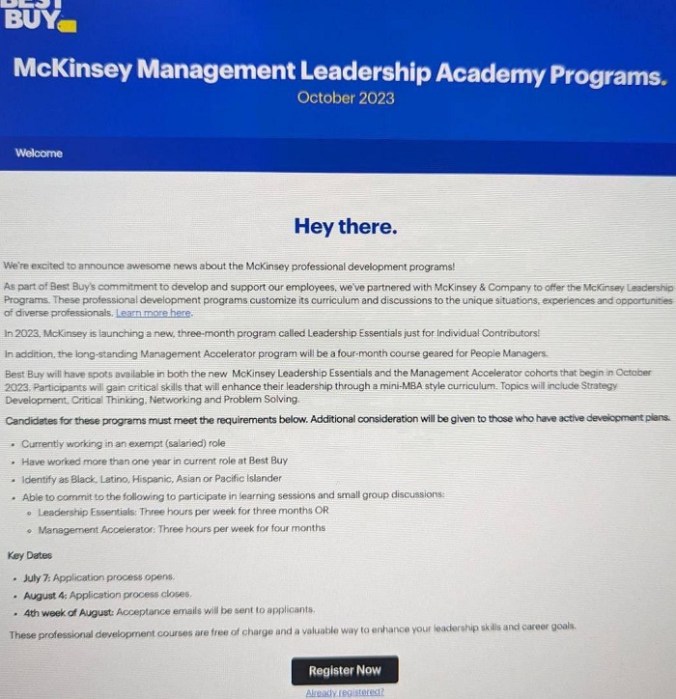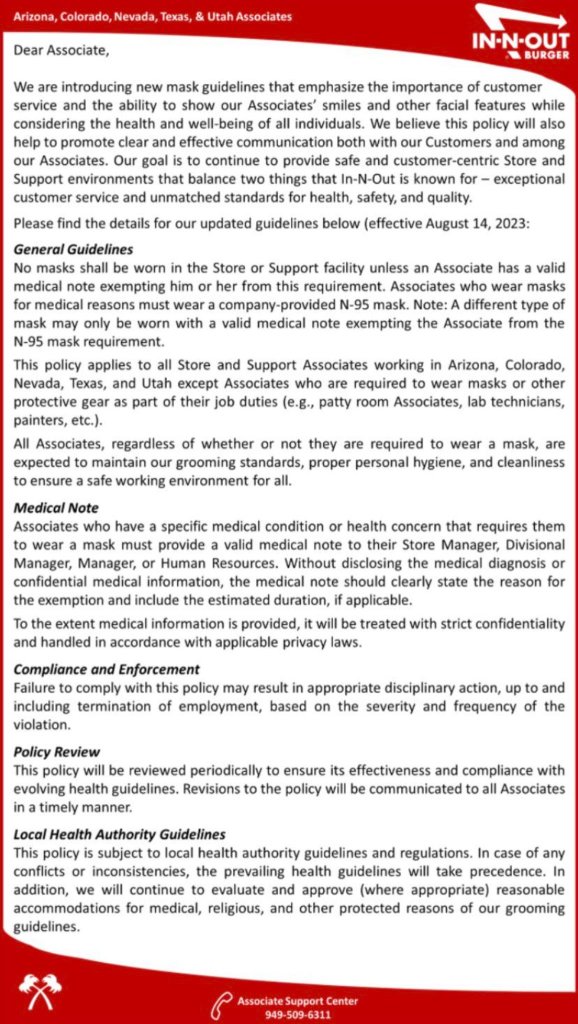
Among the many ways the last few years of Wokemania has reduced the quality of American life and our access to the pursuit of happiness is the creation of the ideology-linked addiction to virtually useless masks and a near-crippling phobia regarding the threat of air-borne illnesses created by fearmongering during the pandemic.
Workplace
And Still More From The A.I. Ethics Files: “Looker” Again Raises Its Perfect Virtual Head In The Hollywood Actors Strike
Back in March, Ethics Alarms discussed the ethical issues implicated when marketing departments begin using Artificial Intelligence to “increase the number and diversity of our models for our products in a sustainable way,” as one retailer phrased it. The scenario echoed the plot of “Looker,” a 1981 Michael Crichton science fiction thriller in which a high-tech research firm convinces companies that real, live models, even after cosmetic surgery, can’t approach the physical perfection that will optimally influence consumers. In its diabolical scheme, models are offered a contracts to have their faces and figures scanned to create 3D computer-generated avatars, indistinguishable from the live versions, which would be animated by A.I. programs for use in TV commercials. Once their bodies are duplicated digitally, the human beings get lifetime paychecks and can retire, since their more perfect CGI dopplegangers will be doing their work for them. As he did so often during his brilliant, too-sort life, Crichton anticipated a serious ethical crisis arising out of developing technology. “Looker” is almost here.
Last week,the 160,000-member union SAG-AFTRA announced that it would join the the screenwriters union in its industry strike after failing to secure a new contract with movie studios and streaming services. The Screen Actors Guild and American Federation of Television and Radio Artists President Fran Drescher—yes, “The Nanny” herself—- condemned the AMPTP’s “shameful” and “disgusting” treatment of the union’s members. Among the major points of dispute is how to preserve acting and writing jobs that could soon be imperiled by the rapid development of computer technology and artificial intelligence.
“Curmie’s Conjectures” #3: Confucius and the Fourth Circuit
by Curmie
Twentysomething years ago, a few months after completing my PhD, I got a phone call from my mentor in Asian theatre, who, upon learning job search wasn’t going as well as I might have hoped, asked if I wanted to teach a couple sections of the university’s Eastern Civilizations course. I asked if I was really qualified to teach such a course. His response: “You know something, and you can read.”
Based largely on his recommendation, I got an interview for the position. I made no attempt to conceal my ignorance of a lot of what I’d be teaching. But the department had struggled with grad students who had lost control of their classrooms, and I’d taught full-time for ten years before entering the doctoral program; I got the job. The head of the Eastern Civ program closed the interview with “There are some books in my office you’ll want to read before you start.” I knew something, and I could read.
That’s relevant to my consideration of the recent ruling of the Fourth Circuit Court of Appeals in Porter v. Board of Trustees of North Carolina State University, in which a tenured faculty member claimed to have been punished for arguing against certain initiatives undertaken by his department. I’m no lawyer, so there’s some legalese I’m not so sure about, and I have no interest in chasing down all the precedents cited by either the majority or the dissent to see if they really say what these judges say they say. But I know something and I can read.
More to the point, one of the texts I taught in that Eastern Civ course was Confucius’s Analects, which I had to get to know a lot better than I did previously in order to teach it to someone else. One of the central tenets of Confucian thought was his argument against having too many laws, as no one could possibly predict all the various special circumstances surrounding every dispute. Context matters; timing matters; motives matter. Confucius’s solution was to turn everything over to a wise counselor (like him) who would weigh all the relevant elements on a case by case basis. That’s not the way our justice system works, nor would it be practical, but it’s easy to see its appeal… in theory, at least.
Significantly, Confucius’s reservations about laws’ inability to anticipate all the possible combinations of circumstances are the first cousin if not the sibling of what Jack calls the “ethics incompleteness principle” which asserts that there “are always anomalies on the periphery of every normative system, no matter how sound or well articulated.”
A.I. Ethics Updates
1. Apparently Alexa and its ilk are causing heartburn among legal scholars. How should conversations over-heard by virtual assistants be treated when they are offered as evidence in court? Among the analogies that are being run up the metaphorical flagpole is a comparison with …parrots, as an eavesdropper who can accurately repeats information it overheard but was not expected to disclose. Courts have refused to admit testimony by parrots. In one case, a parrot named Max repeatedly cried out, “Richard, no, no, no!” after the murder of his owner. The defense attorney in the case wanted to have this evidence admitted the accused murder’s name was Gary. The attorney argued, unsuccessfully, that the “testimony” was not hearsay, but rather like a recording device. Despite expert testimony that that breed of parrot had the ability to accurately repeat statements, the evidence was excluded.
In another case, Bud the Parrot, began incessantly repeating, “Don’t fucking
shoot!” after one of his owners shot the other.
The Weenie Mandate
Elsewhere on Ethics Alarms are a few posts defending the decision by employers to fire employees who have physically intervened in attempted robberies, sometimes to the extent of capturing the thieves. Such individuals are usually hailed as heroes by the media and the public, and the stores that discipline them are assailed as heartless ingrates. The companies are on solid ground, ethically, legally and practically. Typically, there are policies in the employees handbook specifically laying out how robberies are to be handled. Physical intervention not only risks the would-be hero’s well-being, but the welfare of other employees as well. When a staffer’s amateur law-enforcement act goes well, it is still just moral luck.
Unfortunately, this sensible policy has had illicit relations with the “shoplifting should be a crime” mutants, and the result is one frightening deformed offspring. Thanks to woke brain rot seeping through San Francisco and other urban areas, viral videos show staff just standing by politely as people forage through store shelves, sometimes returning several times.
The woman above, Mary Ann Moreno, had worked at Circle K for 18 years. Moreno was behind the counter when Tyler Wimmer walked into the convenience store with a knife, and asked Mary if she would give him a pack of cigarettes for free. Moreno declined. When he grabbed a pack anyway, she instinctively reached out and touched him, then pulled away. Based on the surveillance tapes, the company fired her for violating the company’s “Don’t Chase or Confront Policy” regarding shoplifters and robbers. Moreno is now suing Circle K Stores Inc. Her attorney, Iris Halpern, said the footage clearly shows that Moreno acted in self-defense and made no real effort to stop or chase Wimmer. “Companies have not sufficiently thought through the nuance in these situations,” she says.
Ethics Hero: Non-Weenie Chard Scharf
Pronouns again.
A reader flagged this story and it almost got lost in the swirl of ethics chaos this month, so I want to get it up quickly today. Chad Scharf was the vice president of software engineering at the Jacksonville, Florida, location of Bitwarden, which is a cybersecurity firm based in California. I suspect that headquarters locale is at fault for the fact that Bitwarden decided that all employees should include “their “preferred pronouns” in their personal profiles on Slack, an online messaging platform. This was, of course, part of its diversity/equity/inclusion embrace.
DEI is a cover for government, corporate and other sinister educational efforts to engage in discrimination, progressive virtue signalling and indoctrination, and the only way to slow it down until the courts step in is to show some backbone and say, “No.” That’s what Scharf did. He declined to list any preferred pronouns, and that should have been the end of the issue. There is a clear and reasonable presumption that an employee with a male name who doesn’t specify pronouns is content with being identified by male pronouns.
[Pssst! Missouri State University Trustees! You Really Are Ethically Obligate To Fire MSU President Clif Smart And There’s No Getting Around It
The Equal Protection Project (EqualProtect.org) of the Legal Insurrection Foundation asked the Missouri Attorney General to investigate a “business boot camp” at Missouri State University that specifically excluded white males. The story began getting media coverage—mostly from conservative news media, of course, since the rest regards this as “good” discrimination as an extension of the DEI fad. Caught red- or at least pink-handed, MSU cried “Never mind!” and announced that future business boot camps would be open to everyone, even evil white males. However, the school’s oxymoronically-named president Clif Smart really and truly said this:
“Frankly, I still don’t think we did anything wrong … given that we have multiple cohorts of this going on and this was just one cohort that was limited. We won’t do that. We’ll do a better job on the marketing and information (and) dissemination side and review the process to make sure that everyone has a chance to participate, but we’re not going to exclude people.”
Here’s Controversial Ethics Position: Universities Shouldn’t Employ Professors Who Advocate Murder
In 2020, Prof Erik Loomis, a far, far Left radical (not that there’s anything wrong with that) who teaches at the University of Rhode Island, was discussing the murder of Aaron “Jay” Danielson, a member of the right-wing group Patriot Prayer who perished during rioting in Portland, Oregon. In a September blog post titled “Why was Michael Reinoehl killed?” (Reinoehl is the man suspected of fatally shooting Danielson; he was killed as federal authorities tried to arrest him), Loomis responded to a commenter who had limited sympathy for Reinoehl because he (probably) had shot Danielson by writing,
He killed a fascist. I see nothing wrong with it, at least from a moral perspective…tactically, that’s a different story. But you could say the same thing about John Brown.”
Comment of the Day: “Another “Great Stupid” Milestone: Mayor Adams’ Plan To Stop Shoplifting”
An April 28 post on “Homeroom,” the official blog of the Department of Education (ED) called on schools to remove the criminal background question from admissions. The post exhorted “institutions across the country” to “re-examine their admissions and student service policies and holistically determine how they can better serve and support current and formerly incarcerated students.” We call on you to ban the box,” it concluded.
“Ban the box” refers to a campaign started by the civil rights group “All of Us or None” in 2004. “The campaign challenges the stereotypes of people with conviction histories by asking employers to choose their best candidates based on job skills and qualifications, not past convictions,” the campaign’s website explains. The fallacy of that characterization should be apparent: it assumes that a criminal conviction doesn’t reveal anything about an individual’s character, ethics, trustworthiness or values, as if committing a crime is just something that happens to people, like catching the flu. On the other side of the argument is the principle that a citizen can “pay his or her debt to society,” and once that debt is paid, the metaphorical slate is cleared.
Ryan Harkins wrestles with these issues in his Comment of the Day on the post, “Another “Great Stupid” Milestone: Mayor Adams’ Plan To Stop Shoplifting”:
***
One thing that seems to be a common theme in decriminalization is the notion that people will just do the right thing if their situations weren’t dire. If people are shoplifting, it isn’t because they think they deserve stuff for free, or get a thrill out of thieving, or think theft is no big deal. No, they have to be shoplifting because that is the only way to acquire what they need. If they can just be shown there are alternatives, if they can just be instructed in the right behavior, and perhaps even the circumstances that is forcing them to steal are mitigated, that’s the true means of decreasing crime. Surely the last thing we want to do is give someone a black mark that will just make his circumstances worse and thereby drive him into even more crime, because then he really doesn’t have any choice but to shoplift. Who would give him the time of day if people knew he had a criminal record?
Ethics Observations On The Shemy Schembechler Firing
What a mess.
Glenn ‘Shemy’ Schembechler, son of legendary Wolverines football coach Bo Schembechler, the winningest coach in Michigan football history who took the Wolverines to 10 Rose Bowls, was was hired as the University of Michigan’s assistant director of recruiting on May 17. Three says later he was fired (well, “forced to resign”). His demise was caused by his habit of “liking” controversial tweets on Twitter.
A statement from the school attributed Schembechler’s forced resignation to social media activity that “caused concern and pain for individuals in our community.” Here’s one of those “liked tweets,” in a Twitter tiff over a quote from Thomas Sowell:
Ethics Observations: