From The Ethics Alarms Archives: “Forgetting What We Know”

This post, one of the very first on Ethics Alarms, was written on Halloween, 2009. The blog had essentially no followers then. I judge it an excellent post (if I do say so myself) but just a handful of people read it. There were four commenters: King Kool, who traveled over from the old Ethics Scoreborad site and who, I am happy to say, still weighs in now and then; “Ethics Bob” Stone, who commented her last year,  and a friend I met through my connection with child star advocate Paul Petersen and with whom I am still in touch.

I found it extremely interesting to review–I wouldn’t change anything substantive in it, though I made three small edits—in light of what has happened since, and the theme of the post, which was how ethics evolves.

The post was written before the #MeToo upheaval. For all I know, Harvey Weinstein was forcing an aspiring starlet to have sex with him and Bill Cosby was drugging a young woman as I was posting it. It references several  rationalizations before the Ethics Alarms Rationalizations list had been launched.

I wonder, though, how much out society has really learned since it was written.  Roman Polanski is still living free and directing films in France. Six women have accused him of sex-related crimes, the most recent last November.

Bill Cosby is in prison for one of his rapes: Harvey Weinstein is standing trial right now. Bill Clinton appears to have finally been reduced to persona non grata status among progressives and his former defenders, but his complicit and unapologetic enabler, Hillary Clinton, is still treated as a feminist icon, and even harbors dreams of running for President again. The Lieutenant Governor of Virginia, Justin Fairfax , has been convincingly accused of rape by one woman and sexual harassment by another, yetremains in office, and the local and national media have stuffed the story in the proverbial memory hole.

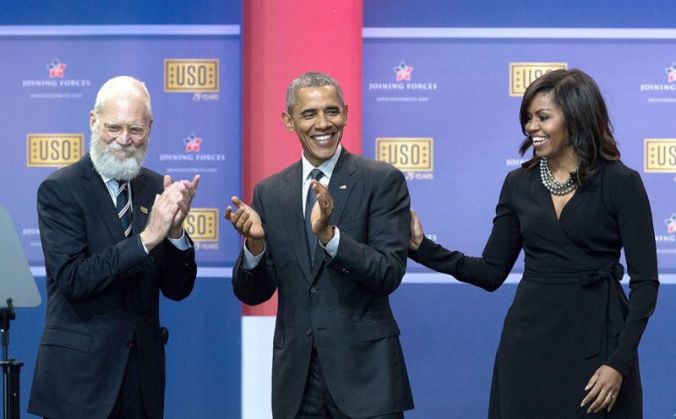
Six years after this post, David Letterman retired from “The Late Show” hailed as comedy legend, with Barack Obama and three former Presidents appearing on his farewell show. He continues to be sought after for interviews and as an MC, as in the USO event pictured above.  In 2016, Letterman joined the climate change documentary show Years of Living Dangerously as one of the show’s celebrity correspondents. In 2017, Letterman gave the induction speech for Pearl Jam when the group was inducted into the  Rock & Roll Hall Of Fame. That same year, 2017, Letterman was feted on Turner Movie Classics with Alec Baldwin—don’t get me started–as he  co-hosted “The Essentials.”  Letterman and Baldwin introduced seven films for the series.

Wisely, “Rosemary’s Baby” was not among them.

In 2018, Letterman began hosting a six-episode monthly series of hour-long programs on Netflix called My Next Guest Needs No Introduction with David Letterman. His old friend, patron, and feminist hero Barack Obama was his first guest.

The second season premiered on May 31, 2019.

This  is “Forgetting What We Know.” Continue reading

The Presley Pritchard Saga, Continued: No, There Is No “Too Sexy Firefighter Principle,” And Evergreen Fire Rescue Messed With The Wrong Woman

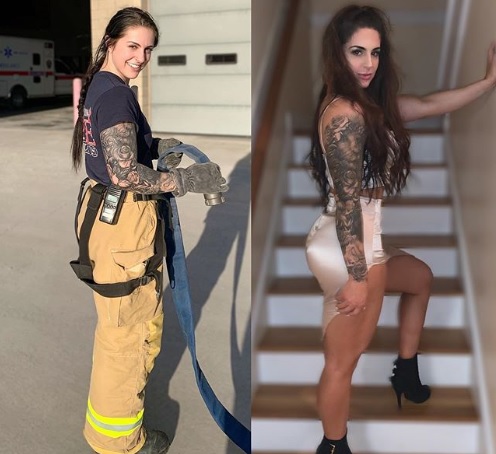
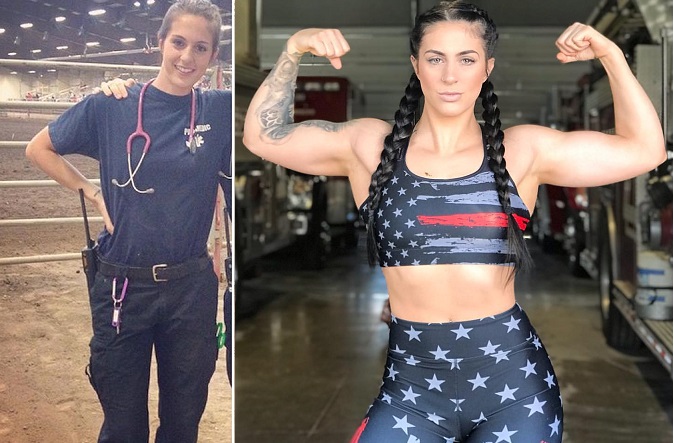
I wondered why a July 6 2019 Ethics Hero post was suddenly getting  lots of visits. The reason was disappointing: Presley Prichard, the inspiring paramedic who built herself up from a slim, 120 pound paramedic into a160 pound athlete so she could meet the strength and fitness requirements to achieve her life goal of being a firefighter — “This is how female empowerment is supposed to work” I wrote, saluting her determination—

—was fired by Evergreen Fire Rescue in Flathead County, Montana  for posting provocative photographs of herself on Instagram. Continue reading

Won’t You Try Saturday Afternoon Ethics, 1/25/20? The Segue Post…

The Winter of Hate would seem like a good time to remember the Summer of Love, don’t you think?

1.Well, that’s nice! A man gets along with his brothers! Rich Juzwiak is Slate’s sex advisor. A recent male enquirer asked him, “I live in a large house along with six brothers, all adults and close to each other in age, two of whom I am having sex with….The problem is that I don’t know what to call this arrangement…”

Oh, is that the problem?

What’s an interesting though experiment is trying to define exactly what this big, happy family arrangement is unethical, or even if it is. What harm does it do to society or non-consenting people? It doesn’t risk unhealthy babies, or ruin the family heirarchy like male-female incest

It the fair and honest answer to the reader’s question, “What do you call it?” “I call it so icky I want to barf, not that there’s anything wrong with that”? Is this the best example of the Ick Factor ever?

How about, “I don’t know what to call it, but if you don’t sell it as a reality show, you’re all idiots” ?

An aside: This reminded me of my favorite Ann Landers question of all time. Ann’s readers said she was having an affair with the husband of a professional lady wrestler, who walked in on her and the cheating husband as they were getting disrobed. He babbled that she was his masseuse, and, incredibly, the credulous wrestler bought it. She asked the terrified mistress if she would give her a massage too, and, trapped, Ann’s inquirer agreed. The wrestler was pleased—so pleased that the woman is giving her weekly massages while continuing to have sex with the wrestler’s husband. What do you think was her question to Ann?

“Can I get in trouble for giving massages without a license?”

This convinced me that Ann Landers answered more fake questions than I previously assumed. Continue reading

The Ethics Mess That Is US Race Relations, Chapter II: Playing Rosa Parks

I don’t understand why this story should even be news, but the fact that it was treated as news, and worse, promoted as news by an NAACP official, is significant , disturbing, but, sadly, not at all surprising.

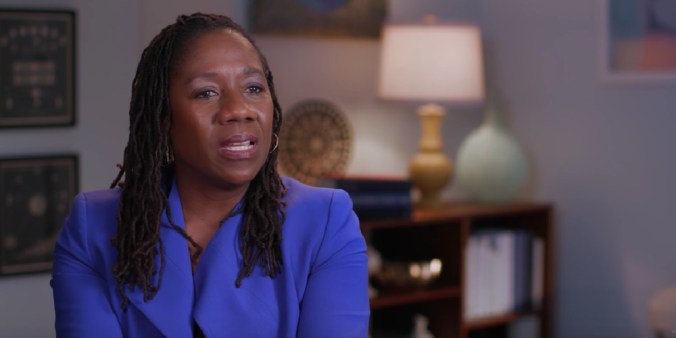
Sherrilyn Ifill,  the president and director of the NAACP Legal Defense and Educational Fund in New York, was returning to Baltimore from New York on Amtrak last week  as she often does. She was sitting in a general-admission area of a largely empty passenger car when a female junior conductor asked her to leave her seat and move into another car  because she had “other people coming who she wants to give this seat.”

Now as it happens, I was once asked to move to another Amtrak car. I had no idea why, but assumed there was a good reason, and the inconvenience was negligible.  Maybe a large group was getting on at the next stop. It was, simply, not a big deal. I’ve been asked to change seats on airlines, too, sometimes with an explanation, sometimes not.

But then, I’m not a high official with a civil rights advocacy organization with an interest in exacerbating racial disharmony in order to sat in business. . Ifill tweeted, “When I was laying [the junior conductor] out to the conductor, at one point, I said, ‘I can sit where I want,’ and I thought, ‘This isn’t 1950.” Continue reading

Was Mike Fiers Right To Blow The Whistle On The Astros’ Sign-Stealing Scheme? Pedro Martinez Has A Nuanced Ethics Answer

Martinez (L) and Fiers (R)

Last week I posted about ESPN baseball color commentator Jessica Mendoza earning her Ethics Dunce stripes for essentially calling Mike Fiers, the Oakland A’s pitcher who revealed to reporters that his former team, the 2017 Astros, had cheated their way to a  World Series title, a snitch. She said in part,

“When I first heard about it, it hits you like any teammate would. It’s something that you don’t do. I totally get telling your future teammates, helping them win, letting people know. But to go public with it and call them out and start all of this, it’s hard to swallow.”

Now Hall of Fame great Pedro Martinez , intrepid as ever, has weighed in with a verdict on Fiers that counters the accepted narrative that Fiers is a role model. Pedro also faults Fiers, but not for the reason Mendoza does. Pedro Martinez, fascinatingly enough, evaluates the problem by regarding a baseball team member as having similar relationship to his team mates as a lawyer does to a client.

That is not as much of a stretch as it might seem at first glance. Professions like that of lawyers is based on trust, and so is the relationship between team mates in sports (as well as partners in police cars, members of  military units, a manager and a personal assistant, and other close working relationships). The analogy is useful and apt.

Pedro opined (in an interview with radio WEEI in Boston, which broadcasts Red Sox games):

“If he was to do it when he was playing for the Houston Astros I would say Mike Fiers has guts. But to go and do it after you leave the Houston Astros because they don’t have you anymore, that doesn’t show me anything…You’re just a bad teammate. …

Now everybody knows you are going to have a whistle-blower in any other situation too [if Fiers is on your team.]. Whatever happens in the clubhouse stays in the clubhouse and Fiers broke the rules. I agree with cleaning up the game. I agree that the fact that the Commissioner is taking a hard hand on this….

BUT!

“If you have integrity you find ways to tell everybody in the clubhouse, ‘Hey, we might get in trouble for this. I don’t want to be part of this.’ You call your GM. You tell him. Or you call anybody you can or MLB or someone and say, ‘I don’t want to be part of this.’ Or you tell the team, ‘Get me out of here, I don’t want to be part of this.’ Then you show me something. But if you leave Houston and most likely you didn’t agree with Houston when you left and then you go and drop the entire team under the bus I don’t trust you. I won’t trust you because did have that rule.”

Continue reading

What’s The Ethical Response When Your Life And Reputation Collapses, And It’s Your Fault? My 12 Step Program For Alex Cora

I have been thinking a  lot about what I would do if I were Alex Cora.

In the past, people who have had the kind of precipitous public fall from grace that Cora has had often committed suicide. That’s neither an ethical nor reasonable response for the former Boston manager, but what is an ethical and reasonable response?

If you don’t know: Alex Cora was, until recently, one of the most popular, secure and successful young managers in Major League Baseball. His present was bright—he had a contract that paid him $800,000 a year, he was one of the faces of the Boston Red Sox, a storied franchise with a fanatic following, he was seen as a role model and an an inspiring  figure who represented the game, his city and his team, as well as his Puerto Rico home. His future was if anything, brighter: more money, perhaps even greater success with a talented and wealthy club, endorsement contracts, upper management, books, broadcasting…and of course, adulation, celebrity and fame.

Then, in the span of days, it was all gone. Cora was named as the mastermind of a sign-stealing cheating scandal that devastated the Houston Astros, and as the likely one responsible for another cheating scandal in Boston. He was fired as Boston’s manager, and the fans, and sports media are furious. Cora is certain to be suspended without pay for two years, and to be pronounced persona non grata in baseball for the foreseeable future. No baseball team will want to be associated with Alex Cora even after his official punishment is over.

So far, Cora has not addressed all of this in public; presumably he is awaiting the MLB report after its investigation of Boston’s sign-stealing in 2018. He has not yet apologized nor acknowledged wrong-doing. What is the most ethical way for him to proceed?

If I were hired to give Cora professional guidance about the way to proceed in the most ethical manner possible, what would it be? Cora still has to earn a living. He has to go on living too: he has a family. He has responsibilities.

Here are the 12 steps—it just turned out that way, I swear. Okay, when I got to ten and realized I was near the end, I did think, “Surely this can be jiggered to have 12 steps..”—that I would urge Alex Cora to follow: Continue reading

Afternoon Ethics Refresher, 1/15/2020: Firing, Tweeting, Protesting, Talking Friends Into Suicide…

Hello?

Traffic here inexplicably dead yesterday and today. Is there a secret ethics convention nobody told me about? There is, isn’t there? I’m hurt…

1. It’s too bad so many readers don’t pay attention to the baseball posts, because a lot of fascinating ethics issues with general applications arise…like right now. Yesterday, as already mentioned in an update to yesterday’s post and a couple of comments, the Boston Red Sox “parted ways with Manager Alex Cora by mutual agreement.” (He was fired.) In a press conference I just watched, the Red Sox brass said that Cora, who was both successful and popular in Boston, was let go solely because of the MLB investigation report regarding his involvement in cheating while serving as a coach for the Houston Astros in 2017, and the allegations of cheating  while managing the Sox in 2018, still under investigation, played no part in the decision. What they meant is that the Astros cheating was going to result in a long suspension for Cora anyway, so the team didn’t need to wait for the bad news regarding his cheating in Boston.

The weirdest thing about the press conference is that none of the four Sox officials would do anything but praise Cora, his character, his judgment, his dedication to the team, his devotion to baseball. Gee, why did they fire this saint, then? Alex Cora’s character is obviously flawed, or he wouldn’t have masterminded major cheating schemes that cost the Astros 5 million dollars and four key draft choices while losing the jobs of two men who advanced his career. Cora’s judgement also stinks, because his actions have now cast a shadow over two teams, their championships, and the records of the players his schemes benefited.

If he was so dedicated to the team, why is  it now facing a public relations and competitive disaster because of his actions? If he was devoted to baseball, how did he end up at the center of a scandal that undermines the perceived integrity of the game? Continue reading

Breaking: Major League Baseball Clobbers The Houston Astros For Their Sign-Stealing Scheme, And Red Sox Manager Alex Cora Is In The Cross-Hairs

In November, I proposed that the Houston Astros should be punished severely for their sign-stealing during the 2017 and 2018 seasons, the first of which resulted in a World Series Championship. Major League Baseball’s investigation is complete, and today the wrath of the Baseball Gods rained down on the team. MLB didn’t take my advice (stripping the team of its titles), but the actions it dis take were surprisingly and appropriately tough.

The Astros, you will recall,  used illegal cameras and video monitors to steal the signs of opposing catchers at Houston’s Minute Maid Park, then signal those signs to their hitters before pitches by banging on trash cans. This occurred throughout the 2017 regular season and postseason, and during the 2018 season as well. Baseball’s Commissioner Rob Manfred suspended Astros Manager A.J. Hinch and General Manager Jeff Luhnow, fined the team $5 million (the most allowed under the MLB rules)  and took away the team’s top two draft picks in both 2020 and 2021. Hours after the announcement, the Astros fired both Hinch and Luhlow, with owner Jim Crane  saying, “We need to move forward with a clean slate. [We] will not have this happen again on my watch.”

All of this is as it should be. The MLB investigation indicated that Hinch had not been involved in the sign-stealing, but was aware of it and allowed it to continue.

Now the saga moves on to, <sigh>, the Boston Red Sox. Continue reading

Saturday Morning Ethics Warm-Up, 1/4/20: Abortion, Ann Althouse, A Big Lie And The Big Stupid

Good morning!

We’ve started a year without a dog enriching each day for the first time in over three decades. Don’t like it much.

1 . Lobbying the Supreme Court against abortion.  207 members of Congress — 39 senators and 168 House members from 38 states — filed  an amicus  brief urging the Supreme Court to uphold a Louisiana anti-abortion law when it hears the case in March, stating they “have a special interest in the correct interpretation, application and enforcement of health and safety standards for elective abortion by the people of the states they represent.” In the brief, the mostly GOP legislators (two Democrats also signed on) implore  the Supreme Court to uphold a lower court’s decision to let stand a Louisiana statute that requires physicians who perform abortions to have admitting privileges to a hospital within 30 miles of where the procedure is being performed. SCOTUS declared virtually the same law unconstitutional in Texas; the argument for this law is that Texas is bigger than Louisiana.

I’m serious.

The Center for Reproductive Rights argues that the Louisiana law is really an effort to “regulate abortion out of existence,” claiming that only one physician in the state would be able to  provide abortions if the law is allowed to stand.

Oh, I think it’s pretty obvious what’s going on.

2. Another Big Lie. When I went to a local cineplex to see “Ford vs. Ferrari,” I was stunned at how few employees were in evidence at a movie house with 18 screens and hundreds of people buying tickets. There was one human being selling tickets, the rest were dispensed by automated kiosks. There were no ticket-takers at all; we figured out that we could have just walked into any of the theaters without showing a ticket to anyone. To buy drinks and snacks, I  had to stand in a line for over 20 minutes, because only one person was filling orders. Continue reading

Comment Of The Day: “’Side hustle?’ SIDE HUSTLE?”

Let’s begin the new year with a Comment of the Day.

It’s appropriate.

One of the important things I have learned since beginning this blog in 2009—in addition to the apparent fact that trying to elaborate on the topic of blackface and dark make-up in the arts will get one’s blog banned on Facebook and there is literally nothing one can do about it—is that the commenters enrich, define, and advance the mission of the blog beyond anything I could have anticipated.

Pennagain’s comment on the topic of the so-called “gig economy” and California’s efforts to smother it is an excellent example. (One of the joys of any Pennagain COTD is that I know I won’t have to check for typos, since Pennagain regularly checks MY posts for typos…). Behold the Comment of Day on the post, “Side hustle?” SIDE HUSTLE?”:

I hardly know where to start. It’s the so called “gigs” that people learn most from. It’s those with the widest experience who can not only make the most of their job (main gig), whatever it turns out to be, but who will accommodate to change, go with the flow and roll with the punches, get a kick out of learning new things from different people, be comfortable experimenting with ideas and opinions.

Retirement – grandpa M. was 54 when he found, as the British put it so accurately, to be “redundant” to his own business when one of his sons took it over. He’d been good at his job, learning the trade from his father and practicing it in one form or another since he was a child, bringing his expertise (and, necessarily, a wife) to the New World at the turn of the century. He had never done anything else in his life. Building and running his business was his whole world, full of customers, many of whom had become close friends. The job kept him active, on his feet, reaching, stooping, sorting, lifting, dealing with salesmen and stock deliveries. He appraised and bargained, bought and sold. He had fierce competition that excited him, and he enjoyed every minute of it.

On the day he (was) retired, he sat down in a red plush chair in his living room and spent nearly every day for the rest of his life sitting there, having nothing else to do. No interests, no radio—no hobbies, no friends, not even any acquaintances. He’d never bothered to get to know his neighbors or attend any social functions at his house of worship. He had nothing in common with his family (the son who inherited the business never came to visit; too busy at work). The second-generation Americans who came religiously to visit, at least one group each weekend, didn’t speak either his original or his business language, nor he theirs.

He died just after his 55th birthday. In the red chair. Continue reading