Ethics Quote Of The Week, And A Few Related Diversions

My son is named after this President, incidentally.

The quote itself is by Ron Chernow, the historian who authored the recent well-reviewed biography of out 18th President, “Grant,”  “Hamilton,” the biography that inspired, we are told, the mega-hit musical. and “Washington” (won’t somebody send a copy to the fools at Christ Church?) was given to an interviewer as his description of another book, the Philip Roth’s historical novel  “The Plot Against America”:

[A] democracy can be corrupted, not by big, blaring events, but by a slow, insidious, almost imperceptible process, like carbon monoxide seeping in under the door.

Some random thoughts on this statement, which I believe is exactly right, and a lot more interesting than the more frequently used analogy about boiling a frog slowly:

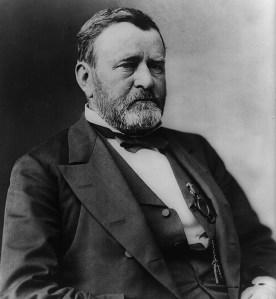
  • Grant, as Chernow’s book (among others of recent vintage) documents, was present at one of those points when democracy seemed to be in the process of being poisoned, and acted forcefully.

By 1868, when Grant was elected to succeed Andrew Johnson, who had done everything he could to allow the South to resist extending civil rights to the newly freed slaves, the KKK had evolved into a powerful terrorist organization that referred to itself as  “The Invisible Empire of the South.” Under the  Klan’s first  “Grand Wizard,” the brilliant former Confederate cavalry general  Nathan Bedford Forrest, whites from all classes of Southern society joined the Klan’s ranks. They attacked and punished newly freed blacks for crimes like  behaving in an “impudent manner” toward whites, brutalized the teachers of  schools for black children, and burned schoolhouses. It also terrorized and often murdered Republican party leaders those who voted for Reconstruction policies.  In Kansas over 2,000 murders were committed as the 1868 election approached; in Louisiana, a thousand blacks were killed in the same period.

Grant entered office knowing that the Civil War victory could come apart. He made some bad appointments–Grant was naive about politics and trusted too easily—but his choice as Attorney General, Amos T. Akerman, was masterful. With Grant’s support, and the with the help of the newly created Justice Department under Grant, he vigorously worked to enforce the Fifteenth Amendment, which gave the vote to black men in every state, and the First Reconstruction Act of 1867, which placed tough restrictions on the South and closely regulated the formation of their new state governments. Between 1870 and 1871, the Republican Congress passed and Grant signed into law the Enforcement Acts, which made it a crime to interfere with registration, voting, officeholding, or jury service by blacks. Congress also passed the Ku Klux Klan Act, which allowed the government to act against terrorist organizations.

  • When I was growing up and becoming interested in the Presidents, a life-long passion that led me to both law and ethics, Grant was routinely listed as one of the worst in the line. All one heard from historians was about the financial scandals that rocked his administration. Grant’s great success in subduing the Klan was literally never mentioned. The main Presidential historian then was Arthur Schlesinger Jr., a member of Jack Kennedy’s inner circle. His job as he saw it was to minimize the contributions of any Republican President, like Teddy Roosevelt (“near great” in his rankings), Eisenhower (“below average”) and Grant (“failure’). Meanwhile, Woodrow Wilson, who dragged the U.S, into the first World War, botched the Versailles Treaty and who actively revived the Klan, being a stone-cold racist, was “great.” Naturally, I believed all of his distortions, which were largely those of the historians at the time, then, as now, often partisans and propagandists. It took me a while to realize that this had been my first encounter with the Left attempting to alter present perception by controlling the past.

That is one of the major sources of Chernow’s carbon monoxide today, except that the disinformation now emanates from the schools, colleges, and the news media. Continue reading →

Playing The Race Card For Intimidation, Power, And Profit

“Nice little airline you got there. Too bad if anything were to happen to it…”

The NAACP has hit on a new, unethical and brilliant extortion tactic. The venerable civil rights group issued an advisory warning calling for black travelers to be cautious about flying on American Airlines. This prompted the airline’s chairman, in response, to announce that the company does not “and will not tolerate discrimination of any kind.” In a previous advisory, the organization told African-Americans to stay out of Missouri. Next, it will tell them not to watch Fox News.

The NAACP attributed its warning to what it called “a pattern of disturbing incidents reported by African-American passengers, specific to American Airlines.”  It cited four incidents  as examples that “suggest a corporate culture of racial insensitivity and possible racial bias on the part of American Airlines.” Four incidents, of course, do not suggest a corporate culture or a pattern. How many white or Asian flyers have had similar confrontations? The NAACP doesn’t care, and I doubt it bothered to find out. The man who was dragged off a United flight in April was Asian. The female passenger who was allegedly struck by an American flight attendant earlier this year was white.  I consider myself abused by every airline I fly. Unfortunately, since I’m a Greek American, my only recourse is to conclude that the reason for my discomfort is that the industry is callous and incompetent, and its employees are poorly trained and supervised. If I were black, I would know my treatment was based on race. Continue reading →

Morning Ethics Warm-Up, 10/29/17: What’s Really Wrong With Single Payer, Incompletely Remembering Charles Kuralt, And Dana Milbank Boards The Ethics Train Wreck

(This is my favorite Arthur Sullivan hymn, even more than “Onward Christian Soldiers”…)

GOOD MORNING!

1 CBS’s “Sunday Morning” had a feature today on the late Charles Kuralt, the original host of the show, famous for his feature “On the Road” in which Kuralt visited “the real America,” meeting locals and revealing regional lore to the rest of the country. At the end of today’s segment, CBS bemoaned the fact that Kuralt, who died 20 years ago, was virtually forgotten, even among journalists if they had no grey in their hair.

This is an example of a larger crisis, cultural illiteracy, that often occupies my thoughts. The blame lies with our inadequate schools and its under-educated teachers, as well as popular culture. Barely knowing anything about George Washington, the root of the previous post, is an existential problem, but only slightly more dangerous are the multiple generations whose member can’t name ten U.S. Presidents, don’t know the dates of the Civil War or who the US defeated in World War II, and who have never heard of Jackie Robinson, Clarence Darrow, Brown v. Board of Education, Eugene McCarthy, Ingrid Bergman, or Lucille Ball.

CBS, however, was indulging its own special breed of disinformation by lionizing Kuralt. Yes, I remember well his plummy voice and avuncular style. I also remember, as CBS would have us forget, the fact that after his death it was revealed that being “on the road” allowed Kuralt to maintain one family in Montana and another, his official one, in New York City. His innovative proposal to CBS to fund his trek back and forth over the contiinent facilitated his betrayal of his family. Kuralt was a sociopath.

2. The most significant ethics story of recent weeks that I have thus far neglected was the announcement that Great Britain’s National Health Service will ban patients from surgery indefinitely if they are obese or smoke. Non life-or death operations, like joint replacements, will be put on hold  until such patients conform to the governement’s life style requirements

Obese patients “will not get non-urgent surgery until they reduce their weight” unless the circumstances are exceptional. Smokers will only be referred for operations if they have stopped smoking for at least eight weeks, with such patients breathalyzed before referral.

When the newly radicalized and Bernie-ized Democratic Prty going all-in for single-payer next year, this cautionary tale needs thorough debate. When the government controls health care, it has the power to constrict personal liberty. The British were horrified by this latest development, which can only be described as the other shoe dropping. What did they expect?

Of course, a party that controls a government that can withhold surgery until citizens conform to mandated life choices would never use that same power to demand other behavior from citizens. Or  assign priorities for surgical procedures to favored groups and constituencies.

Keep telling yourself that. You’ll feel better. Continue reading →

Ethics Dunce: Christ Church In Alexandria, Virginia

I’m sorry, George. You know. Morons.

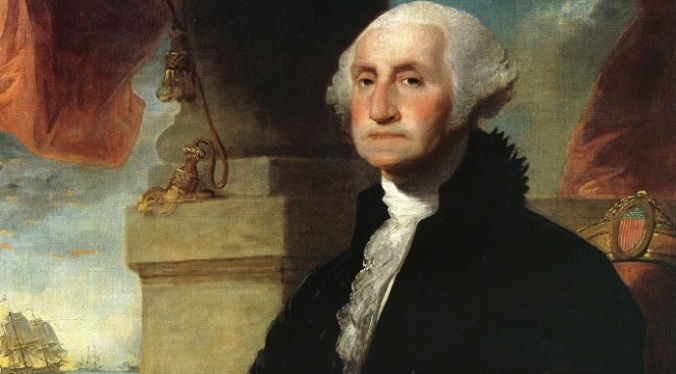
Christ Church in Alexandria, Virginia—the city where I and my family live— announced that it will take take down a memorial plaque  marking the pew where Washington sat with his family.

“The plaques in our sanctuary make some in our presence feel unsafe or unwelcome,” church leaders said. “Some visitors and guests who worship with us choose not to return because they receive an unintended message from the prominent presence of the plaques. Many in our congregation feel a strong need for the church to stand clearly on the side of ‘all are welcome- no exceptions.”

The unspoken but implied rationale is that George Washington was a slave-holder, and that this outweighs everything else. Never mind that the entire white population when he was alive believed that blacks were a lower breed of human. Never mind that it would have been literally impossible to grow up in agrarian, slavery dominated Virginia as a member of the plantation class without embracing slavery. Never mind that Washington continued to ponder the injustice of the practice, and eventually decided never again to buy or sell another slave while advocating slavery’s eventual abolition.  In his will, Washington left directions for the emancipation after Martha Washington’s death, of all the slaves who belonged to him.  Never mind that.

Never mind that without George Washington’s courage, leadership, aversion to excessive power and astonishing charisma and trustworthiness, there would be no United States of America. Continue reading →

Ethics Dunce: Bill Maher, As Usual

Bill Maher, the star of HBO’s “Real Time,” was hosting comedian Joy Behar of “The View” to talk about her new book when they got on the subject of Bill O’Reilly and his  $32 million settlement of a single sexual harassment claim.

Maher observed that many of the recent powerful men of Hollywood accused of sexual abuse always seem to be married.  Behar expressed puzzlement regarding why that was.

Now, I could answer that question for Joy, as could anyone else smarter than she is, which is to say, almost anyone. Joy, you will recall, earlier this month excused sexual harassment by progressives like Weinstein over harassers like Bill O’Reilly because, she said, at least the liberals weren’t hypocrites. (She didn’t explain the pro-feminist/misogyny contradiction, but then Joy is, as I just noted, an idiot.)

Rich and powerful men are almost always older, usually middle-aged, in Hollywood, and everywhere else for that matter. See, Joy, it takes a while to become rich and famous. Nobody heard of you when you were 25 either, and let me tell you, I was much happier then.

The older a man is, the more likely he is to be rich and powerful—sexual harassment doesn’t require power, but power inequity helps—and also he is more likely to be married, especially in Hollywood, where executives  start wondering whether you are gay if you aren’t married and 40. Not that they care if you are gay—after all, more than 50% of Hollywood men probably are— but they care if the public cares, because then you won’t be as marhetable as a romantic lead. Thus even gay middle aged men are usually married by the time they are powers in Hollywood. This has been true since the 1920s.

Another reason is that it takes a while to accumulate hundreds of victims, as in the case of  James Toback.

Maher, however, had a different, if predictable, answer:

“Because they have shitty sex lives.”

Oh, was that a joke, Bill? Hilarious! Except Bill wasn’t joking. He’s a well-documented misogynist, not that this would stop a hypocritical feminist dimwit like Behar from sucking up to him since he is on the right side of history, and Maher has always made it clear that he thinks marriage is for chumps. Maher defended Bill Clinton’s sexual harassing/assaulting ways by arguing that he “earned it,” and has extolled his own lifestyle as a play-the-field, aging bachelor like Sam Malone on “Cheers” as Man Heaven. It should surprise no one that Bill  believes that if married women were good little submissive spouses and eagerly cheered while their fat, disgusting husbands masturbated in front of them like Weinstein or humped their leg like James Toback, men wouldn’t have to force young women looking for jobs to do it instead. Continue reading →

Abashed Morning Ethics Warm-Up, 10/28/17 [Updated]

Good Morning!

1 Following a day in which various exigencies and responsibilities, plus fatigue and distraction, caused me to whiff on getting up at least three posts I thought were worthy of consideration, yesterday I failed to get any up at all. This makes me very unhappy, and I apologize. A fly-in, fly-out assignment in New York City had me up early and back late, whereupon I had my son’s birthday to acknowledge, the World Series to scrutinize and some aching feet to attend to. Priorities can’t be ignored, and being able to recognize when something you want to do and are devoted to doing just cannot be done well in the time allowed is a matter of life competence. Yet I hate failing loyal readers who care about ethics issues and rely on Ethics Alarms to explore them, and feel negligent when this occurs…fortunately, not very often.

Still too often, however.

2. The emergence of Hollywood director James Toback as a serial sexual harasser (at least) had me preparing a post about why theatrical directors are especially prone to this conduct. The gist of it was that in college, where participation in theater is often more social than aesthetic, directors forming romantic relationships with their cast members is neither taboo nor typically exploitative. Similarly, in community theater such relationships are not unusual or unethical, unless they interfere with a director’s artistic duties: casting an inferior performer because she’s your girl friend or because you want her to be is per se unethical. These are the cultures that produce many directors, and they enter professional theater, and later films, with bad habits that cannot be tolerated or continued in a professional context. Similarly, performers also come out of that culture. It may be difficult for some of them to comprehend that what is arguably acceptable in amateur settings is becomes unconscionable in a professional one.

However, this cannot explain Toback’s conduct. An astounding 200 plus women now say they were harassed or assaulted by him, and the list filled up in less than week. Compared to Toback, Harvey Weinstein and Bill Cosby seem restrained.

Actress Selma Blair, for example, says her agent arranged for her to meet Toback for a possible role in one of his films after her career had begun with promise. Blair says the meeting was scheduled at a hotel restaurant, but  when she arrived the hostess told her that Toback wanted to meet in his hotel room. There, Toback asked her to perform a monologue nude, directed her to have sex with him, and said he would not let her leave until he “had release.” Then the actress says, he simulated sexual intercourse on her leg. 

I begin my sexual harassment seminars by stating that the problem is one of ethics. If you have respect for human beings regardless of gender, if you are fair to people you interact with, if you are caring toward them and obey the Golden Rule, if you apply the three basic ethics alarms checks (“Does this seem right? Could I tell my mother about this? Would I want this on the front page of my local newspaper?”), then you won’t be a harasser. But I can’t begin to explain how someone reaches the point of depravity and utter contempt for women that he would behave the way Blair describes Toback behaving. This is, to understate it, uncivilized. Was he raised by wolves? I suspect even wolves would be horrified by his behavior. My father never had to sit me down at 13 and say, “Jack, it’s time for a talk. It’s never right to simulate sexual intercourse on a woman’s leg when she has come to interview for a job.” I didn’t need to be told this. Who needs to be told this who isn’t already a dangerous sociopath?

Somehow, the culture of Hollywood devolved to such a state that abuse of power and women became a social norm, and even conventionally acculturated adults had their values erased and replaced. That is the only way the Tobacks and Weinsteins could come to exist. That culture is now too sick and entrenched to be wiped clean by a few scandals. It is going to take a long time to change it, if indeed it can be changed. Continue reading →

Morning Ethics Warm-Up, 10/26/2017: Witch Hunts, A Missing Witch Message, A Too-Gleeful Dodger, Racially Offensive Breakfast Cereal…[UPDATED]

Good Morning!

1 Sigh. Driving home from Maryland via the Capital Beltway for the first time in many years, I saw the white and gold spires of the D. C. Mormon Temple (above), a local landmark, rising in the distance, and remembered that an an upcoming overpass had long been famous for the inspired bit of graffiti scrawled on it decades ago, perfectly placed to compliment the fantastic structure. It read “SURRENDER DOROTHY!,” in script, for decades.  I don’t know when it was painted over, but it’s gone now.

Why would they do that? It was a part of area lore, it was clever, and it was always good for a smile. Some humorless bureaucrat decided to make the world a little less fun for no good reason. Of such small, heartless gestures is life drained of joy, drop by drop.

2.  Last night, in the 11th inning of a memorable, back and forth World Series Game Two between the Astros and the Dodgers,  Charlie Culberson of Los Angeles hit a two out home run to narrow the score from 7-5 Astros to 7-6. Nonetheless, Culberson’s team was one out away from losing a game they appeared to have in the bag when they were leading 3-1 in the 9th. (Indeed, the Dodgers did lose after the next batter struck out.) Despite his team’s plight, Culberson celebrated his home run like he had just won the game, or at least tied it. He screamed, he raised his hands, he high-fived everyone in sight. Joe Buck on the Fox broadcast speculated that Culberson might have had the score wrong, and believed that his home run tied the game.

No, said Culberson. He knew the score. “I never would have imagined hitting a home run in the World Series, and I did that. I pointed to my parents in the stands and pointing to my wife,” Culberson explained. “I was just having fun out there, nothing more than that.”

Except you’re not supposed to be having fun when your team is facing a devastating loss, Joe. That was bad form, bad taste, selfish, and obnoxious. The Fox cameras even caught a Dodger coach in the dugout turning around, disgusted , and saying to the still ebullient Culberson, “Come on!”

3. 

That’s Ellen Degeneris ogling Katy Perry’s breasts.  Ellen is gay, as we all know. Explain to me why this conduct is funny, acceptable and harmless, but a male heterosexual behaving similarly, for exactly the same reason, would be sexual harassment. You have 30 seconds…

Time! What’s your answer!

Continue reading →

Being Fair To Elizabeth Warren: An Ethics Challenge

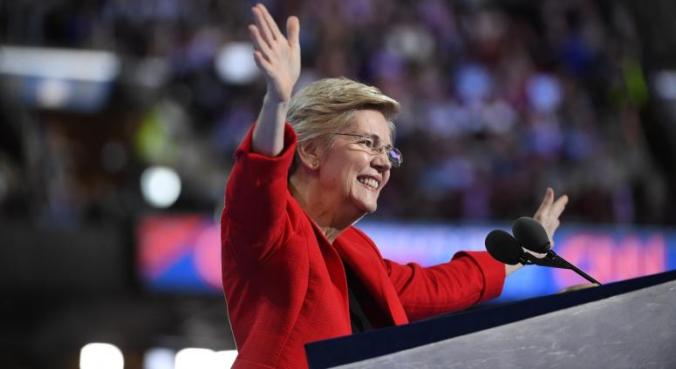
It appears that Senator Elizabeth Warren may have blundered into another ethics controversy.

On  a Harvey Weinstein-themed segment of “Meet the Press,” Warren declared that she also had a  #Me Too” story to tell. As she related the memory to host Chuck Todd…

“I was a baby law professor and so excited to have my first real teaching job and there was a senior faculty member who would tell dirty jokes and make comments about my appearance. And one day he asked me if I would stop by his office, which I didn’t think much about, and I did, and he slammed the door and lunged for me. It was like a bad cartoon. He’s chasing me around the desk trying to get his hands on me and I kept saying ‘You don’t want to do this. You don’t want to do this. I have little children at home. Please don’t do this…and trying to talk calmly, and at the same time what was flickering through my brain is, if he gets hold of me, I’m gonna punch him right in the face.”

Jeffrey T. Kuhner is the host of “The Kuhner Report” on WRKO AM-680 in Boston. I know the station well, having grown up listening to it. Kuhner is not an admirer of Warren, to say the least, and decided to try to check the veracity of her “Me Too” tale. His conclusion: she’s lying. Kuhner writes on his blog:

The faculty member Warren is referring to is law professor Eugene Smith, who was her mentor and close friend at the University of Houston. The reason we know this is because at Smith’s memorial service in 1997 Warren recounted and spoke about the incident. But the account then was dramatically different. In fact, the very opposite.

According to Warren, Smith was her buddy and they were joking around in the office, in which she was laughing uproariously. Numerous witnesses say that, even when speaking at the memorial service, Warren laughed about the alleged incident. Which begs the question: Who cracks jokes about being sexually assaulted? Unless, of course, it never happened.

More importantly, Warren conveniently—and deliberately—left out a seminal fact: Smith suffered from polio. That’s right. He was unable to walk or move around without a wheelchair or crutches. According to his former colleagues, Smith’s polio was so severe they felt pity for him.

Warren herself, while trying to be humorous at Smith’s memorial service, inadvertently revealed how utterly disabled he was. She told a second story about when Smith took her to the faculty lounge for lunch. Smith ordered a steak. After it came, he then pushed the plate towards Warren, asking her to cut it up for him. “Can’t you see I’m a cripple?” he allegedly told her. “Sure. But I thought you knew that when you ordered the steak,” Warren retorted, which she says made him laugh.

The real point, however, is obvious. How does a man who is—in Warren’s words—a “cripple,” unable even to cut his own food (never mind walk), chase a woman repeatedly around a desk seeking to sexually assault/rape her to the point that she is so terrorized she is wondering how to escape though the door? The answer: It’s impossible. This is why many of Smith’s former colleagues say that, although they recall the incident, it was dramatically different from how Warren is describing it now. According to them, it was one big joke. Smith pretended to chase her around the desk, and Warren pretended to be shocked and outraged.

Moreover, in 1997, Warren was then a law professor at Harvard. If she had really been assaulted by Smith, then why did she travel all the way to Houston, deliver a glowing eulogy and praise Smith for his “character” and “moral integrity”? A woman who was truly sexually abused or harassed would never have done it. In fact, she would want nothing to do with him. Warren, however, did do it because she wanted to do it. She liked, even admired, Smith.

From this, Kuhner concludes,

“Warren may be the most depraved, cynical and mendacious member of Congress—and that’s saying something. Think about it: She is willing to smear the memory of a dead, disabled friend in order to win votes and prop up her feminist image.”

Continue reading →

Ethical Quote Of The Month: David Brooks, Channeling Yale Law professor Stephen L. Carter

First, a bit of a disclaimer:

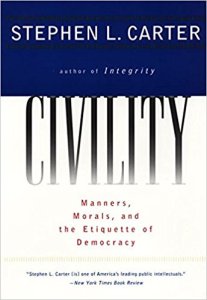
In his Monday column for the New York Times, David Brooks evoked Yale Law professor Stephen L. Carter‘s 1998 book “Civility” to recommend how reasonable people should engage with “fanatics.” I like the quote a lot, with this caveat: Brooks makes it clear, as almost all Times op-eds do now, that by “fanatic” he means all those strange, nasty, stupid, hateful people who don’t subscribe to the New York Times world view and progressive cant. As a result, I have to take Brooks’ words with several grains of sea salt, and indeed try to forget that they are coming from a pundit who has at other times implied that President Trump should be removed from office regardless of whether he actually does anything that would meet the standards required by the impeachment clause or the 25th Amendment.

That and other opinions he has put into print–always in the measured words of the intellectual he styles himself to be—marks him as a fanatic in my book, just one operating under the cover of gentility and intellectual rhetoric. Now, it would have been easy for Brooks to dispel my suspicions and also to have a larger audience for his wisdom had he chosen, as his example of a fanatic, a member of the antifa, or a college student who believes that conservatives should be censored, or any number of leftist nut cases who are as plentiful now as the autumn leaves. But no. Brooks knows that wouldn’t endear himself to his colleagues like Paul Krugman and Charles M. Blow, so his first example of a fanatic, and his only American one, was “a Trump supporter” who threatened him at a baseball game.

Thus Brooks’ column manages to be condescending and arrogant, as well as partisan, because of his failure to harness his biases. The substance of his quote, however, comes via Terry Teachout, the drama critic of The Wall Street Journal, the critic-at-large of Commentary and a thoughtful moderate for an arts guy, and through Amy Alkon, a moderate conservative feminist Trump-hating blogger and author, and Professor Carter, who seems like a reasonable and not especially political sort. This is enough, I think, to cleanse Brooks’ words of their inherent hypocrisy. Deciding that those who disagree with you must be the fanatic in the conversation is, after all, a poor starting point for a productive discussion.

With those reservations and qualifications, here is the quote: Continue reading →

Comment Of The Day: “Weeping And Screaming At The Sky: Dear Democrats…”

Well, I stand corrected!  The anti-Trump response of  “screaming helplessly at the sky” wasn’t as worthless as I opined. At least the prospect of it inspired this Comment of the Day by Ryan Harkins in which he postulates the infantilization of America.

Here it is, on the post, Weeping And Screaming At The Sky: Dear Democrats, Progressives, And “The Resistance,” Are You Embarrassed Yet? Why Not?:

What came to mind when I read this is the notion of the “infantilization of America”, which actually came up second in the Google search by the time I typed in “infanti”.

When I stop and question, not necessarily the ethics of the “aaargh!!!” resistance, but the motivation and the appeal to such tactics, I admit that my conclusions might be a bit biases. But when my 3-year-old wants something and doesn’t get it, she throws a tantrum. Sometimes she throws the tantrum before I say no, in anticipation of that very event. Other than the profanity, the “aaargh!!!” event very closely resembles my daughter’s tantrums.

I am looking forward to the day, hopefully not far off, when my daughter and I might have a conversation like this:

“Dad, may I have a cookie?”

“No, it is past 4 o’clock, and the rules are no snacks after 4.”

“Yes, Dad, I respect that. However, you admitted that dinner is going to be late, and the reason behind the 4 o’clock rule is so that I don’t spoil my appetite for dinner. I am, admittedly, very hungry, and think one cookie now, with two hours yet until dinner, won’t impact my capacity to eat my entire meal.”

“That is very good reasoning, but spoiling your appetite is not the only reason not to have a snack at this point. Another reason is discipline, and training your capacity to resist indulging every desire the moment it appears. A little hunger is not going to hurt you, and your ability to withstand a little hunger now will help you withstand other temptations as you go through life.”

“Wow, Dad, I hadn’t thought of that. So, can I have a stalk of celery instead, since it isn’t very filling?”

“All right, you can have a stalk of celery. Hey, wait, why are you getting out the peanut butter?!?”

“Dad, you can’t have celery without peanut butter, and you said I could have a stalk of celery.”

“…grumble, grumble…”

I think anyone who is a parent will quickly assure me that such a conversation is pure fantasy. However, who wouldn’t want to deal with his children in such a fashion? Who wouldn’t want to deal with other adults in such a reasonable fashion? Why then are we getting the “aaargh!!!” treatment? I think it is because we have, as a culture, infantilized ourselves. Continue reading →