Morning Ethics Warm-Up: 6/12/17

1.Senator Diane Feinstein redeemed some of the Democratic Party’s integrity by stating that James Comey’s revelations regarding Obama AG Loretta Lynch’s directive that he lie to the news media and the American people so they wouldn’t think Hillary Clinton was being investigated warranted hearings and its own investigation. This was easily the biggest story to come out of Comey’s testimony, as the U.S. government using its power to influence a Presidential election by spreading misinformation is far more serious than a foreign power influencing an election by allowing the public to see what a candidate and her party have been covering up. (I have stated the issue this way before, and will continue to do so, since it is accurate and true.) That this damning account was mostly buried by the New York Times, the Washington Post and the broadcast media is yet one more smoking gun (as if more were needed) proving just how partisan and untrustworthy the news media has become. It also should focus more attention on the still-percolating IRS scandal, speaking of subordinates interpreting a leader’s expressed desires as directives, as well as  Barack Obama’s repeatedly demonstrated belief that the ends justifies the means in the 2012 campaign, the passing of the Affordable Care Act, the Iran deal, and more.

2. NY Times op-ed columnist Charles Blow, a smoking-gun himself since the Times’ refusal to discipline or can him when he repeatedly used anti-Mormon slurs to attack Mitt Romney, has become the loudest shill for “the resistance” at the paper–quite an achievement, since the whole paper is a shill for “the resistance”—reveals that 43% of the public (according to polls, remember, and we now know how reliable and unbiased they are) believe that Congress should commence impeachment hearings. Blow finds this tragic, but the only two interpretations of the data is that 43% of the public is civicly, legally and historically ignorant, that 43% of the public has been completely misled by the biased reporting of the news media, or that 43% have embraced the anti-democratic view of impeachment being pushed by progressives and “the resistance,” which is that it is a legitimate device to undo elections and ensure that the Left achieves permanent rule over us all. Writes Blow, sniffling,

“I know well that the very real obstacles to removal injures the psyche of those worn thin by the relentless onslaught of awfulness erupting from this White House. I know well that impeachment is one of the only rays of hope cutting through these dark times. I’m with you; I too crave some form of political comeuppance. But, I believe that it’s important to face the very real possibility that removal may not come, and if it does, it won’t come swiftly. And even a Trump impeachment would leave America with a President Pence, a nightmare of a different stripe but no less a nightmare.”

It should bother everyone that a man like this has a regular, high-visibility platform for his corrosive views. Impeachment is national convulsion that good citizens only hope for when a President has engaged in impeachable acts. Blow and other like him, who hope for those impeachable acts to justify removing a President they object to on ideological, personal or other grounds are just  people with busted ethical alarms,  bad citizens, bad neighbors, and dangerous to our democracy.

3. Here is an ethics train wreck from academia. A white professor at the University of Tennessee asserted via a multiple choice quiz ( Colleges use multiple choice quizzes?) that the statement “Black family bonds were destroyed by the abuses of slave owners, who regularly sold off family members to other slave owners” was wrong. A black student vehemently disagreed and challenged the teacher, who then threatened to “get” the student on Facebook. After the professor was pressured into resigning by the university, she emailed the class with a further attack on the student, without using her name. Naturally, the student has decided that this single incident shows the lurking perfidy of white social justice warriors, or to put it bluntly, “Can’t trust whitey!” How do people like the professor get hired? Since when is a professors position “unacceptable’ because it disputes conventional wisdom? Is race immune from non-conforming academic views? And why are college courses using multiple choice quizzes? [Pointer: Fred]

4.  Also from Ethics Alarms Super Scout Fred: this study, showing that Oakland police officers “tend to speak less respectfully to black people than to white people during traffic stops, using language in these everyday interactions that can erode community faith in the police, according to a first-of-its-kind study of body-camera footage released Monday by Stanford researchers.” Ugh. Now that’s “ microagression,” and maybe not so micro.

Ethics diagnosis: incompetent training, negligent oversight, and dead ethics alarms.

5. CNN has a lot of work to do before it can claim to be a professional and trustworthy news source, and one obvious step is to fire Brian Stelter, the network’s alleged journalism ethics watchdog. His predecessor Howard Kurtz was pretty bad, but Stelter is pure flack, seeing his main function as defending CNN and his secondary function as denying media bias, since he is so shockingly biased himself.

Yesterday on his ironically-named show “Reliable Sources,” Stelter and guest Jeff Greenfield blamed President Trump for polls that show a steep decline in public trust of the news media. Greenfield said,  “I think that has served that relentless campaign on Twitter and in his comments, fake news, fake news, fake news has been to convince that group of people that there is no such thing as a set of facts independent of your politics. And that has certainly served to continue and accelerate what you’ve talked about as a long process of declining trust in news.”

The downward trend will continue until prominent members of the news media admit that the reasons trust in journalism have  declined precipitously are

  • That the mainstream media’s partisan bias is obvious and palpable,
  • That has proven itself untrustworthy, and
  • Arrogant hacks like Stelter and Greenfield make it clear to all willing to see reality that the news media thinks that there’s nothing wrong with its reporting.

As for President Trump, he has an ethical and professional obligation to focus attention on the news media’s shift into a partisan political force, both to prioect his administration and  to ensure that the public isn’t deceived. The previous President was happy to ignore this dangerous development, because Obama  foolishly thought he benefited from it. In truth, he and the nation would have benefited more by journalism that held him to higher standards and criticized him when he deserved it, which was often.

Reconsidering “Lincoln,” Lincoln…And Trump

I’ve been reading a lot about Abraham Lincoln of late. A book by William Hanchett called “The Lincoln Murder Conspiracies” reminded me that while President Jackson is the closest historical match for the populist, outsider aspect of Donald Trump’s rise, the startlingly close match for the antipathy and hatred Trump has faced from the moment of his election eerily traces the experience of Abraham Lincoln.

Like Trump a minority President, Abe won only 39.8% of the popular vote but was still comfortably elected by the Electoral College. As with Trump, his opposition refused to give him a chance to govern or unify the nation, although in his case, the Democrats divided the country literally, seceding from the union before Lincoln took the oath of office. Today’s Democrats are without that option (thanks to Lincoln!), but are doing everything else in their power to undermine the elected leader. (And California, the most Democratic state, is saber-rattling about seceding.) Also like Trump, Lincoln did not concede that his lack of a popular vote majority in any way robbed him of a mandate to govern.

From the moment the election results were known, many Democrats proclaimed the election of Lincoln itself to be an act of aggression, a “declaration of war.” Many in Lincoln’s own party—even his own Attorney General—accused him, with some justification, of engaging unconstitutional measures. The Governor of New York evoked the Revolutionary War generation, saying that they would not stand for such incursions on their rights. Constitutional expert George Ticknor Curtis of Massachusetts predicted that the Lincoln Presidency would “be an end to this experiment in self-government.”

Meanwhile, pundits and critics heaped personal abuse on Lincoln, calling him grotesque, a barbarian, ” gorilla.” Diarist George Templeton Strong, whose words are so often quoted by Ken Burns in his documentary about the Civil War, called him a “yahoo.” It was said that fashionable New Yorkers would be ashamed to be seen in the presence of someone as boorish and uncultured as Lincoln;  it was rumored that he rejected handkerchiefs and “blew his nose through his thumb and forefingers, frontier-style.” As late as 1864, a New York editor wrote,

“[The President] is an uneducated boor. He  is brutal in all his habits and in all his ways. He is filthy. He is obscene. He is vicious.”

Somehow, despite this cruel barrage of ad hominem rhetoric, arguably more successful then that it would be now since the public has more knowledge of the President and can make their own observations, Lincoln persevered to meet the greatest challenges any President ever faced.

While still pondering some of the parallels with today’s relentless attacks on our current President, I watched again the 2012 Stephen Spielberg-directed film “Lincoln,” which was almost unanimously praised when it was released, and which I enjoyed a great deal when I first saw it. This time, however, “Lincoln” revealed itself as an ethics corrupter. Continue reading →

The Comey Testimony, Part II

[Part I is here]

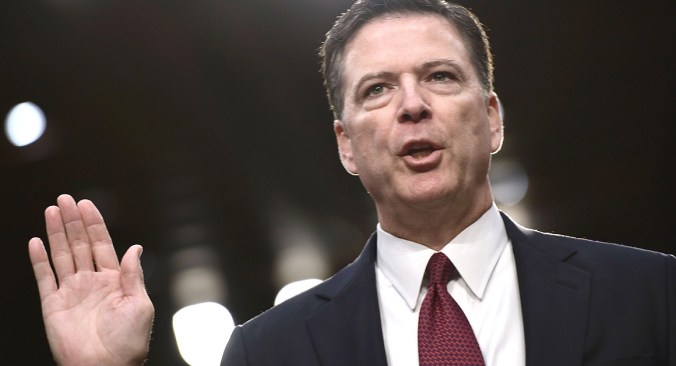
Now let’s look at some direct quotes from James Comey’s testimony: 

1. “Even though I was appointed to a ten-year term, which congress created in order to underscore the importance of the FBI being outside of politics and independent, I understood that I could be fired by a president for any reason or for no reason at all. And on May 9th, when I learned I had been fired for that reason, I immediately came home as a private citizen. But then the explanations, the shifting explanations, confused me and increasingly concerned me. They confused me because the president that I had had multiple conversations about my job, both before and after he took office, and he had repeatedly told me I was doing a great job and he hoped I would stay. And I had repeatedly assured him that I did intend to stay and serve out the remaining six years of my term. He told me repeatedly that he had talked to lots of people about me. Including our current attorney general. And had learned I was doing a great job. And that I was extremely well-liked by the FBI work force. So it confused me when I saw on television the president saying that he actually fired me because of the Russia investigation. And learned, again, from the media that he was telling privately other parties that my firing had relieved great pressure on the Russian investigation. I was also confused by the initial explanation that was offered publicly, that I was fired because of the decisions I had made during the election year. That didn’t make sense to me for a whole bunch of reasons, including the time and all the water that had gone under the bridge since those hard decisions had to be made. That didn’t make any sense to me. And although the law required no reason at all to fire an FBI director, the administration then chose to defame me and more importantly the FBI by saying that the organization was in disarray. That it was poorly led. That the workforce had lost confidence In its leader. Those were lies, plain and simple. And I am so sorry that the FBI workforce had to hear them and I’m so sorry the American people were told them. I worked every day at the FBI to help make that great organization better. As a help, because I did nothing alone at the FBI. There are no indispensable people at the FBI. The organization’s great strength is that its value and abilities run deep and wide. The FBI will be fine without me. The FBI’s mission will be relentlessly pursued by its people and that mission is to protect the American people and uphold the constitution of the United States. I will deeply miss being part of that mission, but this organization and its mission will go on long beyond me and long beyond any particular administration. I have a message before I close for the — for my former colleagues of the FBI. First I want the American people to know this truth. The FBI is honest. The FBI is strong. And the FBI is and always will be independent. And now to my former colleagues, If I may, I am so sorry I didn’t get the chance to say good bye to you properly. It was the honor of my life to serve beside you, to be part of the FBI family and I will miss it for the rest of my life. Thank you for standing watch, thank you for doing so much good for this country. Do that good as long as ever you can. And senators, I look forward to your questions.”

Observations: This entire statement is unworthy of the emphasis that has been placed on it by the wildly spinning news media, The key piece of information to frame the entire episode is  “I understood that I could be fired by a president for any reason or for no reason at all.” Comey also presumably understood that a sub-fact within that understanding is that he could be told some of the reasons he was fired, no reasons, or the reasons the President felt like talking about. He was told he was doing a great job and then fired? Welcome to the work force. Telling an employee that he is doing a great job when he isn’t may be good management, usually isn’t, but is still well within the range of management discretion, and certainly not illegal.

Comey said that he also concerned that the President was saying that firing “had relieved great pressure on the Russian investigation.” As we learn later, the President was not being targeted in that investigation, and we know that he regards it as a politically motivated effort to distract and derail his administration and its agenda. There was nothing sinister about the President’s desire that the investigation go away as quickly as possible. I would argue that he has an obligation to do whatever he can to speed it along. If he didn’t trust Comey’s judgment—and who would?—seeing his exit as a plus is reasonable. Naturally, Comey wouldn’t see it that way.

It is amazing to me that a fired employee saying that his superior’s assessment that his organization was in disarray, that he was a poor leader and that his staff had “lost confidence In its leader” is given any weight at all. What fired employee doesn’t think his firing is unjust and the criticism of him is unfair? Comey calls it a lie: how does he know what Trump had been told or heard? How does Comey know what his agents say behind his back?

Your opinion that someone’s negative opinion about you is wrong and based on erroneous information does not make that opinion a lie. As a lawyer, Comey should know that, and should not have thrown the word “lie” around to be misunderstood by people who don’t know what a lie is—that is, most of the public. Continue reading →

Morning Ethics Warm-Up: 6/11/17

1.  Mainstream media bias has been such a frequent topic on Ethics Alarms that I hesitate to focus on it even when, against all odds, what passes for American journalism has another rotting chunk fall off.  The reaction of most of the media to the Comey testimony was a huge chunk, once again shocking me when I didn’t think my regard for this unprofessional profession could sink lower. Some commentators yesterday (they were conservative, but there is no reason a fair and objective liberal wouldn’t and shouldn’t come to the same conclusion) said that we are witnessing the birth of a mainstream media-progressive fusion political party. This is not a hysterical analysis. The New York Times coverage of the Comey hearing, for example, was so misleading and dishonest as to eliminate that paper from ever being regarded as a reliable political analyst again, at least until it cleans house and issues an abject apology to the nation. Ethics Alarms reader Greg did an excellent job detailing the Times’ disgraceful anti-Trump/pro-resistance spin in the thread on the Comey testimony post, as did journalist commenter Tippy Scales.

The Times knows its first take was untenable; you can tell by its editorial today, in which it already is changing the subject. If Comey had laid a glove on Trump (and he didn’t) regarding  impeachable conduct and a route to removing him—which was the Left’s fervent hope and the resistance’s confirmation bias-driven fantasy—the Times would have been  shaking its fist and demanding action in it Sunday pronouncement. Instead, it offered an extended whine about how Paul Ryan excused Trump’s clumsy handling of his communications with Comey by citing Trump’s inexperience, but that he had condemned President Obama for his inexperience, as if the two positions are inconsistent. First, they are not: Ryan did not support Trump’s nomination, though political inexperience was the least of his disqualifications. Second, the President’s cluelessness is directly relevant to the weaker than weak argument that he was obstructing justice by having the kinds of conversations with a subordinate that is commonplace in a business setting. The Times, as it has been doing a lot lately, simply assumes away an insuperable obstruction to its “resistance” position, , saying that “The president obviously knows that it’s wrong to interfere in an investigation.”

Like Hillary Clinton, apparent cyber-dolt,  “obviously” knew that using a private server for State Department business violated classified communications law?

The same logic that Comey himself used to give Clinton a Stay Out Of Jail pass applies to Trump’s statements to Comey, but far more reasonably. Not only was he not, as Ryan said, “steeped in the long-running protocols that establish the relationships between D.O.J., F.B.I. and White Houses,” the President  wasn’t interfering in the Flynn  investigation by telling Comey he hoped it would end, and he couldn’t interfere in the Russian investigation by firing the FBI director. The Times editorial reveals the real impetus behind the paper’s determination to bring down the President who dared to be elected by “deplorables” who don’t march to the Times’ ideological lock-step: Trump “[struts] about at the head of the party, insulting everyone and everything in sight: staff members, allies, laws, diplomatic decorum and common sense.”

Yes, for once the Times is reporting accurately, but that’s not grounds for removing an elected President, and it does not justify misrepresenting facts to create a public groundswell based on bias, hate, fear and ignorance.

2. And when it is clear that the news media and the Democrats are coordinating in an “Anti-Trump” party, what is a responsible stance for the Trump Administration regarding news organizations who wave the anti-Trump banner at the expense of fair reporting? Continue reading →

Comment Of The Day (2): “Public Servant Ethics, Employment Ethics, Baseball Fan Ethics, And Senator John McCain”

The post about John McCain’s troubling performance during the Comey testimony inspired this thoughtful comment by dragin_dragon, a self-professed senior citizen (although I had no idea), on the related topic f officials knowing when age and/or infirmity create an ethical obligation to step down and retire in the interests of society. 

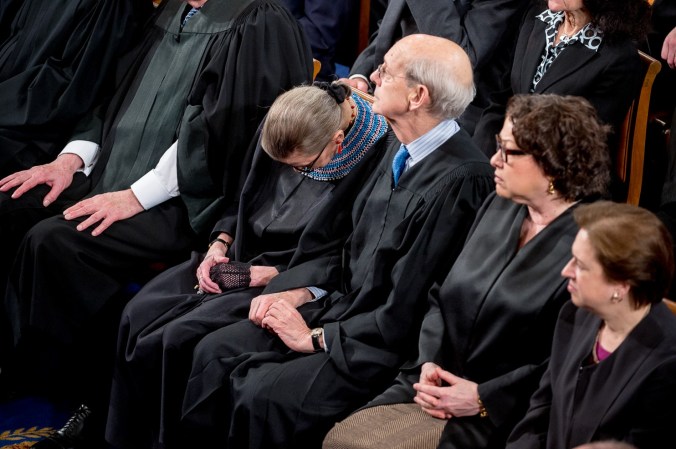
The confounding factor, and one that becomes a powerful rationalization for those who want to stay on in important positions long after their metaphorical pull-date, is that many of them can truthfully argue that their age-ravaged abilities are still better than most of the younger alternatives. Or, as my sister said during a discussion on this topic, “I’d rather have Justice Ginsberg with half her marbles than anyone Trump would nominate.”  I bet that’s how Justice Ginsberg is thinking too. Then there was that attorney with a drinking problem who everyone in the firm agreed was twice as good as any attorney in the firm when sober, and 50% better when drunk as a skunk.

Does that mean the firm should be satisfied if he’s drunk all the time? Isn’t this the same as the age diminished once-brilliant judge?

A topic for another time. Meanwhile, here is dragin_dragon’s Comment of the Day on the post, “Public Servant Ethics, Employment Ethics, Baseball Fan Ethics, And Senator John McCain”:

There comes a time in anyone’s life when it should be obvious that it is time to “Hang up the guns”. In my own life, I am but 71, and I am seeing numerous anomalies in my behavior (walking into a room and wondering why I am here) and in my rational thought (I suspect most who have read my comments sometimes have the same question). I am getting to where I lose debates to my wife on a regular basis (she’ll tell you I’ve always done that). More to the point, I am AWARE of the beginning deterioration. I am wondering if John McCain and Ruth Ginsberg are.

Another thought had occurred to me, however. After realizing that there was some slippage, I have refused an opportunity to run for Alderman and for Mayor of our little newly-incorporated city, because I honestly did not feel I would be able to do the job, either of them, justice, either mentally (what’d you say my name was again?) or physically. I’m winded some mornings after tying my shoe-laces. However, I am reasonably certain that narcissism plays little part in my personality. I suspect it is a BIG part of most elected officials (city, county, state, national) personalities. The idea being “Nobody but ME can do this job properly”, or in some cases, “Nobody but me can do this job, period, well or poorly.” Continue reading →

Comment Of The Day: Why That “We’re Glad You’re Our Neighbor” Sign Is Unethical (As Well As Obnoxious)

Mrs. Q, who is keeping Ethics Alarms current on the oppressive politically correct environment slowly poisoning Portland, Oragon, was moved to issue another report in reponse to the Ethics Alarms post about a virtue-signalling sign popping up live wild-flowers on yards across America here is her Comment of the Day on the post, “Why That “We’re Glad You’re Our Neighbor” Sign Is Unethical (As Well As Obnoxious)”…(I’ll be back at the end.)

This yard sign is just about everywhere in the city including businesses, churches, schools, and city offices.


This one is also popular. I love how the “Science is real” part is in green.

Black Lives Matters signs often accompany the 2 above. Also on businesses, schools, etc.

This one is mostly on businesses/community centers but some residents have this sign taped to their living room windows.

What’s most interesting is that all the problems this town suddenly has with “hate” came after the anti-Trumpers started putting these signs up. I told a (former) friend that I thought these signs were virtue signaling and devisive and smug I didn’t appreciate that every day everywhere an average citizen can’t take a walk or go to the gym without knowing the political opinions of the home/business/agency owners.

She promptly quoted Eleanor Roosevelt’s “No one can make you feel inferior” mantra. Funny enough she’s white, I’m not, and instead of actually listening to me, you know as a special downtrodden minority, she dismissed my concerns altogether about how such signs may negatively affect a community (and then she cut me out of her life. Yep, so tolerant). Continue reading →

From The “The Fish Rots From The Head Down” Files: The Uber CEO’s “Miami Letter”

You wonder why Uber has ethics problems?

This is why Uber has ethics problems.

Uber is being investigated by two law firms hired to make assessments regarding the corporate practices and culture at the ride-sharing giant, determine what created the toxic environment that led to sexism, sexual harassment, other unethical management conduct, and recommend remedial measures. Usually in such situations, the problem stems from unethical leadership. Guess what? Uber’s unethical conduct stems from not merely unethical leadership, but a leader with ethics alarms that have rotted into dust and rust.

The two law firms recently uncovered a 2013 e-mail sent to Uber’s staff by  CEO Travis Kalanick before a company outing in Miami.  Internally referred to as the “Miami letter,” this thing screams “What was he thinking?”, “Where were the lawyers?” and “This guy might get elected President of the United States!”

Here is the e-mail; I’m going to bold some important features: Continue reading →

Morning Ethics Warm-Up: 6/10/17


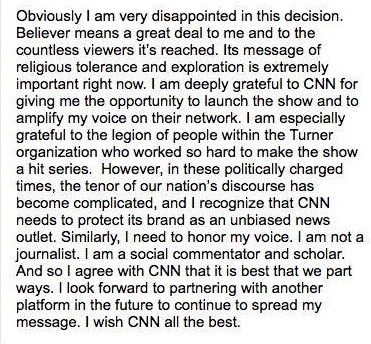
1. In the category of “Good!”, or maybe “Better late than never!” was the news that CNN, after a a full week of pondering, determined that maybe it wasn’t sufficiently professional for a host to call the President of the United States a “piece of shit,” or anyone a “piece of shit,” really, or use “shit”  under the CNN banner, so it fired “Believer” host Reza Aslan. I don’t know why CNN can’t figure out that an immediate firing sends the message that the organization has professional standards and enforces them, and the way CNN handled this says, “We were hoping this would blow over, but guess not.”

Aslan’s tweet after his hook raised other questions:

  • Wait, CNN is trying to be an unbiased new outlet???
  • Oh, is “piece of shit” how scholars express themselves now?
  • “I need to honor my voice” by being able to use vulgarity to express his measured views. Got it.
  • The “tenor” of discourse is entirely within the control of the speaker.
  • Why does CNN put people on the air who don’t understand or respect their professional obligations to the network or the audience?

2. Fox News’s Sean Hannity got web headlines yesterday by tweeting to Aslan: “I do not think you should be fired. You apologized.” Sean Hannity is really too dumb to be allowed out without a leash. His theory is that an apology magically returns everything to where it was before the conduct in question, as if there were no effects. This was serious breach of professionalism and responsibility showing the Aslan was too untrustworthy to be allowed to have his own TV show. It proved that he was a threat to CNN’s reputation (Crude News Network” is the current successor to “Clinton News Network,” and no organization can function if its announced policy is “Go ahead, do anything; as long as you apologize, your job is safe.” Continue reading →

Ethics Hero: Scott Steffel

Only 8 players in Major League Baseball history had hit 600 home runs, and last weekend the number became 9 as Los Angeles Angels slugger Albert Pujols reached the impressive milestone with a grand slam in the fourth inning of the June 3 game in Anaheim. Cal State Fullerton student Scott Steffel, a 23-year-old lifelong Angels fan, caught the ball in his glove. Such a souvenir is a collector’s dream, and catching it a baseball fan’s once-in-a-lifetime dream-come-true.

Yet Scott Steffel gave the ball back to Albert Pujols, the man who hit it. He didn’t ask for money or a truck-load of autographed bats and gloves.   He didn’t think about how much money Pujols had )millions and millions) and that the ball was figuratively made of gold. He just gave it back, saying that he didn’t feel it belonged to him, but Pujols:

“It’s not my ball, it’s his. He deserves it. He’s one of the best baseball players right now. Of all time.”

Bravo.

Public Servant Ethics, Employment Ethics, Baseball Fan Ethics, And Senator John McCain

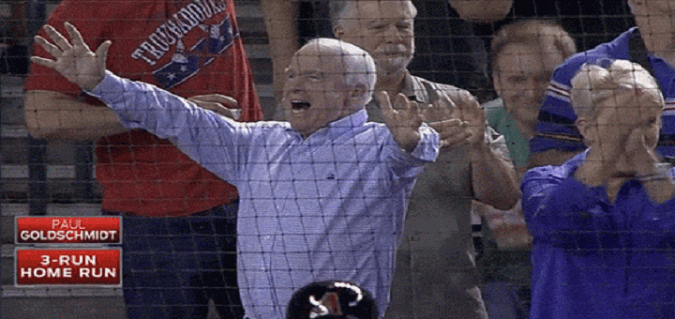
A sub-plot of yesterday’s fizzled firecracker of a “bombshell testimony” by James Comey was Senator John McCain’s bizarre questioning. When I saw how many of my “resistance” member Facebook friends were talking about it, I knew how disappointed they were that Comey produced no smoking guns or even a soggy water pistol. Poor John picked the wrong day to stop taking Ginkgo Biloba. Still, Democrats and Republicans alike were bothered by a senior senator and former Presidential candidate sounding confused and semi-coherent.

Here was the whole exchange: Continue reading →