An Unethical Match: The Ex-Yelp Whiner Finds The Perfect Potential Employer, Sort of

Fdbak

Fdbak, for those times you are afraid to complain about bad service. I think you need a better example for your website, Bob. Signed, Anonymous.

In writing about Talia Jane, Ethics Alarms concluded that her “open letter” to her boss at Yelp was really an career play designed to get the aspiring writer publicity and sufficient fame to exploit for her advancement. If it constituted unprofessional conduct and betrayal of trust, she really didn’t care. (Subsequent investigations of her social media activity indicate that her representations of abject poverty were less than honest). Whether this was the plan or not, her public screed, like excrement attracts flies, got her a job interview with what seems like a good match for someone with her peculiar sense of ethical conduct.

The marketing director at a Dallas startup company called Fdbak sent an invitation Talia’s way on the company’s Facebook page:

Dear Talia Jane,

I commend you for standing up for yourself, and your coworkers. Communicating directly with your CEO takes a lot of courage, especially when the subject matter is negative. I’m reaching out to you on behalf of Fdbak, Inc., a Dallas, TX based technology firm. Fdbak created a messaging app that lets you send and receive anonymous feedback to and from anyone. More importantly, you can tell your employer what you really think, without fear of retribution.

You have already been put through a tumultuous gauntlet of improper employee-employer relations, but there are many employees out there that are struggling to speak up, fearing a result similar to yours. Our goal is to provide individuals with an anonymous vehicle for workplace communication, protecting them from what happened to you. We’d love to have you on our team, helping us build a professional environment where you can speak freely and safely to anyone.

Robert Cowlishaw
Marketing Director at Fdbak

The message is factually incorrect, and what is known in the marketing field as “bullshit.” Talia didn’t communicate directly with her CEO, or if she did, she hasn’t said so. She communicated indirectly and publicly, using a medium, “Medium,” that it was a fair guess that her boss never used or read. So why is Fdbak extolling her unethical open letter and misrepresenting it? Simple: the company, a start-up, is trying to hitchhike on her 15 minutes of fame before it expires, even though her conduct doesn’t really fit.

‘Uh, Bob? She didn’t get fired for communicating directly with her boss. She got fired for embarrassing the company by attacking it in public.’

‘Close enough!!!!’

I now know this is a sleazy company aborning, and so should you.

Continue reading →

This Just In: President Barack Obama Is Still Incompetent

Generalissimo Francisco Franco is still dead

I know I’ve neglected our current unethical President lately while trying to determine which candidate to be out future unethical President is less likely to leave the nation a smoldering ruin, but rest assured, Barack Obama has not improved.

The most indisputable example of late comes as he prepares to visit Cuba. In December, President Obama told Yahoo! News:

“What I’ve said to the Cuban government is, if . . . we’re seeing some progress in the liberty and freedom and possibilities of ordinary Cubans, I’d love to use a visit as a way of highlighting that progress. If we’re going backwards, then there’s not much reason for me to be there.”

This isn’t a casual, non-committal statement when a President makes it, though I realize that Obama has never quite grasped that essential aspect of the job. Cuba reads it, and so does the rest of the world. If Obama is to be believed—he isn’t, but let’s pretend—it is a commitment, and his office as well as the nation is placed on the line along with his credibility.

According to human rights organizations,  the Castro regime’s repression has indeed grown worse since the renewal of diplomatic ties with the United States in 2014. Abuse and arrests of dissidents have increased, and there has been a government crackdown on churches and religious groups:

Throughout 2015, there were more than 8,616 documented political arrests in Cuba. In November alone there were more than 1,447 documented political arrests, the highest monthly tally in decades. Those numbers compare to 2,074 arrests in 2010 and 4,123 in 2011. . . . According to the London-based NGO, Christian Solidarity Worldwide (CSW), last year 2,000 churches were declared illegal and 100 were designated for demolition by the Castro regime. Altogether, CSW documented 2,300 separate violations of religious freedom in 2015 compared to 220 in 2014. . . .  Most of the 53 political prisoners released in the months prior and after Obama’s December 2014 announcement have since been re-arrested on multiple occasions. Five have been handed new long-term prison sentences. Meanwhile, Human Rights Watch noted in its new 2016 report, “Cuba has yet to allow visits to the island by the International Committee of the Red Cross or by U.N. human rights monitors, as stipulated in the December 2014 agreement with the United States.”

Oh, never mind all that depressing stuff, you Gloomy Gusses! Obama announced last week that he’ll go to Cuba anyway, and thus his December pledge was meaningless, just more words. Continue reading →

And Now, A Positive Note About Marco Rubio: Apparently He Actually Reads Bills Before He Votes On Them…

Republican presidential candidate Sen. Marco Rubio, R-Fla., speaks with the media after touring the World Famous Gold & Silver Pawn shop with owner Rick Harrison Thursday, May 28, 2015, in Las Vegas. The shop is featured in the television show Pawn Stars. (AP Photo/John Locher)

…unlike everyone else.

…at least when he bothers to show up to vote, which isn’t often.

Still, to be fair to Marco, Ethics Alarms notes that Joshua Stanton, a lawyer and North Korea policy expert who has advised the Hill on legislation, writes:

By now, most of you know that the North Korea Sanctions and Policy Enhancement Act, the Senate’s version of H.R. 757, passed the Senate unanimously Wednesday night. The House is expected to pass the Senate’s version this morning and send it to the President’s desk.

In an election year, when floor time is especially precious, it was remarkable and humbling that the Senate spent an entire day debating this bill….Both Ted Cruz and Marco Rubio interrupted their presidential campaigns to fly back to Washington and cast “yea” votes. Both senators have been solid supporters of the bill. Two years ago, Senator Rubio personally read every line of an earlier version. I hope I’m not giving away a trade secret here, but it’s pretty damn rare for representatives and senators to personally read lengthy, legalistic bills themselves; most delegate that to their staffers. Rubio did so with obvious care and understanding, leaving no doubt that he’s extremely bright. I saw his tracked changes and comment bubbles in the draft, and suspect that the mineral export ban the Senate added to section 104 was (at least in part) his idea. That provision could be quite powerful, akin to previous legislation that banned Iran’s oil sales.

This suggests to me that Rubio, while not having the goods to be President, could be an excellent, responsible Senator, if he wanted to be.

Too bad he doesn’t want to be.

[There is still no excuse for every member of Congress not personally reading and understanding ever piece of legislation they vote on. For elected officials to vote into law bills they have not read carefully and fully understand is unethical—lazy, irresponsible, incompetent.]

____________________

Pointer: Fred, who is on a roll…


The States’ Inexcusable Incompetence In Rape Cases

rape kits

If anyone can think of a good explanation for this outrage, please enlighten me.

Massachusetts has a 15-year statute of limitations on prosecuting sexual assault crimes, but the state only requires that untested rape kits be stored for six months.  No state currently provides the victim of an alleged sexual assault the right to require a jurisdiction to retain a rape kit until the statute of limitations expires, and only six states and Washington, D.C., provide a right for the prompt processing of a rape kit.

How can this be? Why wouldn’t it be obvious that as long as it is possible that rape charges can be brought, the relevant rape kit must be preserved? Continue reading →

Marco Rubio Flunks A Gut Check: He’s Unqualified To Be President (Too)

empty podium

Last night in Nevada, as the depressing vote totals poured in showing that Nevada Republicans, or at at least about 45% of them, have the minds of desert toads and the ethics of Vegas Strip pimps, (that is, really want Donald Trump to be President of the United States of America, Peewee Herman having chosen not to compete, journalists waited to see what Marco Rubio, supposedly the choice of the GOP “establishment,” would say in his concession speech. He didn’t give one, however. Fox News reported that “the Senator has gone to bed.”

That’s it. That’s signature significance, conduct that all the spin in the world cannot reconcile with a man having the requisite character and values to lead a nation. Rubio has a nice face, a good personal story, a polished speaking style and, most of all, ambition, and until last night, an opportunity. With that weak, lazy and pusillanimous demonstration, Senator Rubio proved conclusively that this is all he has. It’s not enough; it’s not nearly enough. As much as I and any sane and responsible American citizen want someone to block Donald Trump’s frightening march to the Republican nomination, Marco Rubio is no alternative.

I have, apparently foolishly, not allowed all of the many warning signs regarding Rubio’s leadership skills and character to cause me to label him a lost cause. Early on, he proved himself unable to handle his campaign finances ethically or competently. As a Florida state senator, he abused his power and engaged in a scandalous conflict of interest. As a U.S. Senator elected by a tea party surge, he showed himself to be feckless and expedient. He has also been a lousy Senator, seldom showing up for votes. When he began running for President, Rubio even stated that he hated being a Senator, and abandoned any pretense of doing his job—but he continued to collect his salary, because, he said, he needed the money.

While his chief rival, Donald Trump, worked—yes, it is work—around the clock to get in front of cameras and on the air as often as possible, Rubio adopted a minimalist campaign style, never going off script, seldom subjecting himself to interviews where he would have to improvise answers and actually think. Rubio’s debate performances were entirely dependent on whether he could use portions of his stump speech to answer questions. When a skilled ex-prosecutor, Chris Christie, placed him under cross-examination for this weakness, Rubio devolved into an old Star Trek episode computer, repeating the same programmed phrase as metaphorical smoke billowed out of his ears. Then he ducked accountability for his meltdown, insisting that he was just staying on message, until his advisors finally convinced him that denial wasn’t working.

With all of that, in part because of utter desperation, journalists, Republicans and Americans who are horrified at the prospect of having no better candidates to choose from than the delusional Bernie Sanders, the corrupt and dishonest Hillary Clinton, and the vile and inexperienced Ted Cruz, continued to hope that Rubio could rise above his obvious flaws and be someone with the capacity to grow into leadership.

That hope, always faint anyway, is gone now. Not one of the other Presidential candidates would have willfully avoided the opportunity to give a defiant and inspiring concession speech that would be played on the networks and cable channels repeatedly today. Indeed, not one of them could have been stopped from giving such a speech. Nor would any of the past Presidents or unsuccessful but nominated candidates for the office within my lifetime. Why is Rubio different? Continue reading →

Ethics Jump Ball: What Is An Ethical Reaction To This Story?

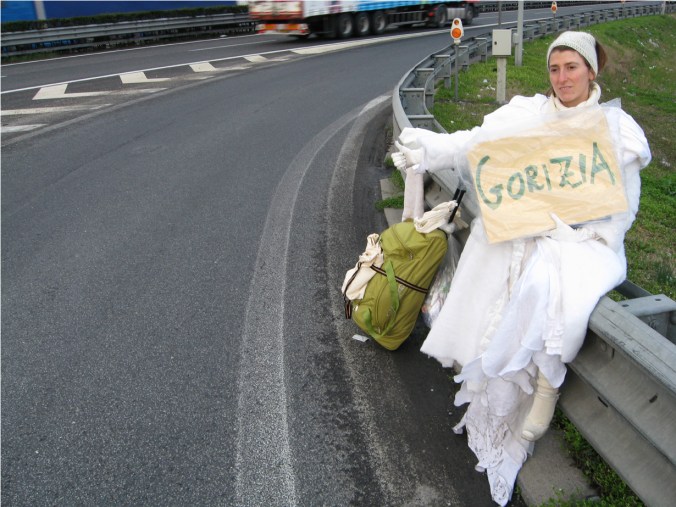
Pippa-Bacca

From the BBC (2008):

An Italian woman artist who was hitch-hiking to the Middle East dressed as a bride to promote world peace has been found murdered in Turkey.

The naked body of Giuseppina Pasqualino di Marineo, 33, known as Pippa Bacca, was found in bushes near the northern city of Gebze on Friday.

She had said she wanted to show that she could put her trust in the kindness of local people.

Turkish police say they have detained a man in connection with the killing.

Reports say the man led the police to the body.

I think I’ll add my reactions to the comments.

Fragments can be found in the tags.

You go first.

__________________

Pointer: Red Flag

Ethics Quote Of The Week: FCC Commissioner Ajit Pai

First-Amendment-on-scroll1

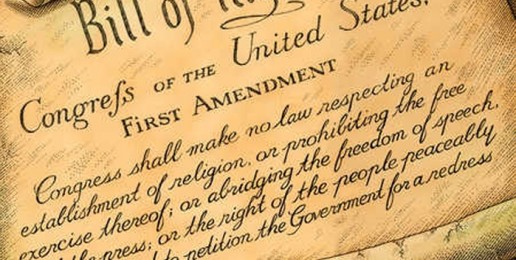
“The text of the First Amendment is enshrined in our Constitution, but there are certain cultural values that undergird the amendment that are critical for its protections to have actual meaning. If that culture starts to wither away, then so too will the freedom that it supports.”

—FCC Commissioner Ajit Pai  to the Washington Examiner, in an interview where he expressed concern that respect for First Amendment principles were diminishing, particularly on college campuses.

Isn’t it fascinating that so many of those who are concerned about the freedom of speech being diminished by political correctness have responded by supporting a Presidential candidate who regularly abuses the right of free speech, and whose response to protesters at his own speeches is to abuse them?

But I digress.

Today’s example of what Pai is talking about comes from California State University Los Angeles (CSULA), where president William Covino, responding to expressions of dismay from the same kinds of students who needed counseling at Rutgers, cancelled a scheduled speech by conservative pundit and Breitbart editor Ben Shapiro, and in a particularly Orwellian touch, did so citing the need for the “free exchange of ideas.” Continue reading →

Ethics Observations On Georgetown Law Center’s Scalia Foofarah

Scalia-Georgetown

I am a Georgetown University Law Center grad, as well as a former administrator there. I also know and have personal relationships with several members of the faculty. None of this especially informs my ethical analysis of the community argument there that arose from a rather innocuous official expression of respect and mourning in the wake of Justice Scalia’s death, but if anyone wonders why I’m posting about this rather than many other ethics issues nipping at my heels, that’s part of the reason. The other reason is that this academic dust-up raises interesting ethics issues, and has received national publicity.

Observations on the tale as it has unfolded:

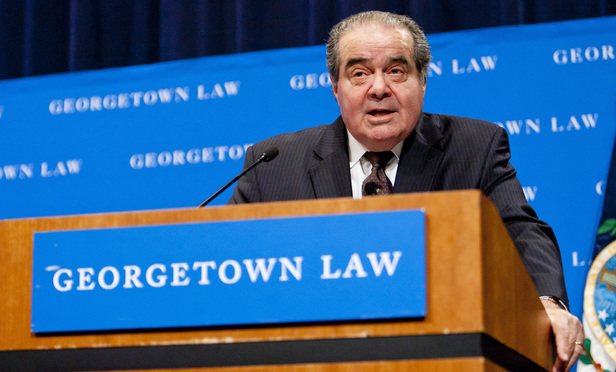
1.  Georgetown Law Center issued a press release mourning the death of Antonin Scalia, including a statement from Dean William M. Treanor that read:

““Scalia was a giant in the history of the law, a brilliant jurist whose opinions and scholarship profoundly transformed the law. Like countless academics, I learned a great deal from his opinions and his scholarship. In the history of the Court, few Justices have had such influence on the way in which the law is understood. On a personal level, I am deeply grateful for his remarkably generous involvement with our community, including his frequent appearances in classes and his memorable lecture to our first year students this past November. The justice offered first-year students his insights and guidance, and he stayed with the students long after the lecture was over. He cared passionately about the profession, about the law and about the future, and the students who were fortunate enough to hear him will never forget the experience. We will all miss him.”

[Note: In the original post, I missed the first line, and kept missing it. Don’t ask me why. The text has been finally, after a couple botched attempts, been revised to include it.]

Is there anything inappropriate about the dean’s statement? Not in my view. This is nothing but a traditional expression of professional respect on behalf a prominent institutional member of the legal community. There is nothing in the statement, save for the last sentence, that anyone could argue is untrue. Countless academics, as well as Scalia’s more liberal colleagues, did learn “a great deal from his opinions and his scholarship.” He was an influential and significant figure on the Court. Scalia was generous with his time and passion as a teacher, and by all accounts he was a good one.

The opening statement,  “Scalia was a giant in the history of the law, a brilliant jurist whose opinions and scholarship profoundly transformed the law,”  seems to be what rankled Scalia critics. It shouldn’t have. At worst it is standard memorial puffery. But calling Scalia a giant “ in the history of the law” seems fair whether you agree with his jurisprudence or not: he is certainly among the 20 or so most quoted, most debated, and most provocative justices. The rest shouldn’t be troubling to anyone who isn’t suffering from Scalia-phobia. A Justice can be brilliant and transformational while being wrong.

None of the reports of the controversy ignited by this standard issue sentiment mention it, but Georgetown Law Center isn’t on the Georgetown campus. It has its own campus that is a 15 minute walk from the Supreme Court. Law students regularly attend oral arguments; I did: it was one of the great advantages of studying law there. More than any law school, the Law Center has good reason to feel a special affinity to the Court and all its justices.

2.  What about the last sentence? Is it appropriate for Treaner to speak for the law school community and say that “We will all miss him”? He was reasonable and fair to assume that.  Unfortunately, in today’s vicious partisan divide where opinions and sincere positions reached after thought and research are too often treated as proof of consort with Satan, and ion which even lawyers, who are trained not to take legal arguments personally, are frequently unable to respect a colleague for a well-reasoned argument that they may still think is completely wrong, it was not a safe assumption. Pillory the dean, then, for giving all members of his community the benefit of the doubt, and assuming they are capable of grace, compassion, fairness, professional respect and civility.

It’s still not unethical to assume one’s colleagues have some class.

3. They all don’t, unfortunately. Law Center professors Gary Peller and Mike Seidman (I know Mike, never met Gary) then used the Campus Broadcast system, usually used for event announcements, invitations and policy changes, to send a message  to all members of the student body titled, “Responses to Dean Treanor’s Press Release Regarding Justice Scalia.”  Peller’s statement reads,

Like Mike Seidman, I also was put-off by the invocation of the “Georgetown Community” in the press release that Dean Treanor issued Saturday. I imagine many other faculty, students and staff, particularly people of color, women and sexual minorities, cringed at headline and at the unmitigated praise with which the press release described a jurist that many of us believe was a defender of privilege, oppression and bigotry, one whose intellectual positions were not brilliant but simplistic and formalistic….That ‘community’ would never have claimed that our entire community mourns the loss of J. Scalia, nor contributed to his mystification without regard for the harm and hurt he inflicted.”

This was partisan grandstanding of the worst kind. The professors, of course, have a right to proclaim their opinions to the student body any time they want to, but their complaint here was petty and mean-spirited. It also models behavior that is poisonous both to the legal profession and the culture as a whole. The are saying, in essence, “We don’t mourn him, we won’t miss him, and we’re glad to be rid of him, because his legal theories aren’t our legal theories, and we are on the side of the angels while he was an uncaring villain.” Such a message accomplishes nothing positive, and much that is destructive. The professors engaged in demonizing, when their profession and their duty is not to denigrate but reason. If they really think they can prove that Scalia was a defender of privilege, oppression and bigotry, they can make that case in a scholarly paper: I doubt that they can. Scalia often defended the rights to engage in conduct that he did not personally support, as well as some he did: the sloppy rhetoric of Seidman and Peller echoes the legally ignorant who accuse criminal defense attorneys of defending robbery and murder. Continue reading →

A Google Chrome Extension So Progressives Can Distort Dissenting Opinions Without Even Trying…And The Left Thinks It’s Wonderful!

Don't worry, only the TRUTH gets through....

Don’t worry, only the TRUTH gets through….

With the addition of a simple Google add-on to your Chrome browser, each and every appearance of the term pro-life will be  replaced with, “anti-choice,” rescuing sensitive abortion advocates from having to endure a a term that reminds them that there’s a material difference between abortion and choosing which flavor to get at Baskin Robbins. This means that the journalistic, scholarly and expositional communications of individuals with varying views from the Great and All -knowing Left will be edited without their approval, and can be copied, quoted and distributed in that weakened and distorted form.

We should have seen this coming. The anti-free speech instincts in the modern progressive movement betrays its totalitarian DNA. This is the next step down the slippery into the abyss from oppressive political correctness, from intimidating and punishing those who express opinions and positions that the left deems hateful (or too close to the truth), to making it impossible to communicate non-conforming ideas aty all by translating them into something less persuasive.

What other words and phrases will be subjected to this treatment? I’ll give odds that the next one will change “illegal immigration” to just “immigration,” not that the mainstream media isn’t regularly doing that already. Continue reading →

Tech And Terrorism Ethics: Apple Is Right. The Government Is Wrong.

FBI-APPLE

If, in some future nightmare scenario come true, the FBI needs to break the encryption on a private i-phone to find the secret code to defuse the Doomsday Machine  President Donald Trump set up after his mind finally snapped and he thought he was the Stay-Puft Marshmallow Man, I assume that Apple won’t stand on principle and will do what needs to be done to save the world. The current dilemma, however, is not that dire.

Although President Obama announced last year that he had decided not to pursue legislation requiring tech companies to give law enforcement access to users’ encrypted data, he proved once again that if you don’t like Obama’s promises, just wait a minute.  For last week, the FBI persuaded a judge to order Apple to create software that would help federal investigators crack into the iPhone 5C that terrorist Syed Rizwan Farook was using before he and his wife slaughtered guests at his company Christmas party in San Bernardino last December. Apple has vowed to defy the order.

Good. Continue reading →