Me, Baseball, And Eddie Bressoud: I Missed An Opportunity To Let Someone Who Had A Positive Influence On My Life Know, And I Botched It. Now It’s Too Late…

Not long before he died, Mickey Mantle, who had spent his baseball playing days as a fearful, bitter, anti-social drunk with low self-esteem, had an epiphany when a man, with tears in his eyes, shook his hand and told him how much Mantle had meant to him growing up. Mantle was astonished that what he had done on the baseball field affected anyone so deeply, and said that from that point on, he no longer felt his life had no meaning or worth.

There are people and subjects that have influenced the course of my life, my interests, choices and beliefs far more than any school I have attended or any pursuit I have engaged in to make money: Presidential history, for which I have Robert Ripley to thank (but that’s another story); theater and performing, for which I credit Mr. Gilbert and Mr. Sullivan; Greek Mythology, a gift from my mother; rules for living, the specialty of my dad; and, last but far from least, baseball and the Boston Red Sox.

Eddie Bressoud died a week ago, at 91. He is primarily responsible for making me a lifetime baseball fan, with all the excitement, entertainment and wisdom that roller-coaster experience has supplied.

In the winter of 1962, I was reading the Herald sports pages and read about the Red Sox trading their much-reviled shortstop, Don Buddin, to the new expansion Colt .45s for Bressoud, who had been their first pick in the expansion draft. I hadn’t followed the Red Sox closely before that, though all of my friends were big baseball fans like most normal kids in Boston, Mass. You know me: I don’t follow crowds, I avoid them. I don’t know whether it was Eddie’s name or what that intrigued me, but I watched Opening Day specifically to see the new guy play.

I learned that he was called “Steady Eddie;” that he had a Masters degree and was a teacher; I saw that he was always in motion on the field, talking to other players, pointing, intense, an obvious field leader. Bressoud got a hit and started a 14-game hitting streak, sucking me in to watching or listening to all those games to see how long he could keep it up. I was hooked: I didn’t miss a game for 8 years.

Bressoud wore #1, and backed up every catcher’s throw to the pitcher with men on base, a fundamental move coaches teach by few major league shortstops continue. Eddie had a Fenway stroke, a strange, chopping, 2/3 swing that was perfect for knocking balls off of or over “the Green Monster” in left. He also had a knack for clutch hits and doing the little things that helped score runs, like moving runners to the next base even when grounding out. Eddie hit safely in the first 20 games in 1964, setting a Red Sox record for a beginning of a season.. When the team was behind in the 9th, which was often in those days,it seemed like he never failed to get on base somehow. 

Bressoud was unusually articulate and smart: he was a teacher in the off-season, and always made it clear that his passion was education. I was the only fan I knew who was so enamored of Bressoud: Carl Yastrzemski was the rising superstar on those bad teams before the Boston miracle pennant of 1967, though the Sox manager and coaches sang Bressoud’s praises for playing the game ‘the right way” and being both intense and productive. My loyalty was a family joke long after Eddie had left the game. All three of his seasons as the regular shortstop were excellent, and he was was named to the All-Star team in 1964. He was the only position player who didn’t get into the game. I was crushed.

The next season, new manager Billy Herman took away Bressoud’s starting job before Spring Training, and then traded him to the Mets, I listened to their games on the radio so I could keep up with how Eddie was doing. He was a valuable part-timer for the Mets for two years, and was acquired by the Cardinals in 1967.  His last MLB appearance was, ironically, against the Red Sox in Fenway Park, when he ran onto the field as a defensive replacement for St. Louis in the 1967 World Series. The Boston fans gave him a nice ovation.

Baseball has given me too much pleasure and perspective to recount in the decades since Eddie retired, and I apply the lessons I have learned from the game regularly in everything I do. I designed a baseball trivia game and launched a company to promote it, leading me to my first marketing job. Baseball has given me lifetime friends, and experiences I will never forget. It allowed me to cope with personable disappointments and failures, and to not to be overly impressed with the occasional success. It taught me much about critical thinking and bias (thank-you, Bill James!), character, leadership, ordering priorities, recognizing corruption, and culture.

Continue reading

I Don’t Know What To Call This, And I Really Don’t Know What Can Be Done About it, But I Know It’s Bad…

I’ve mentioned this toxic phenomenon before, but yesterday I was in Hell. While walking Spuds and driving I saw 14 pedestrians striding along staring at their phones. Three were walking their dogs, and paying no attention to them. One was pushing a baby carriage.

In contrast, I saw only nine adults who were not staring at their phones.

The phenomenon is one of many that is isolating members of society, crippling social skills, undermining the interaction between strangers and neighbors, and giving social media and remote communication an outsized influence over society and the culture. We paved the way for it with such developments as the Sony Walkman, now, if self-isolation and absorption in public isn’t a social norm, it is rapidly becoming one.

Is the conduct unethical? It is tempting to argue that it hurts no one but the phone screen addict, though that definitely doesn’t apply to those behaving like this while caring for dogs, babies and children (or crossing the street). The counter argument would be Kant’s Universality Principle: would we want a world where everyone walks through the world oblivious to everyone and everything but their phone? Well, that’s what we are on the way to creating.

Continue reading

Easiest Ethics Quiz Ever!

Your Ethics Alarms Easiest Ethics Quiz of All Time is…

Do you detect any bias in the CNBC lists of the Best and Worst States to Live and Work in?

Here they are:

CNBC’s top 10 worst states to live and work for 2023 are

  1. Texas
  2. Oklahoma
  3. Louisiana
  4. South Carolina and Alabama (tie)
  5. Missouri
  6. Indiana
  7. Tennessee
  8. Arkansas
  9. Florida

CNBC’s top 10 best states to live and work for 2023 are

  1. Vermont
  2. Maine
  3. New Jersey
  4. Minnesota
  5. Hawaii
  6. Oregon
  7. Washington
  8. Massachusetts and  Colorado (tie)
  9. Connecticut

One of the criteria for determining the best states to live and work in is is the extent to which they permit relatively unrestricted abortion, since many single women regard this as a priority. Ironically, such states are not desirable places for unwanted children to ever have a chance live or work, but this was not one of the criteria.

USA Today and other mainstream media outlets reported the CNBC woke propaganda effort uncritically without noting the obvious. The USA Today article began, “How does life in your state compare to the rest of America?”

Nah, there’s no mainstream media bias!

Bad Analogy, Bad Legal Theory, Bad Judge

The ABA Journal reports that Waco, Texas, Justice of the Peace Dianne Hensley objects to performing same-sex weddings because of her religious beliefs, and makes such couples seek to get hitched elsewhere. Now she is claiming that her stance is supported by the U.S. Supreme Court’s June 30 decision in 303 Creative v. Elenis. That one, I’m sure you recall, declared that it was “forced speech” and a violation of a web designer’s First Amendment rights to require her to create websites for same-sex weddings.

The Texas’ State Commission on Judicial Conduct slapped Hensley with a public warning for refusing to perform same-sex weddings. Hensley filed a lawsuit against the Commission in December 2019, but it was dismissed. Now she is appealing, using the new SCOTUS decision as her ammunition.

Continue reading

Indiana Jones And The March Of Folly

I have to ask: what the hell is going on with Harrison Ford’s nose in the photo above from “Indiana Jones and the Dial of Destiny”? It looks like he borrowed it from Dustin Hoffman’s make-up kit from “Little Big Man,” when Dustin played a 111-year old man. But I digress…

It is now certain that Disney’s fifth and one hopes final Indiana Jones movie will be a financial disaster. It cost $300,000,000 to make, and with marketing and other costs, a big Hollywood film has to clear about twice its filming costs to break even. That’s not happening; three weeks after its release, “Dial of Destiny” is already trailing two less-hyped summer films, and is being treated as “dud on arrival.”

“Movie Web” has done the best analyses I’ve seen regarding the film’s conceptual, artistic and marketing problems (here and here), and I’d love to write about those, but this is an ethics blog, so I’m officially interested in just one aspect of the debacle: Why didn’t anyone stop it?

Continue reading

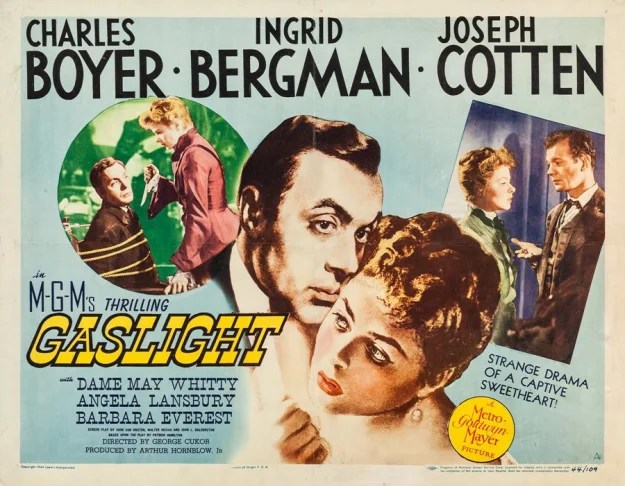
It’s Unethical For Democrats, the News Media And Activists to Gaslight The Public, But On The SCOTUS Affirmative Action Smack-Down, They Did It Anyway

The coverage of the recent rulings in Students for Fair Admissions v. University of North Carolina and Students for Fair Admissions v. Harvard almost universally created the impression that they were further attacks on democracy by a rogue Supreme Court, foiling the will of the people. In particular, these decisions blocking institutionalized institutional racist discrimination, which is what higher education affirmative action is, were assailed as creating disastrous hurdles to black Americans as they strive to succeed in this nation plagued by systemic racism.

Two recent polls show that this narrative was fake news from the news media and misinformation from the Left. A Rasmussen Reports national telephone and online survey found that 65% of “Likely U.S. Voters” approve of the rulings, with 49% approving “strongly”. Just 28% disapprove of the conclusion that the prohibition on discriminating by race means no discrimination by race. You can read how the questions were posed here. Another poll from YouGov/The Economist asked “Do you approve or disapprove of Supreme Court’s ruling on affirmative action?” Both sexes, all races, every age group, and every level of income approved more than not. (See here.)

Yeah, I know: polls. In this case, however, these easily manipulated surveys perform a service. The Supreme Court’s function does not and should not involve following the mob, but appealing to mob emotions has been a central strategy by progressives as they seek to de-legitimize the one branch of the government they don’t control. An accompanying myth is that the Roberts Court is an obstacle to “the will of the people,” even when, as in this case, the will of the people is supported by the Constitution and our laws.

Even after a concerted and ongoing effort to inflict Marxist goals, racial quotas and “good” discrimination on the culture, our core values have stood up to the propaganda siege—so far.

There is hope.

Ethics Hero (Corporate Division): In-N-Out Burger

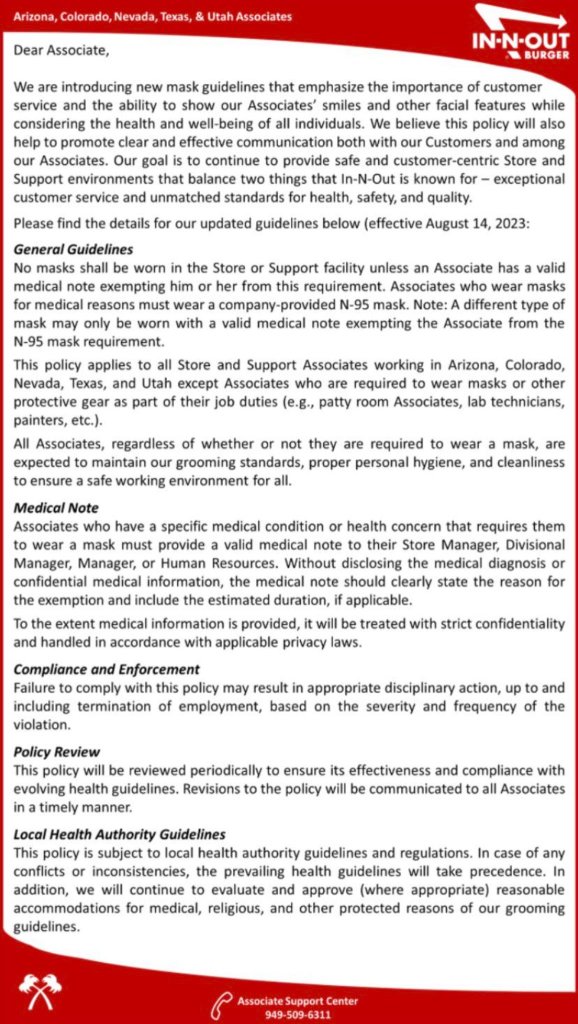
Among the many ways the last few years of Wokemania has reduced the quality of American life and our access to the pursuit of happiness is the creation of the ideology-linked addiction to virtually useless masks and a near-crippling phobia regarding the threat of air-borne illnesses created by fearmongering during the pandemic.

Continue reading

Housekeeping Note Re Banned Commenters

Much as I hate to give attention to rule-breaking visitors here who get themselves banned, I need to clean this up.

Yesterday a former commenter who who was banned years ago returned with a semi-reasonable comment, and I, mixing up screen names, unwittingly welcomed him back thinking he had been AWOL rather than banned. That was my fault; I apologized upon discovering it, and in penance, left up the couple of comments he had left thinking that I had relented, here.

I also informed him—that’s “Chris”— that no further comments of his would remain on EA going forward. Nevertheless, he dumped more comments on other posts today, and also inspired a couple of other banned commenters to invade.

When I spam banned commenters’ attempts to sneak back on, any replies legitimate commenter make to them vanish as well. I know it is easy to miss the ban announcements, as I can’t place them on every post. I apologize for the inconvenience.

Now back to work…

Ethics Quiz: “Colored People” Bad, “People Of Color” Good!

I almost missed this kerfuffle completely. Of all people, one of my most reliably Democrat-supporting friends raised it, beginning by saying. “I know this is not something a good progressive is supposed to say or think, but….

…why in the world is it ‘racist’ to say ‘colored people’ but politically correct to use the term ‘people of color’ when by the undeniable rules of English, they mean exactly the same thing?”

She continued, “And how can anyone belonging to an organization called ‘The National Association for the Advancement of Colored People’ accuse someone of being a racist for saying it?”

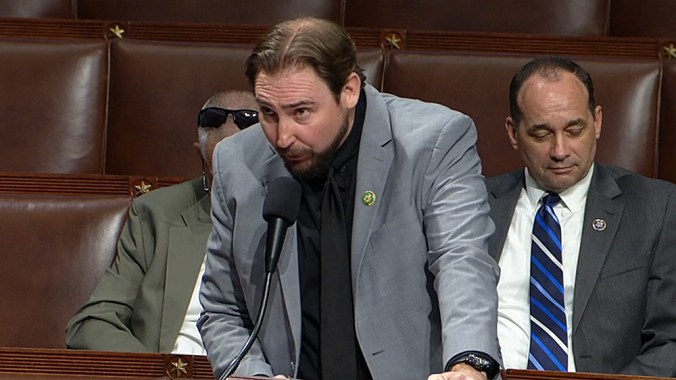
Arizona Republican Rep. Eli Crane was arguing for his amendment to the defense budget and policy bill, as he wants to prohibit the Pentagon from requiring participation in DEI training or the use of ” race-based concepts” in the hiring, promotion or retention of individuals. In the course of debate, Crane said “My amendment has nothing to do with whether or not colored people or black people or anybody can serve, okay? It has nothing to do with color of your skin… any of that stuff.”

Recognizing a “gotcha!” when she saw one, black Democratic Rep. Joyce Beatty, an enthusiastic member of the racist Congressional Black Caucus, demanded Crane’s words be stricken from the congressional record. “I am asking for unanimous consent to take down the words of referring to me or any of my colleagues as “colored people,'” said the dues-paying member of the NAACP. Crane wanted to amend his comments to “people of color,” but Beatty insisted that she wanted his words stricken. Censorship is, after all, her party’s way, and no Republicans had the guts to object.The chair ordered Cranes entire statement stricken by unanimous consent.

Beatty then worked to exploit the gaffe for all it was worth, writing on Twitter: “I am still in utter and disbelief that a Republican uttered the words ‘colored people’ in reference to African-American service members who sacrifice their lives for our freedom… I will not tolerate such racist and repugnant words in the House Chamber or anywhere in the Congress. That’s why I asked that those words be stricken from the record, which was done so by unanimous consent.” Then the Ohio Democrat told CBS that Crane’s explanation that he “misspoke” was a lie. “He didn’t misspeak,” Beatty said. “He said clearly what, in my opinion, he intended to.” 

In other words, he intended to use a racist slur.

Your Ethics Alarms Ethics Quiz of the Day is…

What is fair treatment for Rep. Crane?

Continue reading

Why The White House Cocaine Incident Matters

In a depressing AP story about a poll supposedly showing that a large majority of Americans don’t believe democracy is working as it should in the U.S. today, one disillusioned voter, a “moderate Republican,” singled out the GOP’s investigations of Hunter Biden as a prime example of misplaced priorities.

“Hunter Biden — what does that have to do with us?” he asked, neatly demonstrating why the Founders decided that a pure democracy was dangerous, and that a republic was much safer in many respects.

Hunter Biden is not important at all isolated from what he represents, which is strong evidence that the President of the United States is 1) lying 2) abusing power and influence to assist his pathetic ne’er do well son 3) possibly benefiting from his son’s influence peddling 4) corrupting the justice system to protect his family, and 5) untrustworthy, because he is willing to place other priorities above the interests of the United States of America. The fact that the “moderate Republican,” whose argument is that the President’s son has “nothing to do with the economy,” can’t comprehend this, is a perfect example of how most U.S. citizens don’t understand the basic concepts of ethics, government and law.

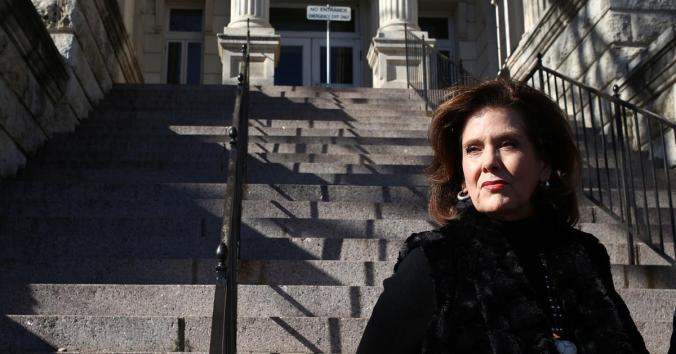
Consider the White House cocaine fiasco. A white substance in a plastic bag was found in the White House library and identified as cocaine. Hunter Biden had been to his father’s abode three days before the discovery. Hunter has been a cocaine user in the past, and there is video and photographic evidence of that. From the beginning, the White House made every effort imaginable to keep the public and the media’s suspicions going to the obvious place. On July 5, less than 72 hours after the discovery, a law enforcement source leaked to Politico that the owner of the drugs would likely never be known. National security adviser Jake Sullivan suggested the drug could have belonged to construction workers renovating the West Wing Situation Room, and Joe’s paid liar Karine Jean-Pierre flipped into indignant “How dare you!’ mode when a reporter asked if the envelope might have belonged to a Biden. She also said, laughably, insisted that the Secret Service would never allow the President to dictate how they handled delicate matters at the White House. “We are not involved in this,” Jean-Pierre said. “This is something that the Secret Service handles. It’s under their protocol.” Sure. Who believes this?

On July 13, the Secret Service concluded its investigation without naming a suspect, saying that it could not narrow the group of people who had access to the area to “a person of interest.” Hunter was never questioned. The Secret Service briefed members of the House Oversight and Accountability Committee on its findings.

Senator Tom Cotton had an amusing analogy to this narrative.”This is like if the Hamburglar lived in the White House, all the hamburgers disappeared, and they said they didn’t have any suspects or no one they could question,” he said. Meanwhile, conservative pundit and former Secret Service agent Dan Bongino says that his former colleagues are furious, and that they know who brought the cocaine into the White House, adding,

“So there’s probably less than 200 people who could have left this cocaine, by the way, in a bag which is plastic, which is non-porous, meaning it’s probably not that hard to pull a latent print. They’ve got to know who did it. The question is, who’s pressuring them to not find out who did it? And it’s gotta be coming from this White House. This is terrible. Don’t destroy this agency like the FBI. It’s really unbecoming. A lot of my former colleagues at the Secret Service who retired, they are absolutely furious about this. Oh yeah, yeah, I can tell you, I got 50 emails, communications, texts from people. ‘This is embarrassing, humiliating.’ These are good guys, man, guys who worked for Obama and Bush, non-partisan guys, most of them aren’t even political. This is embarrassing. They know exactly who it was.”

And sports bookies are releasing odds on who owned the drugs.

Continue reading