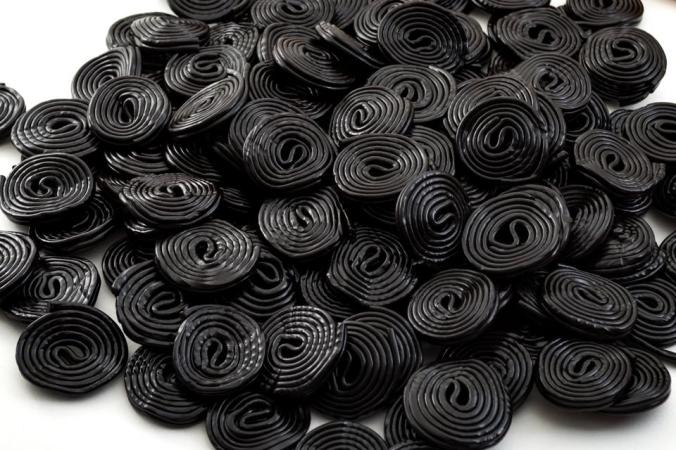
The current issue of the New England Journal of Medicine describes the odd case of a middle-aged construction worker who died from eating one or two large bags of black licorice daily over a three week period. A naturally occurring compound, glycyrrhizic acid, found in black licorice can have adverse health effects if you gorge on it: in 2017, the FDA warned on its website, “If you’re 40 or older, eating 2 ounces of black licorice a day for at least two weeks could land you in the hospital with an irregular heart rhythm or arrhythmia.” If you have muscle weakness or an irregular heartbeat, you should stop eating it and call your doctor, who should also advise you possible about interactions it may have with your other medications.
The construction worker’s sudden addiction to the candy caused his heart to stop, and he collapsed at mid-day at a fast-food restaurant. Emergency responders performed CPR and revived him, but he died the next day. Dr. Neel Butala, a cardiologist at Massachusetts General Hospital who was one of the authors of the case study, pronounced the lesson of the episode:
“The key message here for the general public is that food containing licorice can potentially be hazardous to your health if eaten in large quantities. I don’t think people realize it. It’s not labeled that way.”
It shouldn’t have to be labelled, should it? What isn’t potentially deadly in asbsurdly large quantities? Water can kill you. Of course candy can kill you. It’s interesting to know why, and that licorice root extract can cause dangerously low potassium and imbalances in bodily electrolytes, but honestly: who wouldn’t do a little checking if they suddenly started eating huge amounts of something that normal people only consume occasionally, if at all? Continue reading