Morning Ethics Warm-Up, 10/25/17: The Clinton Campaign’s Russian Dossier Connection, Her Lying Lawyer, And Jeff Flake

GOOD MORNING!

1 I have long been an admirer of Arizona Senator Jeff Flake, who is one of the few members of Congress, more’s the pity, who will stick to his principles even when they pit him against his own party. However, his freak-out and verbal attack on President Trump accomplish nothing positive (unless you consider making Democrats happy positive) and  at this point constitute pure self-indulgence and, yes, these words are coming up a lot lately, virtue-signalling and grandstanding. I have no sympathy for Flake, Senator Corker, or any other Republican leaders who stood by and allowed Donald Trump to hijack their party. The time for Flake to take a stand was last March, or even earlier. Ethics Alarms stated that the GOP shouldn’t have let Trump into the debates or on its ballot. I said that he should have been kicked out of the debates when he began trashing the party, and when he  became disgustingly boorish and uncivil. I explained that it could have and should have refused to nominate him by changing the rules. The party had a duty to the country to present a competent, trustworthy alternative to the corrupt, venal, dishonest candidate the Democrats were going to nominate: everyone knew who that would be. Instead, the GOP sold its soul. Jeff Flake now says that Trump is reckless, outrageous and undignified? Who didn’t know that? I assume the President’s  voters knew that. On Ethics Alarms, I wrote about those Trump character traits in 2011.

It is particularly galling for me to read Flake’s attack on Trump in the Washington Post today, which begins, “As I contemplate the Trump presidency, I cannot help but think of Joseph Welch.” In fact, it makes me want to scream helplessly at the sky. In this Ethics Alarms post, I invoked Welch’s famous televised slap-down of Joe McCarthy before the first Republican candidates debate, and concluded “If someone doesn’t at least try it, none of these 15 non-Trumps are smart enough to be President.” I wrote that on September 16, 2015. 

Senator Flake is like a Senator  going to Honolulu in December of 1942 and proclaiming that the Japanese can’t be trusted. He deserves no sympathy or support now.

He should have been reading Ethics Alarms.

UPDATE: My friend and frequent ProEthics collaborator Mike Messer called this “flake news.”

2. I haven’t had time to thoroughly unravel what yesterday’s revelation that Hillary Clinton’s campaign funded what became the infamous “Russian dossier” means. A couple of points, however, Continue reading

But…But… It Doesn’t Mean He’s Not A Good Lawyer!

RIP, Snoopy.

This is a fascinating example of the legal community’s incomprehensible standards regarding who is and who isn’t fit to practice law.

In New York,  the bar took away lawyer Anthony A. Pastor’s license after he violently killed his girlfriend’s poodle “Snoopy.” See Matter of Pastor, 2017 NY Slip Op 06729, (App. Div. 1st Dept. Sep. 28, 2017).

An autopsy revealed that Snoopy  had nine broken ribs, a crushed kidney and massive internal bleeding, all at the hands of Pastor.

In disbarring Pastor, [ Matter of Pastor, 2017 NY Slip Op 06729, (App. Div. 1st Dept. Sep. 28, 2017)], the court noted that the sentencing judge’s comments that the respondent’s conduct “‘showed almost incomprehensible violence, and malice,’ that the dog was in ‘excruciating pain’ up until she lost consciousness while respondent ‘sat down at his computer in the most cold-blooded manner, and went to work, knowing that the dog lay dying, . . . on the floor behind him.’”

Nice.

But what does it have to do with whether the creep is a competent, honest, trustworthy lawyer?

Again I note that John Edwards never faced discipline for his massive deceptions and machinations, while his wife was dying of cancer, and while he was running for President. This conduct directly implicated trust and character, yet the refrain of Edwards’ colleagues was that his deceptions and cruelty, while clearly unconscionable, did not involve the practice of law, and thus did not preclude Edwards continuing to be regarded as a trustworthy lawyer. Are they kidding? I wouldn’t trust John Edwards to mail my water bill. Still, I hear this argument all the time in my legal ethics classes. One hypothetical is about a law partner who is caught cheating at poker in a regular game among fellow attorneys. Does that conduct mandate reporting him to the bar for discipline? Most lawyers say no.

They are wrong. Continue reading

The Unethical Fine Print Game

I am on record as believing that lawyers who intentionally assist their clients in burying unconscionable, unenforceable or unfair terms in standard contracts, usually in fine print, are unethical, and engaging in a professional violation of the Rules of Professional Conduct. I’ve offered several seminar hypotheticals on the topic to make my point, and have never encountered a lawyer who had a good defense for the practice. Usually the best they can come up with is “everybody does it” or “but it’s legal!” Of course, the bar associations are on their side, not mine, because, well, everybody does it. That’s a proverbial can of worms the bar associations don’t have the guts or integrity to open. What else could it be but unethical, however, when a client company says, “Make sure you bury this provision saying that they have no recourse if we cheat them in the fine print!” and the lawyer says, “But that’s unenforceable!” and the client says, “Yeah, but they won’t read it before signing, and when we point out that they did agree to it, maybe it will scare them off,”  and the lawyer shrugs and says, “Whatever you say! It’s your contract”?

WiFi companies are especially egregious in this regard. As an effort to show itself as above the field and avoiding the unethical industry practice, a British WiFi company, Purple, ran  a social science experiment, inserting language in its standard contract that obligated consumers to clean toilets at festivals and clear sewer blockages.  22,000 people signed up anyway. The contract stated–in fine print—that its signatories would be legally required to perform 1000 hours of community service, including, but not limited to, “cleaning toilets at festivals, scraping chewing gum off the streets” and “manually relieving sewer blockages.”

The gag clause was inserted in the company’s terms and conditions for a period of two weeks, “to illustrate the lack of consumer awareness of what they are signing up to when they access free WiFi .” Purple also offered a prize to anyone who actually read the terms and conditions, and found the “community service clause.” Only one person won it. Continue reading

Surprisingly, Many California Lawyers Want To Have The Option Of Having Sex With Their Clients

It's all your fault, Arnie...

It’s all your fault, Arnie…

For most of the last century, sensible and rational lawyers accepted that exploiting the attorney-client relationship to have sex with their clients was unprofessional and unethical, without needing a formal rule to tell them the obvious. Then along came Steven Bochco’s popular TV drama “L.A. Law,” the over-heated saga of a high-rolling Los Angeles law firm and its libidinous lawyers. Most libidinous of all was domestic law specialist Arnie Becker, played by the then-blonde and dashing Corbin Bernsen. Arnie habitually slept with his clients when they were wealthy, sculptured, beautiful trophy wives trying to shed their husbands. This was not the image that the family law bar wanted to see broadcast to America, so lobbying efforts were undertaken in many state bars to formally declare Arnie’s nocturnal client conferences unethical, as they undoubtedly were.

California, being partially at fault for the uptick in the public’s false belief that lawyers use their practice as a virtual dating bar, was among the first states to pass an “Arnie Becker Rule,” though it had company, like Oregon, which amusingly anticipated Bill Clinton by including a strangely specific definition of what sexual intercourse was, and New York, which narrowly limited its prohibition to Arnie Becker and domestic relations lawyers like him. Other jurisdictions demurred, as well as the American Bar Association, which is supposed to seek consistency in the legal ethics rules. California’s new rule was one of the more wishy-washy ones, with Rule 3-120 stating that Continue reading

Now THIS Is “Conduct Prejudicial To The Administration of Justice”!

The late Joe Jamail, role model...

The late Joe Jamail, role model…

Almost all jurisdictions include in their lawyer ethics rule a catch-all provision, Rule 8.4 (d), that says that is is professional misconduct for a member of the bar to

(d) Engage in conduct that is prejudicial to the administration of justice;

Virginia is one state that omits this prohibition as too vague; D.C.’s version says that a lawyer must not engage in conduct that is seriously prejudicial, whatever that means. My position is that such a rule is necessary, since no set of rules can cover every situation, and lawyers, I have found, are especially creative in finding new ways to be unethical.

Texas Super Lawyer Joe Jamail (who died last December) established the proposition that a lawyer could prejudice the administration of justice by his spectacular incivility in this deposition:

The Delaware Supreme Court condemned Jamail’s conduct as “rude, uncivil and vulgar,” saying that it abused the privilege of appearing in a Delaware proceeding,” and showed “an astonishing lack of professionalism and civility.” (The immortal quote from the video is Jamail telling his adversary counsel that he “could gag a maggot off a meatwagon.” The deposition deteriorated into a Trumpian insult-fest, with Jamail calling the other lawyer “Fat boy” and being called “Mr, Hairpiece” in return.) The court went on to call Jamail’s unprofessional behavior “a lesson for the future—a lesson of conduct not to be tolerated or repeated.”

Following the judicial reprimand,  Jamail said,  “I’d rather have a nose on my ass than go to Delaware for any reason.”

But even Joe never did this. Continue reading

From “The Ethics Incompleteness Theorem” and “The Ends Justify The Means” Files, The Pautler Case: My Favorite Legal Ethics Dilemma Ever!

"Irena's Vow" Pictured L to R: Maja Wampuszyc, Tracee Chimo, Tovah Feldshuh (kneeling), Gene Silvers

The Sundance Channel was doing a “Law and Order” marathon this week, and I happened to see an episode from 2002 that I had missed. It was based on the Pautler case in Colorado from the same year.

In “DR 1-102,”  Assistant DA Serena Southerlyn (Elisabeth Rohm) deals with a hostage crisis in which a man suspected of bludgeoning two women to death claims he will release his captive, held at knifepoint (above), if he can consult with an attorney. Southerlyn volunteers to enter the scene, and obtains both the hostage’s release and the killer’s  surrender, but only by deceiving him into believing that she is his lawyer, and not a prosecutor working for the police and the State. Although Southerlyn is hailed as a hero, the bar seeks to disbar her, charging her with violating Disciplinary Rule 1-102 (now New York RPC 8.4 d., which prohibits lawyers from lying.  .

Actually, Serena did a lot more than that, as did her model, Mark Pautler, the Jefferson County (Colorado) assistant D.A. whose real life conduct created a legal ethics dilemma that is debated to this day.

On June 8th, 1998, Chief Deputy District Attorney Mark Pautler  arrived at a gruesome crime scene where three women lay not just murdered, but chopped in the skull.  All had died from hit in the head with a wood splitting maul. The killer was William Neal, who had apparently abducted the three murder victims, one at a time, and killed them over a three-day period. Now, police said, he was at another locale, having released three hostages he had held in terror for about 30 hours. Neal left in the apartment a tape recording that detailed all of his crimes, including a fourth murder and rape at gun point.

Neal contacted police at the apartment using his cell phone and personally described his crimes in a three-and-a-half hour conversation. The officer speaking with Neal took notes of the conversation and occasionally passed messages to Pautler and other officers at the scene. A skilled negotiator, she urged the maniac to surrender peacefully. Efforts to ascertain the location of Neal’s cell phone were unsuccessful, and it was feared that if Neal did not surrender, others would die.

Neal made it clear he would not surrender without legal representation. The police did not trust the public defenders office to handle the situation, fearing that a defense counsel’s advice might lead Neal not to place himself in police custody. Pautler also believed that a public defender would advise Neal not to talk with law enforcement. Neal was savvy enough, he felt, that a police officer could not effectively pretend to be his lawyer, so Pautler agreed to impersonate a defense attorney over the phone He told Neal that his name was was “Mark Palmer.”

Though in the ensuing phone conversation Pautler tried to avoid giving direct legal advice, it was clear that Neal believed “Mark Palmer” worked for the public defender’s office and represented him. And the deception worked: Neal eventually surrendered without further incident.

Not surprisingly, the Colorado Bar had problems with Pautler’s conduct. He was charged with violating two ethics rules, the equivalent of the one used in the “Law and Order” episode and also Colorado Rule 4.3, which requires a lawyer to inform an unrepresented party so it is clear that he isn’t representing him, and to give no legal advice other than to get an attorney. They could easily have charged him with violating others. like Rule 1.3, requiring diligent representation (Call me a stickler, but trying to trick your client into surrendering to police isn’t what the rule has in mind), Rule 1.4, which requires a lawyer to keep a client informed (“Oh: I’m really a prosecutor!“), Rule 1.6, Confidentiality (Pautler shared what Neal told him with police; a lawyer can’t do that! ) Rule 1.7, Conflicts of Interest (Ya think?) and Rule 4.1, which prohibits lawyers making false statements of fact, like “I’m here to help you.” Continue reading

The Case Of The Snoozing Prosecutor

cigar ash

There is a true story about Clarence Darrow putting a wire in his cigar and puffing it during an opponents closing argument to the jury. The idea was to create an absurdly long ash, so the jury would become distracted and watched to see when it would fall on his suit, when they were supposed to be paying attention to the summation. I’ve used that story in ethics seminars, asking attendees if this was unethical, and if so, was there a rule that could be used to punish a lawyer who did it.

Now comes word that the Maine Supreme Judicial Court ruled  on Tuesday that there was no prejudicial error in the trial of Buddy Robinson, who was convicted in the death of his downstairs neighbor, despite the fact that the prosecutor, then Assistant Attorney General Andrew Benson, pretended to fall asleep during his Robinson’s lawyer’s closing. Robinson had appealed the verdict because of this and other questionable conduct by the prosecutor. Benson admitted that he sometimes pretended to be asleep in trials to annoy defense attorneys. In its opinion denying the appeal, the court concluded that the trial judge did not err in denying Robinson’s motion for a new trial, given the strength of the prosecution case.

It also said that the fake sleep bit “was sophomoric, unprofessional and a poor reflection on the prosecutor’s office.”

It’s also an ethics violation, a couple of ways. Maine’s Rules… Continue reading

Now THAT’S An Unethical Lawyer!

Don't keep them waiting, Doug...

Don’t keep them waiting, Doug…

You know, I don’t comprehend  professional ethics alarm malfunctions like this one. I mean, if a lawyer thinks, “Hey, I think I’ll threaten opposing counsel with pepper spray and a stun gun to keep him in line,” and no faint ringing in his head suggests, “Wait—that might be unethical—maybe I sould check the rules,” what would make his ethics alarms sound? How can a lawyer ever think such conduct is justifiable or permissible, never mind that he could get away with it?

Nevertheless, California Douglas Crawford  held a can of pepper spray a yard from the face of the opposing lawyer, Walter Traver, during an April 2014 deposition  (with a stenographer there!). Crawford then told Traver, “I will pepper-spray you if you get out of hand.” Then the lawyer pointed a stun gun at Traver’s head and said, “If that doesn’t quell you, this is a flashlight that turns into a stun gun.” To show he wasn’t kidding, Crawford discharged the stun gun near Traver’s face. Continue reading

Three Florida Lawyers Discover How Reporting a Crime Can Be Unethical

DUI_setup

How can you get disbarred for reporting a drunk driver? Three Florida lawyers were up to the task.

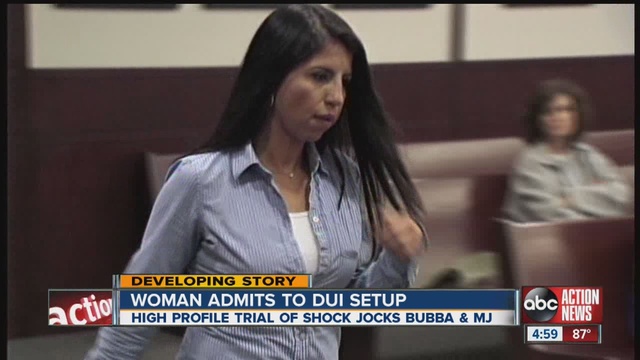
Stephen Diaco, Robert Adams and Adam Filthaut were found to have “maliciously” set up the drunken-driving arrest of their opposing counsel in a  high-profile defamation trial, and Judge W. Douglas Baird,  the referee in their legal ethics case,  wrote  that Stephen Diaco, Robert Adams and Adam Filthaut should lose their licenses permanently under the legal ethics standards of the Florida Bar.

In 2013, C. Philip Campbell was representing radio shock jock Todd “MJ” Schnitt in his slander suit against another DJ, “Bubba the Love Sponge” Clem. Clem was represented by the Adams and Diaco law firm. Campbell  left court and went to Malio’s Steakhouse in downtown Tampa, near his home and office. While Campbell was at the eatery, he was spotted by Melissa Personius, a young paralegal who worked for Adams and Diaco.

According to testimony, Personius called her boss, Adams, to report that Campbell was in the restaurant. Then Personius sat next to Campbell and the two bought each other drinks. As the night proceeded, Personius periodically relayed information to Adams. Adams then contacted Diaco and Diaco constacted Filthaut to agree upon next steps. The key was that Filthaut was friends with Sgt. Raymond Fernandez, who was then head of the Tampa police DUI unit, thus was able to sic  the DUI unit on the unsuspecting opposing counsel, who was in the process of being plied with liquor by Adams and Diaco’s attractive paralegal.

When it was time to for the targeted lawyer to leave, Campbell told Personius that she was too tipsy to drive and offered to call her a cab. Personius protested that she didn’t want to leave her car at the restaurant overnight and asked Campbell  if he would move the car for her. “Of course,” he said, nice guy that he is. As Campbell drove her vehicle up the street, he made an illegal turn and was pulled over by Fernandez officers, who were lying in wait. He was arrested and charged with DUI. Continue reading

Here’s A First: Kansas Suspends A Lawyer For Facebook Bullying

It's unethical for a lawyer to play a sad violin over Facebook??? Why yes, it is!

It’s unethical for a lawyer to play a sad violin over Facebook???  Why yes, it is!

Eric Michael Gamble was representing a biological father opposed to the adoption of his daughter, which had been approved by the 18-year-old mother.

After Gamble deposed the young woman, he messaged her on Facebook in a shamelessly manipulative fashion, saying…

‘I wish to offer you some reasons why you should stand up and fight for your daughter. As you know, I am the attorney for [the biological father]. We held your deposition in my office. I wanted to give you the chance to make things right. This may be your last opportunity to be a mom for [the baby]. As I told you after your deposition in my office, it is not too late. You still have a wonderful opportunity to have a real relationship with your daughter if you so choose. I have attached a document for you to consider signing and bringing to court or to my office. It is a revocation of your consent to adopt. If you sign this document there is a very good chance that you will be able to call [the baby] your own and [the baby] will call you her mom. I can’t begin to explain how beautiful and wonderful parenthood is. I have a little girl myself and she is my world just like you are your dad’s world. [The baby] deserves to know her parents. She deserves to know that you love her and care for her as well. Do not let this opportunity pass you by because you will live with this decision the rest of your life and [the baby] will know someday what happened. [The adoptive parents] do not legally have to ever let you see her again after court (although they are probably trying to convince you otherwise with the idea of an ‘open adoption’). The reason why you don’t know about the trial was because they don’t want you there because that doesn’t help [the adoptive parents] case. This is your time to get rid of the guilt and standup and do what is right and what [the baby] deserves. She deserves to have her parents love and care for her. She deserves to know her grandparents and extended family. If she’s adopted, she won’t have that chance. [The biological father] wants to be her dad and to love her. She deserves that. I urge you to print, sign, and notarize this document and bring it to my office before court. Trial is June 27, 2013, at 9:00 a.m. at the Johnson County Courthouse, Division 15. I hope to see you and your father there.’

What’s wrong with this? The legal ethics rules protect unrepresented parties in a matter from exactly this sort of pressure. Rule 4.3, in Kansas and elsewhere, prohibits a lawyer from giving advice to adversaries of his or her client, which statements like “This is your time to get rid of the guilt and standup and do what is right and what [the baby] deserves” clearly are. The rules also require lawyers to treat all participants in the justice system with fairness and respect. That message constitutes neither. Rule 4.4 says that “In representing a client, a lawyer shall not use means that have no substantial purpose other than to embarrass, delay, or burden a third person.” Gamble has a defense, of course: his substantial purpose was to have the adoption dropped like his client wanted, but since he wasn’t supposed to be talking to her anyway (other than to advise her to get a lawyer), that wasn’t going to fly. Rule 8.4, meanwhile, says that a lawyer must not “engage in conduct that is prejudicial to the administration of justice.”

After he lost the case, Gamble reported himself for the Rule 4.3 violation. This is usually a good tactic to encourage lenient treatment, but in this case, it didn’t work. In suspending Gamble for six months, the Kansas Supreme Court seemed to invoke all three of the violated rules, as it wrote,

“…As the hearing panel noted, respondent “attempted to manipulate the biological mother and, as a result, interfered with justice.” Respondent’s conduct “amounted to emotional blackmail” of an unrepresented 18-year-old who was dealing with a process that was already “’emotionally exhausting.'” His “electronic message was designed to embarrass, burden, and create guilt in the mind of the biological mother.” These “bullying tactics directly reflect on [respondent’s] fitness to practice law as an attorney.” Consequently, we hold that the respondent should be suspended for a period of 6 months. A minority of the court would impose a longer period of suspension. We unanimously order a reinstatement hearing under Rule 219.”

And the social media claims another victim.

Addendum: I was remiss, in posting this, not noting that the underlying issue in the lawsuit is a far more serious and complex ethical and legal one than the topic of this post: the matter of unwed mothers putting their new borns up for adoption without the father’s consent or participation. That has been a battle royale on Ethics Alarms twice, and you can review it here.

_________________________

Pointer: ABA Journal

Facts: Legal Profession Blog