Taking A Stand On Privacy, As Ethics Alarms Go Silent

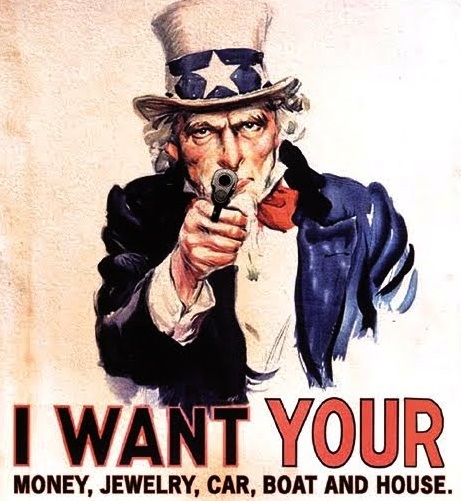
"Oh, all right---as long as I get that job."

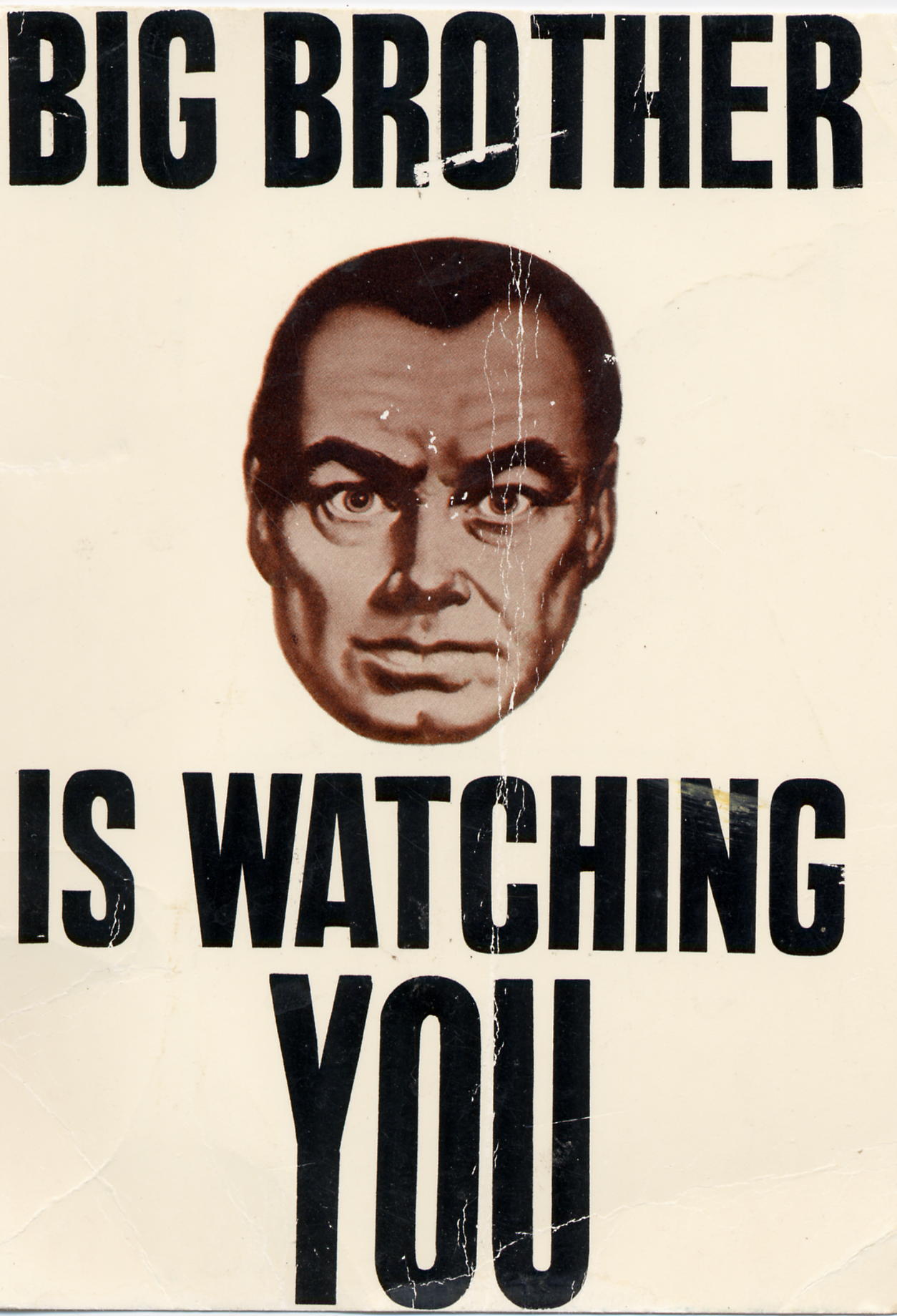
The cultural consensus on the boundaries of personal privacy are eroding more quickly than I imagined. There are a lot of reasons for this: the intrusions of technology, increased government intrusiveness as part of anti-terror measures, utilitarian calculations that conclude that privacy should be sacrificed for supposedly more worthy objectives, like preventing bullying, or discouraging sexism and anti-gay attitudes. Whatever the reasons, it is crucial that society puts the brakes on, hard, or George Orwell’s nightmare will arrive remarkably intact, just a few decades late.

A stunning report on the MSNBC blog Red Tape reveals that some state agencies are routinely requiring job applicants, as a condition of employment, to provide full access to their social networking accounts so their otherwise private communications can be monitored. Equally disturbing, college athletes at many colleges are being required to “friend” a coach or other university personnel, who can keep tabs on what the student is posting. From the University of North Carolina handbook: Continue reading

The Civil Forfeiture Outrage: American Government At Its Worst, So Naturally We Ignore It

Do progressives and conservatives have the courage to confront the illusion-shattering outrage of civil asset forfeiture in America? Not so far they haven’t. That shouldn’t be too surprising.

There are some things our governments do that are so frightening, wrong and un-American that we tend to look right by them—ignore them, pretend they aren’t happening, focus on other things—because their implications are too confounding to deal with. For fans of big government, who look to central authority to micro-manage our economy, distribute our resources, protect us from every threat and isolate us from the consequences (and often the benefits) of human nature, the fact that government power corrupts as surely as any power is an inconvenient (and undeniable) truth that threatens the foundation of their ideology. How irrational is it to place more responsibility on the government if we can’t trust the government, because we can’t trust the inevitably flawed and conflicted individuals who run it?

The willful blindness is no less insidious with conservatives, whose core belief is the inherent goodness of the American system and way of life, as defined by our founding documents. Accepting that the largest and oldest democracy on earth sometimes targets and plots against law-abiding citizens means accepting the possibility that the system itself doesn’t work, and that its supposedly sacred ideals—life, liberty, and the pursuit of happiness—are a cynical lie. Aiding and abetting the blindness is the traditional media, which is substantially populated by self-important, inadequately-educated, ethically-shaky pseudo-professionals who believe their duty to objectively tell the public what it needs to know should be tempered by what they believe will persuade members of the public to adopt the “right” views, and, of course, by what will pull their attention away from the competition. Better to have features about Michelle Obama’s healthy eating crusade than to tell Americans about government wrong-doing, especially when the journalists support the party in power.

As a result of this toxic mix of bias, self-interest, self-delusion and incompetence, many of the most illuminating examples of how far America can go wrong can take a long, long time to enter into public consciousness. A recent example is insider trading by members of Congress, which had been well-documented for a decade before a “60 Minutes” report combined with the Occupy protest visibility and the widespread distrust of Wall Street suddenly made it a significant public concern. But other equally important issues, like the abuse of U.S. convicts, including the tolerance of prison rape, haven’t broken through the willful blindness yet.

Neither has civil asset forfeiture, despite the efforts of libertarian activists, publications like Reason, websites like Popehat, and organizations like ACLU and  The Institute for Justice, a libertarian, human rights public interest law firm that I have been negligent in not plugging earlier. (I apologize.) Right now, the Institute is going to court in a Massachusetts civil forfeiture case, United States v. 434 Main Street, Tewksbury, Mass, that serves as an excellent introduction to the sinister nature of this institutionalized abuse of power. Here’s the story, from the Institute’s website: Continue reading

Teacher Alert: Students Are Not Your Trained Monkeys!

I really, really hate this.

You see, the Hitler Youth was BAD indoctrination and manipulation of children. Forcing students to protest budget cuts is GOOD indoctrination. Understand, students? .

Third through fifth graders at an elementary school in Michigan’s Walled Lake Consolidated School District were assigned by at least one teacher this week to write letters to Gov. Rick Snyder protesting his budget cuts. Students were told the best letters would be forwarded to the governor. According to one parent,  teachers prepped the students with explanations of the cuts—from the teachers’ perspective only, of course. Students also were asked to speak in front of their classmates about why they didn’t like the budget cuts, as if they could have any real understanding of the issue.

Teachers are engaging in gross misconduct and abuse of  power when they use children they have been entrusted to teach  to further their personal, political and economic agendas. This isn’t just indoctrination; it is forced labor and exploitation. The school board has apologized—wonderful. Now when will those teachers be sent packing? My kids and your kids are not trained monkeys to be programmed and manipulated into unwitting political combatants. These teachers are better than the child molesters, but not by much.

When, if ever, the deteriorating education profession agrees on a serious and comprehensive ethics code, it had better include a provision that prohibits this outrageous conduct in the strongest terms.

The Susan G. Komen Foundation-Planned Parenthood Ethics Train Wreck

Unlike the 26 U.S. Senators who are unethically abusing their positions by presuming to demand that an independent non profit organization expend its funds according to their interests, I am not going to tell the board of the Susan G. Komen Foundation how to pursue its mission…because as with the Senators, it is none of my business. Ethics is my business, and the full-blown ethics train wreck surrounding the Foundation’s decision to end its substantial financial support of Planned Parenthood has been created by dishonesty, misrepresentation and a lack of fairness from all directions.

Here are some unpopular ethics truths in this fiasco. Continue reading

Incomprehensible Nevada Justice For A Sexual Predator

Pop quiz: Can you guess the sentence for this criminal?

Hey! Let's show some compassion for these sexual predators, people!

Bethyl Shepherd, a 35-year old high school teacher,was

  • convicted of having various forms of sexual relations with seven of her male students. In addition…
  • The boys ranged were as young as 15.

She got 60 days in jail, with the rest suspended.

I detect in the country a progressive deterioration of rational attitudes toward official punishment, and this case is an unnerving example. The news story makes it clear that everyone, including prosecutors and the parents of the boys, wanted leniency for Shepherd, and no jail time. The judge rejected their misguided pleas, but just barely.

Why so little punishment? Well, this is Nevada, where the attitude toward dubious sexual relationships is uniquely tolerant. Nevertheless, Shepherd is a sexual predator who exploited the trust of students and their parents for her own sexual gratification. This was not one foolish teacher-student crush, as in other cases that have sent teachers like Mary Kay Le Tourneau into prison for long periods. It appears that much of the sympathy for Shepherd stemmed from defense testimony that she was bi-polar and that this affected her judgment (let’s see how far Jerry Sandusky gets with that strategy) and the fact that her life has spun out of control as a result of her arrest, as she has lost her job, her career, her husband, her children, and has had to sell her car. Continue reading

Yuri’s Tweets, Flawed Analogies and the School’s Defenders

[Why is it that when I’m traveling and stuck in airports where the supposedly free WiFi doesn’t work and on airplanes that can’t keep on schedule, some post that I assumed was fairly straightforward turns into the Battle of Antietam? I apologize to the various commenter’s whose work product languished waiting for moderation—I just didn’t have the chance. This odyssey ends tonight; I apologize for slowing things down. On the other hand, it’s good to know that my presence is not required for there to be lively and interesting discussions here…thanks, everyone. Good work.]

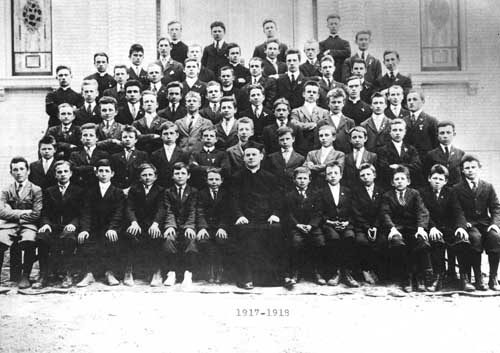
Don Bosco Prep High School, Class of 1917-1918

That is not to say that sending gross, obscene, or abusive tweets is exemplary conduct; obviously it is not. I have concluded, however, that the proper and ethical use of social media is something that people, including minors, have to learn for themselves by trial, error, research, observing the mistakes and experiences of others, making dumb mistakes and suffering because of them.  Parents and schools, as well as the popular media, have roles to play by giving advice and calling attention to cautionary tales, but heavy-handed attempts to manage social media conduct attempted by authority figures who, as a general rule, neither use nor understand what they are attempting to regulate are both irresponsible and doomed to failure. Like it or not, social media is a primary, and growing, means of communication and interaction in American society, and students are wise….that’s right, wise...to learn how to use it. I was just speaking to a room full of lawyers, and asked them how many used Twitter. The answer: none. But their clients use Twitter, and their client’s adversaries use it, and certainly their children. Their bar associations are making rules about what these lawyers and judges should and shouldn’t be able to do on social media, and most of those bar committee members don’t use Twitter either.As a result, the various jurisdictions have inconsistent rules, based on a lack of knowledge, that are already archaic.

It is fine and responsible for any adult to try to warn a young person that comments on social media need to be considered carefully, that they have a reach far beyond any intended audience and are essentially broadcasts, and that messages or photos can reach people who they hurt or upset, or cause to have a poor opinion of the sender. Ultimately, however, the pioneers in this new frontier of personal expression and mass communication are going to have to learn their own lessons, and better that they learn them now than when they are members of Congress. All punishing students for their tweets teaches them is that people with authority abuse it, and that adults just don’t understand. Because, for the most part, they don’t.

Now the analogies and comparisons:

Public schools vs. Private schools: I gather that the theory here is that if a student voluntarily attends a private school, the student has voluntarily submitted to whatever the school regards as proper discipline, whereas public schools, since they are mandatory and creatures of the government, are constrained by the Constitution. I think I may have encouraged this by a careless reference to the ACLU, which was, of course, a mistake (and I have removed it.) This is ethics, not Constitutional law, and the values are autonomy, fairness, respect, privacy and abuse of power and authority, not Freedom of Speech. I have dealt with several private schools and one Catholic school, and none of them suggested in their printed materials or regulations that they reserved the right to punish my child for what he said, wrote, or communicated during non-school hours, or when he wasn’t physically on school grounds. Neither does Don Bosco, which states as its “philosophy”:

“Don Bosco Prep educates young men so that, through a process of self discovery, each student will come to recognize and acknowledge his talents and limitations, while pursuing academic, athletic, artistic and personal excellence.

“Mindful of both our role and responsibility as a Salesian college prep school, we respect each student as a unique individual. Through active presence in his life, we promote a joyful spirit, intellectual curiosity, self-esteem and emotional maturity. We encourage the development of character and personal responsibility, love for one’s fellow human beings, a concern for the environment and an active commitment to social justice, all of which serve as the cornerstone of each student’s spiritual growth.”

I take none of that, including references to being “an active presence” in a student’s life, “promoting” emotional maturity, and “encouraging” development of character to mean “we can punish your child for absolutely anything he does or says that we disapprove of, no matter where or when it occurs.” It, the school, does all of the things relating to its philosophy in the school, based on the student’s activities and interactions in the school. Any other reading is giving a group of strangers whose biases, background and motivations I can only guess at a blank check to manipulate a child’s life, thoughts and personal activities.

When one teacher from a private school called me to tell me that she felt it was cruel of my son to exclude a classmate whom he did not like from his birthday party, I told her that it was none of her business, and filed a complaint with the school.. Private school does not mean “we can meddle in your child’s private–as opposed to school—activities.

Catholic vs. Secular: All schools should teach character; it happens that Catholic schools do it with more fervor, but that gives them neither a greater obligation nor additional authority. Schools teach good conduct and civility by insisting on appropriate conduct and deportment in school. Are people really prepared to argue that a Catholic school can justify punishing its students for not doing household chores, not washing their hands after using the bathroom in their homes, being cruel to a younger sibling or being disrespectful to a parent? Not only is personal social networking use as unrelated to the school  as any of these, it is also far less significant. How much of a blank check do we want school administrators to have? The right answer to that is that they shouldn’t have a blank check at all, and being a Catholic school changes nothing.

High schools vs. Military Academies: This is just a bad analogy. The student at a military academy has no personal life, and has no privacy. The academy is in loco parentis; the student lives there; authority is total. There is an honor code and a code of conduct, and it applies to everything a student does, including communications. That’s the military. That’s not high school.

High Schools vs. College: Several commenters have referenced the incident from last March when Brigham Young University suspended a star basketball player for having pre-marital sex. Brigham Young is famous for its strict and far-reaching conduct code, which bans drinking, pre-marital sex and many other activities that are virtually courses at other schools. If a student agrees to attend B.Y.U., the student has also agreed to certain conditions unique to the university. Should a more typical college be applauded for suspending a student who has sex with his high school girl friend over Christmas break, in his parents’ home? No; this is none of a college’s business, and attempting to extend its authority beyond the campus and even over state lines in such a fashion is intolerable. If Yuri Wright and his parents signed a document promising that Yuri would never send an offensive tweet during his years at the school, I withdraw my condemnation of Don Bosco’s punishment.

High schools vs. the Workplace: It is true that if an employee engages in conduct outside of work that embarrasses or reflects badly on an employer, ot that interferes with the employee’s ability to do his or her job, the employer is behaving ethically if it chooses to terminate the employee. It is not ethical for an employer to terminate an employee for any private conduct it happens to disapprove of, however. It can’t tell me that I can’t drink or smoke or have sex with men in my own home. It  better not tell me that I can’t vote for Ron Paul or root for the Red Sox, either. The Naked Teacher Principle applies, of course: if I’m a Coca-Cola VP and a Facebook picture shows me chugging Pepsi, that image could undermine my effectiveness at work, and Coke can can me; it’s ethical. If I write an ethics columns for a newspaper and I am caught in an adulterous affair with Marianne Gingrich, the newspaper is only being responsible to fire its unethical, untrustworthy ethicist. None of this applies to Yuri’s tweets. They don’t reflect on the school, or shouldn’t, because the school shouldn’t have any control over his personal communications. They  don’t interfere with his studies, or make him a worse football player.

Expression vs. Conduct: Tweets aren’t conduct. Even if I accept the proposition that a school may, in extreme situations, have some legitimate role in attempting to control student conduct outside of school (and I’m not sure I do), allowing a school to punish a student for the content of his words, uttered or written away from school, is a slippery slope with no braking. If sexually and racially objectionable tweets can get a student expelled, why not tweets critical of President Obama, or cheering on Newt Gingrich? Does Don Bosco’s commitment to “social justice” mean that Yuri can’t tweet that Occupy Wall Street is a crock?
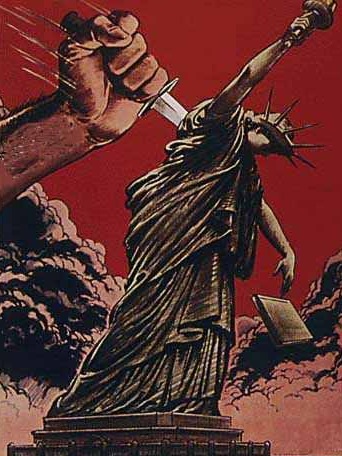
Attention Schools: You Do Not Own Your Students

This must stop.

Yuri? Your school just called; they want slightly more understated smile from you in the future. Or else.

Yuri Wright, a top ranked high school football player who is being sought by schools in the Big Ten, Pac-12, ACC, SEC and Big East, was expelled from Don Bosco Prep High School in Ramsey, N.J.for sending sexually graphic and racial Twitter posts to his more than 1,600 followers. The action jeopardizes his chances of getting a big-time football scholarship. Continue reading

Please Kill My Dog

“The Ethicist,” whom I have not harassed for a while, a.k.a Ariel Kaminer, handles this week an odd query from a woman who has been asked by an elderly friend to pledge to euthanize her dog after she dies. Kaminer, as she often does, makes the issue more complicated than it is and muddles things by implying some kind of inconsistency on the part of pet owners who find the request unethical but who will dine on cooked animal flesh this evening. She even had to consult Peter Singer, the controversial Princeton ethicist, about whether an animal has a “right to life.”

Every living thing has a right to life, and also a right to live, which is why eating other animals as humans have evolved to do is not incontrovertibly  unethical. Killing an animal just because you can, or because it makes you happy, or because you have convinced yourself that it wants to die when in fact it doesn’t, however, is incontrovertibly unethical. Continue reading

Politics in Elementary School: Unethical Always

Believe it or not, Yip Harburg is only 7 years old in this photo...

Third graders at Woodbrook Elementary School in Albemarle County, Virginia recently performed a song called “Part of the 99,” proclaiming their solidarity with the “Occupy” movement’s zeitgeist.  The song was part of a program sponsored by “Kid Pan Alley,” a children’s arts organization. The children worked with a facilitator to develop the theme and lyrics for a song, and that facilitator, who so far has not been identified, obviously, and I mean that in the “do these people really think we’re all idiots?” sense of the word, manipulated the process to produce an “Occupied Youth” moment. A blog got wind of it, and the criticism, richly deserved, erupted on the internet.

Incredibly, the school denies that any indoctrination went on, and claims that the children came up with the lyrics and theme on their own. As “who are you going to believe, me or your own eyes?” lies go, this one is superb. Here are the lyrics those third graders supposedly came up with by themselves: Continue reading

Ethics Quiz, Killer Pizza Edition: Can School “No-Tolerance” Be Dumber Than THIS?

I grant you: THIS is a scary pizza. What Nick Taylor had, however, was not.

Nicholas Taylor is 10-years-old and attends David Youree Elementary School in Smyrna, Tenn., 30 miles southeast of Nashville. He is currently serving a week-long sentence at “the quiet table” during lunch time and has had to endure gun safety lectures. What was his terrible offense?

He “threatened” other students at his lunch table with a piece of pizza that was shaped vaguely like a gun because of the bites that had been taken out of it. Yes, some pathetic, parent and culture-warped weenie of a fellow student complained to a teacher that Nick was making “threatening gestures” with his partially-eaten pizza-gun.  Taylor denied it. That meant he was lying. More punishment.

Your Ethics Quiz Question—and you better not get this one wrong!—is : Can political correctness “no-tolerance” idiocy in the schools get any worse than punishing a child for the shape of his pizza slice? Continue reading