Today’s Unpleasant Ethics Question: How Can We Justify Trusting Today’s Scholars and Academics To Train Our Rising Generations?

I want to state at the outset that the ridiculous research paper I’m about to make fun of is only one horrifying example of institutional insanity, and it would be unfair to use it to characterize the entire higher education complex. However, I do believe that a healthy and functioning scholarly sector must have a way to reject, condemn and shun such abuses of position and authority.

I’ll have more to say on this matter after revealing the head-exploding product of University of San Diego professors Diane Marie Keeling and Bethany O’Shea.

These scholars have published a study titled “Conceptualizing Black Humanity Through Geopoetic Intimacy and Resistance: Memory Making-with Geologic Materials” Here is the abstract:

Amplifying the importance of geologic processes in subject formation, the study asserts that geological time is important for understanding memory and memorials. In the Equal Justice Initiative’s Community Remembrance Projects and the National Memorial for Peace and Justice, materials of geologic composition like soil, and those made from earth materials, such as steel and bricks, are employed to trope the bodies of lynching victims and weather racist geologic formations of subjecthood. The holding and eroding of violent memories crafts an intimate and resistant geopoetics of Black humanity.

Oh. What???
Continue reading

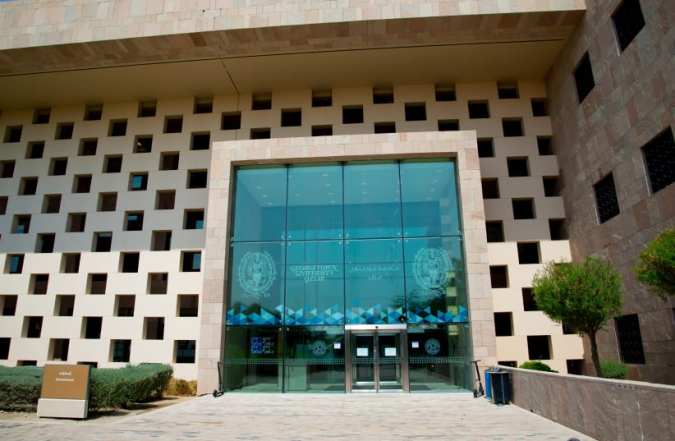
American Antisemitism Sunday on Ethics Alarms Kicks Off With This Ethics Quiz: Georgetown’s Qatar Conference

The Jerusalem Post reports in part:

[Georgetown University] is hosting a Hamas-affiliated media personality as a keynote speaker at a conference, in addition to other officials from designated terror organizations…..titled “Reimagining Palestine,” [concluding today] in Qatar. One of the main speakers was Wadah Khanfar, a former official at Qatar’s mouthpiece Al Jazeera whose relationship with Hamas has been well-documented throughout the years. Khanfar was named as an early leader of Hamas’s office in Sudan by multiple Arabic-speaking outlets, including the Palestinian Raya Media Network, the Yemen-based Mareb Press, and the British Al-Arab website. Likewise, according to Mohamed Fahmy, a former Al Jazeera English Egypt bureau chief, the Muslim Brotherhood described Khanfar in 2007 as “one of the most prominent leaders in the Hamas office in Sudan.” Khanfar was also reportedly connected to the al-Aqsa Foundation in South Africa, which the US Treasury Department designated “a critical part of Hamas terrorist support infrastructure.” ….Other speakers at the conference included Shawan Jabarin, who is closely affiliated with the Popular Front for the Liberation of Palestine, another designated terror organization, and Issam Younis, who in the past supported Hamas’s oppressive rule in Gaza…

The Washington Free Beacon, the conservative publication, adds (because the mainstream news media doesn’t think this is newsworthy]:

The speakers at the “Reimagining Palestine” event will discuss the “ideological shifts” of Zionism, “art as resistance,” and “anti-colonial struggles,” and will engage in “dialogue that challenges the status quo,” according to the Doha event’s website.

Your Ethics Alarms Ethics Quiz of the Day is….

Is it ethical for an American institution of higher learning to do this in the midst of the Israel-Hamas War?

Continue reading

The Rest of the Story: Hamline Has To Pay, But It’s Not Enough

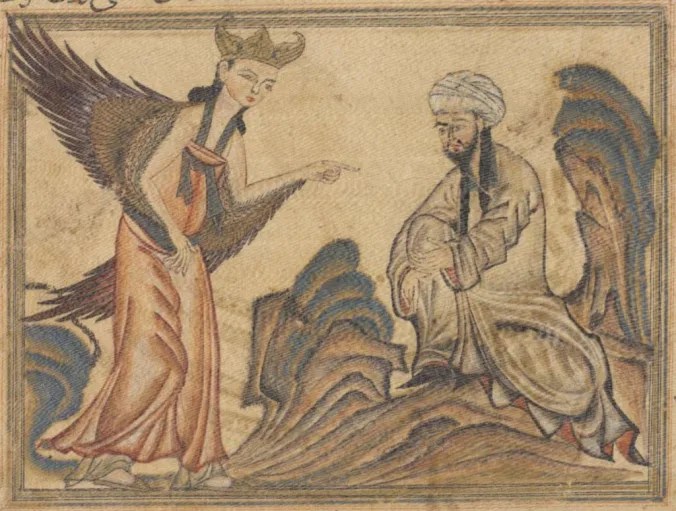
One of the most nauseating displays of grovelling to student bullies and censors was the topic of this post at Ethics Alarms in January of 2023. Erika López Prater, an adjunct professor of art history at Hamline University in St. Paul, Minnesota, was going to discuss a famous 14th-century painting of Islam’s founder. Knowing that Islam forbids depictions of the Prophet Muhammad, she included a warning in her course syllabus that images of the Prophet Muhammad would be shown and studied in the course. Muslim students did not have to take the course. Students with concerns were told to to contact her, but none did. She again alerted students, at the start of the class, soany devout Islamic student could leave. No student left. But after Dr. López Prater showed the painting, a senior taking the course and who had remained for the class complained to the administration, and Muslim students who were not even in the course argued that the class was an attack on their religion.

So Hamline fired the professor. Emails to students and faculty agreed that she had engaged in “Islamophobic” conduct, and Hamline’s president at the time, Fayneese S. Miller, even issued an email saying that respect for the Muslim students “should have superseded academic freedom.”

Continue reading

Now My OTHER Alma Mater Has an Anti-Semitism Problem…

This story raises the question of when pure anti-Semitism breaches the protection of academic freedom, or if it ever does.

Georgetown Law Center maintains an online “Scholarly Commons,” a portal where faculty members can post law journal articles, completed or in progress, and other papers and materials. Professor Lama Abu-Odeh, who teaches two courses at GULC on “conservative legal thought,” posted “working papers” to the portal with no academic citations, which presumably would be added if the papers ever develop into scholarly treatises. Their subject is what Abu-Odeh calls the “genocide in Gaza,” and her rhetoric frequently crosses into classic anti-Semite tropes

“Gaza Shoah: Zionism’s Efficacious Role as Ideological Supplement in the US,” for example, uses the familiar anti-Israel slur that it is “an apartheid state.” The paper also endorses “resistance to the Zionist project,” excusing Hamas, and even denies that Hamas terrorists raped Israelis during the October 7 terrorist attack. Another anti-Semitic trope that Professor Abud-Odeh embraces is the claim that Jews manipulate the American media and bribe U.S. politicians. “It is true that the American political class, Democrats and Republicans alike, is on AIPAC’s dole,” Abu-Odeh writes. “It is also true that legacy media is dominated by Zionist Jews.”

Continue reading

UPenn’s Anti-Semitic Lecturer

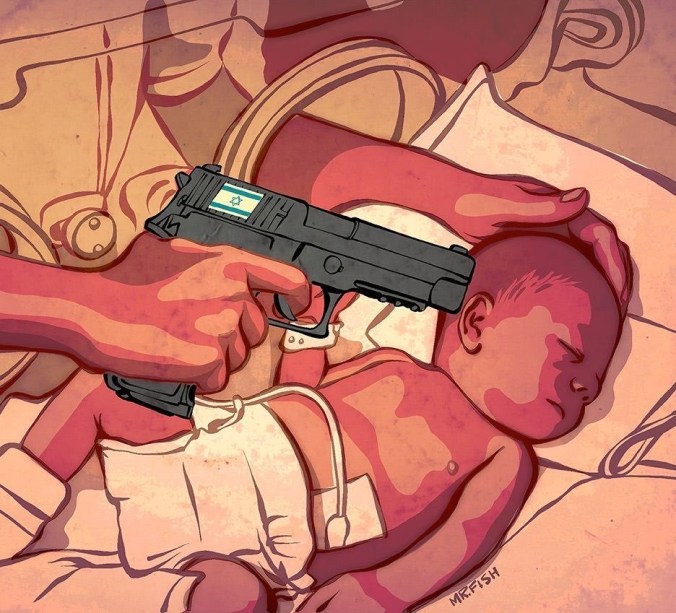
That cartoon above, showing apparent Zionists (as in “Jews”) sipping Gazan blood like wine, is probably the most outrageous of political cartoonist Dwayne Booth’s works…I don’t know, maybe this one is..

All a matter of taste, I guess. The ethics question is, now what, if anything?

Booth is a lecturer at the University of Pennsylvania’s Annenberg School of Communication having joined the school as an adjunct faculty member in 2015. Political cartooning is certainly a valid courss of study. He currently teaches two classes, but since Hamas’s October 7 terror attack, his off-campus cartooning has become especially controversial.

Booth publishes political cartoons under the pen name “Mr. Fish.” One of his classes teaches students the political cartooning art by exploring “the purpose and significance of image-based communication as an unparalleled propagator of both noble and nefarious ideas,” according to Penn’s website. “Work presented will be chosen for its unique ability to demonstrate the inflammatory effect of weaponized visual jokes, uncensored commentary, and critical thinking on a society so often perplexed by artistic free expression and radicalized creative candor.”

You can see more of Booth’s anti-Israel cartoons here. As far as I can determine, there is not sufficient basis for disciplining him or ending his association with the school. Political cartooning, though I personally view it as a crude, over-rated and deceitful form of editorial, is by nature extreme in device and approach. Booth’s own political opinions and obvious anger at Israel that he expresses as “Mr. Fish” or on social media are not relevant to his value teaching the political cartooning craft, and would seem to be squarely within the margins of both academic freedom and the first Amendment, provided that his commentary in class and on campus are not directed at Jewish students.

However, if a school, like the University of Pennsylvania, decided that, at a time when there are unusual tensions around the Gaza-Israel conflict its lecturer should cool his public fervor or consider another teaching position elsewhere, that would be a fully ethically defensible position. He’s right at the line now.

He might even have crossed it.

“Curmie’s Conjectures” #3: Confucius and the Fourth Circuit

by Curmie

Twentysomething years ago, a few months after completing my PhD, I got a phone call from my mentor in Asian theatre, who, upon learning job search wasn’t going as well as I might have hoped, asked if I wanted to teach a couple sections of the university’s Eastern Civilizations course.  I asked if I was really qualified to teach such a course.  His response: “You know something, and you can read.” 

Based largely on his recommendation, I got an interview for the position.  I made no attempt to conceal my ignorance of a lot of what I’d be teaching.  But the department had struggled with grad students who had lost control of their classrooms, and I’d taught full-time for ten years before entering the doctoral program; I got the job.  The head of the Eastern Civ program closed the interview with “There are some books in my office you’ll want to read before you start.”  I knew something, and I could read.

That’s relevant to my consideration of the recent ruling of the Fourth Circuit Court of Appeals in Porter v. Board of Trustees of North Carolina State University, in which a tenured faculty member claimed to have been punished for arguing against certain initiatives undertaken by his department.  I’m no lawyer, so there’s some legalese I’m not so sure about, and I have no interest in chasing down all the precedents cited by either the majority or the dissent to see if they really say what these judges say they say.  But I know something and I can read. 

More to the point, one of the texts I taught in that Eastern Civ course was Confucius’s Analects, which I had to get to know a lot better than I did previously in order to teach it to someone else.  One of the central tenets of Confucian thought was his argument against having too many laws, as no one could possibly predict all the various special circumstances surrounding every dispute.  Context matters; timing matters; motives matter.  Confucius’s solution was to turn everything over to a wise counselor (like him) who would weigh all the relevant elements on a case by case basis.  That’s not the way our justice system works, nor would it be practical, but it’s easy to see its appeal… in theory, at least.

Significantly, Confucius’s reservations about laws’ inability to anticipate all the possible combinations of circumstances are the first cousin if not the sibling of what Jack calls the “ethics incompleteness principle” which asserts that there “are always anomalies on the periphery of every normative system, no matter how sound or well articulated.” 

Continue reading

“Curmie’s Conjectures”: Another Case from Yale, This One with a Twist

by Curmie

I had a post about half-written, talking about the fact that SCOTUS justices are nominated and confirmed (or not) primarily for their adherence to certain political principles rather than for their integrity, judgment, legal expertise, or temperament. 

‘Twas not ever thus.  In my lifetime, five SCOTUS Justices were confirmed by a voice vote and three others received all 100% of the votes. Another seven received at least 80% of the votes.  But of the current members of SCOTUS, only Chief Justice Roberts received majority support from Senators of both parties… and that was by a single vote.  Justice Thomas, who’s been around the longest, is the only currently-serving member of the Supreme Court to have been confirmed by a Senate controlled by the party not in the White House at the time.

This, I was about to argue, makes the process depressingly predictable: liberals over here, conservatives over there, with Roberts as the closest thing to an unreliable vote for “his side.”  I was getting around to talking about the allegations against Justice Alito: did he really do something wrong, or is furor mostly partisan in nature?  Answer to both questions: yes. 

But then, despite the predictable split in the two Affirmative Action cases, we also see Gorsuch writing a scathing dissent on Arizona v. Navajo Nation, Barrett and Kavanaugh voting with the liberal bloc on Moore v. Harper, and Jack saying pretty much what I would have said about the Alito case.  I may want to return to the general outline of my half-written essay at some point in the future… but the timing isn’t right, now.

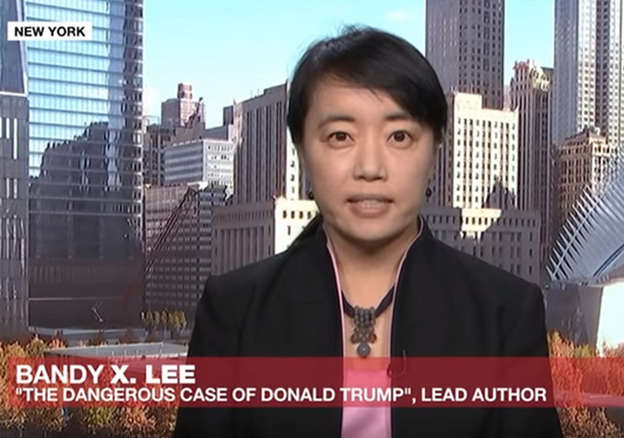
So let me go off in a different direction and talk about a faculty member dismissed from an elite university for her political statements.  The headline on the FIRE article begins “Yale shreds faculty rights to rid itself of professor…”  Certainly we’ve seen a fair amount of that kind of fare here on Ethics Alarms.  What’s different is what follows in that title: “…who called Trump mentally unstable.”  Well, that sure goes against the whole “universities are cesspools of Woke indoctrination” mantra, doesn’t it?

Continue reading

Here’s Controversial Ethics Position: Universities Shouldn’t Employ Professors Who Advocate Murder

In 2020, Prof Erik Loomis, a far, far Left radical (not that there’s anything wrong with that) who teaches at the University of Rhode Island, was discussing the murder of Aaron “Jay” Danielson, a member of the right-wing group Patriot Prayer who perished during rioting in Portland, Oregon. In a September blog post titled “Why was Michael Reinoehl killed?” (Reinoehl is the man suspected of fatally shooting Danielson; he was killed as federal authorities tried to arrest him), Loomis responded to a commenter who had limited sympathy for Reinoehl because he (probably) had shot Danielson by writing,

He killed a fascist. I see nothing wrong with it, at least from a moral perspective…tactically, that’s a different story. But you could say the same thing about John Brown.”

Continue reading

Cowardly And Unethical College Administrators…Again

The ethics of this controversy are easy. How could Hamline College administrators screw it up so badly? That’s easy too.

An adjunct professor of art history at Hamline University (in Minnesota, where strange things are always happening), Erika López Prater, knew that Islam forbids depictions of the Prophet Muhammad, so before showing a 14th-century painting of Islam’s founder, she alerted any Muslim students taking her class through her course syllabus that images the Prophet Muhammad would be shown and studied in the course. She directed students with any concerns to contact her. No student did.

Before the class in which paintings of Muhammad were about to be shown, she again alerted students in case anyone felt they needed to leave. No student left. But after Dr. López Prater showed a painting featuring the prophet, a senior in the class complained to the administration. Then Muslim students who were not in the course argued that the class was an attack on their religion. Guess what?

Hamline officials told Dr. López Prater that she was out. Emails to students and faculty pronounced the episode “Islamophobic.” Hamline’s president, Fayneese S. Miller, co-signed an email saying that respect for the Muslim students “should have superseded academic freedom.” Continue reading

I Just Signed An Open Letter. This is Why:

Last week, professors, lecturers and academics across the country began signing the “Stanford Academic Freedom Declaration.” It is an open letter that calls on universities to restore free speech, academic freedom and institutional neutrality. The open letter asks universities and professors to adopt and implement the “Chicago Trifecta” — the Chicago Principles on unilateral free speech, the Kalven report that requires institutional neutrality on political and social topics, and the Shils report, making “academic contribution the sole basis for hiring and promotion.”  It is picking up metaphorical steam: several hundred new signatures have been entered since I first saw the document last night. One of them is mine: I qualify as a former adjunct professor of legal ethics.

Stanford economist and co-author John Cochrane is the first name on the list and presumably launched the letter. He told College Fix:

The larger hope is to bring back academic freedom on campus and in the academic enterprise more generally. Only with robust academic freedom, the ability to investigate ideas and bring out uncomfortable facts, does scholarship bring about new and reliable knowledge, especially on crucial issues to our society.

Who knows if this will have any impact or persuasive power? I am dubious about the use of such protest tools, but at least this one causes no harm even if it like the lonely tree falling in a forest. Trying to ensure that the letter has no effect is, of course, the mainstream media, which so far, at least, hasn’t deemed the effort newsworthy for a week. In the meantime, several news sources have devoted space to the fact that in China, a massive flock of sheep has been walking in a circle for 12 days straight. Priorities!

I’m grateful for the opportunity to do something proactive about this problem, which I view as an existential threat to American culture and society. Boycotting the recent class reunions of my college and law school was mandatory for me but also the equivalent of Grandpa Simpson shouting at clouds. My  Harvard reunion book essay explaining my position did attract a few kudos in the mail, all of which opined that there were many other class members who felt as I do but were afraid to make their views public.

Wow. Harvard apparently has graduated a lot of weenies. But I knew that.

I’ll be circulating the letter to my friends and associates who can sign it. It’s awfully open, which mean that if someone wanted to muck it up with fake names, gag names and other graffiti, they could. Right now, I’m the last name on the list, number 1,241. It will take about a hundred times that to make a ripple, I know.

It’s worth a shot.