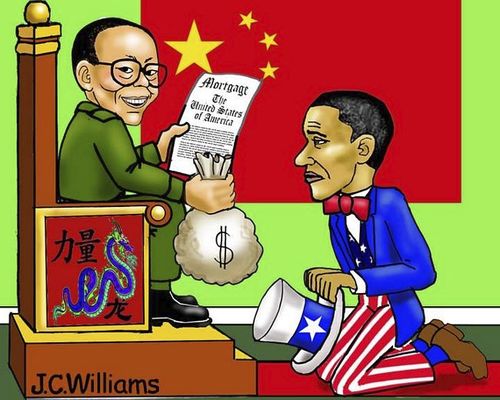
Ethics Quote of the Week: Yu Jie

“I arrived in the United States a month ago, thinking I had escaped the reach of Beijing, only to realize that the Chinese government’s shadow continues to be omnipresent. Several U.S. universities that I have contacted dare not invite me for a lecture, as they cooperate with China on many projects. If you are a scholar of Chinese studies who has criticized the Communist Party, it would be impossible for you to be involved in research projects with the Chinese-funded Confucius Institute, and you may even be denied a Chinese visa. Conversely, if you praise the Communist Party, not only would you receive ample research funding but you might also be invited to visit China and even received by high-level officials. Western academic freedom has been distorted by invisible hands.”

Yu Jie, Chinese dissident and author recently relocated to the U.S., in an op-ed column in the Washington Post, exposing how America’s dependence on China for trade and financing has not only made the nation vulnerable, but is also eroding its integrity and values.

Every budget cycle that the United States permits to expand its debt makes the nation more indebted to China, and places more power in the hands of its leaders to exert influence over American policies. Yu Jie’s disturbing article shows how our values are being undermined as well. China’s is a repressive, undemocratic and often brutal regime that the United States has foolishly allowed itself to become dependent upon. What will the consequences of this be? How can the United States lead the free world while being under the thumb of the Chinese? Corruption is inevitable. Yu Jie writes, Continue reading

Ethics Quote of the Week: GMU School of Law Dean Daniel Polsby

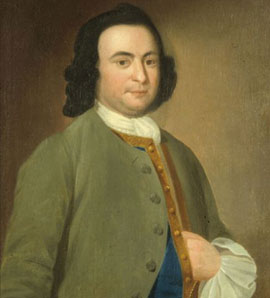
George would be proud.

“Student organizations are allocated budget by the Student Bar Association in order to allow them, among other things, to bring speakers to the law school.  Neither the law school nor the university can be taken to endorse such speakers or what they say.  Law school administration is not consulted about these invitations, nor should we be.  Sometimes speakers are invited who are known to espouse controversial points of view.  So be it.  So long as they are here, they are free to say whatever is on their mind within the bounds of law.   They cannot be silenced and they will not be.

“Just as speakers are free to speak, protesters are free to protest.  They must do so in a place and in a manner that respects the rights of speakers to speak and listeners to listen, and that is in all other ways consistent with the educational mission of the university.  Student organizations which hold contrary points of view have every right to schedule their own programs with their own speakers, and these speakers’ rights will be protected in just the same way.

“The law school will not exercise editorial control over the words of speakers invited by student organizations, nor will we take responsibility for them, nor will we endorse or condemn them.  There has to be a place in the world where controversial ideas and points of view are aired out and given space.  This is that place.”

——  Daniel D. Polsby,  Dean of George Mason University Law School, responding to calls from the Council on American-Islamic Relations for the Law School to disinvite activist Nonie Darwish, who had accepted an invitation from the campus Federalist Society and the Jewish Law Students Association to speak on campus.  Continue reading

The Widener School of Law Faculty’s Character Deficit

The Widener faculty meets to discuss its options regarding the persecution of Prof. Lawrence Connell

When we last left the ethics train wreck at the Widener University School of Law, Dean Linda Ammons had succeeded in exacting her revenge on long-time tenured professor Lawrence Connell, forcing him into a year-long suspension and demanding that he undergo psychiatric evaluation for political correctness infractions that she took as as a personal affront, despite the fact that a university inquiry cleared him. (The supposed justification for his punishment was the Catch-22 offense that he had “retaliated” against the students who had wrongfully accused him by publicly denouncing their claims.) Nothing much has changed in the interim. Connell is gone, and is in the process of suing. Widener’s reputation continues to sink, as it has abandoned academic freedom for lock-step ideological conformity; its Dean, Linda Ammons, maintains her silence about the affair despite unanimous condemnation by observers, reinforcing the conclusion that she has a vendetta against Connell, and the faculty remains mum. It is that last the commentators find most fascinating: why have none of Prof. Connell’s colleagues at the law school stood up for him? After all, the principle involved, academic freedom, is core to their profession, and the facts are straightforward. Continue reading

Ethics, Porn, and the Creepy Professor

The Ronald Ayers saga raises the intriguing, Weiner-esque ethical issue of whether a college professor being creepy is sufficient reason to fire him.

The former economics professor was fired by the University of Texas for viewing pornography on an office computer, which the University’s policies forbade. The chain of facts has the ring of Kafka: 1) a student claims he hears “sexual noises” emanating from Ayers’ office, which 2) is considered sufficient provocation (the professor denied the accusation that he was not “master of his domain” at work) for the school to search his computer, which 3) uncovers evidence that he looked at some pornographic sites, and 4) also that he searched for the term “teen,” which 5) the university deems sufficient to indicate that he was searching for child pornography, so 6) they fired him, after three decades and tenure on the faculty.

University records say Ayers at first denied the allegations that he viewed pornography, but when confronted with a printout of his computer records, admitted that it may have happened “at the end of a long work day.” Ayers later told administrators seeing the porn was for “academic research.”

Uh-huh… Continue reading

“The Strange Case of the Threatening Hypothetical”, Continued: The Verdict Is In!

The Victim

Lawrence Connell, the Widener School of Law criminal law professor placed on administrative leave for using the school Dean in a “violent scenario” to illustrate legal principles to his class, has given a revealing and clarifying interview to the National Association of Scholars website.

This section is most relevant to his current plight, and the fairness of complaints leveled against him by some of his students. It’s also about one of my favorite topics in criminal law, attempt law, which has a significant ethical component, as you will see. But the main point of interest is that includes one of the supposedly racist, sexist, threatening hypotheticals he used.

Q: Can you give me an example of a hypothetical you might have used in class, to which the students who complained might have been referring? Can you describe the context in which you would have used it? Continue reading

The Strange Case of the Threatening Hypothetical

Lawrence Connell, a tenured associate professor at Widener University School of Law in Delaware, is fond of using famous or familiar people in the hypotheticals he presents to his criminal law class.  One of his imaginary scenarios involved him as a murderer, and the school’s Dean as his victim. Now he is on administrative leave from the school, as administrators investigate  him for using “violent scenarios” that some students complained violated the school’s discrimination and harassment codes.

Widener University spokesman Dan Hanson, meanwhile, has declined to provide more details on the matter, but insists that Widener is committed to academic freedom.

Right. Continue reading