Ethics Alarms Baseball Ethics Special Report: The Boston Red Sox, Sign Stealing, Technology, And Cheating [UPDATED]

[I got the news about Major League Baseball’s announcement that the Boston Red Sox had admitted that some of the team’s employers and players had engaged in illegal sign-stealing about an hour before the Sox-Blue Jays game was scheduled. My intent was to write the post about it last night after the game. The game, however, went 19 innings and lasted 6 hours. (The Sox won, and absent this scandal, it would have been a big news story itself, one of the most important victories of the year and one that set several team records.) So the post didn’t get written, and believe it or not, I have occasional priorities and commitments that take precedent over my profit and income free ethics blog. Thus I consider the multiple e-mails and Facebook messages I have received accusing me of ducking the issue less than amusing, an unwarranted attack on my integrity. To all of those individuals, most of whom barely read the news reports, I say, “Bite me.”]

Yesterday afternoon the New York Times broke the following story, which reads in part:

Investigators for Major League Baseball have determined that the Red Sox, who are in first place in the American League East and very likely headed to the playoffs, executed a scheme to illicitly steal hand signals from opponents’ catchers in games against the second-place Yankees and other teams, according to several people briefed on the matter.

The baseball inquiry began about two weeks ago, after the Yankees’ general manager, Brian Cashman, filed a detailed complaint with the commissioner’s office that included video the Yankees shot of the Red Sox dugout during a three-game series between the two teams in Boston last month.

The Yankees, who had long been suspicious of the Red Sox’ stealing catchers’ signs in Fenway Park, contended the video showed a member of the Red Sox training staff looking at his Apple Watch in the dugout. The trainer then relayed a message to other players in the dugout, who, in turn, would signal teammates on the field about the type of pitch that was about to be thrown, according to the people familiar with the case.

Baseball investigators corroborated the Yankees’ claims based on video the commissioner’s office uses for instant replay and broadcasts, the people said. The commissioner’s office then confronted the Red Sox, who admitted that their trainers had received signals from video replay personnel and then relayed that information to Red Sox players — an operation that had been in place for at least several weeks.

As reported by ESPN, Baseball Commissioner Rob Manfred said in a statement,

“We actually do not have a rule against sign-stealing. It has been a part of the game for a very, very long time. To the extent that there was a violation of the rule here, it was a violation by one or the other [team] that involved the use of electronic equipment. It’s the electronic equipment that creates the violation. I think the rule against electronic equipment has a number of policy reasons behind it, but one of them is we don’t want to escalate attempts to figure out what a pitcher is going to throw by introducing electronics into that mix.To the extent there was a violation on either side, we are 100 percent comfortable that it’s not an ongoing issue, that if it happened, it is no longer. I think that’s important from an integrity perspective going forward.”

This is a complicated story, and part of not one complicated ethics category, but several: technology ethics, baseball ethics, cheating, and general ethics. In the interests of clarity, I’m going to cover the story in a series of short observations, each with a heading. At the end of this post, I have posted a long published essay I authored about baseball ethics within the culture of the game. Those who are not familiar with these issues, which are fascinating, might want to read that first. it is helpful background information.

Points and Observations:

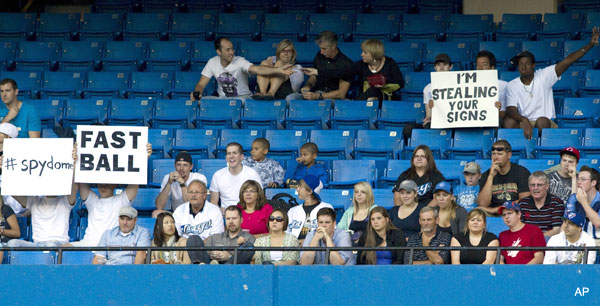
  • Traditional sign-stealing in baseball is not regarded as cheating. This seems counter intuitive because of the word “stealing.” Sign-stealing refers to teams decoding the signals given by the catcher to the pitcher (regarding what kind of pitches to throw and where ), and the coach or the dugout to a batter or baserunner (in bunt and hit-and run plays). Theoretically, knowing the other team’s signals provides an advantage, as to a batter who knows that the next pitch will be a curve rather than a fastball. Usually, signs from the catcher to the pitcher are in jeopardy when there is a runner on second base. He can see the catcher’s signs as well as the pitcher can. Catchers use finger-signs in various combinations to ask for various pitches, and position their gloves to indicate where they want the balls thrown. If the runner at second can signal to the batter what the catcher has told the pitcher to throw, the batter may have an advantage.

This is why catchers often go to the pitching mound when a runner is on second base. They change the signs. The second baseman will often join them, because it is his job to know what pitch is being thrown so he can signal (usually behind his back, using his hand) to his team’s outfielders. An outside fastball makes it unlikely that the batter will pull the ball, for example.

Sign-stealing on the field, using just eyesight and hands, is what players call “the game within the game.” Joe Girardi, the Yankee manager, said in an interview yesterday that he just assumes every team is trying to steal signs, whether they are or not. Continue reading
Ethics Quote Of The Month: Hillary Clinton In Her Upcoming Book, “What Happened”

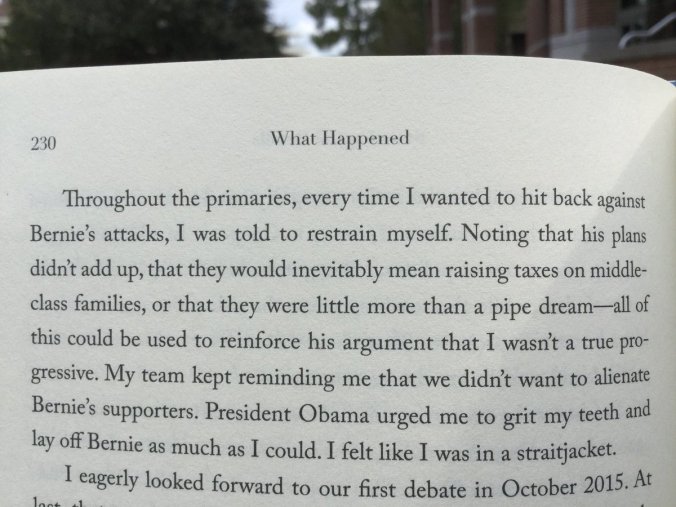
You see the quote above. This is a section of one of the excerpts being doled out to the media and public to build interest in Clinton’s latest book. In the excerpt she blames Bernie Sanders, among others, for her defeat, saying that his attacks against her during the primary caused “lasting damage” and laid the foundation for “(Donald) Trump’s ‘Crooked Hillary’ campaign.”

Observations:

1 As with her earlier excerpt about how she wishes she had acted more assertively when Donald Trump was “stalking her” during a debate, Clinton displays the opposite of leadership instincts here. Although she was the one offering herself as the leader of the free world, she whines that she was rendered powerless by the advice of others and the recommendation of President Obama. Saying that she felt that she was “in a straitjacket” is simply admitting that she was indecisive and accepted the judgment of others over her own. However, that decision was hers; she was not in a straitjacket, and she is accountable for the ultimate decision to “lay off Bernie.” She can’t credibly blame anyone else.

2. Bernie Sanders was as inoffensive and respectful as opponent as Hillary could have possible drawn for the Democratic Party nomination. His obvious reason for running was to get a national platform for his far-left, Socialist positions. He was too old, he was eccentric, and he wasn’t even a Democrat. Like Barack Obama, who also ran against Hillary believing that he had no chance, Hillary’s lack of charisma, chilly public persona and inherent untrustworthiness suddenly made Sanders’ underdog candidacy viable. Nonetheless, as Ethics Alarms discussed during the campaign, Sanders never behaved as if he was committed to winning. Most remarkably (and unforgivably for his supporters), he gave a pass to Clinton on her e-mail server scandal, saying more than once that he didn’t care about her “stupid e-mails.” Since Clinton was lying about, double-talking around, spinning and ducking the issue almost daily, this was a gift that no other serious candidate would have given her. Yet she’s blaming Bernie now for not being even less competitive.

Incredible! Continue reading

Ethics Dunce Hillary’s George Costanza Moment

In “The Comeback,” a much admired “Seinfeld” episode, George Costanza obsesses over the fact he missed what he is sure was the perfect comeback when a colleague at a staff lunch, watching him gluttonize a bowl of shrimp, quipped that “George, the Ocean called, and they’re out of shrimp!” George wishes he had said, “Yeah? Well, the jerk store called, they’re running out of you!” The problem is that much success in life is based on timing. If you miss your moment, it’s gone, and coming back later to explain that you had the perfect response and didn’t use it is trolling for sympathy, when you don’t deserve any.

Now Hillary Clinton, in her post-Presidential-run botch excuse tour, is channeling George as she muses about whether she missed the perfect comeback when, she says, Donald Trump was “invading her space” during the town meeting style debate.

In an audio clip to promote her upcoming book (above), Clinton reads the section in which she recounts her thoughts as she claims she considered telling her Republican adversary to “back up, you creep” as he roamed the stage behind her during the second presidential debate.

“My skin crawled,” Clinton reads. “It was one of those moments where you wish you could hit pause and ask everyone watching ‘well, what would you do?'” Just two days before, Clinton says, “the world heard [him] brag about groping women.” She says she decided against telling Trump to “back up, you creep, get away from me. I know you love to intimidate women, but you can’t intimidate me,” and instead gripped the microphone “extra hard.”  Now she wonders if she made the right choice.

Hey Hillary, the loser store called, and it’s out of you! Continue reading

Unethical Quote Of The Month: An NFL Wife, On The Private Facebook Fearful Spouses Of Future CTE Victims Support Group Page

“It’s scary to think about the future and the ‘what ifs’ … if it’s what he loves, I have to support it.”

What? No, you don’t!

The above anonymous quote from a feature about how 2,000 wives of past and current NFL players share their fears and console each other as the evidence mounts that their husbands are likely to spend their final years as tortured, brain-damaged victims of their sport and burdens on their families illustrates how delusional supporters of the NFL money machine have become.

It also shows, to depressing degree, how people will rationalize and justify conduct that cannot be rationally defended.

If an unmarried NFL player without family responsibilities chooses to shorten his life and cripple himself in exchange for a brief career in the limelight and a lot of money, that’s his stupid choice to make. Then the only other responsible parties are the cynical and corrupt sport that knowingly pays him to make that choice, the amoral and greedy corporations that make such cruelty worth the NFL’s while, and the ethics alarms deficient football fans who get their Sunday thrills watching young men slowly disable themselves. Continue reading

Ten Further Thoughts On The “The Taunting Girls Softball Team”

Well! I returned from my seminar to find an excellent discussion underway regarding this Morning’s Ethics Warm-up, wholly devoted to the Virginia girls softball team that was hammered mercilessly for the raised middle fingers of six teammates to send off their vanquished foes in the semi-finals. Here are some further thoughts after reading the comments:

1. There is no question that the conduct of the girls concerned the game, the sport, and the League. They were in uniform. The message directed the “up yours” gesture to the other team. This is not a case where personal expression via social media was punished by an outside authority. Ethics Alarms has been profuse in its rejections of efforts by schools to punish students for their language, ideas or other expression on platforms like Facebook and Snapchat. Those are clearly, in my view, abuses of power, parental authority and free expression. This is not like such cases in any way. If a cheerleader squad, wearing the uniforms, colors and emblems of a school, behaved like these girls, punishment by the school would be appropriate, right up to the “death sentence” of dissolving the squad.

2. Would the reaction to the photo be different if it were a boy’s team? I just don’t think so.

3. The comparison has been made to the earlier post about Matt Joyce, a major league player, being suspended by the league for a comment made to one fan during a game in a heated exchange. For the life of me, I cannot figure out what anyone would think is similar about the two episodes, the primary difference being the fact that in one case, an adult was disciplined for professional misconduct on the field of play, and in the other, children were disciplined for breaching conduct their sport and organization exists in part to teach, reinforce and convey. The punishment of the player was $60,000 in lost income for a single word, not broadcast via social media. The team was not punished except to have to play without his services for two games, but then it was not colorably a team offense by any stretch of the imagination. I don’t even want to think about what an MLB team would do to six players who, in uniform, made the same gesture the girls did to “our fans.” They might all get released. Continue reading

Ethics Hero: The Chicago Cubs Organization

This was a wonderful gesture of kindness and reconciliation. It won’t mean much to those who don’t follow baseball, and that is Reason #478,653,222 why it’s a mistake not to follow baseball.

I’ve written about the Steve Bartman fiasco several times.  I am not in the “Steve Bartman was an innocent victim of circumstance” camp, though he was a victim of moral luck. He was an  incompetent baseball fan, not paying sufficient attention to the game and interfering with it as a direct result. On the other hand, for members of the 2003 Cubs to use him as a scapegoat for their blowing a lead,  the game, and the play-offs, and for Chicago fans to hound him out of town and into hiding, was far worse than his negligence, the most disproportionate and vindictive treatment of a fan in sports history.

Here was my summary of the saga to date before the Cubs finally won the World Series after more than a century of failure:

Bartman, for those of you who have lived in a bank vault since 2003, was the hapless young Chicago Cubs fan who unintentionally interfered with a foul ball that might have been catchable by Cubs outfielder Moises Alou in the decisive game of 2003 National League Championship Series. In a perfect display of the dangers of moral luck, Bartman’s mistake—it didn’t help that he was wearing earphones and watching the ball rather than the action on the field—began a chain of random events  that constituted a complete collapse by Chicago in that very same half-inning, sending the Miami Marlins and not the Cubs, who had seemed comfortably ahead, to the Series. Bartman, who issued a sincere and pitiful apology, was widely vilified and literally run out of town. He then became part of Cubs and baseball lore, one more chapter in the sad saga has been called “the Billy Goat Curse,” the uncanny inability of this team to win it all.

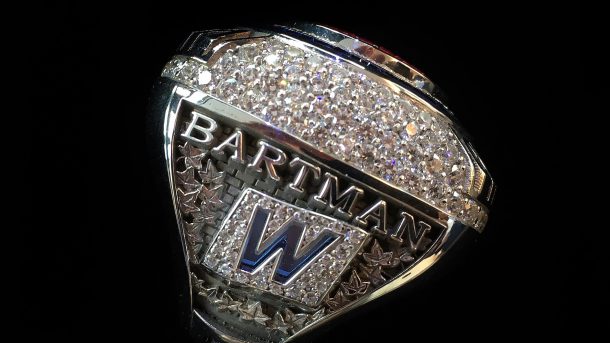
Yesterday the Cubs announced that the team had privately awarded Bartman  an official Chicago Cubs 2016 World Series Championship ring as a special gift from the the Cubs organization. These things contain 214 diamonds at 5.5 karats, three karats of genuine red rubies and 2.5 karats of genuine sapphires, and are worth about $70,000. Even so,  the symbolism is worth far more.

Tom Ricketts, the Cubs owner, issued a statement: Continue reading

Morning Ethics Warm-Up: 7/30/17

Good Morning!

(I’m starting this post just a few minutes before noon, thank to a WiFi outage. I’m sorry.)

1. I finally saw “Passengers,” which most people and critics seemed to hate. I see no obvious inferiority to the over-praised and honored “The Martian” or “Gravity,” especially the latter, which bored me to tears, but never mind: it’s an ethics movie. It is also a moral luck movie, and that drove me crazy. I’ll bet so many viewers (SPOILER ALERT!) saw the film and came out saying, “She had to forgive him, because if he hadn’t awakened her prematurely to keep him company, everyone would have died!”

No, no, no! His (Chris Pratt’s) conduct toward her (that’s Jennifer Lawrence, and anyone who wrongs Jennifer Lawrence deserves the torments of Hell) was just as bad–and it was horriblewhether it turned out well by chance or not. Subsequent discoveries or unpredictable events cannot make an unethical act retroactively ethical.

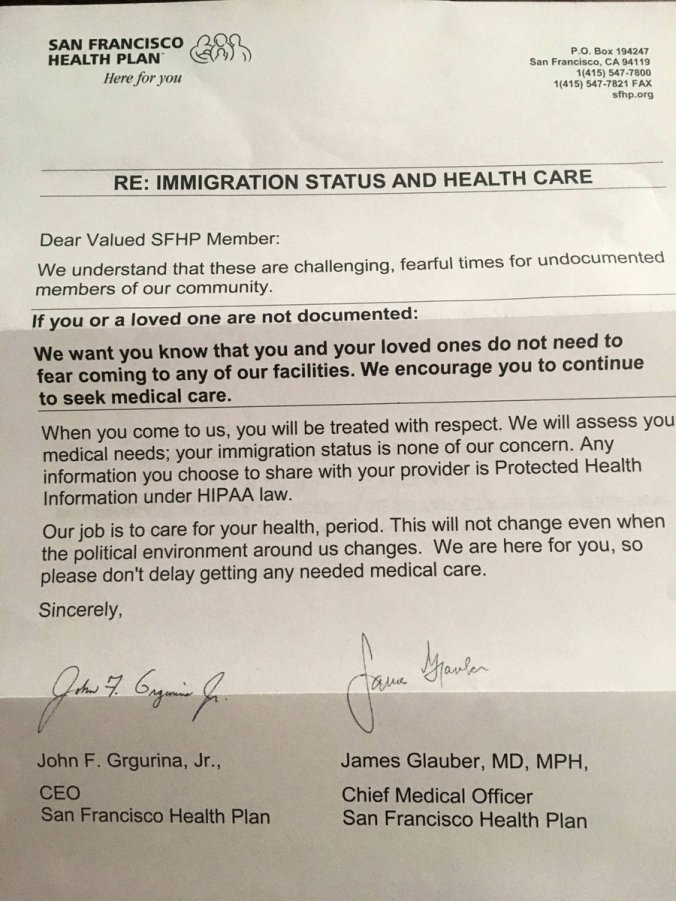
2. San Francisco’s Medicaid program sends illegal immigrants this letter:

When the anti-Trump deranged argue that the President is “crazy,” my stock answer is going to be that nothing he has said or done is as “crazy” as the position that it is right and just to officially encourage foreign citizens to breach our borders, defy our sovereignty and break our laws….and the people trying to use the 25th Amendment to execute a coup are exactly the people who think the letter above is compassionate and right. (Believing that a coup is in anyone’s interest is also demonstrably nutsy-cuckoo, but that’s another issue.)

3. I am really going to be disappointed if NPR and PBS don’t get zero-ed out of the budget. I may be stuck with biased and incompetent journalism, but I shouldn’t have to pay for it.

In a segment of NPR’s “All Things Considered” this week (Yes, I generally think the show is excellent, but that’s not the point) about the “restorative justice” approach to campus sexual assault, reporter Tovia Smith quoted Columbia University graduate Emma Sulkowiczs, aka “Mattress Girl,” as a “survivor” of rape.

She’s not a survivor; she was a harasser, and Columbia just paid a financial settlement to her victim for permitting her to proclaim him as a rapist when the evidence didn’t back the claim. Columbia doesn’t believe Sulkowiczs was raped, and her accusation has been thoroughly discredited. Why in the world would NPR choose this cruel and discredited woman to profile while discussing actual campus sexual assault, and how could it be ethical journalism to still refer to her as a rape survivor?

Smith’s tweeted response to criticism was as damning as the choice of “Mattress Girl” itself:

“Sulkowicz considers herself a survivor & we ID her as such. We’ve clarified that their school found the student she accused ‘not responsible.” Continue reading

Ethics Observations On The Florida Teens And The Drowning Man

The story from Florida about the five teenage boys who took a video of a man who drowned as they laughed and mocked him, never calling for help or alerting authorities, isn’t one of the apathetic bystander episodes that Ethics Alarms has discussed in the past. This is something worse, an episode that raises troubling questions about what kind of culture and society could produce young men so cruel and callous. One has to wonder how society can trust these young men, so obviously devoid of ethics alarms or conscience at such a young age….except that most of us will never know who they are, since their names have been withheld from publication because they are minors.

Meanwhile, the basic ethics question “What’s going on here?” is especially difficult. The episode naturally sparks such an emotional response that reason and analysis have a hard time clawing their way to the front. I’ve been pondering the story since it was publicized, and I still find it disorienting.

Here are some comments and observations, perhaps more random and disjointed than they ought to be: Continue reading

Morning Ethics Warm-Up: 7/14/17

Good morning!

1. It is a matter of constant fascination to me how all of President Trump’s personal lawyers appear to be flaming jerks, whatever their legal skills may be. Here’s an example from this week: Marc Kasowitz, President Trump’s personal attorney on the Russia conspiracy theory investigation, was contacted by a stranger, a retired public relations professional, who had read ProPublica’s unflattering story on Kasowitz. He sent the lawyer an email with the subject line: “Resign Now.’’

Kasowitz used the 30 minutes between 9:30 p.m. and 10 p.m. to bombard the man with threats and epithets, writing such dignified  messages as,

“I’m on you now.  You are fucking with me now Let’s see who you are Watch your back , bitch/”

“Call me.  Don’t be afraid, you piece of shit.  Stand up.  If you don’t call, you’re just afraid.” 

“I already know where you live, I’m on you.  You might as well call me. You will see me. I promise.  Bro.”

Nice.

This isn’t a legal ethics violation, though it almost certainly would be if Kasowitz were addressing an opposing counsel in such a manner. It’s just generally unethical as outrageous, inexcusable, gratuitous incivility, reflecting poorly on him, his profession and his client. A client who was minimally concerned about ethics would fire him.

2. Speaking of a minimal concern for ethics, Trump’s defense of his son’s dumb but legal meeting with the Russian lawyer promising dirt on Hillary included the statement that “most people would have taken that meeting.” Once again, we have evidence that Donald Trump literally doesn’t know what ethics is. Oh, his rationalizations are the same ones the average ethically-retarded citizen uses—this is why he is President. They are still rationalizations. Yes, Mr. President, and most people would accept extra money from an ATM and not tell the bank about it. And most people lie to get out of trouble. And most people do all sorts of unethical things, which doesn’t make them ethical, responsible or appropriate.

He is the President, though, and this is how we will inevitably become a nation of assholes. 

3.  And speaking of assholes, there is Nancy Pelosi. Because a female journalist was blocked from access to the House of Representative by a Sergeant of Arms who properly pointed out that she was wearing a sleeveless dress, always forbidden according to Congress’s dress code, we were suddenly subjected to the false narrative that those mean, sexist Republicans were abusing women again, as well as being typically antediluvian in their ideas about propriety. (Men can’t go sleeveless either, but never mind.) Paul Ryan was the target here, as the Speaker is officially charged with enforcing such rules. The narrative was not really about the dress code, but just part of the over-all “Get Republicans” news media strategy to make the party as unpopular as possible. Yesterday Paul Ryan plausibly said that he wasn’t aware of the rule in question, and was happy to amend it. Then Nancy Pelosi piled on, tweeting, “Glad to see [Speaker Ryan] is updating the dress code for the House Floor. These unwritten rules are in desperate need of updates.”

Pelosi was Speaker for four years, her tenure ending just six years ago. The same rule Ryan is being attacked for was in place during her entire tenure. Why didn’t she fix it herself, dedicated feminist that she is? Her tweet is such obvious hypocrisy that it calls attention to the double standards employed by Democrats, the news media and women. Pelosi could have cheered the change without appearing to duck her own responsibility for their continuation. Instead, she acted as if she was an innocent bystander.

Nancy Pelosi is a major reason the Democratic Party has become a party of assholes. Who but an asshole would tolerate a national leader like this as the face of his or her party in Congress? Are Democrats proud of this woman? Do they endorse her tactics and rhetoric? We have to assume so, don’t we? Continue reading

From “The Pazuzu Excuse” Files: The Justly-Fired TV Reporter’s Lament

Colleen Campbell, a local  Philadelphia television reporter, got herself fired for an obscenity-packed rant berating a cop  outside a Philadelphia comedy club. What she didn’t know was that the whole, ugly thing was filmed. You know that rule that says “ethics is what you do when nobody’s looking except your embarrassed companion and a policeman who you have no respect for anyway because he’s just a cop? That’s the one Colleen whiffed on.

Campbell ae was kicked out of the club for “loud whispering” throughout the show. Once outside, she denied being disruptive to an officer who removed her. The officer replied that Campbell and her male friend needed to just leave the scene. The reporter replied, charmingly,

Or what? Or what, motherfucker? Lick my asshole. How about that? Fucking piece of shit. That’s why nobody likes fucking police … idiots in this fucking town.”

Campbell, 28, didn’t know her act was caught on camera and posted to Facebook until after she received word from the station that she had been fired. Now she says…

“That’s not me or how I talk or act or anything at all…I don’t know what to do. I feel ruined and embarrassed for me and my family….I feel awful…That’s not me or how I speak or how I talk or how I was raised. I had to delete all my social media, because I’m getting threats….I wanna apologize to the officer. I don’t remember the whole altercation at all. I remember feeling attacked. I would never talk like that. It was like watching a whole different me.”

The Kathy Griffin episode sparked several of those currently popular blog posts and web essays about how social media destroys people who make “one mistake” and if it could happen to them, it can happen to you. Ethics Alarms has had several of these posts in the past, always about regular citizens who had an ugly e-mail distributed to the universe by an angry girl friend, or a tasteless or misunderstood tweet to a friend gone viral. No question: these web lynchings are out of proportion to the offense. Continue reading