Death Throes Of The Death Penalty: Dumb Expert, Dumb Advocates, Dumb Debate

“Next!”

As I recently concluded, the death penalty is beyond saving, not because it can’t be defended ethically and morally, but because the issues are tangled beyond repair.

The controversy over the legality of the so-called drug cocktails that somehow became our execution method of choice is a perfect example. The battles over capital punishment trapped policy-makers into this kinder, gentler, ridiculously complicated method of execution that has suffered snafus ranging from unavailable drugs to ugly extended deaths. The problem is the floating definition of “cruel and unusual punishment,” prohibited by the Constitution, but almost entirely subjective. Many judges think killing a killer is itself cruel by definition, and the more reluctant Western Europe becomes to execute the worst of the worst, the easier it is to make the argument that the death penalty is also unusual.

I don’t get it. I never have. India once executed condemned criminals by having the subject place his head on a stump under the raised foot of  trained elephant, which on a command would smash the head like a grape. Quick, painless–messy!—but virtually fool-proof. A pile-driver would be an acceptable equivalent.  Ah, but ick! In this stupid, stupid, intellectually dishonest debate, ick always equals “cruel and unusual,” because to opponents of the death penalty, killing people, even horrible, dangerous people, is inherently icky.

(Oddly, ripping unborn babies out of the womb is not, but I digress.)

I’ve admitted it, and I will again. (This lost Ethics Alarms Luke G., one of its best commenters the last time.*) It is obviously wrong to intentionally prolong an execution or deliberately cause pain, but if the occasional execution is botched and the condemned suffers, that should be cause for great rending of garments, nor should it be used to discredit capital punishment. As I wrote here about Clayton Lockett’s execution in Oklahoma

“There was no question of Lockett’s guilt, and his crime was inhuman. Such wanton cruelty and disregard for innocent life warrants society’s most emphatic rebuke, and the most emphatic rebuke is death. It is essential that any healthy society make it clear to all that some crimes forfeit the continued right to not just liberty, but also life. Anyone who weeps because this sadistic murderer experienced a few extra minutes of agony in the process of being sent to his just rewards has seriously misaligned values. No method of execution will work every time, and to make perfection the standard is a dishonest way to rig the debate. If the death penalty is justified, and it is, then we should expect and accept the rare “botch.” Meanwhile, if the concern really is efficiency, reliability, speed of death and minimal pain, there are literally dozens, maybe hundreds of methods of swift execution that would accomplish this. They just won’t pass the standards of death penalty opponents, because no method will.”

Today the Supreme Court heard oral arguments on the question of whether Oklahoma’s use of the common surgical sedative midazolam did not reliably make prisoners unconscious during lethal injections, thus violating the Eighth Amendment’s protection against “cruel and unusual punishment.” It’s a ridiculous case, which arises out of the botched April 2014 execution of Lockett that sparked the post I just quoted. It is a ridiculous case because the method of execution isn’t worth arguing over. Elephant. Head. Problem solved. Why is Oklahoma fighting about which cocktail to use? This is the anti-capital punishment team’s game, and sooner or later, the result is preordained.  Continue reading
The AWOL Walter Fauntroy, Flawed Black Martyrs And The Duty Of Outrage

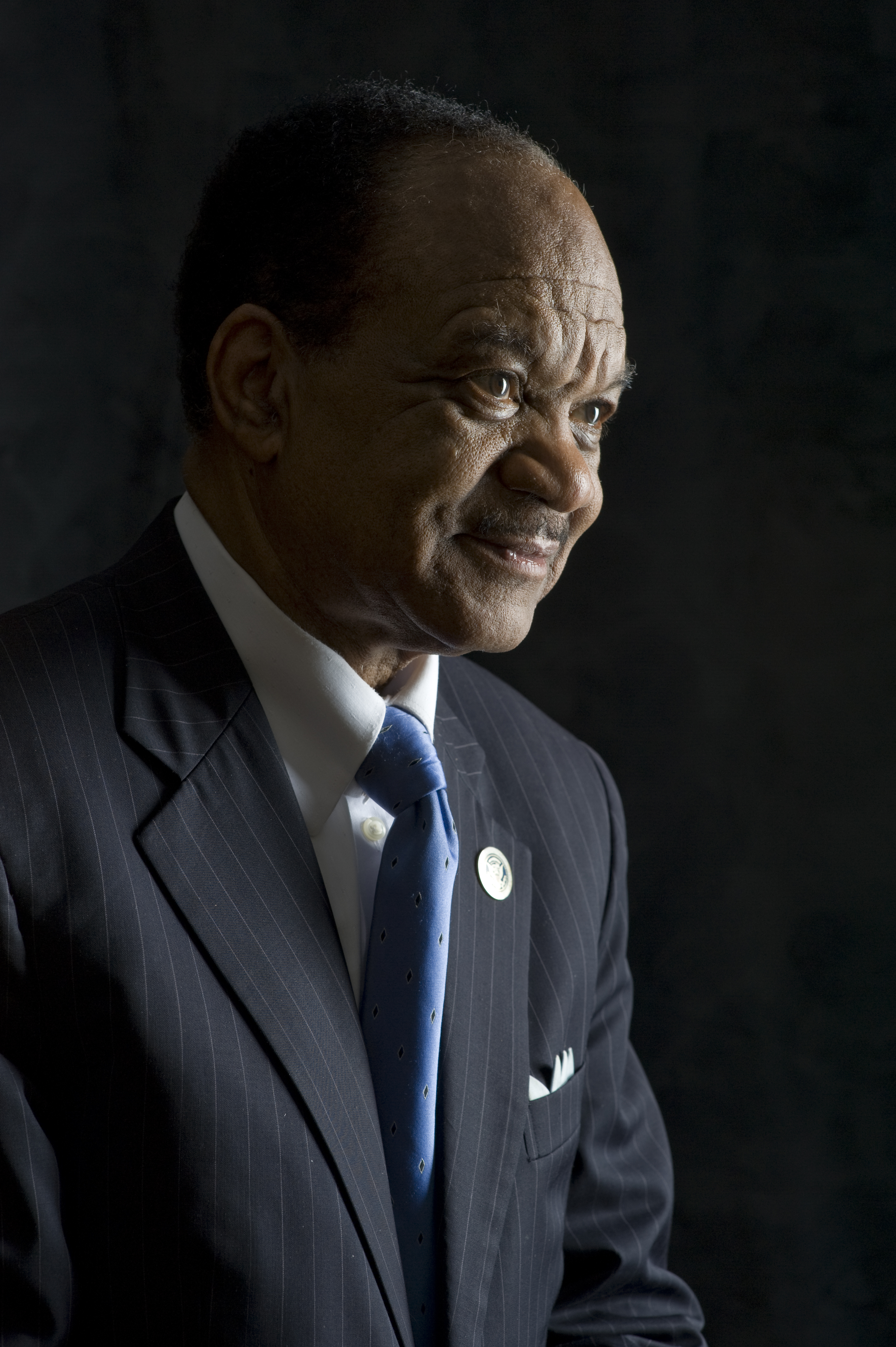
Walter Fauntroy, D.C. icon, civil rights hero, fugitive, coward, crook...but still a hero. Somehow.

Walter Fauntroy, D.C. icon, civil rights hero, fugitive, coward, crook…but still a hero. Somehow.

As I was composing this post in my head, I stumbled upon—and I mean that, because I normally avoid her columns like cheap Chinese food—Kathleen Parker’s latest column. Parker is the sort-of conservative, sort-of op-ed pundit who has mastered the art of compassionate equivocation, meaning that her opinions on public affairs usually consist of one long sigh. She was at it again here, except that the topic she was sighing about confounds me, he who does not shrink from assigning blame, almost as much as it does she who usually spreads blame so evenly that its ethical impact is nil.

Parker wrote…

At the same time that people avoid too-sensitive subjects, they seem to fear stating the obvious lest their thoughts be interpreted as an act of betrayal to “the group.” Politicians are the most risk-averse of all. Few are the Democratic women who will find (or express) fault with Clinton. It is the rare African American who finds fault with Obama. When Rawlings-Blake also said that she “gave those who wished to destroy space to do that,” her Democratic colleagues spoke only of her “poor choice of words.” Not poor thinking? Not lousy leadership? Republicans don’t get a pass. Heaven forbid they should call out someone who wants to inject biblical end-times into political debate.”

Ah, how it makes my chest fill with pride that I have flagged all three of the ethical breaches Parker mentions within the few daysHillary Clinton’s brazenly suspicious conduct and the disgraceful refusal of her cheering section to either acknowledge or question it…Rawlings-Blake’s “lousy leadership”… and Republicans who use religiosity as a prop. Parker being Parker, she had earlier used an example of missing outrage that sets my teeth on edge because, while correct, it calls to mind another area of missing outrage and societally-damaging martyrdom that I can’t quite figure out how to talk about.

Where is the outrage beyond the African American community about police brutality and the deaths of young black males? Where are members of Congress other than those belonging to the black caucus? My God, the list of those killed is staggering,” she writes, “yet this is not a new phenomenon. Baltimore’s Freddie Gray, the 25-year-old who suffered spinal injuries while in police custody and died, is but the most recent. Yet you see only the usual black activists speaking up.”

True. The missing paragraph, however,  is this: “Where are the African-American activists asking why so many young black men are constantly in positions that place them in conflict with the police? When protesters chant the names and carry photos of police victims like Freddie Gray, Walter Scott, yes, and Mike Brown, they are presenting in honored terms African-Americans who weren’t credits to their communities or examples for the next generation to emulate. Indeed this ritual sanctifies lives and backgrounds that are part of the same urban pathology as the police attitudes that killed them.”

Freddie Gray was only 25-years-old, and yet he already had a staggering 18 previous arrests since he turned 18-years-old. His mother was a heroin addict; he had no father in his life. Why was someone like this even out of jail, in a position to become yet another victim of police anger and contempt against the endless wave of young, irresponsible, law-defying young men who undermine the vitality of their own communities and the nation?

The fact that Gray’s death was undeniably the greater outrage shouldn’t allow the outrage of lives like his to be ignored. Black crime and police dysfunction are part of the same pathology. If only the Bill O’Reillys are going to ask the hard questions about black communities policing their young and changing their deadly culture—and are they really hard for O’Reilly, whose audience is inclined to look for ways to side with the police even when they commit murder?—then those questions and their equally hard answers, involving, among other things, avoidance of responsibility and accountability, can be and will be largely ignored.

This is part of the loyalty to “the group” phenomenon that cripples the African-American community and warps its values. It is especially powerful when prominent leaders, those African-Americans who should be leading the way away from self-destructive conduct and who have the power, visibility, and credibility to do so, demonstrate an atrocious lack of ethics themselves. Where are the black voices—those not belonging to black women he sexually assaulted, that is—condemning Bill Cosby? Or Al Sharpton? Charles Rangel?

Washington, D.C.’s overwhelmingly black population was conditioned to accept black leadership outrages by the late Marion Barry. I was not quite aware of the extent of this cultural purging of the ability to hold prominent African-Americans to ethical standards until I read a jaw-dropping Washington Post feature about the wife of local civil rights legend Walter E. Fauntroy, who helped Martin Luther King plan the 1963 March on Washington, and who served as the District’s congressional delegate for two decades. The tone of the article is enough to make a reader think he or she is going mad. The loving 80-year-old wife, Dorothy Fauntroy, speaks about her husband in glowing terms that nothing in the article suggests is inappropriate. Continue reading

Incompetent Elected Official Of The Month: Baltimore Mayor Stephanie Rawlings-Blake

Baltimore riots

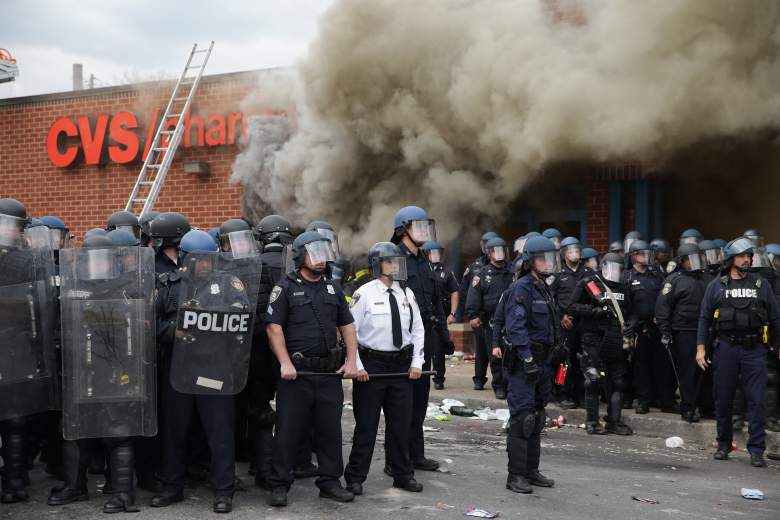
Being the mayor of any city in the throes of a race riot is a losing proposition; being an African-American mayor when the rioters are all black and the riot was sparked by the mysterious death of a black man in police custody is a hopeless proposition. Last night’s riot in Baltimore actually justified the kind of para-military response that got Ferguson, Missouri condemned by Eric Holder’s Justice Department, but that approach was politically impossible. I don’t know what I would have done in Baltimore Mayor Stephanie Rawlings-Blake’s hot seat, except hope against hope that President Obama didn’t come out with a statement that Freddie Gray could have been his son. So this is not the time to second-guess the mayor’s actions.

For the record, my assessment is that the volatile combination of acculturated black community contempt for policy authority and long-incubating and neglected racist inclinations in police departments was activated nationwide by seven years of cynical exploitation of racial divisions and distrust by President Obama, Eric Holder and the Democratic Party for electoral gain. Race riots were the predictable  consequence, and I say that with confidence because I predicted it in 2012, when Trayvon Martin’s death was elevated to a national issue just in time for the President Obama’s re-election push. Rawlings-Blake may have been part of that effort; I haven’t investigated that. She certainly inherited its results.

My verdict of incompetence in her case focuses less on her failure to prevent or contain the riots than on her inept communications skills. Leaders have to communicate clearly. If they can’t, they have a duty to learn: the skill can be taught. (I’m looking at you, W.) If they can’t communicate, their leadership ability is intrinsically crippled. Leaders who have to constantly “clarify” what they said, or “walk back” comments, or claim that they were “quoted out of context” when they were just quoted lose the public’s trust, and deserve to.  Public officials have to be careful  what they say, and how they say it, and this is a crucial, indispensable skill in their chosen field.

Rawlings-Blake held a press conference as the riots in her city were unfolding, and said this:

“And I’ve made it very clear that I worked with the police and instructed them to do everything that they could to make sure that the protesters were able to exercise their right to free speech. It’s a very delicate balancing act because while we try to make sure that they were protected from the cars, and the other things that were going on, we also gave those who wish to destroy, space to do that as well. And we work very hard to keep that balance, and to put ourselves in the best position to de-escalate and that’s what you saw.”

Continue reading

Acting Ethics: Why We Don’t Want Actors Being Too Picky About Their Roles

FergusonX

In the strange ethics category of “Conduct That Isn’t Exactly Wrong But That Will Have Nothing But Bad Consequences To Society If There Is A  Lot Of It” (CTIEWBTWHNBBCTSITIALOI for short) is actors rejecting roles because they have philosophical or political disagreements with the script.

We’ve had two high profile examples of this occur lately. All we can do is hope that it’s a coincidence. The first was when about a dozen Native American actors, including an adviser on Native American culture, left the set of Adam Sandler’s first original movie with Netflix, “The Ridiculous Six,”a western send-up of “The Magnificent Seven,” claiming some of the film’s content was offensive.

Really? An Adam Sandler movie offensive?

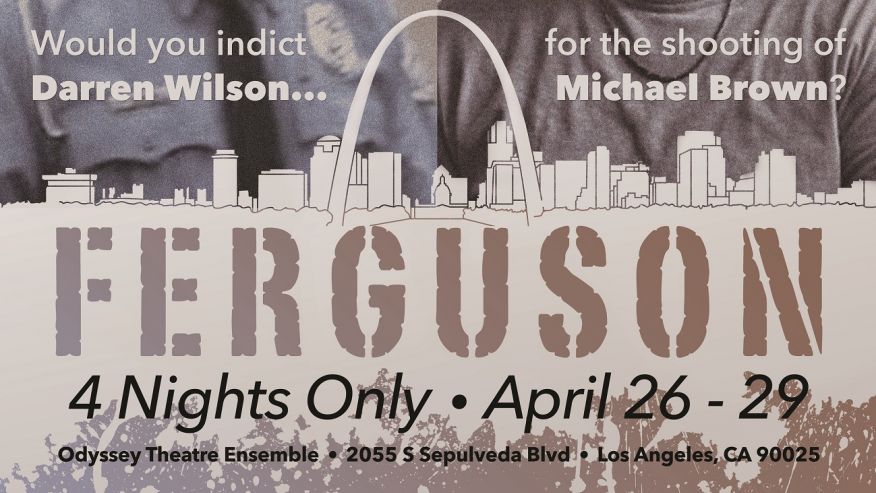
The second and more troubling was in LA,  where five actors quit the cast of the new play “Ferguson,” which consists entirely of dramatizations of the Michael Brown murder grand jury testimony, because the actors apparently felt that it did not appropriately support the “Hands Up! Don’t Shoot!” narrative.

That’s really stupid, but I’m not getting into that again.

We don’t see many examples of professional actors doing this for several reasons. One is that they can’t afford to. Acting, except for the top fraction of a per cent, is anything but lucrative; it’s a subsistence level job, redeemable because it is, or can be, art, and tolerable as long as the actor doesn’t have a family to support, or has a trust fund.

The main reason this is unusual, however, is that an actor isn’t responsible for the content of the play, movie or TV show he or she acts in, but only the skill with he or she helps present that content to an audience. Actors—and technical artists like costume and light designers—are the conduits through which a writer’s work of performance art gets to live. They don’t have to like a show, agree with it or understand it, which is a good thing, since many excellent actors don’t have the  education, experience or intellect to understand complex and profound works. As one realistic actor friend once told me, “If we were that smart, we’d be smart enough to be in another profession.” Continue reading

The Clinton Foundation’s OTHER Ethics Problem—And An Ethics Trainwreck Update

clinton_foundationEven if it weren’t being used for what looks like influence peddling…even if the foreign contributions to it didn’t create a textbook “appearance of impropriety,” which is prohibited for a Secretary of State…even if Hillary Clinton’s unilateral destruction of thousands of e-mails makes her surrogates’ (and imagine: one of those surrogates is an ABC new show host, and the network sees nothing wrong with that) argument that there’s no “smoking gun” evidence of wrongdoing a shining example of gall for the ages…there is another ethics problem with the Clinton Foundation, one that is beyond reasonable debate, and one that even the most shameless Clinton acolytes won’t be able to deflect by attacking the messenger.

It’s an unethical foundation, by well-established non-profit standards, and that has nothing to do with politics. Continue reading

Tsarnaev’s Irrelevant Finger And The End Of Capital Punishment

dzhokhar-tsarnaev finger

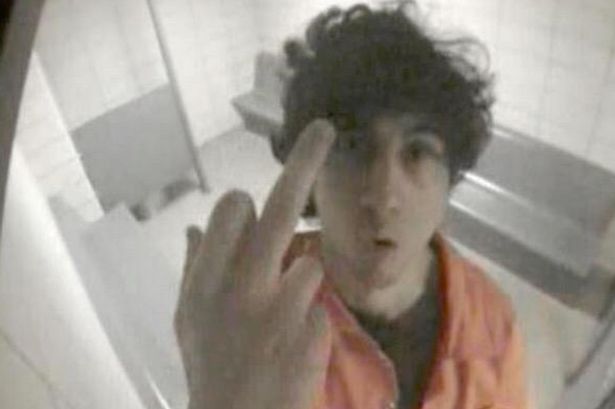
I’ve stated here several times that I am in favor of the death penalty when it can be shown beyond any doubt whatsoever that an individual committed a horrific, cruel, unequivocally inexcusable murder or murders, preferably murders. One of the two Boston Marathon bombers, Dzhokhar Tsarnaev, the surviving one, clearly qualifies. Unfortunately, the public, the law and the legal profession are too confused to bring integrity to capital punishment, and I think, because of that, it can never be sufficiently fair and coherent to be ethical. Continue reading

Unethical Quote Of The Week: Ohio Governor John Kasich

“[T]he most important thing is, what does the Lord want me to do with my life?”

Potential GOP Presidential candidate John Kasich, Governor of Ohio, explaining what considerations will determine whether or not he enters the race.

"Governor? It's for you."

“Governor? It’s for you.”

There is so much wrong with Kasich saying this that the only question now is whether it disqualifies him for elected office.

I guess that’s excessive, though. In a political culture in which Hillary Clinton is considered qualified to be President, almost no one can be truly disqualified. Anything goes, as long as you are wearing the right team colors.

If the Founders knew their democracy would come to this, I think they would have decided to just submit to King George’s tyranny.

Kasich is a skilled governor, just as he was an outstanding House member in a crowd of Republican embarrassments during the Bush years. Then he tried being a talking head for Fox, and had the integrity to quit in disgust. He seemed to have the qualities necessary to elevate the Republican presidential field.

Guess not:

1. He is pandering. The GOP evangelicals and religious right have a lot of power and influence, and they are the only ones who could possibly take Kasich’s statement seriously. “Ah!” they will say, or so Kasich’s shameless advisors have convinced him, “He’s one of us! He believes that weather disasters are visted upon us because of America’s sins! He believes that women belong barefoot and pregnant, that Adam was ducking dinosaurs, that school prayer will cure our ills…that good people ought to be able to shun and exclude the sinful by refusing to sell them services that they provide to everyone else, and that homos are the spawn of Satan.” The statement that Kasich is dictated to by God hints that he thinks a theocracy is hunky-dory. Hey, look at Iran!

2. He is lying. Or he is deranged.

3. The belief that God is likely to choose you as a leader of the most powerful nation on earth is so devoid of humility and so unfair to and disrespectful of the democratic process that it boggles the mind.

4. It avoids personal accountability.

5. The statement is a declaration of incompetence and fecklessness. What other decisions will President Kasich place in God’s hands, or blame on Him when they turn out to be duds?

6. Waiting for God to declare the right course is an intentional abdication of ethics for the moral direction on others, or, if you prefer, Others.

 God made you say that, John, so you would not be President. You have your answer.

Dummy.


Read more:

Typo Ethics: Early Accountability Check For Candidate Clinton

“From her mother’s own childhood – in which she was abandoned by her parents – to her work going door-to-door for the Children’s Defense Fund to her battling to create the Children’s Health Insurance Program, she’s fought children and families all her career.”


That doesn't mean they don't matter, however...

That doesn’t mean they don’t matter, however…

That was the startling news in Hillary Clinton’s long-awaited presidential candidacy announcement: that Hillary has fought families and children all her career. As an ethicist, I find the candor laudable, but I am surprised that Mrs. Clinton is making such a strong bid for the anti-family and child-hating voting bloc.

OK, it’s a typo. The Clinton campaign website fixed it, and her spokespeople reassured the news media “that the former secretary of state has not been secretly fighting children all these years.”

I almost passed on this story, being seldom able to post a typo-free 800 words myself despite reading the damn things repeatedly, but that would have been cowardly. This is not necessarily trivial. This bears some watching. I know that the large Hillary Zombie Squad, which appears to care only about the former First Lady’s chromosomes and nothing else, won’t give a second’s thought to this if her destruction of e-mail evidence and willful skirting of her own agency’s transparency and security policies don’t trouble them, but it is not insignificant. Continue reading

Once Again, President Obama Displays His Aversion To Accountability

It's far from the only missing piece in the Obama leadership puzzle, but it's a big one...

It’s far from the only missing piece in the Obama leadership puzzle, but it’s a big one…

The so-called liberal news media (also called “the news media”) has largely ignored the implication of the President’s recent comments on the link between child health and climate change, but not every source. In a couple of recent interviews, Obama has attributed his determination to control global warming to a personal interest in childhood asthma.

A White House “fact sheet” on climate change notes that the percentage of Americans with asthma has “more than doubled’ in the last three decades [ I haven’t checked these statistics; as you know, the President fudges numbers frequently], and says that “climate change is putting these individuals and many other vulnerable populations at greater risk of landing in the hospital,” with those at greatest peril including children, the elderly, the poor, those who are ill and minority communities. “Rising temperatures can lead to more smog, longer allergy seasons, and an increased incidence of extreme-weather-related injuries,” the document informs us.

Speaking on ABC with chief health correspondent Dr. Richard Besser, the President connected climate change to a frightening Obama family episode. “Well you know, Malia had asthma when she was four, and because we had good health insurance, we were able to knock it out early,” the President said. The children of less successful parents, however, won’t be as lucky, Obama said. “It will be an all-around benefit to society if asthma can be curtailed.”

This is standard issue climate change fear-mongering, along with the convenient and cynical use of children to drive emotional responses from the public rather than allow them to rationally weigh facts, options, and the balancing of costs with benefits and risks. The entire climate change debate has been waged in this unethical manner, on both sides of the issue, and thus has been incompetent, irresponsible, and untrustworthy.

There is something else here, however.

USA Today makes a strong case that there was another more likely cause of Malia’s breathing problems: her father. Continue reading

Amazing! The Columbia School Of Journalism Just Boarded “Jackie’s” UVA Gang Rape Ethics Train Wreck

train-wreck

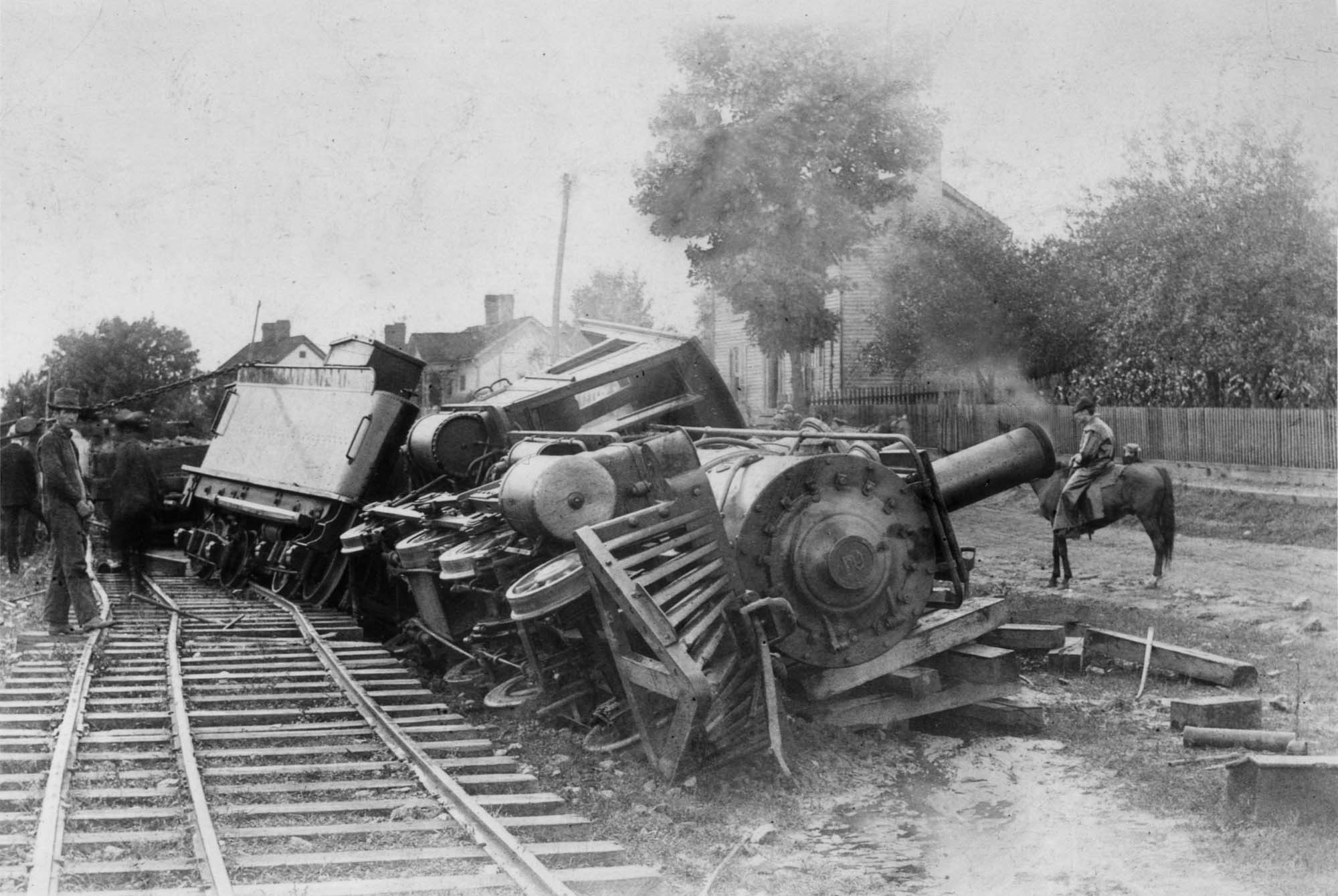
An Ethics Alarms ethics train wreck occurs when a notable unethical act or event becomes a long-running ethics disaster that exposes not merely the ethics deficits of the original participants, but others who become involved later, including, among others, public officials, commentators, experts and pundits.

This might be the first time I have ever seen the organization specifically brought in to perform a forensic ethics analysis of what caused the wreck end up with its own ethics sullied. Incredibly, however, that is what has happened to the prestigious Columbia School of Journalism, which just delivered the definitive verdict on Rolling Stone’s abysmal journalism concerning a false accusation of a fraternity gang rape by a University of Virginia fraternity.

The Columbia Journalism School held a press conference today to discuss the details and implications of its findings regarding Rolling Stone’s (tardily) retracted article, “A Rape on Campus.”  Columbia Journalism Dean Steve Coll emphasize that the fiasco  was “the collective fault of the reporter, the editor, the editor’s supervisor, and the fact-checking department.”

“We don’t believe that ‘Jackie’ was to blame,” Columbia academic affairs dean Sheila Coronel added.

Wait: how can she possibly make such a manifestly dishonest statement like this? The woman who made the false allegations that resulted in the story isn’t to blame for the story? She was the one who claimed to be gang raped at a party that never happened, at a fraternity that didn’t have a party, by frat brothers who didn’t exist, using quotes that were never said. “Jackie” is not only to blame, she is the single person most responsible for the story, its botching by Rolling Stone, and the harm it did to the fraternity she accused and the University of Virginia. “Jackie” started this Ethics Train Wreck rolling: note that I named it, months ago, “Jackie’s” UVA Gang Rape Ethics Train Wreck, because while Rolling Stone’s incompetent and biased reporter and editors played insane engineer, throttling down and blindly driving the engine to disaster, it was “Jackie” who owned the train and shoveled the coal.  And she’s not to blame? Continue reading