Ethics Blindness at Joe Pa’s Memorial Service

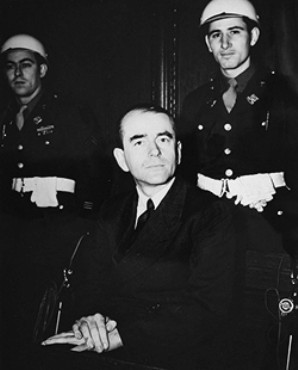
At least Albert Speer didn't have a clear conscience.

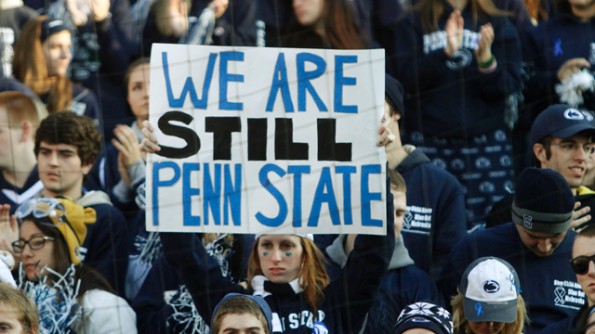
I did not expect the speakers at Joe Paterno’s emotional memorial service to avoid stepping on  some of the myriad ethical landmines that lay before them. It was a time to say good things about the late Penn State coach, and there is plenty to say. Still, two speakers did cross deep into unethical territory. Even at a memorial service, when the lessons of the Jerry Sandusky affair are so important for all to learn and accept, it was poor judgment and irresponsible for those honoring Paterno to try to minimize or deny his accountability in the tragedy.

Unethical Statement #1: Nike Co-Founder and Chairman Phil Knight. “Whatever the details of the investigation are, this much is clear to me: There was a villain in this tragedy. It lies in the investigation, not in Joe Paterno’s response to it.”

This got a standing ovation, a reaction every bit as offensive as the Penn State student riots after Paterno’s firing, indeed more so. Knight’s rationalization excuses every Enron executive who knew that the leadership was defrauding investors; every Bernie Madoff family member and enriched investor who knew something was wrong but waited for the SEC to act; every member of the Nixon White House who saw the rule of law being trampled but reasoned that since he wasn’t directly involved, there was no reason to speak up; every member of Congress who knew that Rep. Mark Foley was sexually harassing House pages and kept quiet; and every priest who knew that a colleague was sexually molesting boys and did nothing, because the Church leadership was doing nothing. Knight’s defense of Joe Paterno is a defense of all of these, and indeed a defense of evil. Continue reading


Comment of the Day: “Ethics Dunce: Monica Bova

Monica Bova and supervisor, 2013

There are obviously a lot of funny, witty people among the Ethics Alarms regulars, and on all sides of the political spectrum. It often shows, despite the fact that the discussion here tends to be about serious issues, and hence on the intense side. Still, humor is always welcome, and Scott Granger just contributed a comment that uses it deftly to lend perspective to the jaw-dropping statements of Monica Bova, a Costa Cruises executive who thought it would be a grand time to extol the “heroism” of the crew of the company’s recently wrecked ship, and insult the surviving passengers, while more than twenty presumably dead tourists were still the object of a desperate rescue mission and the ship’s craven captain was under arrest.

Here is Scott’s Comment of the Day on yesterday’s post, “Ethics Dunce: Monica Bova”:

“In a statement that may possibly be issued by Costa Cruises 48 hours from now, the company will congratulate Ms Bova on her new role as a street corner burger vendor in Scranton PA:

‘Monica’s unrivalled experience of mass audience catering and customer relations will be greatly missed. But our loss is very much  Scranton’s gain.’ Continue reading

Soon To Be Justly Unemployed Ethics Dunce: Costa Cruises Exec Monica Bova

Among her next job options, public relations is probably not an option.

You are a cruise ship company executive. Your half-billion dollar cruise ship hit a a rock because the captain was fooling around, tipped over, and while it was sinking, the captain lied to the Coast Guard about conditions and fled in a lifeboat before the passengers were safe. More than 20 are missing, and eleven bodies have been found. What do you do?

If you are Costa Cruises Assistant director Monica Bova, you accuse the surviving passengers of “sensationalism” over the disaster.

“I have read, seen and heard so much nonsense from these survivors, who tended as usual to choose sensationalism rather than information,” she wrote in a post on an Italian website. “I realize that there may be conflicting opinions and I do not have the expertise to determine guilt and causes of the tragedy, but in a real emergency anything can happen.” Bova went on to call her colleagues the “true heroes”, adding that without them, none of the guests would have been able to evacuate. Continue reading

The Ethical Firing That Never Happened: Penn State’s Blindness Continues

...and you still don't get it.

Penn State didn’t think that allowing a probable sexual predator to continue to abuse kids was a firing offense, and still doesn’t.

Incredibly, Joe Paterno is still receiving his full salary. He was not fired, as all newsmedia reported, and the University, having released a deceitful and carefully worded misleading announcement in November, allowed that falsehood to be circulated and believed, even as students were rioting on campus against Joe Pa’s “dismissal.”

“The Board of Trustees and Graham Spanier have decided that, effective immediately, Dr. Spanier is no longer president of the University,” the announcement had stated. “Additionally, the board determined that it is in the best interest of the University for Joe Paterno to no longer serve as head football coach, effective immediately.

But it never said that Paterno was fired. Now, finally, the University’s sick subterfuge is coming to light. Continue reading

Van Der Sloot’s Defense: Worst Rationalization Ever?

Yup: It's Natalee's fault.

Joran van der Sloot finally pleaded guilty yesterday to the murder of a Peruvian woman, Stefany Flores, whom he had met in a bar. His lawyer, Jose Luis Jimenez, blamed the crime on van der Sloot’s earlier arrest for the disappearance of Natalee Holloway in Aruba and the widespread suspicion that he was the missing teenager’s killer.

Defense lawyers, in the zealous representation of their clients, must often come up with creative theories bordering on the risable to try to wring every last drop of helpful spin out of a hopeless case. It bothers non-lawyers and legal ethicists alike when attorneys assert things about a case or their client that they couldn’t possibly believe is true, though it is enough to meet the low bar of the Rules of Professional Conduct for the lawyer to believe that such statements might be true, perhaps in a parallel universe. They are in the “well, how about this?” category. A defense lawyer with a despicable client like van der Sloot, who appears to be a stone cold sociopath, doesn’t have much to work with. Continue reading

Comment of the Day: “The Priorities of U.S. Higher Education Defy Understanding”

When the topic on Ethics Alarms is education, Michael frequently scores a Comment of the Day, and he did it again following the post on the University of Maryland spending a fortune on its president’s residence. Here is his effort to help us understand the conduct discussed in The Priorities of U.S. Higher Education Defy Understanding. And I’ll have a closing comment at the end.

“I have asked these questions about what is driving up college costs. Here is what I have found: Continue reading

The Priorities of U.S. Higher Education Defy Understanding

The next president of the University of Maryland, apparently. Wait---that was the previous post!

The out-of-control costs of higher education are one of many systemic problems that plague America, and it is one that I confess baffles me completely. I do not understand why tuition is so high and continues to climb. I do not understand why universities pay professors huge salaries for minimal teaching duties, and I don’t see what expensive buildings and beautiful surroundings have to do with education. I don’t understand why students pay outrageous sums to be educated then take trivial and absurd courses, like the now-cancelled Columbia University undergraduate course that was to consist of hanging out with the Occupy Wall Street gang to endear oneself with course’s OWS-loving professor.

Most of all, I do not understand the persistence of the myth that a college education can, does, or should qualify a graduate for good job, when it appears that a large percentage of students, if not a majority, leave the campus unable to write, think, or name the men on Mount Rushmore. Decades ago, as an administrator at major law school, I was shocked to discover that the school held remedial reading and wring courses for some first year students, one of them a graduate of Yale.  Do you think the problem has improved since then? A college education in the U.S. is a poor and declining product that is over-priced and over-hyped, and I don’t understand why people are willing to go into debt to purchase it, and why the manufacturers haven’t cut costs, improved the product, and lowered the price.

Well, maybe I do understand. Like so many other problems, the reason for this one may be no more mysterious than the fact that those in charge are irresponsible, incompetent, and unaccountable.

This week brought the news that crews will begin demolishing the president’s house at the University of Maryland, and begin construction of a new 14,000-square-foot mansion that will cost the school at least  $7.2 million. The palatial new digs for Maryland U’s president is being built in the midst of the university’s pleas for donors to contribute funds to rescue Maryland students who may be forced to drop out because of their family’s financial plights.
Meanwhile, the current president, Wallace D. Loh, has said that he will cut eight varsity sports teams in June to save an estimated $29 million over the next eight years. Do you understand this? Continue reading

Ethics Hero: Police Officer Robin Parker

The ethical way to take your medicine.

Officer Robin Parker, a Maine state police officer, was pulled over for drunk driving while off-duty and arrested, as he should have been, but as many officers in similar circumstances are not, due to “professional courtesy.”  Parker was put on administrative leave pending an investigation. His arrest was beginning to cause discord at the station, as some of Parker’s colleagues but some of his fellow officers were ostracizing the officers who arrested him.

Parker sent a mass email to all the officers. It read…

Dear Fellow Troopers,

I’m not sure I’m able to articulate exactly how I feel,  but I will try to put into words my thoughts.

Most if not all of you know by now what happened with me last Sunday evening. I was pulled over on the turnpike for suspicion of driving under the influence. I was subsequently processed and charged with that offense by Troopers within Troop G.

 I want to first thank all of you for your tremendous support and prayers. I will continue to graciously accept them as I move forward in this process. One thing I want to make perfectly clear to everyone. My decisions and choices were mine and mine alone. I have made some mistakes and I’m prepared to answer for them. I appreciate the kind words expressing sadness that I will have to deal with this in the courts and within the department. But these are the consequences for MY ACTIONS. I’m not saying this is not painful, because it is. I’m not saying this is not going to be hard, because it will be. I’m not saying I’m not ashamed and embarrassed, because I am. But, what I am saying is I own this and I’m prepared for the consequences. Continue reading

Why “He’s Suffered Enough” Is Not Enough

Not enough.

“He’s suffered enough” is one of the more popular and effective rationalizations, usually put into use in defense of white collar criminals and the likes of Roman Polanski, wealthy or once-respectable criminals for whom remorse and humiliation are deemed to be as devastating as incarceration.  Yet it is still a rationalization—a deceptive representation of the truth—and shows a misunderstanding of what official punishment needs to accomplish.

A sad drama has played out in a Montgomery County Maryland court, where twenty-year old Kevin Coffay was sentenced to twenty years in prison for fleeing the scene of a May auto accident that he had caused by being drunk behind the wheel, as Spencer Datt, 18; John Hoover, 20; and Haeley McGuire, 18, remained in the wreck after Coffay fled.  All three died.

Coffay was stunned by the sentence, and news reports say that the case has torn the community apart, with the families of the victims seeking retribution, and supporters of Coffay pleading for compassion and mercy. Their argument, as it always is in such tragedies, is that “he’s suffered enough”. This misses the point of the trial, the sentence, and the societal ritual that such events demand. Continue reading

Iowa Aftermath: Five Ethics Lessons

The Iowa Caucuses produced a bumper crop of ethics lessons.

Ah, it may look like corn, but but there are kernals of ethics knowledge in those Iowa fields!

1. People may do the right thing for the wrong reasons, but what counts is that they do the right thing. Jaw-dropping statements from some Evangelicals in Iowa that they just couldn’t see voting for a woman to be President had many pundits writing that Iowa was too backward to have such a prominent role in electoral politics. The result of this particular bias, however, was to knock Rep. Michele Bachmann out of the race, a result she had earned with her serial irresponsible statements and half-truths. And it was a bias that she courted, both by her repeated nod to subservience in her own marriage and her self-identification with the Evangelical bloc. The bigotry that helped end her candidacy was a bigotry that she  supported, and that equals rough justice, but justice nonetheless.

2. The news media’s lack of diligence and professionalism warps the process. Continue reading