Coming To A Ballot Box Near You: “The Naked Senator Principle”?


Go Ashley!

Go Ashley!

Ashley Judd, the accomplished Hollywood actress-feminist (and the non-singing sister in the singing Judd family), is seriously contemplating a run for the Kentucky Senate as a Democrat against Senate minority leader Mitch McConnell. There is a potential problem, however, implies the conservative “Daily Caller.” Judd will become the first serious contender for high national office who has appeared on screen numerous times in various degrees of nudity. The blog’s entertainment editor has done her research with no less an authority than MrSkin.com, and reports that Judd went topless for 1996′s “Normal Life” and went topless and bottomless in 1999′s “Double Jeopardy.” Meanwhile, in both 1996′s “Norma Jean and Marilyn” and 1999′s “Eye of the Beholder,” Judd went full frontal while also baring her comely tush. Ashley had a lesbian sex scene in 2002′s Oscar-nominated “Frida,” and “Mr. Skin”  categorized nine other scenes as “sexy,” and if you can’t trust him on such matters, whom can you trust?

We have learned that former porn stars can’t be middle school teachers or beauty queens, that art teachers can’t be seen painting pictures with their butts (even with paper bags over their heads) and that “the Naked Teacher Principle” decrees that those we entrust with the the shaping of young minds cannot be trusted to do the job if their naughty bits are just a mouse click away. Doesn’t it follow that there is a “Naked Senator Principle”? Surely internet nudity that was previously available at the Multiplex is a disqualification for Congress. Isn’t it? Shouldn’t it be? Continue reading
Ethics Catch-Up: The Revolting Hillary Clinton Testimony

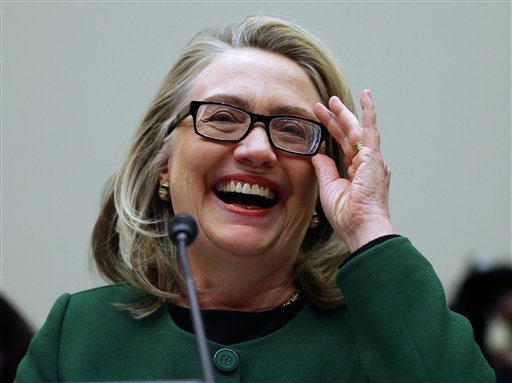
No wonder she's laughing.

No wonder she’s laughing.

I know I neglected my duty to highlight a truly nauseating example of American political shams at their worst with last week’s dual appearances by outgoing Sec. of State Hillary Clinton on the Hill, where she was ostensibly going to inform Americans what really happened in Benghazi, and why. I apologize. I was preoccupied with the earth-shattering matter of  Beyonce’s lip-syncing, and also, I admit, was having a hard time enduring both Lance Armstrong’s act and a Clinton performance in such close proximity. I’m only human, after all. Still, I need to go back a week and examine, if briefly, the ethics stinker that was Hillary on the Hill:

1. Members of this administration keep using the word “responsibility,” but to paraphrase Inigo Montoya, I don’t think the word means what they think it does. Clinton had stated unequivocally that she “accepted full responsibility” for the Benghazi tragedy in October, reiterated that statement last week, and then repeatedly shifted the blame to others or otherwise denied responsibility. She wasn’t responsible for the decisions regarding security, she said. It wasn’t her fault that she didn’t know about cables from Ambassador Stevens’ a month earlier requesting more protection, because “1.43 million cables come to my office. They’re all addressed to me.” Well, who’s “responsible” for a system in which urgent, perhaps life and death messages not addressed to the Secretary of State never reach her desk? She blamed a lack of funding ( a claim that appears to be untrue) was also responsible for the tragedy, and naturally, she can’t be held responsible for that. Clinton’s definition of “responsibility” reveals itself during her testimony as meaning responsible for fixing the problems and systemic failures that led to the deaths of the four Americans, but not really accepting responsibility for what happened–responsibility, in other words, without accountability. Continue reading

Discovered: An Ethics Hero and a Theater Code of Ethics—From 1945!

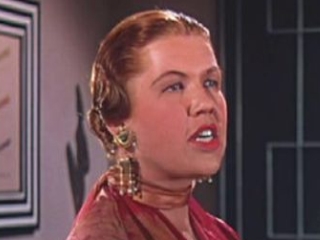
The ethicist in “Singing in the Rain”

For many years, I have been attempting to persuade the local professional theater community in Washington, D.C. to develop and adopt an official Code of Ethics. I have not been successful, and it’s not surprising. Theater, indeed professional show business of all kinds, has been almost ethics-free for centuries. These are tough pursuits, and tough pursuits easily gravitate toward the Law of the Jungle—“Kill or be killed”—unless the culture makes a concerted effort to evolve in a different direction. Theater certainly has not. There a few unwritten rules in theater that could form the backbone of a useful code, such as “The show must go on!”, and there have certainly been members of the profession who are thoroughly ethical, they tend to be very successful individuals who have taken on high ideals once the need to back-stab has lessened, people who are so talented and fortunate that the need to lie and cheat never arises, or, a special category, marginally talented but hard-working and versatile professionals whose trustworthiness is their primary asset. (This last group usually fares poorly in the end.)

Not only have I been unable to interest anyone in developing a code for the theater, I have never heard of one being developed anywhere else. Until now, that is. I recently learned that Kathleen Freeman, a great character actress* who died in 2001, wrote and adopted an ethics code for a small theater company, the Circle Players, that she established in Los Angeles when she was 24 years old. Continue reading

Comment of the Day: “Ethical If We Want It To Be: NBA Flopping and Fooling the Ref”

This is a wonderful comment by Dwayne N. Zechman, which goes to the heart of what makes sports ethics so perplexing. Let me leave it to Dwayne now, and I’ll have some comments at the end. Here is his Comment of the Day on the post Ethical If We Want It To Be: NBA Flopping and Fooling the Ref:

“I admit I’m having a little trouble with this one.

“If I understand correctly, your premise is that each sport has its rulebook, and what’s ethical or not is mostly determined by what’s in that rulebook. The outside margins of “mostly” come from long-standing traditions, and de facto rules related to safety or practicality. The game isn’t life–it’s a distinct “closed system” if you will, and the rules about life might not apply. Or perhaps it’s better to say that we can choose to declare (in the rulebook or through tradition) that certain rules of life do not apply within the game and that’s okay. Doing so diminishes neither the ethical rule nor the game itself.

“So the beginning of my trouble is that this smacks a little of a combination of “Everybody does it”, “If it isn’t illegal, it’s ethical”, and The Compliance Dodge. Okay, I can accept that, though, because we’ve already stipulated that specific ethical principles can be exempted from a game/sport.

“Next comes my own dissonance in trying to reconcile this article with other recent articles here on Ethics Alarms about pro football, where the same exemption of ethical principles is applied, but somehow shouldn’t be. Okay, I can accept this, too. There is a distinction in that an ethical principle shouldn’t be exempted from the game when there are clear, demonstrable consequences to the player that persist after the game is over and the player’s real life resumes. In a situation such as that, it’s impossible to exempt an ethical principle JUST for the game because the exemption itself renders the game no longer a “closed system”. Continue reading

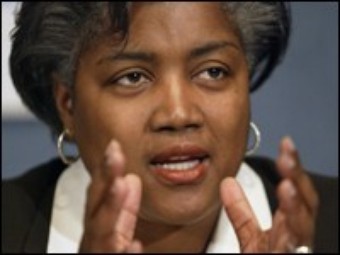
Donna Brazile Opens An Ethics Can Of Worms On “The Good Wife”

Is this the real Donna Brazile or the fake one?

The increasingly common practice of using real political figures playing themselves in dramas made me queasy from the beginning, and now I know why.

“The Good Wife,” CBS’s excellent legal drama now highlighting that network’s Sunday nights, has made such blurring of the real and fictional something of a trademark, featuring such real-life political power-player as Fred Thompson and Vernon Jordan in past episodes, not merely in cameos, but participating in substantive scenes as their real-life selves. Last night, Democratic Party strategist Donna Brazile, who had earlier in the day participated in Christiane Amanpour’s roundtable on ABC, played herself in the episode’s fictional meeting between her and  Eli Gold (Alan Cumming), the ethics-free campaign manager for the Good Wife’s Creepy Husband, Peter Florrick (Chris Noth). I must say, Donna Brazile made an extremely convincing Donna Brazile. She has a future in acting, as long as she can play herself. The problem is what fictional Donna Brazile told fictional Eli Gold, and the immediate, and confusing real life ethical issues it raises. Continue reading

When An Apology Proves You’ll Say Anything: Ed Schultz’s Amazing Mea Culpa

"Hey Ed! Your masks are showing!

After MSNBC had announced that it was suspending Ed Schultz for a week without pay for calling conservative talk-show host Laura Ingraham a “slut” on his syndicated radio show, its boorish left-wing star delivered an on-air apology. Schultz certainly seemed sincere and contrite, saying solemnly that his “vile and inappropriate language” was wrong and uncalled for.  “I am deeply sorry, and I apologize,” he said. “I apologize to you, Laura, and ask for your forgiveness…It doesn’t matter what the circumstances were. It doesn’t matter that it was on radio and I was ad-libbing. None of that matters. None of that matters. What matters is what I said was terribly vile and not of the standards that I or any other person should adhere to…..And I have been in this business since 1978, and I have made a lot of mistakes. This is the lowest of low for me. I stand before you tonight in front of this camera in this studio in an environment that I absolutely love. I love working here. I love communicating with all of you on the radio and the communication that I have with you when I go out and do town hall meetings and meet the people that actually watch. I stand before you tonight to take full responsibility for what I said and how I said it, and I am deeply sorry.

“My wife is a wonderful woman,” Ed continued, getting emotional. “We have a wonderful family. And with six kids and eight grandkids, I try to set an example. In this moment, I have failed. And I want you to know that I talked to my sons especially about character and about dignity and about the truth. And I tell you the truth tonight that I am deeply sorry and I tell them every day that they have to live up to standards if they want to be a successful human being in life. And I have let them down. I have never been in this position before to the point where it has affected so many people. And I know that I have let a lot of people down…. Continue reading

Fairness and Gov. Brewer’s 16 seconds of Panic

[Personal Note: I apologize for the dearth of posts since Wednesday. I have been on short but intense road tour of Virginia, presenting three three-hour legal ethics seminars in three days, and driving long distances in-between. My sincere intentions to keep up the commentary on ethics developments elsewhere fell victim to fatigue, age, and the surprising discovery that vene I get sick of thinking about ethics sometimes. I am sorry, and will catch up diligently.]

Governor Jan Brewer suffered through an elected official’s nightmare, beginning her televised gubernatorial debate with Democrat Terry Goddard with an embarrassing meltdown, complete with a garbled opening statement and a 16 second pause when she lost her bearings entirely and went mute, despite having her notes in her hand. Ben Smith of Politico wrote that “Arizona Governor Jan Brewer’s opening statement in last night’s debate reflects either an amazing lack of preparation, or sheer panic.” Well, nobody who is going to appear on television for a debate that will decide her future employment fails to prepare. It was obviously panic, and the kind of panic that has very little to do with being governor of Arizona or the ability to do any other job, except perhaps host the “Tonight Show.” Continue reading

The Trouble With Auto-Tune

The British show that launched “American Idol,” X-Factor, admitted that it had used Auto-Tune, an audio processor that corrects a singer’s pitch and tone. An 18-year-old contestant named Gamu Nhengu sang just a little too well in the show’s seventh season premiere, and fans and critics started hinting at conspiracy on the web, especially via the show’s Facebook page. Finally, a spokesman for “X-Factor” confessed that Auto-Tune was used to fix disruptions caused by the many microphones used on stage during the telecast, but that the judge’s decisions were definitely based on the actual, non-Auto-Tuned performances of contestants. The show’s producers, he assured the public, only used the processor to “deliver the most entertaining experience possible for viewers.”

I’m sure that is true. This is exactly the reason TV executives rigged the quiz shows in the 1950’s. It is the reason why TV reality shows are scripted, and why NBA stars get away with game fouls that referees call against lesser players. Any competition’s entertainment value is enhanced by better competitors and more suspenseful action. The problem is that once spectators know or suspect that they are being manipulated, they stop watching at all. The fact that Simon Cowell’s UK hit would use the device immediately roused “American Idol” conspiracy theorists, and  Cowell to immediately announced an Auto-Tune ban. Continue reading