The Ethics Alarms List of Debate Cheats and Fallacies

fallacy

I realized it was time to post the definitive Ethics Alarms List of Debate Cheats and Fallacies after once again having to point out to an indignant commenter that calling  him a jerk based on a jerkish comment was not an ad hominem attack, and that saying idiotic things on-line carry that risk. Here, at last, is the current list, adapted from multiple sources. As with the Rationalizations List, with which this occasionally overlaps, I invite additions. Participants here should feel free to refer to the various fallacious arguments by number, and to apply critically them to my posts as well as the comments of others. Am I immune from occasionally falling into one or more of these bad debate techniques and rhetorical habits? No. The other reason I wanted to get the list up was to reinforce my own efforts to be persuasive without being manipulative.

1. Ad Hominem Attack

An ad hominem attack means that one is substituting the character or quality of an adversary’s thought for the argument the adversary is presenting. This is unfair, as well as misleading. “Your argument is invalid because you are a crook, a fool, an idiot” is an ad hominem attack. It is not an ad hominem attack to prove an argument idiotic, and conclude, on the basis of signature significance, (which requires that an  argument be so idiotic that no non-idiot would conceive such a thing and dare express it),that the one making the argument is an idiot, since only an idiot would make such an argument. Confusing the true ad hominem attack with the latter is a useful deflection by poor advocates of the fair consequence of their advocacy. Idiots can still hold valid positions, and disproving the position has nothing to do with proving they are idiots.

1 a. The Toxic Introduction.

A more subtle application of the ad hominem attack is The Toxic Introduction, where the argument of another is introduced by noting a negative quality about the individual. The effect is to undermine the argument before it has even been heard, by its association with a less than impressive advocate.
2. Butch’s Stratagem (The Straw Man)

Continue reading

Almost An Ethics Quiz: The Comment In The Queue

temptation

I awoke this morning to a polite, well-written, credible comment—to an older post—that immediately sparked an ethical dilemma. Maybe you can help me out.

The comment reveals unpleasant personal details about the commenter’s past encounters with a blogger who has prompted some controversy on Ethics Alarms, episodes that mark the blogger as a jerk of the highest order. Indeed, I had already diagnosed Blogger X as a jerk, and written about it. This is difficult to explain without revealing the identity of the blogger—let’s just say that his writings that attracted my attention complained about a phenomenon that was far better explained, at least in his case, by his character than the causes his many posts attributed to it.

Normally, this would be an easy call. I have frequently removed similar ad hominem attacks on some of you (you didn’t know that, I bet!). Settling old scores is not what this site is for, and the comment in question would usually fail for being off-topic. There are two reasons I am considering approving the comment.

Continue reading

Comment of the Day: “Ethics Observations On The “Affluenza” Sentence”


I don't think this is the same "Theodoric of York" who authored this excellent "Comment of the Day"...at least I hope it isn't.

I don’t think this is the same “Theodoric of York” who authored this excellent “Comment of the Day”…at least I hope it isn’t.

The heat/ light ratio in the comments to the post about the controversial sentencing of a 16-year-old scofflaw in Texas has been depressing, but among the rational, measured, well-considered and thought-provoking responses by those who actually read the post, this one, by new commenter Theodoric of York,  is a winner. His politeness is especially appreciated among all the posts calling me names that would shock my mother. I hope he comes again, and often.

I’ll have some further comments after he’s had his say. Meanwhile, here is Theodoric of York’s Comment or the Day on the post Ethics Observations on the “Affluenza” Sentence.

Disclaimer the first: I’m not an attorney, nor do I play one on TV. Disclaimer the second: I have no knowledge of Texas law regarding juvenile justice, nor do I have any knowledge of Texas state law regarding negligent vehicular homicide, nor do I have any real knowledge of that state’s laws regarding DUI, homicide, manslaughter or murder. And yes, I know the difference between murder and negligent vehicular homicide, and I am also aware that young Mr. Couch is a minor. Disclaimer the third: I have not read Judge Boyd’s actual ruling, nor have I seen actual video of her sentencing. If someone could provide a link to that (if a link exists), it would be appreciated. That being said: Continue reading

Wait…Did Debbie Wasserman Schultz Expose A Media Ethics Scandle? Is MSNBC Staging Interviews? Does Anybody Care?

"And now let's ask our guest a tough question: what do you think about what I just showed our audience, Congresswoman? I hate to put you on the spot!"

“And now let’s ask our guest a tough question: what do you think about what I just showed our audience, Congresswoman? I hate to put you on the spot!”

In an appearance on MSNBC’s Jansing & Co., Democratic Party Chair Debbie Wasserman Schultz answered queries from Chris Jansing about President Obama’s multi-year lie—desperately being recast as a “promise” by the reporters who have the honesty to report it at all (it’s hard to admit that the leader you’ve been promoting for five years is just just another manipulative fraud )—that “you” can keep your doctor and your health plan if you like them, “period.” I was struck by the unethical means (an ad hominem attack)  Wasserman Schultz employed to rebut a clip of Marco Rubio criticizing the President,  and her pure obfuscation that followed. I also mentioned that she appeared to not know how to pronounce the common word “misled,” saying it instead as “myzeld,” which is usually proof that a speaker is 8 years old.

Sharper eyes than mine among the commenters noticed what I completely missed: the Congresswoman looks like she’s reading from a teleprompter. That would explain “myzeld” more plausibly than my explanation (that everyone in the woman’s life from grade school to now has allowed her to sound like an idiot by not correcting a childish word gaffe). It would also indicate something far more significant than the well-established fact, barely post-worthy, really, that Wasserman Schultz employs unethical debate tactics and is dishonest in statements to the media and the public. If true, it would indicate that MSNBC is staging what it represents as spontaneous, candid interviews, and allows Democrats to know the questions they are going to asked in advance, prepare responses, and have them running on teleprompters at the MSNBC studio. Continue reading

Incompetent Elected Official Of The Month: Democratic Party Chair Debbie Wasserman Schultz

Please watch the above, and listen carefully.

How does someone like this become the spokesperson of a major political party, much less get elected to Congress?

  • Her response to Marco Rubio’s undeniably accurate statement was a pure ad hominem attack.
  • Her explanation for why the President’s intentional misrepresentation isn’t the lie that it obviously is consists of nothing but assertively delivered double-talk and irrelevant talking points that do not address the issue.
  • She thinks “misled” is pronounced “myzeld.” Let me repeat that…

She thinks “misled” is pronounced “myzeld!!!!”

I am not surprised at the first; the second is standard operating practice for this Congresswoman (and she has lots of company these days, on this topic), but the last is the canary dying in the mine. Continue reading

Ethics Dunce: Fat-Bashing Film Critic Rex Reed

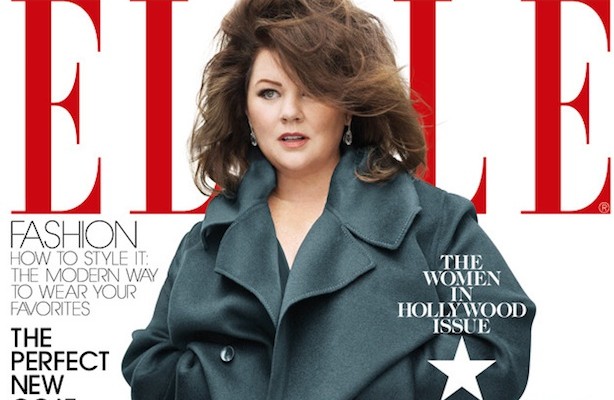
melissa_Elle

Actress Melissa McCarthy stole the film “Bridesmaids” right out from under its better known stars, including the screenplay’s author, Kirsten Wigg. In that film, her hit CBS sitcom “Mike and Molly,” and subsequent films (of varying quality), McCarthy has shown that she is s versatile, appealing comedienne with deep dramatic resources. Film critic Rex Reed, however, is mostly concerned with her weight, which is usually a component of the characters she plays and the quality, other than her talent, that sets her apart from the standard issue, impossibly thin, fit and sexy Hollywood actress.

In his withering review of her latest comedy “Identity Thief,” Reed causally refers to McCarthy as a “female hippo” and reduces her career to this: “Melissa McCarthy (Bridesmaids) is a gimmick comedian who has devoted her short career to being obese and obnoxious with equal success.” Called on his fat-bashing, Reed responded, “I have lost entirely too many friends to obesity-related diseases to pretend Ms. McCarthy’s alarming obesity is anything to applaud.”

There are two aspects of this that are striking. One is that Rex Reed, who played the pre-op Myra Breckenridge in the awful movie version of Gore Vidal’s gender-bending, and considered scandalous at the time, satiric novel (Raquel Welch, now over 70, was post-op), is still alive and reviewing, albeit obscurely until, as now, he writes something outrageous. At one time—40 years ago? Longer?— Reed was considered the most quotable and one of the most influential film critics; now, to say he is passé would be a compliment.

The other striking aspect of this incident is this:  while the culture will turn with unforgiving venom on any public figure who derides individuals for their color, sexual orientation, malady or disability, any of which would be considered cruel, bigoted, and hateful, deriding individuals because their weight doesn’t meet with aesthetic norms—among which are now out-sized breasts on otherwise fat-free frames and sharply chiseled abdominal muscles, a look that was literally freakish until the dawn of Nautilus and personal trainers—-still is largely regarded as justified and acceptable. Continue reading

Ethics Quiz: RFK Jr.’s Despicable, Private Journal

RFK Jr

News value? We already knew that the acorn doesn’t fall far from the tree—did we need to read RFK, Jr.s diary to prove it?

This is a straightforward one. Apparently a New York Post reporter somehow came into possession of Robert F. Kennedy Jr.’s personal journal for 2001. It is, as I imagine President John F. Kennedy’s journal for, say, 1962 would have been, largely a diary about sex, chronicling RFK Jr.’s battles with and evident enjoyment of the family malady, at least on the male side, sex addiction.

The journal is juicy, to say the least, and it also has a tragic side: allegedly Kennedy’s wife Mary discovered and read it shortly before committing suicide last year. RFK Jr. is a radio talk show host, an author, and something of a conspiracy theorist; he also has participated in the shameful and deadly practice of scaremongering regarding vaccines. He is also a Kennedy with a famous father, so in a small bore, minor way, he is sort of a public figure, on the same scale as, oh, let me think…Joey Buttafucco, of Long Island Lolita infamy? Patrick Wayne, the Duke’s B-movie star son? That’s not quite it…something less than Jon Gosselin, Kate’s abused ex-hubby, and more than Daniel Baldwin, the least of the four Baldwin bros.

Your Ethics Alarms Ethics Quiz is this:

Is it ethical for the news media to acquire and publicize the details of a private journal belonging to a minor celebrity with no  relevance to current events? Continue reading

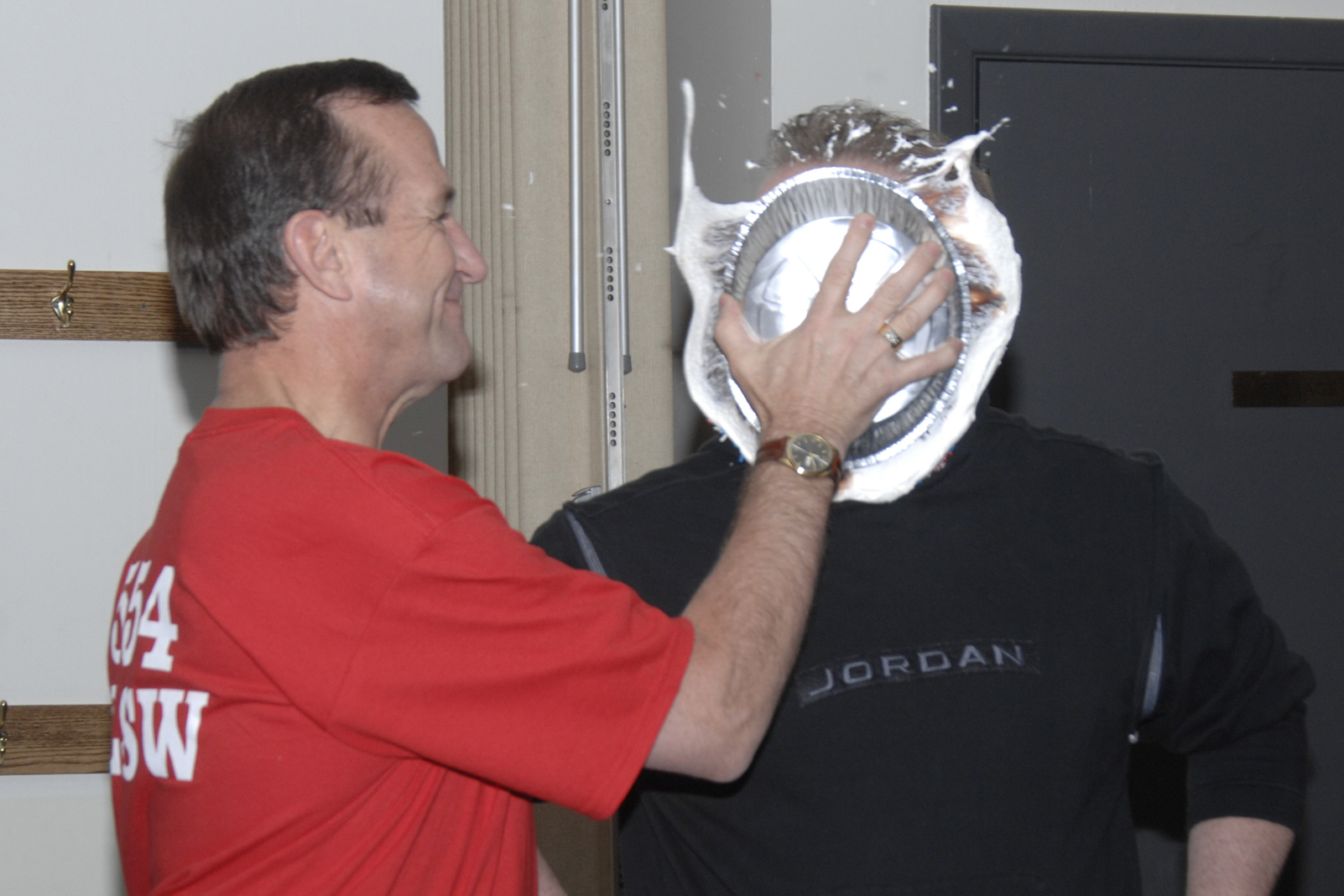
Now THAT’S An Ad Hominem Attack

"How do I rebut your argument? Here's how, you, brain-damaged Hell-spawn!"

“How do I rebut your argument? Here’s how, you, brain-damaged Hell-spawn!”

David Plouffe at least has done something useful, if not ethical.

We get a lot of accusations here—aimed at me and also between warring commenters—of using ad hominem attacks. Ad hominem attacks are indeed unethical, not because of the negative descriptions of the target they involve, which may well be accurate and fair, but because they are a dishonest and unfair debate tactic. The motive behind a true ad hominem attack is to avoid dealing with the substance of what an adversary claims, argues or asserts by attacking the person, character or background of the adversary.  The intention is to avoid the implications of a fact or illuminating opinion by asserting: “This person is bad, so don’t listen to what he has to say.”  It is a logical fallacy, of course. Whether an individual is bad or not doesn’t change the facts; a bad person may have performed a brilliant analysis, uncovered the wisdom of the ages, or uncovered the key perception that solves enduring mysteries. It is unethical for one seeking to rebut the argument to attack the arguer as if it’s the same thing. When successful, ad hominem attacks deflect the real debate and turn it into a debate about something else, focusing on the original speaker, now feeling the need to defend his honor rather than his position. Continue reading

On Civility

Civility is a core ethical virtue but a tricky one, both to define and to maintain. Peter Wehner has written a superb (and short!) essay on the topic at the Commentary Magazine site, applying it especially to political discourse.

” We can possess civility while at the same time holding (and championing) deep moral and philosophical commitments, ” Wehner writes. Continue reading