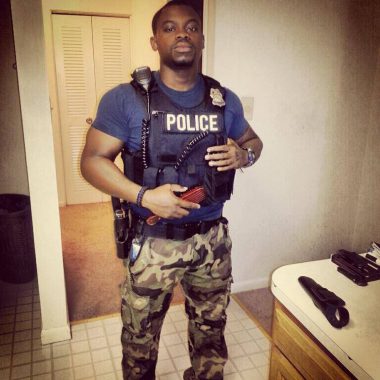
Ethics Hero (And Author Of Perhaps The Best Facebook Post Ever): Palm Beach Florida African-American Police Officer Jay Stalien

Jay Stalien

When I read published quotes from police officer Jay Stalien’s Facebook page post, now deservedly in the process of going viral, my immediate reaction was that it was a hoax, a measured and well-researched explanation of the racial unrest surrounding police shootings and the Black Lives Matter movement written by a professional pundit  and placed in the metaphorical mouth of a black police officer to give it added power and credibility. It was, in short, too good to be true.

It is true, however, as well as good. To be presented at this time is an act of courage and civic responsibility by Stalien, and his effort redeems the existence of Facebook and social media, not to mention the internet, as few posts have. In the past, someone like Stalien would have to submit a column to a newspaper editor, and agree to cuts and edits that reduced its effectiveness, if his important observations were to have any impact beyond his living room or workplace. Now he can publish himself. The First Amendment has seldom been better served.

The post is very long, but you should read it all, here.  I will only point out some highlights.

He begins, in part…

The following may be a shock to some coming from an African American, but the mere fact that it may be shocking to some is prima facie evidence of the sad state of affairs that we are in as Humans.

I used to be so torn inside growing up. Here I am, a young African-American born and raised in Brooklyn, NY wanting to be a cop. I watched and lived through the crime that took place in the hood. My own black people killing others over nothing….I used to be woken up in the middle of the night by the sound of gun fire, only to look outside and see that it was 2 African Americans shooting at each other.

It never sat right with me. I wanted to help my community and stop watching the blood of African Americans spilled on the street at the hands of a fellow black man. I became a cop because black lives in my community, along with ALL lives, mattered to me, and wanted to help stop the bloodshed.

As time went by in my law enforcement career, I quickly began to realize something. I remember the countless times I stood 2 inches from a young black man, around my age, laying on his back, gasping for air as blood filled his lungs. I remember them bleeding profusely with the unforgettable smell of deoxygenated dark red blood in the air, as it leaked from the bullet holes in his body on to the hot sidewalk on a summer day. I remember the countless family members who attacked me, spit on me, cursed me out, as I put up crime scene tape to cordon off the crime scene, yelling and screaming out of pain and anger at the sight of their loved ones taking their last breath. I never took it personally, I knew they were hurting. I remember the countless times I had to order new uniforms, because the ones I had on, were bloody from the blood of another black victim…of black on black crime. I remember the countless times I got back in my patrol car, distraught after having watched another black male die in front me, having to start my preliminary report something like this:

Suspect- Black/ Male, Victim-Black /Male.

Then Officer Stalien, in the same powerful style, proceeds to answer typical complaints from the black community by presenting  “FACTS” that too many African-Americans, elected officials, journalists and partisans refuse to believe, accept, or comprehend: Continue reading

Four Supreme Court Decisions: Abortion, Guns, Affirmative Action, Corruption…And Ethics. Part I: Fisher v. University of Texas

Abigail Fisher: Not dark enough to get "an equal shot"

Abigail Fisher: Not dark enough to get “an equal shot”

The under-populated U.S. Supreme Court recently made four decisions on issues with ethical principles involved. This is the first of four posts reviewing the ethics implications of the decisions.

I. Affirmative Action: Fisher v. University of Texas

The University of Texas’ admissions program guarantees admission to top students in every high school in the state. It is dubbed the  Top 10 Percent program, though the percentage cutoff is flexible. A second part of the admissions program admits other students from Texas and elsewhere using standards that take into account academic achievement and other factors, including race and ethnicity. Many colleges and universities base all of their admissions decisions on such grounds. The case before the Court challenged that part of the program, and presented an opportunity for the Supremes to finally declare affirmative action unconstitutional, as previous opinions hinted they might do some day.

This was not the day, however. Justice Kennedy, writing for the majority, said courts must give universities significant but not total autonomy in designing their admissions programs, writing:

“A university is in large part defined by those intangible ‘qualities which are incapable of objective measurement but which make for greatness.’ Considerable deference is owed to a university in defining those intangible characteristics, like student body diversity, that are central to its identity and educational mission.But still, it remains an enduring challenge to our nation’s education system to reconcile the pursuit of diversity with the constitutional promise of equal treatment and dignity.”

This defines either an ethical dilemma, which the Court’s majority is punting, or an ethical conflict…which the Court majority is punting. Is diversity an ethical objective, or a practical one, that is, a powerful non-ethical consideration? It is hard to argue that diversity in a student body isn’t desirable—to enhance the educational experiences of students, to avoid having a permanent, under-credentialed underclass, to “look like America.” However, fairness and common sense argue that admitting one candidate over another who is better qualified simply because of ethnicity or race is per se wrong. I don’t blame the Court at all for not making a clean call.

As usual, President Obama described the result in simplistic terms. “I’m pleased that the Supreme Court upheld the basic notion that diversity is an important value in our society,” he told reporters at the White House. “We are not a country that guarantees equal outcomes, but we do strive to provide an equal shot to everybody.”

Thank you, President Obvious. The crux of the case, however, was what should be done when using race as a standard for admission to attain that diversity denies an “equal shot” to someone who has the misfortune to be white, like Abigail Fisher, or Asian-American. Continue reading

Virginia’s Governor Restores The Vote To Felons

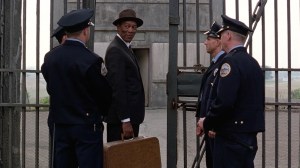
"First thing on my mind, now that I'm finally out of Shawshank, is to register to vote. Then I figure I'll look up Andy..."

“First thing on my mind, now that I’m finally out of Shawshank, is to register to vote. Then I figure I’ll look up Andy…”

Virginia’s Gov. Terry McAuliffe signed an executive order yesterday  that restored the voting rights of 206,000 ex-felons. The order applies to all violent and nonviolent felons who served their sentence. Virginia is one of a minority of states, only ten, that do not automatically restore rights upon completion of a felony sentence and one of only four  that require an application by each individual felon and action by the governor. Because this is an executive order, McAuliffe will have to reissue it every month.

McAuliffe, who is the political equivilent of Prof. Harold Hill in “The Music Man,” issued the predictable triumphal blather, saying from the Virginia Capitol steps after being introduced by a gospel choir,

“We benefit from a more just and accountable government when we put trust in all of our citizens to choose their leaders.It has taken Virginia many centuries, unfortunately, to learn this lesson. But today, we celebrate its truth.”

We get a more just and accountable government when we put trust in those who have proven themselves untrustworthy, eh?

That’s one of McAuliffe’s talents: he can make a measure that isn’t necessarily unethical at all seem like it.

Is it unethical to tell felons that they are banned from voting and running for office for life? It’s a policy choice, that’s all. A state can make lifetime disenfranchisement part of the official price for serious lawbreaking on the theory that felons have shown themselves to be  insufficiently respectful of the laws and society in general, and lowered themselves into the ranks of permanent second class citizens by their own choices and conduct. I won’t say that’s not fair: it depends what one thinks fair is. It’s tough. It signals a high regard for the rights to participate in self-government. Continue reading

More Casting Ethics: The Stunt Performer Dilemma

Penelope Cruz and her stunt double. Works for me!

Penelope Cruz and her stunt double. Works for me!

To recap: This month, we have already debated a wide range of casting ethics controversies…

The position of Ethics Alarms is identical in all three controversies. The only consideration in casting a role should be the director’s artistic assessment of who will do the best job meeting the artistic and commercial demands of that role, under the constraints of the project, which can include budget, locale and workplace conditions. Ethnicity, race and off-screen appearance should be secondary, and better still, irrelevant. Efforts to substitute political, diversity or affirmative action goals  for artistic ones undermine the integrity of the work, and are unfair to the audience as well as the work itself. Make-up is a tool of the performing arts, and is unrelated to blackface, which was a convention designed to denigrate African Americans. Confounding make-up used to allow a performer to play a character of a different ethnicity, race or skin shade with minstrelsy and blackface is intellectually dishonest or ignorant.

Now comes a new issue in this spectrum: the use of white, male stunt performers to substitute for black or female stars.

This article, in The Telegraph,  begins with the assumption that the practice is inherently unethical:

“For decades, white stunt performers would paint their faces and bodies black to double for black stars. Similarly, it was not uncommon for stuntmen to put on heels and wigs to double for women. This was not happening in a vacuum: all the while, black and female stunt performers were pressing for recognition and the right to work in the jobs for which they were best suited….There is an understanding within the studios that such incidents don’t look good and need to be kept hush-hush.”

If, as the article and the Hollywood activists it interviews assert, the practice of “blacking up” white stunt performers is designed to exclude qualified black stunt performers from working, then of course it is unethical. Given the close-knit stunt performer community, described as a white, male, “old boys network” in the essay, this is certainly possible, even likely. Nevertheless, the assertion that there is anything intrinsically unethical, unfair or wrong with using a disguised white stunt performer to substitute for a black star, a male stunt performer to substitute for a female star, or any other variation imaginable is, as with the Hispanic and Afghan complaints, based on non-existent ethical principles. Continue reading

Unethical Quote Of The Week: Nautika Harris

miami-teen-home-intruder

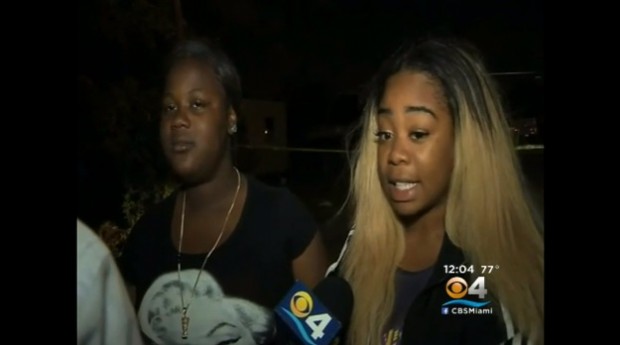
“You have to look at it from every child’s point of view that was raised in the hood. You have to understand … how he gonna get his money to have clothes to go to school? You have to look at it from his point of view.”

Nautika Harris (above, right), the cousin of a 17-year-old teen shot dead by a 54-year-old Miami woman as he tried to exit her home, which he had entered to burglarize.

Miami-Dade police say that Trevon Johnson, 17, burglarized the home of a 54-year-old old woman last week.

She was not in the house when the break-in occurred, but after being alerted by her surveillance system, she rushed home and found Johnson climbing out of a window. She shot him dead, and his relatives are outraged.

“I don’t care if she have her gun license or any of that. That is way beyond the law … way beyond,” Johnson’s cousin Nautika Harris told local radio station WFOR. “He was not supposed to die like this. He had a future ahead of him. Trevon had goals … he was a funny guy, very big on education, loved learning.”

And loved burglary, apparently. Continue reading

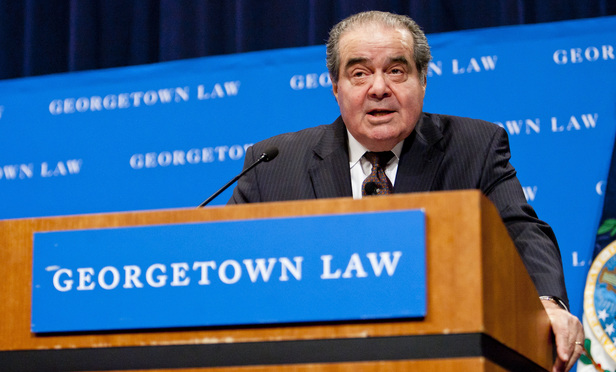
Ethics Observations On Georgetown Law Center’s Scalia Foofarah

Scalia-Georgetown

I am a Georgetown University Law Center grad, as well as a former administrator there. I also know and have personal relationships with several members of the faculty. None of this especially informs my ethical analysis of the community argument there that arose from a rather innocuous official expression of respect and mourning in the wake of Justice Scalia’s death, but if anyone wonders why I’m posting about this rather than many other ethics issues nipping at my heels, that’s part of the reason. The other reason is that this academic dust-up raises interesting ethics issues, and has received national publicity.

Observations on the tale as it has unfolded:

1.  Georgetown Law Center issued a press release mourning the death of Antonin Scalia, including a statement from Dean William M. Treanor that read:

Scalia was a giant in the history of the law, a brilliant jurist whose opinions and scholarship profoundly transformed the law. Like countless academics, I learned a great deal from his opinions and his scholarship. In the history of the Court, few Justices have had such influence on the way in which the law is understood. On a personal level, I am deeply grateful for his remarkably generous involvement with our community, including his frequent appearances in classes and his memorable lecture to our first year students this past November. The justice offered first-year students his insights and guidance, and he stayed with the students long after the lecture was over. He cared passionately about the profession, about the law and about the future, and the students who were fortunate enough to hear him will never forget the experience. We will all miss him.”

[Note: In the original post, I missed the first line, and kept missing it. Don’t ask me why. The text has been finally, after a couple botched attempts, been revised to include it.]

Is there anything inappropriate about the dean’s statement? Not in my view. This is nothing but a traditional expression of professional respect on behalf a prominent institutional member of the legal community. There is nothing in the statement, save for the last sentence, that anyone could argue is untrue. Countless academics, as well as Scalia’s more liberal colleagues, did learn “a great deal from his opinions and his scholarship.” He was an influential and significant figure on the Court. Scalia was generous with his time and passion as a teacher, and by all accounts he was a good one.

The opening statement,  “Scalia was a giant in the history of the law, a brilliant jurist whose opinions and scholarship profoundly transformed the law,”  seems to be what rankled Scalia critics. It shouldn’t have. At worst it is standard memorial puffery. But calling Scalia a giant “ in the history of the law” seems fair whether you agree with his jurisprudence or not: he is certainly among the 20 or so most quoted, most debated, and most provocative justices. The rest shouldn’t be troubling to anyone who isn’t suffering from Scalia-phobia. A Justice can be brilliant and transformational while being wrong.

None of the reports of the controversy ignited by this standard issue sentiment mention it, but Georgetown Law Center isn’t on the Georgetown campus. It has its own campus that is a 15 minute walk from the Supreme Court. Law students regularly attend oral arguments; I did: it was one of the great advantages of studying law there. More than any law school, the Law Center has good reason to feel a special affinity to the Court and all its justices.

2.  What about the last sentence? Is it appropriate for Treaner to speak for the law school community and say that “We will all miss him”? He was reasonable and fair to assume that.  Unfortunately, in today’s vicious partisan divide where opinions and sincere positions reached after thought and research are too often treated as proof of consort with Satan, and ion which even lawyers, who are trained not to take legal arguments personally, are frequently unable to respect a colleague for a well-reasoned argument that they may still think is completely wrong, it was not a safe assumption. Pillory the dean, then, for giving all members of his community the benefit of the doubt, and assuming they are capable of grace, compassion, fairness, professional respect and civility.

It’s still not unethical to assume one’s colleagues have some class.

3. They all don’t, unfortunately. Law Center professors Gary Peller and Mike Seidman (I know Mike, never met Gary) then used the Campus Broadcast system, usually used for event announcements, invitations and policy changes, to send a message  to all members of the student body titled, “Responses to Dean Treanor’s Press Release Regarding Justice Scalia.”  Peller’s statement reads,

Like Mike Seidman, I also was put-off by the invocation of the “Georgetown Community” in the press release that Dean Treanor issued Saturday. I imagine many other faculty, students and staff, particularly people of color, women and sexual minorities, cringed at headline and at the unmitigated praise with which the press release described a jurist that many of us believe was a defender of privilege, oppression and bigotry, one whose intellectual positions were not brilliant but simplistic and formalistic….That ‘community’ would never have claimed that our entire community mourns the loss of J. Scalia, nor contributed to his mystification without regard for the harm and hurt he inflicted.”

This was partisan grandstanding of the worst kind. The professors, of course, have a right to proclaim their opinions to the student body any time they want to, but their complaint here was petty and mean-spirited. It also models behavior that is poisonous both to the legal profession and the culture as a whole. The are saying, in essence,We don’t mourn him, we won’t miss him, and we’re glad to be rid of him, because his legal theories aren’t our legal theories, and we are on the side of the angels while he was an uncaring villain.” Such a message accomplishes nothing positive, and much that is destructive. The professors engaged in demonizing, when their profession and their duty is not to denigrate but reason. If they really think they can prove that Scalia was a defender of privilege, oppression and bigotry, they can make that case in a scholarly paper: I doubt that they can. Scalia often defended the rights to engage in conduct that he did not personally support, as well as some he did: the sloppy rhetoric of Seidman and Peller echoes the legally ignorant who accuse criminal defense attorneys of defending robbery and murder. Continue reading

KABOOM!* The YMCA Camp Slavery Re-Creation And I Can’t Believe I’m Typing This…

Another day of fun at the YMCA Camp!

Another day of fun at the YMCA Camp!

Maybe the reason I can’t believe it is that it’s difficult to believe anything when one’s brains decorate the walls.

The Detroit News  reports, in a story that I initially assumed was a hoax, that the YMCA Storer Camps in Jackson, Michigan included an  “educational” activity called “Underground Railroad”) in which black children were asked to play runaway slaves, as some teachers and camp instructors acted as slave masters, chasing them down using real horses. Once captured, the children were “auctioned off.” One of the young “slaves” complained to her mother, who wrote an e-mail to the elementary school that subjected its charges to this fun exercise, reading in part:

“As the mother of an African American son and daughter, I am dismayed that Pardee Elementary would authorize and condone such an extremely racially insensitive and damaging activity…The slave masters (camp instructors and teachers) had certificates which allowed them to pay for the slaves, and the students were required to hold up the certificates when they were bought or sold.”

“My daughter said she was scared,” another mother complained. “One of the guys (camp instructors) re-enacted killing a deputy. They should not do that in front of a 10-year-old, and not when kids are hundreds of miles away from home. If they want to teach black history, they should do that in the classroom.”

Ya think? Continue reading

Comment of the Day: “Unethical High School Assembly Video Of…What? The Month? The Year? Eternity?”

race

I must admit: I thought the “unequal opportunity race” video that was the subject of my post to be so outrageously simplistic, exaggerated, insulting to white Americans and discouraging to minority Americans that nobody would defend it. The lively debate that the post sparked proved that the white privilege deflection has seeped into mainstream thinking far more than I had previously understood, and that the position the progressive movement wants to communicate to African Americans is that absent aggressive, government-executed hobbling of present day white citizens as they pursue their own ambitions and dreams, and opportunities for their children, black Americans are doomed to comparative failure, cursed to be victims of traps, gaping craters and metaphorical sharks.

Late in the debate, commenter Chris Bentley, himself an African American, provided a different perspective in two long posts. I am combining them as his Comment of the Day, on the post ,Unethical High School Assembly Video Of…What? The Month? The Year? Eternity?.

To which I say b.s. (as a black man). I have no doubt, no doubt whatsoever, that I have succeeded (and failed at times) solely based on my merit, talents, and desire. I have not been unemployed for even a second, since the age of 18 (I am 37). I have applied to many, many jobs that I have desired, and been hired for many of those jobs. I have been accepted and attended 8 (8!) different colleges, earning 3 different degrees. I have spent the last 20 years working in education, from ECE to college, and spent 3 years as a preschool director (a black male preschool director is about as rare as a unicorn that poops gold).

None of this is meant to be taken as bragging, as my story is no more successful than anyone else on this blog. Nor am I more successful then any average black man, who grew up with loving, educated parents, who forced me to have a good head on my shoulders, taught me the importance of education, and did not teach me to be distrustful of whites, or to blame shift my failures elsewhere. I find it patronizing to be told that individual merit is not enough for me to succeed, when compared to whites; that if I truly want to compete on an even playing field, I need those same whites to level the field.

No. I. Don’t.

Continue reading

Dear BlackLivesMatter And Friends: If You Won’t Be Responsible, At Least Leave LeBron James Alone

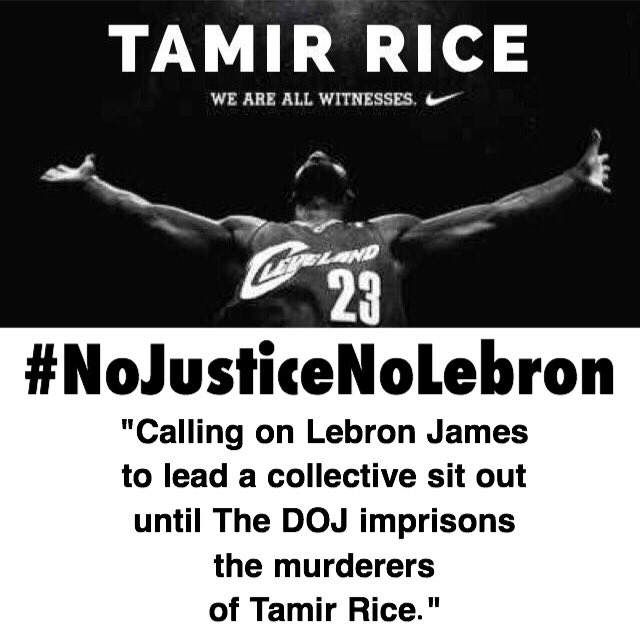
No Justice LeBron

It should be apparent by now that BlackLivesMatter is a racist domestic terrorist organization. Terrorism is causing chaos for the sake of causing chaos in the imagined pursuit of a political agenda. That’s what the group, smug and shameless as ever, did over the post-Christmas weekend, disrupting the Mall of the Americas and blocking traffic at the Minneapolis airport. No, they haven’t killed anyone yet; they claim to be non-violent. We’ll see about that when they get sufficiently frustrated. One thing is certain about irrational, self-glorifying organizations: you never know how irrational they will get.

Now the Tamir Rice mess in Cleveland has presented BLM and its allies—which include all three Democratic candidates for President, according to their pandering rhetoric, as well as the Democratic National Committee— with a target more relevant to their alleged mission than disrupting children’s choir performances, losing money for small businesses and inconveniencing  Minnesotans who never did an African American harm in their lives. Using the hashtag #NoJusticeNoLebron, the Ferguson activated activists, led by writer Tariq Touré, have launched a Twitter barrage  imploring NBA superstar and Cleveland Cavaliers hometown hero LeBron James to refuse to play in NBA games until the Department of Justice, “imprisons the murderers of Tamir Rice.” Justice is of course investigating the fatal November 2014 shooting, since the Obama Administration tacitly encourages the divisive myth that any time a  white officer shoots a black man, it is presumptively a civil rights violation.

Like virtually everything that has come out of the incoherent, anti-white, anti-police movement surrounding the various controversial police shootings (of blacks only, however, though there have been more fatal shootings of whites…but never mind, that doesn’t advance the mythical narrative), this plan is ludicrous, unfair, and demonstrates the ignorance and/or contempt the protesters have for due process and the rule of law. Continue reading

Ethics Observations On The Washington Post’s Fatal Police Shootings Study

policeshootings

The Washington Post just released its own study of 2015 police shootings, including statistics that that the FBI, which admitted to the Post that it has not done a thorough job of tracking the data, has missed. Writes the Post:

The Washington Post is compiling a database of every fatal shooting in the United States by a police officer in the line of duty in 2015. The Post is tracking more than a dozen details about each killing — including the race of the deceased, the circumstances of the shooting, and whether the person was armed — by culling local news reports and monitoring independent databases such as Killed by Police and Fatal Encounters. In some cases, The Post conducted additional reporting. The Post is documenting only shootings in which a police officer, while on duty, shot and killed a civilian — circumstances that most closely parallel the 2014 killing of Michael Brown in Ferguson, Mo. The Post is not tracking deaths of people in custody, fatal shootings by off-duty officers or deaths in which police gunfire did not kill the individual.

The FBI and the Centers for Disease Control and Prevention log fatal shootings by police, but officials acknowledge that their data is incomplete.The Post’s database will be updated regularly as new fatal shootings are reported and as new facts emerge about individual cases. The Post is seeking assistance in making the database as comprehensive as possible. To provide information about fatal police shootings in 2015, send us an e-mail at policeshootingsfeedback@washpost.com. The Post is also interested in obtaining photos of the deceased and original videos of fatal encounters with police.

Elsewhere, the Post makes it clear that “incomplete” hardly begins to describe the FBI’s negligence:

The landscape of police shootings is surprisingly thinly explored. The FBI is charged with keeping statistics on such shootings, but a Post analysis of FBI data showed that fewer than half of the nation’s 18,000 police departments report their incidents to the agency.The Post documented well more than twice as many fatal shootings this year as the average annual tally reported by the FBI over the past decade. The FBI and the federal Bureau of Justice Statistics now acknowledge that their data collection has been deeply flawed. FBI Director James B. Comey called his agency’s database “unacceptable.” Both agencies have launched efforts to create new systems for documenting fatalities.

Observations: Continue reading