Comment of the Day: “Ethics Quiz: The Kidneys of Orlac”

But first, a last act of altruism...

But first, a last act of altruism?

The presumptive winner of the annual Ethics Alarms award for “Commenter of the Year” in 2013, texagg04has delivered a Comment of the Day expanding the topic of the post regarding a condemned prisoner in Ohio who wrangled a postponement of his execution so he could donate his organs to relatives. Here is  texagg04’s  take on “Ethics Quiz: The Kidneys of Orlac.” I’ll have some comments at the end.

“First, a murderer or other capital criminal being held responsible for his or her conduct seems to be in conflict with the same individual being allowed to display charity when you say they  forfeited their freedom, all of it, with their commission of a  capital crime. I’m not so sure it should be viewed from that angle.

Punishment serves a variety of purposes. Some petty crimes receive punishment designed to compensate, as best as can be, the victim – the victim being dead, capital punishment does not serve this purpose. Some crimes are of an anti-social nature, and the apt punishment seeks to rehabilitate or reconcile the perpetrator to the community. Capital crimes are so heinous that we have determined that the perpetrator must be completely cut off from society, through their death. In this case, the punishment does nothing for the victim OR for the criminal; the punishment is designed solely for the benefit of society.

If the criminal wishes to donate his/her organs to (what we must assume is to salve their own conscience – even though we can, probably, cynically assume is just a delaying tactic), we should not care one bit. They are gaining no material benefit from the community, nor are they engaging in any direct interaction with the community – so the act of cutting them off from the community as part of the punishment is still complete. Continue reading
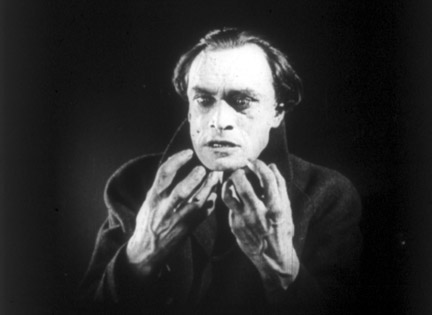
Ethics Quiz: The Kidneys of Orlac

Kidneys, okay, maybe...BUT NOT THE HANDS! NEVER THE HANDS!!!

Kidneys, okay, maybe…BUT NOT THE HANDS! NEVER THE HANDS!!!

One individual who may be having complicated sentiments this Thanksgiving is Ronald Phillips, who is current residing on Ohio’s death row. He was supposed to be dead by now, but was spared at the last moment when Governor John Kasich issued a stay of execution to ponder Phillips’ unusual request, which had been rejected by prison officials. Phillips, you see, is not a nice guy, as his current address might suggest. He was convicted of raping and killing the three-year-old daughter of his girl friend. (They subsequently broke up. It was him, not her.) He had experienced a change of heart, however, or rather, wished to facilitate one. His sister needs a heart transplant, and he wants his to be passed over to her after his execution by lethal injection. He also wants his kidneys donated to his mother, who is on dialysis because hers are failing, and any other parts of him that might save a life given to others.

Presumably this will not include his hands, because there are a couple of horror movies, one old one in particular, about what happens after that operation, and they are pretty scary. There are no horror films that I know of, however, about the aftermath of getting an executed murderer’s kidney.

Yet.

Gov. Kasich, who is a nice guy, has explained that as heinous as Phillips’ crime was, the state should try to accommodate his desire to save innocent lives. The tentative plan is to hollow Phillips out, execute him in July, and then harvest anything that’s left.

Have you seen that movie, by the way?

Your Ethics Alarms Ethics Quiz:

Should such a request by a condemned prisoner be granted?

I’ll play devil’s advocate here, except that the advocate for the child rapist deserves the title more than I do. I think Kasich is confused, and that Phillips or his lawyers have figured out one more way to foil the criminal justice system. Continue reading

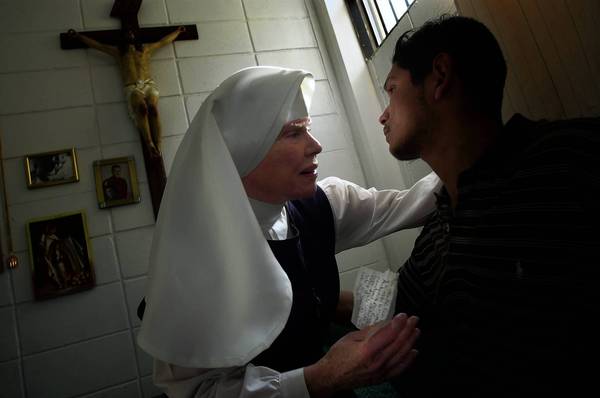
Ethics Hero Emeritus: Sister Antonia Brenner, 1926-2013


Sister Antonia dies at 86

Sister Antonia caring for a prisoner in La Mesa in 2002

Once again, someone remarkable has died whose life was insufficiently celebrated while she was alive. I had never heard of Antonia Brenner until yesterday. I wish I had.

Mary Clarke was born on Dec. 1, 1926—we share a birthday!— the second of three children. Her father, Joseph, was a prosperous business executive; the family had a second home overlooking the Pacific. After her second marriage, to Carl Brenner, she was known as Mary Brenner, and was the mother of eight children, comfortably ensconced in Beverly Hills.  While struggling through her second divorce, she began doing charity work for the poor in Los Angeles.  A priest friend, Monsignor Anthony Brouwers, took  her to La Mesa state penitentiary in Tijuana, Mexico, which was filled with convicted murderers, thieves, gang members, rapists and other hardened criminals, all living in brutal and inhumane  conditions even by the horrible standards of U.S. prisons. Everything—her life, her name, and most of all, the existence of the prisoners, changed after that.

She became devoted to their plight as human beings, and brought the prisoners basics of comfort that were being withheld from them, at her own expense. She gave them aspirin, blankets, tooth paste, soap, even prescription eyeglasses. She carried spare toilet paper with her, and kep a lookout for other missing essentials. Brenner acquired a prison contract to sell soda pop to prisoners and then used the proceeds to post bail for minor offenders. She began spending more and more time with the prisoners, gaining their affection and trust, even singing in their church services. She treated them with dignity and kindness: when prisoners died, it was Mary Brenner who prepared him for burial. Continue reading

Presenting the Ethics Alarms Heroes’ Hall Of Honor

remember

Today, the anniversary of September 11. 2001, American minds should be occupied with thoughts of gratitude for heroes, the often anonymous and unknown people we may pass in the street every day, as well as the justly famous and celebrated, who make our lives and many others better by living their own selflessly and well. They are our salvation, role models and neighbors, and they teach us the lesson that all is never lost, and hope is always thriving, as long as there are good and courageous people who will do the right thing, no matter what the cost, when fate turns to them.

This seems like a propitious time to dedicate the Ethics Alarms Heroes Hall of Honor, the list of the Ethics Heroes Emeritus whose stories have been told here (and on this site’s predecessor, The Ethics Scoreboard.) Every current member of the Hall is now deceased, like the brave men and women who died this day, 12 years ago. Each of them, in a unique way, teaches how human beings can rise above the vicissitudes of mere survival, self-interest, personal benefits and the base desires of the species  to live  meaningful and virtuous lives. Some accomplished this over decades, some with one brilliant and transforming act of distinction.

There are currently 32 members enshrined in this virtual Hall. Obviously, it is far from complete. They are just symbolic representatives, worthy ones, of millions more who once breathed the same air we do today, and like those who perished twelve years ago, face the prospect of being forgotten over time, as we all go about the consuming task of getting from one day to another. Each one of us, I believe, is capable of emulating their example.

Here are the thirty-two members and their stories, as of this date,

September 11, 2013... Continue reading

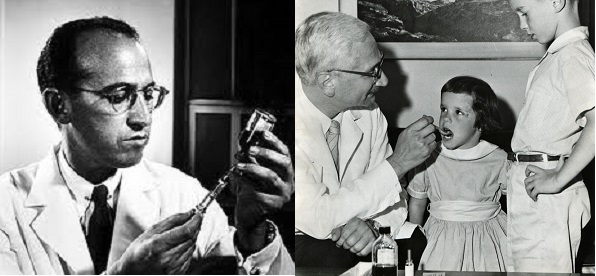
Exemplary Ethical Conduct I’m Embarrassed I Didn’t Know About Dept.: Jonas Salk and Albert Sabin

Salk and Sabin

Salk and Sabin, true professionals. Did you know?

You learn the damnedest things in the damnedest places, which is a good reason to keep your ears open wherever you may be.

Last night I found myself listening to Michael Savage, easily the most offensive of all conservative talk show hosts, and he gives Rush and Mark Levine a run for their money in the ego category, too. I only listen to Savage by accident, and then only in bites of five minutes or less; it frightens me that millions of people might be influenced by such consistently hateful commentary.

But Savage (whose real name is Michael Alan Weiner) is no dummy, and not infrequently goes off on learned tangents about philosophy, history or religion in between declaring that the nation is under Nazi rule. Yesterday, just as I was reaching for the dial, he disclosed that one of his heroes growing up was Jonas Salk, not because he invented the first effective polio vaccine, but because he refused to patent it, and gave it to the world for the benefit of humanity. A bit later, Savage noted that Albert Sabin, Salk’s bitter rival who later invented the oral vaccine, also declined to profit from his invention.

Could all this be true, I wondered?  If it is true, why did I not know about it? Why doesn’t everybody know about it? Continue reading

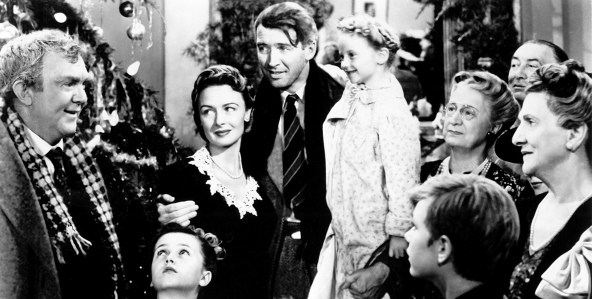
The Complete “It’s A Wonderful Life” Ethics Guide [UPDATED]

 Frank Capra’s 1946 masterpiece “It’s A Wonderful Life” is one of the great ethics movies of all time, perhaps the ethics movie of all time. In 2011 I prepared a guide through its complex ethics thicket. The post was divided into three separate posts, and I eventually combined them s0 readers can have the pleasure, if one can call it that, of watching the film like I do: having ethics arguments the whole way through. And now, here is your guide. Additions are welcome and encouraged.

1. “If It’s About Ethics, God Must Be Involved”

The movie begins in heaven, represented by twinkling stars. There is no way around this, as divine intervention is at the core of the fantasy. Heaven and angels were big in Hollywood in the Forties. Nevertheless, the framing of the tale advances the anti-ethical idea, central to many religions, that good behavior on earth will be rewarded in the hereafter, bolstering the theory that without God and eternal rewards, doing good is pointless.

We are introduced to George Bailey, who, we are told, is in trouble and has prayed for help. He’s going to get it, too, or at least the heavenly authorities will make the effort. They are assigning an Angel 2nd Class, Clarence Oddbody, to the job. He is, we learn later, something of a second rate angel as well as a 2nd Class one, so it is interesting that whether or not George is in fact saved will be entrusted to less than heaven’s best. Some lack of commitment, there—then again, George says he’s “not a praying man.” This will teach him—sub-par service!

2. Extra Credit for Moral Luck Continue reading

Ethics Quiz: The Case of the Unauthorized Clean-Up

The photo on top is how the lot looks today, thanks to a generous citizen. Philadelphia wants it put back to the way it looked in the lower photo. Wait…WHAT?

Can an act that benefits everybody still be unethical? That’s the underlying conundrum in this week’s Monday Warm-Up Ethics Quiz.

In the Point Breeze neighborhood of Philadelphia, a city-owned lot was in nightmarish condition, filled with trash, weeds and rats. Ori Feibush owned a coffee shop that backed onto the lot, and had repeatedly petitioned the city to do something about it, like clean it up. Feibush, who also is a real estate developer, says he submitted seven written requests to buy or lease the land, calling the Philadelphia Redevelopment Authority about it 24 times. There was no response to any of this, and the city claims that it has no record of any inquiries.

Finally, Feibush couldn’t stand the mess any more. He spent more than $20,000 of his own money to clean up the lot, removing more than 40 tons of junk, garbage, and trash. Point Breeze residents are thrilled.

The city, however, is threatening to take legal action against Feibush for trespassing, explaining through a spokesman that “Like any property owner, [the Philadelphia Redevelopment Authority] does not permit unauthorized access to or alteration of its property. This is both on principle (no property owner knowingly allows trespassing) and to limit taxpayer liability.” It is demanding that Feibush return the land to its original condition—that is, fill it up with garbage so it is an eyesore, dangerous, and useless again.

Your Ethics Quiz:
Who is in the wrong, the city, or Ori Feibush? Continue reading

Ethics Quiz: The Vetoed Wish

“When you wish upon a star…it depends how sick you are!”

This one is so convoluted with cross-cutting issues that I’m not going to even try to make the call until I read some responses.

McKenna May is four-years-old and has survived leukemia. Her mother and grandmother submitted her wish to go to Walt Disney World to the Make-A-Wish Foundation, which, according to its mission statement, selects children with life-threatening medical conditions and grants their wishes. McKenna’s wish was granted by the charity, but then withdrawn  because her father, William May, who is divorced from McKenna’s mother, refused to sign the required approvals. He believes that the Make-A-Wish funds should be spent on children who are terminally ill, and not children like McKenna, who have been cured. McKenna’s mother, Whitney Hughes, says that the real reason May has killed his daughter’s dream is to punish Hughes for restricting his visiting rights.

Your Ethics Alarms Quiz Question:

Assuming May is not doing so out of spite, is his decision to pass up his daughter’s dream trip to the Mouse Kingdom so that a more needy child can be helped an altruistic and noble gesture, or an unethical act of disloyalty and betrayal to his young daughter? Continue reading

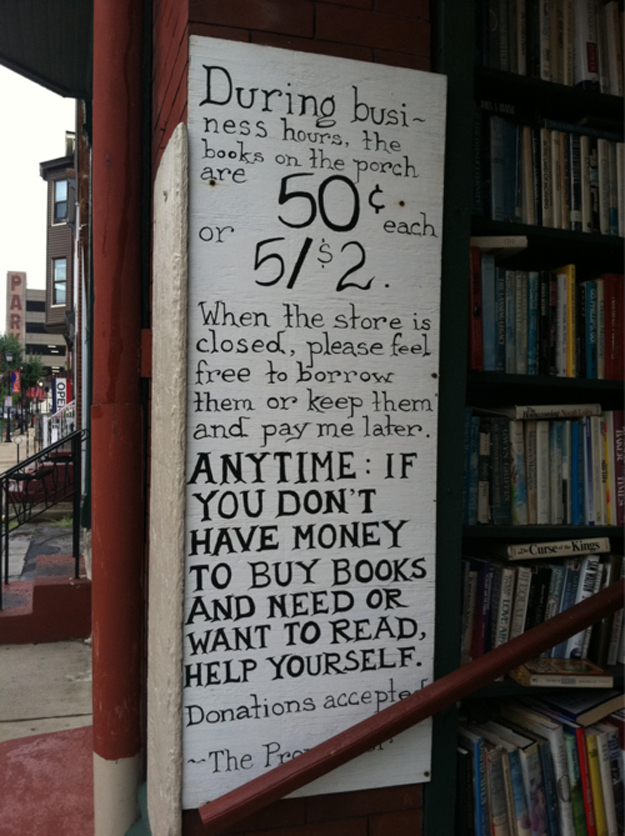
Remember, Things Are Better Than They Seem…There’s Photographic Proof!

Much gratitude is due to Buzzfeed for this lovely and timely sequence of  “21 Pictures That Will Restore Your Faith in Humanity,” of which the photo above is one. Yes, I’m sure one or more may be photoshopped. At this point, I really do not care.

I don’t know about you, but I need a little reinforcement today.

My Field of Dreams

Yesterday, an Off-Broadway musical closed that I launched on its remarkable run nearly 12 years ago. The show had productions in four states, D.C. and London; it had over 450 performances; it became the cornerstone of one very talented (and very nice) actor’s career, and an important opportunity for several others. It gave a dear friend immense pleasure, satisfaction and recognition in the final decade of his life, and probably saved my theater company from bankruptcy. Most important of all, perhaps, is that it entertained thousands of people. If I got bopped by a trolley tomorrow, the show would undoubtedly stand as one of the major accomplishments of my entire strange, eclectic, under-achieving life.

And yet…feeling good about the unlikely saga of the show, now that it has finally (probably—it has risen from the dead before) seen its last audience, takes considerable effort for me, and has from the beginning. My satisfaction is more intellectual than emotional, because I know that I personally benefited less from the show in tangible ways in proportion to my contribution to it than anyone else involved. Although I restructured the script, re-wrote, added and cut lines, wrote new lyrics to one song and added two others to the show, including the finale, I’m not credited as a co-auther. I own no part of the property, and never received a dime in compensation. Those closely connected with the original production know all of this, but the extent of my role in the creation and success of the show has been invisible to audiences for over a decade. Continue reading