When Ethics Alarms Don’t Ring: Nikki Haley’s Answer To “What Caused The Civil War?”

At a New Hampshire town hall, long-shot GOP Presidential wannabe Nikki Haley was asked what she believed caused the Civil War. She answered,

“I think the cause of the Civil War was basically how government was going to run. The freedoms and what people could and couldn’t do….I think it always comes down to the role of government and what the rights of the people are. And I will always stand by the fact that I think government was intended to secure the rights and freedoms of the people. It was never meant to be all things to all people. Government doesn’t need to tell you how to live your life. They don’t need to tell you what you can and can’t do. They don’t need to be a part of your life. They need to make sure that you have freedom. We need to have capitalism. We need to have economic freedom. We need to make sure that we do all things so that individuals have the liberties so that they can have freedom of speech, freedom of religion, freedom to do or be anything they want to be without government getting in the way.”

When the questioner said it was “astonishing” that she didn’t mention slavery, Haley replied: “What do you want me to say about slavery?” and called for the next question.

Continue reading

PM Ethics Shadows, 4/12/2022: Civil War Memories, Crazy Climate Change Terrorists, Someone Figures Out That BLM Is A Scam, And More [Corrected]

The Civil War started on this date in 1861, as Southern forces fired on Fort Sumter in South Carolina’s Charleston Harbor. That’s about all that needs to be said. All wars are ethics nightmares, but none has had more ethics ramifications for this country, from the lives sacrificed to end slavery, to the war crimes of Andersonville, and the total war tactics of Sherman, to the myriad instances of astounding courage, cruelty and incompetence on the battlefields and the ongoing debate about how best to glean the right ethics lessons from them. (Tearing down statues is not it, though.) The Civil War took away our greatest POTUS, Lincoln, and gave us Presidents Grant, Hayes, Garfield, Arthur, Harrison and McKinley, Civil War veterans all. The one non-veteran in the sequence, Grover Cleveland, is an ethics controversy himself because of it: Grover paid someone else to take his place in the draft. And yet….try asking the nearest college grad to give you the dates of the Civil War. I asked a Cornell law grad and former associate of one of the most prestigious law firm in the nation once.
She guessed “Somewhere in the 1930s, right?”

1. I’ll take “Unethical environmental fanatic nutballs, Alex!” Adbusters, a self-described “international collective of artists, designers, writers, musicians, poets, punks, philosophers and wild hearts” posted instructions on how to deflate the tires of “rich people’s” gas-powered vehicles. [Pointer: JutGory] “Wedge gravel in the tire valves, leaflet the SUV to let them know the tires are flat and why it was done, and walk away. It’s that simple,” the group said in a tweet. The group cautioned “to avoid targeting vehicles with disabled stickers or hangers.” That’s considerate of them…

This is what climate change hysteria does to people who lack ethics alarms. Here’s what they want you to leave on the windshield when you disable a car:

2. Good. Now what took you so long? On the Huffington Post, progressive opinionater Stephen Crockett authored a rueful essay bemoaning the fact that Black Lives Matter is apparently a racket. (Please note that this space figured that out years ago, and it wasn’t hard.)

He writes, Continue reading

Morning Ethics Warm-Up, 7/2/2021: Remembering The Epic Second Day Of The Battle Of Gettysburg

Little Round Top

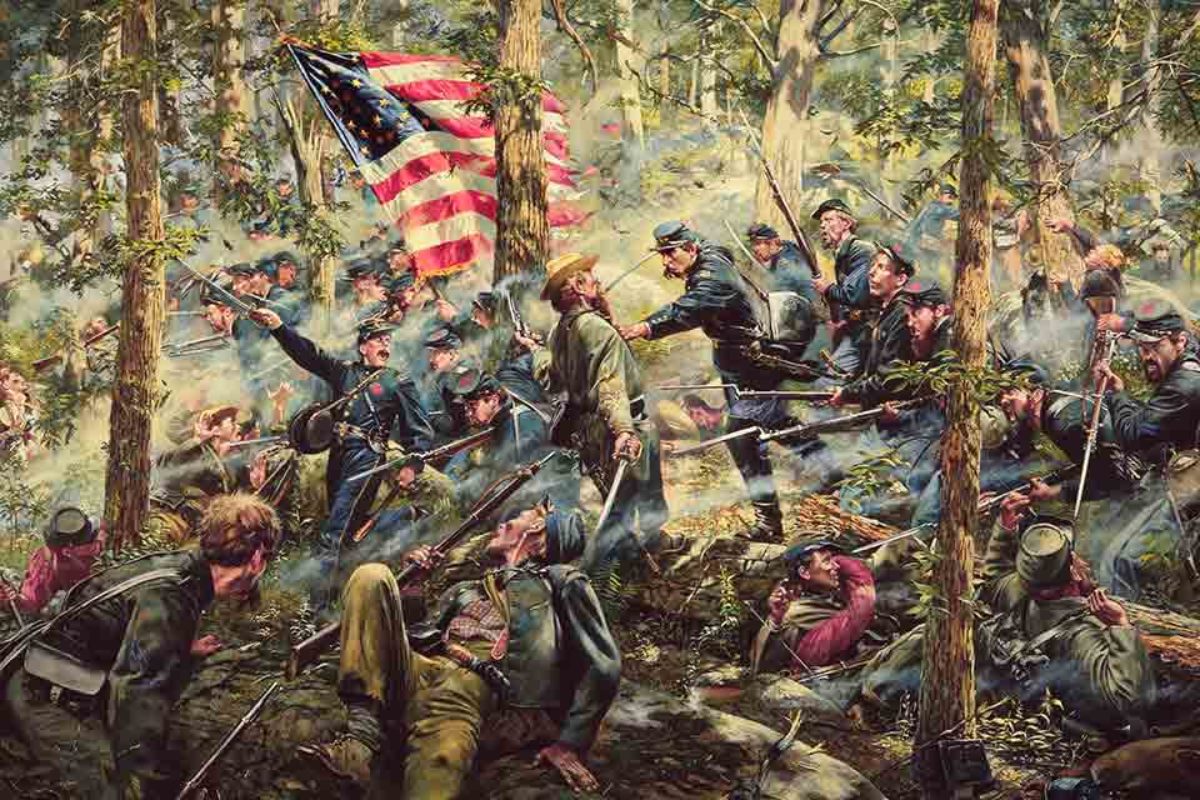
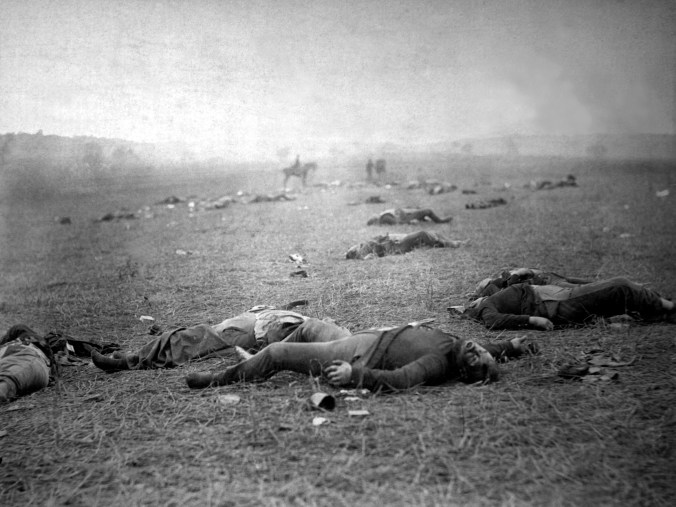
On July 2, 1863, during the second day of the Battle of Gettysburg with the fate of the Union and the United States hanging in the balance, Confederate General Robert E. Lee’s Army of Northern Virginia tried to break through the line of General George G. Meade’s Army of the Potomac at Cemetery Ridge, Culp’s Hill and Little Round Top. More than once that day, only luck and chaos prevented July 2 from marking the end of the nation as we know it, and from preserving slavery at least a little longer.

All accounts of the battle on July 2 are full of the word “confusion.” Robert E. Lee ordered Lieutenant General James Longstreet to attack by moving his troops up the Federal left flank while General A.P. Hill’s corps threatened the center of the Union line. If coordinated properly, General George Gordon Meade wouldn’t be able to move his troops to reinforce the Union left, where Lee instructed Lieutenant General Richard S. Ewell to make diversionary attacks and launch an all-out assault if possible. Lee’s plan, if successful, would force the Union army to surrender the positions it held on the high ground south of Gettysburg after the first day of the battle, and the entire Civil War might have been won by the South in a day.

Continue reading

Comment Of The Day: “The Hanging Of Henry Wirz”…And Thoughts On Who Is Worthy Of A Memorial

wirz2

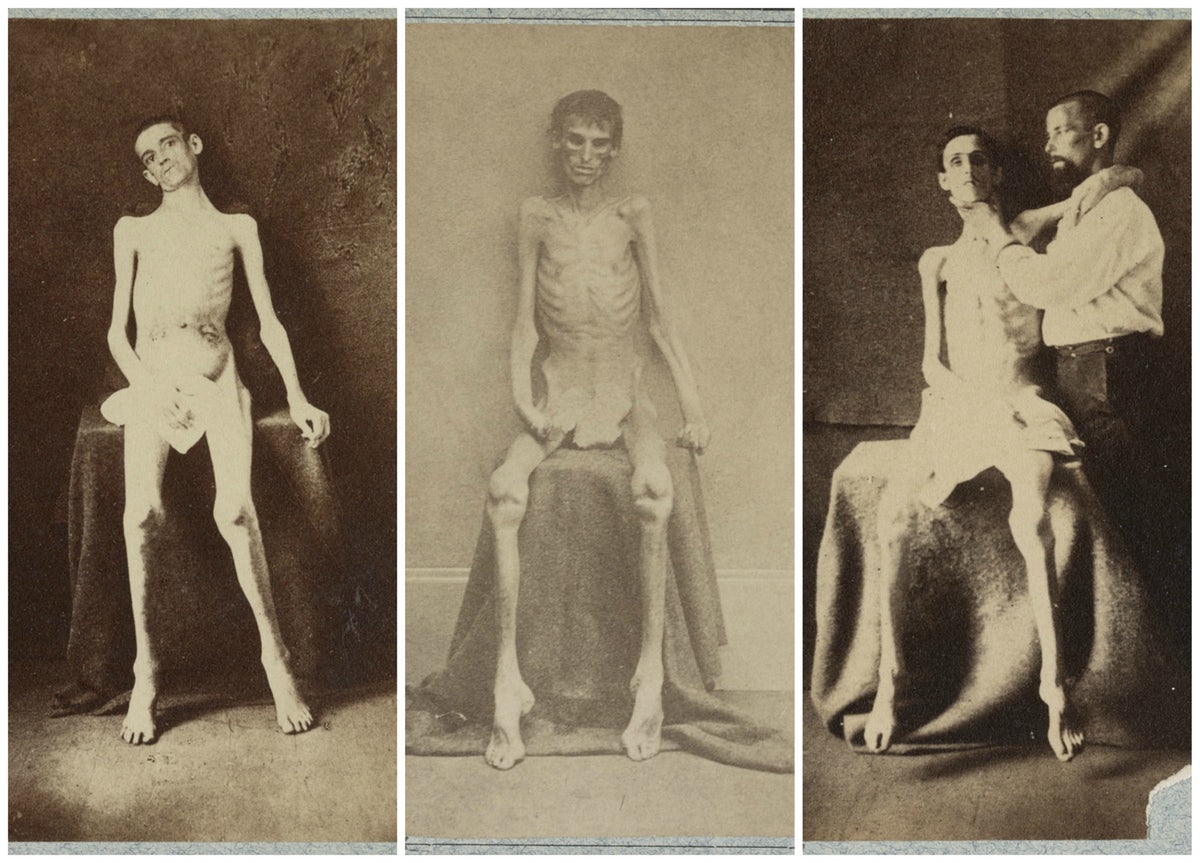
Michael West’s latest Comment of the Day was a provocative note relating to the recent post marking the execution of Capt. Henry Wirz, the Confederate commander of the infamous Andersonville prison camp and the defendant in the first American war crimes trial. Apart from the information, his comment also prompted some research and thought on my part. There are ethical conundrums afoot.

I’ll be back to discuss them after Michael West’s Comment of the Day on the post, “The Hanging of Henry Wirz”:

And there’s a monument in memory of Henry Wirz smack dab in the middle of the “main” intersection of Andersonville. The town, which literally had NO connection to Wirz outside of circumstance…has a monument to the man. At least when Southerners were given the option to erect monuments and name installations, they generally associated places with Southerners who had geographic connections with the locale.

Like Fort Bennin: with a military career earning no more than a “yeah, he was there” mention, Fort Benning is named after a man who happened to be born near there. But Henry Wirz gets a monument in the town associated with his notoriety. Perhaps it would be fair to let his monument be the last torn down by the history-eaters, if only to remember that lethal scapegoating is wrong, however temporarily useful.

I’m back with more on this topic:

Continue reading

The Hanging Of Henry Wirz

Andersonville photos

On this date in 1865, Henry Wirz, the Confederate commandant of the infamous Andersonville prisoner of war camp in Georgia, was hanged after the war crimes trial that became the precedent for the Nuremberg trials after World War II.

I know the story of Captain Wirz and the circumstances of his trial well, having directed Saul Levitt’s great ethics play “The Andersonville Trial” twice. Not that Levitt’s play was an accurate portrayal of the trial—for one thing, Wirz’s dramatic stage testimony defending himself never happened. However, Levitt brilliantly brought to the fore the deep hypocrisy of Wirz’s scapegoating after the Union victory. Not only were the atrocities at Andersonville no worse than those at some Northern prison camps, Lincoln and Grant deliberately provoked the crisis in managing such camps by the South when they made the tactical decision not to engage in prisoner exchanges.

Continue reading

Monday Ethics Warm-Up, 11/9/2020: A Bad Date, Pseudo Blackface, Harvard Being Harvard, And Short-Lived Integrity At The New York Post

  1. I was just checking this date in history. Wow. As if Kristallnacht wasn’t bad enough all by itself, the date November 9 seems to have been cursed. Other events on this date include:
  • Lincoln appointing the incompetent General Burnside as commander of the Union Army in 1862. Burnside made George McClellan look like military genius by comparison. He was responsible for the slaughter at Fredericksburg, where he ordered charge after futile charge up a kill into Confederate artillery. He was responsible for the blood mess resulting from a battle for a useless bridge during Antietam (anyone could easily walk across the river at that point), and was the idiot responsible for the crater fiasco at Petersburg, where a great plan was transformed into a disaster because Burnside replaced trained clack troops with untrained white troops, who promptly charged into the hole made by the Union’s underground explosion.
  • The Supreme Court refused to hear a challenge by the state of Massachusetts regarding the constitutionality of the undeclared  Vietnam War by a 6-3 vote.
  • A Sunday school teacher and Boy Scout troop leader Westfield,, New Jersey father John Emil List slaughtered his entire family,  his mother Alma, his wife Helen (in the side of the head), and two three children He then left the murder weapon alongside their carefully laid-out corpses. This was premeditated:  List had  cancel newspaper, milk, and mail delivery to his home in the days leading up to the murder, and called the children’s schools to say that the family was going to visit a sick relative out of town. By the time the bodies were, List had vanished, and he stayed missing for 18 years.

2. Well you know…Harvard. Harvard College undergraduate Joshua Conde, and editor of the school paper and a Government major (like me!)  argued in the Harvard Crimson that the school must fire professors who hold “unacceptable views” and “controversial beliefs.”

Continue reading

Mid-Friday Ethics, 6/12/2020: The Fame Edition

Good afternoon!

1. On Fame. One of my pet peeves is the pursuit of fame as a life objective. It is inherently unethical, because fame itself is unrelated to good or evil; it is a neutral value, and its pursuit is pure self-interest mixed with ignorance.

First, as too many celebrities to count have informed us, fame is at least as much of a burden as a boon, and second, there is no such thing as “immortality” through fame. As Shelley wrote,

I met a traveller from an antique land,
Who said—“Two vast and trunkless legs of stone
Stand in the desert. . . . Near them, on the sand,
Half sunk a shattered visage lies, whose frown,
And wrinkled lip, and sneer of cold command,
Tell that its sculptor well those passions read
Which yet survive, stamped on these lifeless things,
The hand that mocked them, and the heart that fed;
And on the pedestal, these words appear:
My name is Ozymandias, King of Kings;
Look on my Works, ye Mighty, and despair!
Nothing beside remains. Round the decay
Of that colossal Wreck, boundless and bare
The lone and level sands stretch far away.”


The lyrics of the theme song from the movie and TV series “Fame” so annoyed me that I refused to view either:

Remember my name, fame
I’m gonna live forever
I’m gonna learn how to fly, high

I feel it comin’ together
People will see me and cry, fame
I’m gonna make it to heaven
Light up the sky like a flame, fame
I’m gonna live forever
Baby, remember my name!

Yeah, good luck with that life plan. Who remembers Irene Cara, the star of the film who sang the song? If you enter the field of performing, or any field, to become famous rather than to contribute something of value to society, you’re an asshole.

Chasing it is a fool’s pursuit, but sometimes fame finds you. I just read that former MLB baseball player Claudell Washington died. I remember him, but few do: he arrived heralded as a future superstar, but never reached that status. He is famous, however, because a foul ball he hit in a game of no importance is “immortalized” in “Ferris Bueller’s Day Off,” a cult classic, as the ball Ferris (Matthew Broderick) catches in the stands while playing hookie.

It’s more immortality than most of us get. Continue reading

Ethics Alarms Celebrates Presidents Day: The Speeches. VI. President Abraham Lincoln’s Second Inaugural Address

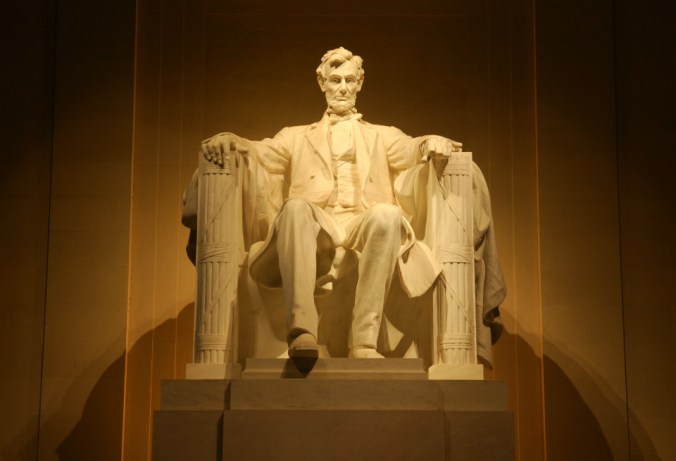
I think we’ll end our foray into Presidential oratory with the master, Abraham Lincoln. We have recently revisited his Gettysburg Address; in this speech. Abe gave us the famous words that grace his memorial in Washington, D.C.

Fellow Countrymen,

At this second appearing to take the oath of the presidential office, there is less occasion for an extended address than there was at the first. Then a statement, somewhat in detail, of a course to be pursued, seemed fitting and proper. Now, at the expiration of four years, during which public declarations have been constantly called forth on every point and phase of the great contest which still absorbs the attention, and engrosses the enerergies of the nation, little that is new could be presented. The progress of our arms, upon which all else chiefly depends, is as well known to the public as to myself; and it is, I trust, reasonably satisfactory and encouraging to all. With high hope for the future, no prediction in regard to it is ventured.

On the occasion corresponding to this four years ago, all thoughts were anxiously directed to an impending civil-war. All dreaded it — all sought to avert it. While the inaugural address was being delivered from this place, devoted altogether to saving the Union without war, insurgent agents were in the city seeking to destroy it without war — seeking to dissolve the Union, and divide effects, by negotiation. Both parties deprecated war; but one of them would make war rather than let the nation survive; and the other would  accept war rather than let it perish. And the war came. Continue reading

Comment Of The Day: “Comment Of The Day: “Pre-Thanksgiving Day Ethics Wrap-Up, 11/27/2019””


Alizia Tyler’s Comment of the Day predictably set off another round of debates relating to the Civil War. There are few episodes in our history that are so rich with ethics and leadership controversies, so it is not surprising that Lincoln, secession, slavery, the Confederacy, Lee and other objects of contention keep finding their way here, most recently in connection with the relentless Confederate Statutory Ethics Train Wreck.

Red Pill Ethics has made an impressive entry in this fascinating and ever-green category. Here is his Comment of the Day on the post,”Comment Of The Day: “Pre-Thanksgiving Day Ethics Wrap-Up, 11/27/2019””….I’ll be back at the end.

I sat and argued Lincoln a bit to my significant other. Or at least all the things history kind of brushes aside.

1) Laws determine what we can’t do, not what we can do. If there is no law saying that an act is illegal then it is by definition legal. This is the foundation of American law. The government just can’t make up rules and arrest you for things that aren’t illegal.

By this universally true standard, the South’s secession was legal. There is no law prohibiting it and, historically, none of the early states entered the union with the understanding that it was an unbreakable agreement. Indeed the federal government was deliberately made to be a weak structure to preserve the autonomy of the states. To this day there is no law saying that the states can’t leave the union – in any case such a law would be deeply hypocritically and ethically bankrupt given America’s rebellious origin. Some Supreme Court cases have touched the issue but their constitutional basis is literally non existent – “Texas had become part of ‘an indestructible Union, composed of indestructible states’ ” uhhhhh where does the constitution say that?

2) At the time of the Civil War, secession was widely if not universally viewed as a legal option. So a few Southern States peacefully succeeded and ordered all Northern troops out of their sovereign territory. The feds did not comply. They sat in Fort Sumter and did not leave. The Confederacy then blockaded the Fort to prevent it’s resupply that the unlawful occupiers of that land might be forced to leave. Again the Feds did not comply. Instead they ran the blockade and sent more men and material to the Fort. Sorry fam, but when one nation sends troops into another nation to occupy their land… that’s an invasion no matter how bloodless it may be. The modern equivalent of a bloodless invasion like this would the Russian annexation of Crimea. Bloodless but inarguably illegal and an act of war. If Ukraine had gotten its shit together and actually had a functioning military or military alliances it very likely would have been the start of a big ol’ war. As it stands though, Ukraine lacks the power to fight back and so it took the invasion on the chin.

The South did not. They opened fire on the Fort and eventually took it back – and they managed to do it without actually killing anyone. A bloodless invasion was met with a bloodless defeat and sovereign land was returned to its sovereign owner. In any case, the North’s soft invasion and the previously unheard of authority that it implied so alarmed the other states that four more states who had initially opposed secession then decided to secede. The North then blockaded the South’s ports and invaded Virginia. Even Maryland and Delaware, Northern states, considered withdrawing from the Union but were prevented from doing so by federal intervention…which brings us to the next evil that Lincoln’s administration perpetrated. Continue reading

Saturday Ethics Pick-Me–Up, 6/15/2019: The “Oh, Fine, It’s Afternoon Already And I’m Barely Awake” Edition

Bvuh.

Travel hangover today: I’ll do the best I can…

1. Thank you, loyal commenters, for a yeoman job in yesterday’s Open Forum.

2. Confederate Statuary Ethics Train Wreck update. Now the historical airbrushers (all from Progressiveland, just in case you couldn’t guess) are going after Civil War recreations and commemorative events. The head of the Lake County Forest Preserve in Illinois declared that there would be no more annual Civil War Days event after next  month’s edition, if he gets his way. He doesn’t think Confederate flags should ever be displayed, even in battle recreations. Besides, he wants the event to be retooled so that instead of commemorating the single most important period and struggle in U.S. history, it advances an understanding of climate change.

(Who are these people? How did they get this way? What do we do about them so the cultural damage they inflict is contained?)

The home-grown historical censor also said,

“This has nothing we want, nor should celebrate, nor re-enact. When southern states are being made to tear down every statute representing this racist, murdering chapter of our history, I can’t believe here in Lake County our own forest preserve is preserving and celebrating it every year, and with our tax dollars.”

This deliberately brain-dead approach to U.S. history is working (aided greatly by the atrocious neglect of American history in our schools), and by working I mean promoting ignorance so citizens can be more easily misled. The Wall Street Journal reported that visits to Civil War national battlefields are falling off. Over 10 million Americans visited  Gettysburg, Antietam, Shiloh, Chickamauga/Chattanooga, and Vicksburg  in 1970. They only had 3.1 million visitors last year.

That’s about as many tourists as visited the “Cheers” bar in Boston.

3. Oberlin race-baiting update: in case you missed it, the jury in the Gibson’s Bakery case  hit the college with the maximum punitive damages, capped by law at 22 million dollars.  Continue reading