Which Presidents Would Have Tweeted Trump-Style If They Had A Twitter Account?

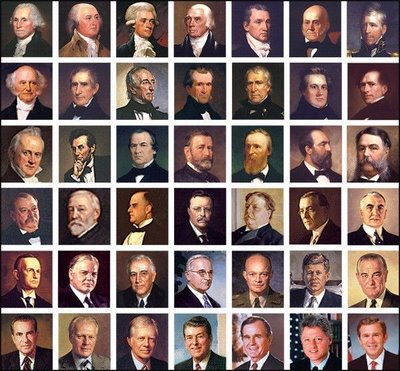
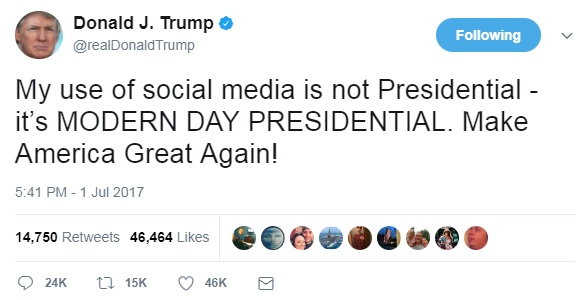
The tweet above from the President as he doubled down on his unusually stupid attack tweets against Joe and Mika got me thinking. He’s not entirely wrong. Trump is the first President to use social media personally and for candid statements and observations, bypassing the news media, and almost all of the previous Presidents had no choice in the matter. Fourth of July weekend always gets me thinking about the Founders, and the Founders get me musing about the Presidents, and I found myself playing this mind game: Which of our Presidents, had they has access to Twitter, would have used it in a Trumpian manner?

I should clarify some issues at the outset. None of the Presidents would have used Twitter in a stupid, juvenile and boorish manner like President Trump, because none of them were that stupid, juvenile and boorish. (On the other hand, none of their critics, being comparatively responsible and sane, would have argued that stupid, juvenile and boorish tweets were justification to remove the previous 44, as Keith Olbermann thinks.) By using Twitter in a Trumpian manner, I mean using it…

..Personally…

…for the purpose of by-passing the news media and White House spokespersons…

…in order to make declarations of intent, emotions or satisfaction, or

…to attack, accuse, denigrate, compliment, rebut, defend, joke, troll, or otherwise

…communicate directly with the public.in an unfiltered manner.

One other caveat: Trump would definitely be establishing new Presidential norms were his tweets less obnoxious and embarrassing. By the time his term(s) are over, he mat have given Presidential tweeting such a bad reputation that no future POTUS will dare use Twitter for fear of being compared to the Mad Tweeter of 1600 Pennsylvania Ave.

All right, on to the inquiry!
Which of our previous Presidents would have used twitter in one or more of the ways Trump uses it. based on what we know of their character and leadership styles?

Continue reading

For The Last Time: This Is Why The Post-Election Attacks On Trump And His Election Are Unethical

This is the last time I’m going to try to explain why the fair, patriotic, ethical and rational approach to the impending Presidency of Donald Trump is to be supportive of the office and the individual until his actual performance in the job earns just criticism. Attempting to undermine a Presidency at its outset is a self-destructive act, for nobody benefits if a Presidency fails. Wishing for a failed Presidency was what Rush Limbaugh did in 2008, and he was justly condemned for it, substantially by the same people who are saying the same thing he did, but about Donald Trump. They were right then, and they today are just as wrong, and despicable,  as Rush was.

I have had numerous debates, on and off Ethics Alarms, with usually reasonable people who take the #NotMyPresident position, which is nonsense on its face. If you are a citizen, Trump is your President. We don’t have, or allow, citizen states. You can dissent, and support political opposition, but you still must obey the laws and be loyal to the nation, which means loyalty to the nation’s elected leadership. Loyalty doesn’t require agreement, but it does require respecting legitimate authority, and seeking what is best for the United States of America. Constitutional crisis is never good for any nation. A crippled government is never good. A leader estranged from the public is never good. Seeking these things is irresponsible and foolish, but more than that, it is dangerous.

In The Caine Mutiny, a film version of the stage drama and novel “The Caine Mutiny Court Martial,” Captain Queeg (Humphrey Bogart), a man whose war-shattered nerves and self-esteem problems have rendered him an erratic and an unpopular officer, falters in his command during a storm. His officers, frightened and already convinced that their captain is unfit for command, mutiny. At their military trial, their defense attorney causes Queeg to have a breakdown on the witness stand, winning the case for the accused mutineers. Later, however, at the post trial victory party, the lawyer, Barney Greenwald (Jose Ferrer),  shames his clients. He represented them zealously, but he tells them that they were, in fact, at fault for what occurred on the Caine: Continue reading

Encore! Presidents Day Ethics: The Presidents of the United States on Ethics and Leadership

It’s President’s Day, and I see that it has been five years since the most popular Ethics Alarms President’s Day post was published. That one, from 2011, reminds us of the ethics wisdom and leadership acumen of the remarkable men who have served their country in the most challenging, difficult, and ethically complicated of all jobs, the U.S. Presidency.

In the middle of a campaign season littered with some disturbingly unethical candidates, it seems especially appropriate to re-post that entry now….with some updates. In 2011, I left out three Presidents, including the current one. Now all are represented, most of them well.

So…

Ladies and Gentlemen, the Presidents of the United States of America:


George Washington: “I hope I shall possess firmness and virtue enough to maintain what I consider the most enviable of all titles, the character of an honest man.”

John Adams: “Because power corrupts, society’s demands for moral authority and character increase as the importance of the position increases.” 

Thomas Jefferson: “On great occasions every good officer must be ready to risk himself in going beyond the strict line of law, when the public preservation requires it; his motives will be a justification…”

James Madison: “No government any more than any individual will long be respected without being truly respectable.”

James Monroe: “The best form of government is that which is most likely to prevent the greatest sum of evil.”

John Quincy Adams: “Always vote for principle, though you may vote alone, and you may cherish the sweetest reflection that your vote is never lost.”

Andrew Jackson: “One man with courage makes a majority.”   (Attributed)

Martin Van Buren: “No evil can result from its inhibition more pernicious than its toleration.”

William Henry Harrison: “There is nothing more corrupting, nothing more destructive of the noblest and finest feelings of our nature, than the exercise of unlimited power.” Continue reading

A Presidents Day Celebration (PART 2): The Good, The Over-matched, And Then There’s Abe

presseal

The Presidents between #7, Jackson, and #16, Lincoln, are almost entirely unknown to most of the public: not one in a hundred can name them all, and of those almost none can name them in order. Eight one-term Presidents, all trying to stave off the civil war in various ways, and all failing that mission.

I will never understand why learning the Presidents in order isn’t a standard requirement in the public schools. It’s not hard; it is a useful tool in placing events in American history, and it prevents embarrassments like the Cornell law grad I once worked with who couldn’t place the Civil War in the right century. Besides, we’re Americans, damn it. The least we owe the 43 patriots who have tried to do this job, some at the cost of their lives, many their health, and many more their popularity, is their place in our history and their names.

On with hailing the Chiefs with some of my favorite facts about them:

James K. Polk

“Hail to the Chief,” which had been sporadically in use since Madison’s day, became the official anthem of the office during the Polk Administration. Polk was a small, unimpressive man, and it was said that he needed the musical announcement when he entered a room or no one would notice him. Looks can be deceiving. James K. Polk was as wily, tough and as ruthless as they come. One reason may be that he was another Presidential survivor of an ordeal that would kill most people: as a teenager, he underwent a bloody frontier operation for gallstones with no anesthesia, tied to a table, biting on a rag.

Zachary Taylor

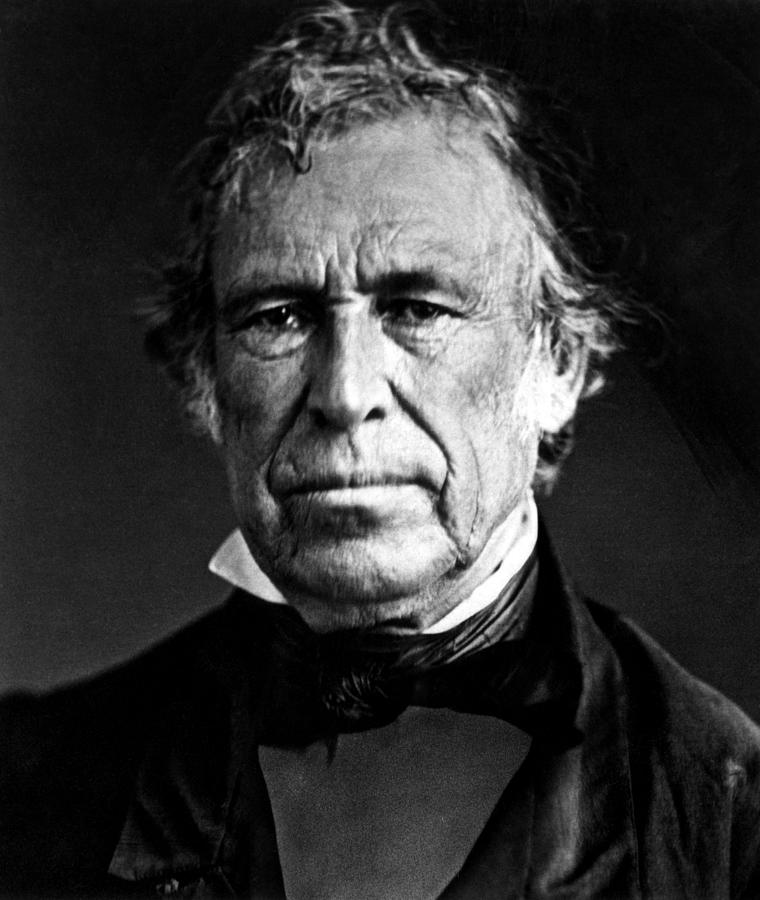
zachary-taylor

General Taylor, who was pursued by both the Whigs and the Democrats who both wanted to nominate him for President, was a great experiment  He was not a member of any political party, had never held public office prior  to becoming President, and had never even voted before becoming Chief Executive. He was also nearly illiterate. We often long for an apolitical President, a true, rather than a pretend, “outsider.” Taylor would have been an interesting test case, though the pre-Civil War political and social chaos was hardly the most promising period to try out the theory. Unfortunately he died of cholera less than half-way into his administration.

And he wasn’t even elected in a year ending in a zero! Continue reading

Presidents Day Ethics: The Presidents of the United States on Ethics and Leadership

In commemoration of President’s Day, Ethics Alarms presents the ethics wisdom of the remarkable men who have served their country in the most challenging, difficult, and ethically complicated of all jobs, the U.S. Presidency.

Ladies and Gentlemen, the Presidents of the United States:

George Washington: “I hope I shall possess firmness and virtue enough to maintain what I consider the most enviable of all titles, the character of an honest man.” Continue reading

Rep. Cao: Profile in Something or Other

Wow. One lone House Republican voting for the reviled Democrat healthcare bill.  Talk about conscience! Talk about courage!

Well, maybe. The vote by Louisiana Republican  Anh “Joseph” Cao could have been a truly ethical act, or a completely  cynical one. The fact that it is almost impossible to tell which explains a lot about the funhouse mirror version of “ethics” in use of Capitol Hill.  Continue reading