When The Incompetent Meet The Corrupt: The U.S. Postal Service vs Lance Armstrong

Left to right: Lance Armstrong's lawyers, the U.S. Postal Service, Lance.

Left to right: Lance Armstrong’s lawyers, the U.S. Postal Service, Lance.

The U.S. Postal Service, virtually insolvent and incapable of doing anything about it, wasted $31 million in 2000 on a four-year contract sponsoring Lance Armstrong and his cycling team. Why? Search me. Still, it was , the Service says, paying to endorse champions, not cheaters, which is what Armstrong and his team were. Now Postal Service is joining a false claims lawsuit, claiming that Armstrong and the team defrauded the government and violated their sponsorship contract by using performance-enhancing drugs. The Postal Service filed the suit shortly after Armstrong finally admitted that what had been alleged for over a decade, what he had denied and sued over and attacked and protested and postured indignantly in pained and defiant terms was, in fact true. He had used illegal and banned substances and methods on the way to his epic success, hero status and world fame.

Armstrong is also a crook, taking millions from the Post Office and other sponsors who believed he was a real champion rather than a phony one. It would be nice, inspiring even, if just one lying, cheating miscreant voluntarily returned the millions he acquired through dishonest means, rather than using those millions to hire super-lawyers to allow him to keep the ill-gotten gains. Lance, however, bottom of the ethics barrel-scum feeder that he is, would not be my most likely candidate for such a noble display. Indeed, he is living up to my low expectations. Continue reading

An Ethics Muffin Wreck

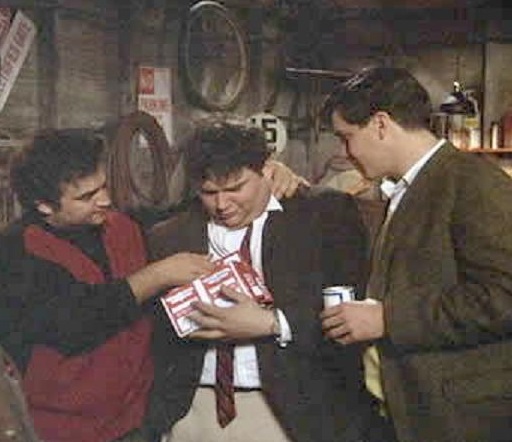
Tim Matheson in “Animal House,” as “Justice Department Inspector General”

In the end, it was Ethics Bob who saw the light first. Responding to last month’s Ethics Alarms post about the Justice Department’s inspector general flagging extravagant costs for conferences, Bob Stone, a business ethics expert and blogger who comes from a long career with the Defense Department, wrote this:

“As a sometimes victim of smear-by-IG, I’d recommend turning down the outrage. Just as there never was a $400 hammer, there probably wasn’t a $16 muffin. I’ve been involved with a lot of government conferences—I’ve sponsored a few—and my experience is that the people are as diligent with expenses an informed taxpayers would like them to be. IG’s records are built on how many outrages they turn up, and they often manufacture them.”

Continue reading

The Hazing Abuse of Michael Warren

Michael Warren should have consulted Kevin Bacon...

A fraternity hazing story—yes, amazing as it seems, there are still hazings—raises the persistent ethical issue of whether a victim is responsible for his own mistreatment if he consents to it. Even if he shares responsibility, however, his consent does nothing to reduce the ethical failings of the abusers, or those of the irresponsible authorities who presided over a sick campus culture.

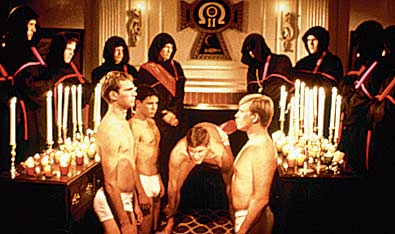
Michael Warren is an African American who was the only black pledge of the Alpha Delta Omega fraternity at Hartwick College (in Oneonta, New York). His potential “brothers” locked him in a bathroom with other pledges for hours, where they were subjected to ear-splitting music and strobe lights; he was forced, he says, to dress like a pimp, a humiliating bit of racial stereotyping; and, shades of the evil Omega Theta Phi fraternity in “Animal House,” was paddled so hard that he needed medical treatment (“Thank you, sir, may I have another?”). Warren complained, and found himself a pariah on campus, making him so uncomfortable that he gave up his scholarship to transfer to Hofstra. Now he is suing Hartwick, and his lawyer is arguing that his mistreatment by the fraternity “may have ruined his life.” Continue reading

The Final Proof That Michael Vick Doesn’t Get It

In the finale of “Animal House,” after the expelled Delta House members have sabotaged Faber College’s parade causing wanton destruction, mayhem, panic and riots, the fraternity’s  president approaches the dean (who is lying in the ruins of the stands toppled by the Delta House “Deathmobile”) and hopefully asks for “one more chance.”

I thought of this classic moment when I read that Michael Vick, the serial dog-abuser now seeking redemption by winning football games for the Philadelphia Eagles, had told an interviewer that he really missed owning a dog and hoped to have one as a pet some day. Continue reading

Standards, the Salahis, Bluto, and Us

A sane culture discourages ethical misconduct by condemning and punishing it. The American culture, thanks to greed, intellectual rot and an irresponsible media, rewards unethical conduct by making it profitable. This isn’t a trivial matter.

Tareq and Michaele Salahi are about as despicable a pair as one can imagine, redeemed only by the fact that they haven’t caused any oil spills, aren’t abusing children and haven’t killed anyone. They are full-time grifters, and are diligently working to profit by exploiting America’s sick obsession with media celebrity. They crashed a White House dinner in November, costing several people their jobs, and launching multiple investigations that added to the tax-payers’ burden. None of that mattered to them, of course, because the irresponsible escapade advanced their idiotic, pathetic and selfish goal: joining the likes of Jose Canseco, Corey Feldman and Gary Busey on TV’s equivalent of belching, a reality show. Then, being completely shameless, they recently stalked a White House dinner again, getting themselves stopped by the Secret Service as they rode in a rented limousine, dressed in formal attire, with an “Inside Edition” camera crew in tow. This was just an “incredible coincidence,” they explained…wink-wink, nudge-nudge. Continue reading

Corked Bats and “No Harm, No Foul”

From lawyer/baseball blogger Craig Calcattera we learn that Baseball Hall of Famer Robin Yount may have used a corked bat. Corking, in which cork is surreptitiously inserted into a hole drilled down the length of a baseball bat, is banned by the rules of baseball: it supposedly allows the bat to be swung faster and propel a ball farther and harder because of the properties of the cork. Get caught with a corked bat, and a major league player gets thrown out of the game, suspended and fined. Worse, he acquires the reputation of being a cheater. Those who are certain that former Cubs slugger Sammy Sosa used steroids are bolstered in their belief by the fact that he was once caught using a corked bat.

Yet there are strong indications that the superiority of corked bats is imaginary. When TV’s excellent “Mythbusters” tested the matter, their tests rendered that myth as “busted.” So Robin Yount’s  3,142  major league hits were not aided in any way by the cork in his bat. Should we care that he used one, if he indeed did?

Yes. We should care that he was cheating. Using a corked bat violates the rules, and the fact that this cheating is not as effective as a player  thinks it is, or effective at all, is absolutely irrelevant to an assessment of his character, integrity and sportsmanship. When the Delta House students in the comedy “Animal House” steal what they think are the final exam answers and use them on the test, they are still cheating, even though it turns out that their cheat-sheet had the wrong answers.  A runner who cheats but loses the race anyway is still a cheater; so is a corked bat-user who never manages to hit the ball.

“No harm, no foul”  is just another rationalization to make it easier for some to let unethical conduct go unrecognized and unpunished. The foul is the harm, or part of it. In cheating situations, there are two issues: was there cheating, and what were the consequences of it. The cheater is responsible for the results of his cheating, but often has less than complete control over them.  An ineffective cheater is still just as unethical as an effective one.

Many have trouble grasping this. Even some professions have trouble grasping this: for example, the ethics rules governing lawyers generally only prohibit completed violations.  An attorney trying to introduce falsified evidence in trial doesn’t count as cheating, in the construction of the Rules, if the attempt fails.  A lawyer who tries to deceive his or her client with a slyly misleading statement may not be violating the ethics rules if the client isn’t misled. Admittedly, this weakness in the legal ethics rules has a lot to do with the logistics of enforcement, but it is still an embodiment of “no harm, no foul.” The unsuccessful attempt to break the rules would probably support a complaint that the lawyer exhibited conduct calling  his character into question, but I can’t locate a case of  a lawyer whose bar  disciplined him solely for unsuccessfully attempting to break a rule.

When, if ever, baseball decides to permit corked bats, then using them will be perfectly fine, if probably pointless. For now, however, the anti-corking rule still serves a useful purpose. It helps identify who the cheaters are. In cheating, as in more honorable pursuits, there is no honor in being inept.