This video brings back some bad memories as I head to the second anniversary of my wife’s sudden death. Grace battled alcoholism our whole marriage, and the careful, plodding, slightly slurred speech pattern you hear above from Rep. Fitzgibbon is exactly how she would speak when she was smashed and trying to hide it. Sober, she was quick-tongued and sparklingly articulate.
I feel sympathy for Fitzgibbon, but he has to resign, and so far doesn’t have the integrity to do it. Fortunately for him, he belongs to a side of the ideological spectrum that doesn’t believe in responsibility or accountability among their other ethical quirks.
Fitzgibbon, to his credit, at least issued an ethical apology for his disgraceful conduct, except for one teeny-tiny omission: there was no “therefore, today I tender my resignation as representative of the 34th District”:
Why not start off the day with a humiliating confession? Nothing else has been working lately…
Back in May, I wrote about that ad above in which a goofy pitchman for the Allied Injury Group nicked or squashed a couple of legal ethics rules in the course of exactly the kind of lawyer advertising the profession was afraid would result when it had to eliminate the unconstitutional ban on the practice. It was a harsh post and should have been. I wrote in part,
“…the spokesperson calling himself “Your Favorite Attorney” is an actor, indeed a stand-up comic named Shaun Jones. All of the jurisdictions prohibit lawyer advertising in any form that is misleading or that includes false information. A sole practitioner can’t call her firm “X & Associates,” for example, if she’s the only lawyer in the firm. Putting a non-lawyer in front of a camera and calling having him call himself an attorney is an undeniable violation, and an intentional one… Jones also says that if the client doesn’t make money, “I” don’t make money. That is deceit. The firm will argue that the actor is only saying that if the firm doesn’t win its cases, the actor won’t get paid. But his statement is intended to refer to contingent fees for attorneys, and he isn’t one. “
Having done my duty to flag these hacks, I then proceeded to put the wrong law firm name in the headline! I have a typo and proofreading problem, as even casual visitors here know; I’ve gotten better, but the fact that these posts are usually written in fits and starts while I try to complete actual income-relating work [Thank you, by the way, to those of you who sent me generous contributions or gifts over the holidays, or kind words of encouragement that I appreciated just as much.] means that I sometimes miss glaring errors. That’s not an excuse. But it’s true.
This one was a doozy, made worse by my obstinate habit of proofing everything but the headlines. And so it was that The Allied Law Group, a distinguished and, based on my research, an impeccably professional and trustworthy firm that specializes in civil appellate law, media and First Amendment law, open government laws, regulatory litigation, legislation and general litigation, but not personal injury law, was unjustly and wrongly impugned.
That firm’s clients include lawyers, public interest groups, trade associations and media organizations. Their website is impressive and professional; I would even say, as one who is often asked to review the content of lawyer websites for ethics violations, exemplary.
So this was a really bad mistake on my part, and I could not be more sorry, embarrassed, contrite and remorseful. I apologize to the firm, its lawyers, its staff and clients. The post has been corrected, and let us never speak of it again.
I want to note that the firm attorney I spoke with was thoroughly civil, respectful, and, frankly, nicer than I might have been in a similar situation. She did not threaten me, as many lawyers are wont to do. She did inform me of the undeserved abuse that her firm has been getting—even death threats!—from people who have confused the firm with Allied Injury Group. People want to kill unethical lawyers now? I did not see that coming. I do have a hard time believing that anyone inclined to send death threats reads an ethics blog, but never mind: I accept responsibility for contributing to the confusion.
The Allied Law Group’s representative also didn’t make any demands during our conversation, because before she finished her second sentence I said: “I’ll fix that post immediately.” Nor did not instruct me to post this: I told her that I would compose an apology and get it up as soon as possible, because that’s my policy when I screw up.
Finally, I want to thank commenter Ric, who sent in a comment flagging the error last November. As Herman Kahn said, unlikely disasters occur when there’s a 1% confluence of bad management and bad luck. I try to read all reader comments. I missed that one.
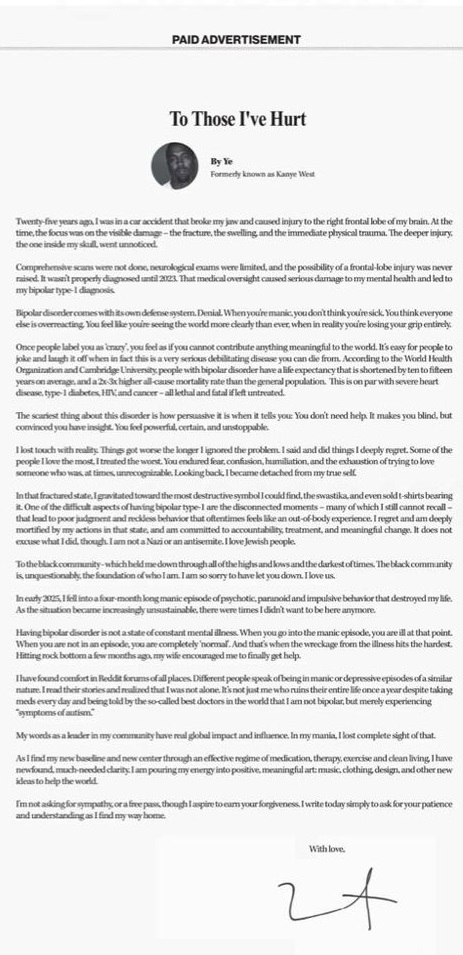
That’s the full page ad that “Ye,” aka. Kanye West, paid to have placed in, of all papers, the Wall Street Journal. I wonder what percentage of WSJ readers even know who the hell he is? Never mind; he did it. Here’s what the ad says (I hesitate to put down “he wrote’):
“Twenty-five years ago, I was in a car accident that broke my jaw and caused injury to the frontal lobe of my brain. At the time, the focus was on the visible damage – the fracture, the swelling, and the immediate physical trauma. The deeper injury, the one inside my skull, went unnoticed….”
It wasn’t properly diagnosed until 2023. That medical oversight caused serious damage to my mental health and led to my bipolar type-1 diagnosis. Bipolar disorder comes with its own defense system. Denial. When you’re manic, you don’t think you’re sick. You think everyone else is overreacting. You feel like you’re seeing the world more clearly than ever, when in reality you’re losing your grip entirely.
Once people label you as crazy, you feel as if you cannot contribute anything meaningful to the world. It’s easy for people to joke and laugh it off when in fact this is a very serious debilitating disease you live from….
The scariest thing about this disorder is how persuasive it is when it tells you: You don’t need help. It makes you blind, but convinced you have insight. You feel powerful, certain, and unstoppable.
I lost touch with reality. Things got worse the longer I ignored the problem. I said and did things I deeply regret. Some of the people I love the most, I treated the worst. You endured fear, confusion, humiliation, and the exhaustion of trying to love someone who was, at times, unrecognizable. Looking back, I became detached from my true self.
In that fractured state, I gravitated toward the most destructive symbol I could find: the swastika, and even sold t-shirts bearing it. One of the difficult aspects of having bipolar type 1 are the disconnected moments – many of which I still cannot recall that lead to poor judgment and reckless behavior that oftentimes feels like an out-of-body experience. I regret and am deeply mortified by my actions in that state, and am committed to accountability, treatment, and meaningful change. It does not excuse what I did, though. I am not a Nazi or an antisemite. I love Jewish people.
To the black community – which held me down through all of the highs and lows and some of my darkest times. The black community is, unquestionably, the foundation of who I am. I am so sorry to have let you down. I love us.
In early 2025, I fell into a four-month long manic episode of psychotic, paranoid and impulsive behavior that destroyed my life. As the situation became increasingly unsustainable, there were times I didn’t want to be here anymore.
Having bipolar disorder is not a state of constant mental illness. When you go into the manic episode, you are ill at that point. When you are not in an episode, you are completely “normal.” And that’s when the wreckage from the illness hits the hardest. Hitting rock bottom a few months ago, my wife encouraged me to finally get help.
I have found comfort in Reddit forums of all places. Different people speak of being in manic or depressive episodes of a similar nature. I read their stories and realized that I was not alone. It’s not just me who run [sic] their entire life once a year despite taking meds every day and being told by the so-called best doctors in the world that I am not bipolar, but merely experiencing “symptoms of autism.”
My words as a leader in my community have real global impact and influence. In my mania, I lost complete sight of that.
As I find my new baseline and new center through an effective regime of medication, therapy, exercise and clean living, I have newfound, much-needed clarity. I am pouring my energy into positive, meaningful art: music, clothing, design, and other new ideas to help the world.
I’m not asking for sympathy, or a free pass, though I aspire to earn your forgiveness. I write today simply to ask for your patience and understanding as I find my way home.”
It’s time to check the old, Ethics Alarms Apology Scale to see where this whatever it is fits.
According to the scale, this is the hierarchy of apologies, their function and their motivation, from most admirable to the least credible:
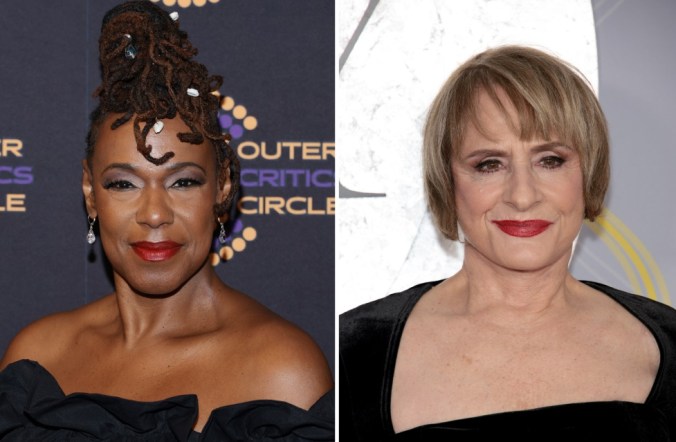
Back in November of last year, I wrote about the silly–but instructive—Broadway feud between diva Patti Lupone and performer Kecia Lewis, who is black, and who has received some accolades herself. Lewis was starring in “Hell’s Kitchen,” a 2024 jukebox musical about the life and career of Alicia Keys in a theater that shared a wall with the theater featuring “The Roommate,” a quiet, two-actor drama starring Mia Farrow and LuPone. The amplified sound in “Hell’s Kitchen” at two points in the musical could be heard by the audience LuPone’s show, so LuPone sent a polite note to the “Hell’s Kitchen” producers asking them to turn down the volume at those points in the sound design that were loud enough to interfere with her show. (The producer of “The Roommate”should have handled that, but Patti has power and influence and has never been shy about using them.) “Hell’s Kitchen” complied. LuPone, in gratitude, sent a thank-you note to the producers and flowers to the stage management and sound staff.
But Lewis decided to play the race card, because that’s what so many of the Woke of Color have been taught to do, because it works. She posted a video on Instagram reprimanding LuPone for supposedly engaging in race-based “microagressions.” I wrote in “Dear Patty LuPone: Please, PLEASE Tell Kecia Lewis ‘Oh, Bite Me!’” that I was ” hoping against hope that LuPone, who is the epitome of a diva (as this Ethics Alarms post demonstrates), either issues an emphatic “Bite Me!” to Lewis or ignores her completely as not worthy of attention from Patti’s perch on Broadway Olympus. Lewis is the racist here; she is the one who is stereotyping a white performer as insensitive and dismissive.”
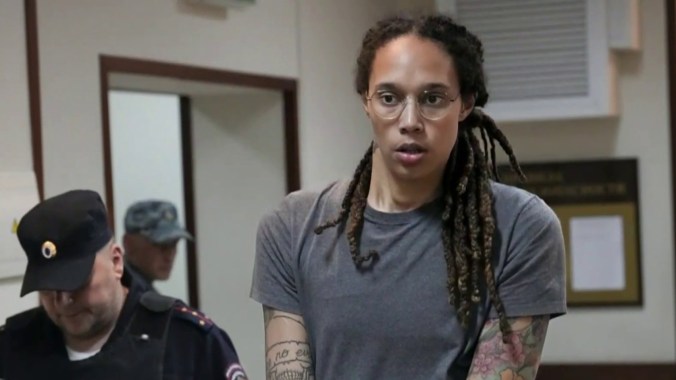
The post about Britney Griner being caught betting on her own team’s games was improvidently posted. It was based on an entry on a suspicious website that I should have investigated further than I did.
I’ve been caught before, though not recently. This time it was confirmation bias that got me: I think Griner is a grifter and Ethics Villain, and was obviously (note the title) predisposed to believe the worst. As several commenter have noted, the report I was relying on didn’t make sense, but it was also, as web hoaxes often are, not sufficiently clever to tip me off that it was intended as satire. As Ethics Alarms has stated repeatedly, false stories on teh web should be flagged as such or are unethical. And despicable. I hate them to pieces.
So, here come the apologies: I apologize to Britney, readers here, the WNBA and anyone who was fooled by my carelessness and stupidity. I had an unusually busy morning, was distracted and tired from a bad night, and should have waited until I was in a more competent state of mind.
Let that be a lesson to me. And you. And everyone.
%$!@#$!
I‘m leaving the post up below, as, to quote Paul Newman (as Doug Roberts, the architect) at the end of “The Towering Inferno,” “kind of a shrine to all the bullshit in the world.”
***
Britney Griner, the anti-American WNBA star who made the Biden Administration give Russia an international criminal (an illegal arms dealer whose nickname is “The Merchant of Death”) in order to save her from her own stupidity and recklessness, is now accused of betting on her own team’s basketball games.
Griner placed “several sizable wagers” on Phoenix Mercury games over the past two seasons according to a Vegas sportsbook employee named Art Tubolls. He noticed “a suspicious number of bets placed by someone who looks suspiciously like Britney Griner, except wearing a mustache and calling herself ‘Rick Slamson.’”
WNBA Ethics Manager Josephine Barron todl the news media,“We’re looking into whether or not she purposely fixed the scores,” adding that Griner could be banned for life if the allegations are true. The bets were disturbing. One wager read, “Mercury will lose by 7 because I’m taking the night off and pretending to have a groin injury.” Another bet was for $1,000 on “Caitlin Clark to drop 30 and break ankles.”
Right now Griner’s fans and allies are in the spin and denial stage, but it doesn’t look good for her, and anyone who is shocked—shocked!—hasn’t been paying attention. On the way to creating an international incident, she knowingly defied a State Department warning not to travel to Russia, doing so for money, although she was hardly destitute. She carried with her substances that she knew were illegal in Russia, and that she knew carried serious criminal penalties. Her explanations and excuses after she was caught breaking the law in Russia strained credulity: for example, a U.S. doctor has no authority to waive Russian drug laws, but Griner tried to use a letter from her physician justifying medical marijuana use by the athlete to get around her illegal possession charges. Then she sought diplomatic rescue from the nation she had condemned a racist while serving as a Black Lives Matter advocate. Griner is just not very bright, and there is a strong link between inadequate intelligence and unethical conduct. The link becomes stronger with wealth and celebrity.
Griner is, in short, a proven jerk, much like Pete Rose, baseball’s poster boy for forbidden gambling. The gambling allegations regarding the WNBA star, if true, just prove that she’s an even bigger jerk than I originally thought.
[From the retraction: “I’m leaving the post up below, as, to quote Paul Newman (as Doug Roberts, the architect) at the end of “The Towering Inferno,” ‘“‘kind of a shrine to all the bullshit in the world.'”]
***
Britney Griner, the anti-American WNBA star who made the Biden Administration give Russia an international criminal (an illegal arms dealer whose nickname is “The Merchant of Death”) in order to save her from her own stupidity and recklessness, is now accused of betting on her own team’s basketball games.
Griner placed “several sizable wagers” on Phoenix Mercury games over the past two seasons according to a Vegas sportsbook employee named Art Tubolls. He noticed “a suspicious number of bets placed by someone who looks suspiciously like Britney Griner, except wearing a mustache and calling herself ‘Rick Slamson.’”
WNBA Ethics Manager Josephine Barron todl the news media,“We’re looking into whether or not she purposely fixed the scores,” adding that Griner could be banned for life if the allegations are true. The bets were disturbing. One wager read, “Mercury will lose by 7 because I’m taking the night off and pretending to have a groin injury.” Another bet was for $1,000 on “Caitlin Clark to drop 30 and break ankles.”
Right now Griner’s fans and allies are in the spin and denial stage, but it doesn’t look good for her, and anyone who is shocked—shocked!—hasn’t been paying attention. On the way to creating an international incident, she knowingly defied a State Department warning not to travel to Russia, doing so for money, although she was hardly destitute. She carried with her substances that she knew were illegal in Russia, and that she knew carried serious criminal penalties. Her explanations and excuses after she was caught breaking the law in Russia strained credulity: for example, a U.S. doctor has no authority to waive Russian drug laws, but Griner tried to use a letter from her physician justifying medical marijuana use by the athlete to get around her illegal possession charges. Then she sought diplomatic rescue from the nation she had condemned a racist while serving as a Black Lives Matter advocate. Griner is just not very bright, and there is a strong link between inadequate intelligence and unethical conduct. The link becomes stronger with wealth and celebrity.
Griner is, in short, a proven jerk, much like Pete Rose, baseball’s poster boy for forbidden gambling. The gambling allegations regarding the WNBA star, if true, just prove that she’s an even bigger jerk than I originally thought.
This story gets a Kaufman, the Ethics Alarms label for a topic that rates George S. Kaufman’s famous assessment of his interest in Fifties crooner Eddie Fisher’s difficulties finding younger women to date. (Eddie, you may recall, was the husband Elizabeth Taylor divorced to hook up with Richard Burton, and who earlier, with Debbie Reynolds, fathered Carrie Fisher.) Kaufman said, when posed with Fisher’s dilemma on a TV panel show,
“Mr. Fisher, on Mount Wilson there is a telescope that can magnify the most distant stars to twenty-four times the magnification of any previous telescope. This remarkable instrument was unsurpassed in the world of astronomy until the development and construction of the Mount Palomar telescope. The Mount Palomar telescope is an even more remarkable instrument of magnification. Owing to advances and improvements in optical technology, it is capable of magnifying the stars to four times the magnification and resolution of the Mount Wilson telescope. Mr. Fisher, if you could somehow put the Mount Wilson telescope inside the Mount Palomar telescope, you still wouldn’t be able to see my interest in your problem.”
And yet there have been dozens of news stories and social media posts about the current story, and I feel compelled to comment.
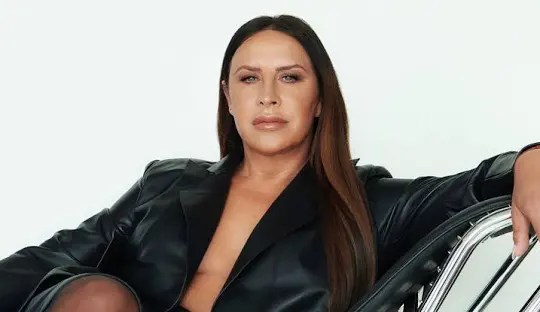
“Emilia Pérez” is a 2024 Spanish-language “French musical crime comedy” about a Mexican cartel leader who enlists a lawyer to help her disappear so that she may transition into a woman. [Comment: Well, other movies with insane premises have managed to be good…] At the 97th Academy Awards, “Emilia Pérez” will have 13 nominations, including Best Picture. Karla Sophia Gascón, who plays the cartel leader, is the first openly trans woman to be nominated as Best Actress.
Barack Obama was the all-time champion of cynical, politically motivated Presidential “apologies.” It’s election time, though: the Democrats are in trouble, and clearly some bright propagandist assisting those faceless apparatchiks pulling poor Joe’s strings suggested that what the hell, it couldn’t hurt to have Biden grovelling to Native Americans right now.
“The federal government has never, never formally apologized for what happened, until today. I formally apologize as president of the United States of America for what we did. I formally apologize. I have a solemn responsibility to be the first president to formally apologize to the Native people. It’s long, long, long overdue. Quite frankly, there’s no excuse this apology took 50 years to make….One of the most horrific chapters of the American history. We should be ashamed. The vast majority of Americans don’t know about it.”
Bite me.Biden probably didn’t know about it until he was told that he was making the speech. This was his first diplomatic visit to a tribal nation in his four-year term. Gee, what a coinkydink that it came right before an election! He should be ashamed to engage in such obvious pandering, but the shame threshold of his party is at an all-time high right now. Have you noticed?
Let’s look at everything wrong with this “apology”:
Littlemore than two weeks ago, both Curmie and I wrote about the ridiculous “RayGun,” aka. Rachel Gunn, who made a travesty of the Olympics breakdancing event (which was arguably a travesty from its inception anyway) and who may have rigged the Oceana competition to represent Australia in order to get a free trip to Paris in exchange for making an ass of herself.
Now, apparently sensing that her metaphorical 15 minutes of infamy was expiring, she’s in the news again for issuing what the ethically-inert news media is terming an “apology.” In an interview with the Australian current affairs show “The Project” the 37-year-old university lecturer said this week that she is “very sorry for the backlash that the [break-dancing] community has experienced” following her performance.
“The media are not trusted, and all the conferences and articles in the world are not going to help them out of their hole. What will help is if the media industry learns to do what it once did with some honor: Apologize for mistakes.”
—–Mark Judge, reflecting on the current Joe Biden cover-up disaster that has implicated the mainstream news media and lowered its already abysmal level of public trust even further
Judge makes a profound point. If reporters, journalists, publishers and editors acknowledged their mistakes, ethical lapses and instances of incompetence, bias, dishonesty or worse, there would be at least some sense that they recognize their deficiencies and are committed to correcting them. Judge writes,

 Ethics Alarms