Desperate Ethics Quote Of The Week: Louis C.K.

Comedian/actor Louis C.K. has taken the high road in responding to his share of the wave of accusations coming at various show business and pop culture figures following the launch of the Harvey Weinstein Ethics Train Wreck with its Kevin Spacey caboose. The New York Times recently revealed the certifiably awful stories of C.K.’s disgusting conduct toward five women, and subsequent show business sources have confirmed that “everybody knew” Louis  was abusing his influence and power to harass women. Now the often thoughtful and provocative comic is fighting for his professional life, and has evidently decided that the wisest course is to be accountable, remorseful and contrite. Here is his statement:

I want to address the stories told to the New York Times by five women named Abby, Rebecca, Dana, Julia who felt able to name themselves and one who did not.

These stories are true. At the time, I said to myself that what I did was okay because I never showed a woman my dick without asking first, which is also true. But what I learned later in life, too late, is that when you have power over another person, asking them to look at your dick isn’t a question. It’s a predicament for them. The power I had over these women is that they admired me. And I wielded that power irresponsibly.

I have been remorseful of my actions. And I’ve tried to learn from them. And run from them. Now I’m aware of the extent of the impact of my actions. I learned yesterday the extent to which I left these women who admired me feeling badly about themselves and cautious around other men who would never have put them in that position.

I also took advantage of the fact that I was widely admired in my and their community, which disabled them from sharing their story and brought hardship to them when they tried because people who look up to me didn’t want to hear it. I didn’t think that I was doing any of that because my position allowed me not to think about it. There is nothing about this that I forgive myself for. And I have to reconcile it with who I am. Which is nothing compared to the task I left them with.

I wish I had reacted to their admiration of me by being a good example to them as a man and given them some guidance as a comedian, including because I admired their work.
Continue reading →

The IRS Scandal: “I’m Sorry!” Is Not Enough, But That’s Apparently All Our Battered Democracy Will Get


I’ve been holding a draft of this post for two weeks until I calmed down. You should read the first version.

The Treasury Department  agreed to  a “very substantial” settlement covering damages to hundreds of tea party groups following a class-action lawsuit over the obstructive, discriminatory IRS scrutiny they received when applying for tax-exempt status leading up to the 2012 election. According to court documents,  the IRS admitted wrongdoing and apologized for its conduct. The IRS stated,

“The IRS admits that its treatment of Plaintiffs during the tax-exempt determination process, including screening their applications based on their names or policy positions, subjecting those applications to heightened scrutiny and inordinate delays, and demanding some Plaintiffs’ information that TITA determined was unnecessary to the agency’s determination of their tax-exempt status, was wrong. For such treatment, the IRS expresses its sincere apology.”

That’s nice. Isn’t that nice?

The department did not disclose the amount of money handed out to over 400 organizations: “The [Internal Revenue Service]’s use of these criteria as a basis for heightened scrutiny was wrong and should never have occurred,” Attorney General Sessions said in a statement.  “It is improper for the IRS to single out groups for different treatment based on their names or ideological positions.”

Ya think?

The scandal began in 2013, when an IRS official admitted the agency had been aggressively scrutinizing groups with names such as “Tea Party” and “Patriots.” It later emerged that some liberal groups had been targeted, too, but in less aggressive ways and although in far smaller numbers. I hate to be suspicious, but if a Democratic administration’s tax agency agency in advance of an election wanted to hobble Republican and conservative groups, picking out some progressive groups to harass would be the smart move. In “Jack Reacher,” a sniper who wants to kill one target shoots five, so it looks like a random mass shooting. Same theory.

The IRS accelerated its special treatment of conservative groups around 2010, as the election approached, and Tea Party applications for tax-exempt status surged. Some court decisions had eased the rules for tax-exempt groups to participate in politics. Something had to be done, and some obama loyalists in the IRS apparently decided to do it. Or it was all one big misunderstanding.

After the scandal broke, there was a mass exodus from the IRS’s management. Conservative groups sued. Congressional Republicans launched  years of hearings, amid allegations the Obama White House had ordered the targeting. It was a futile effort. In earlier administrations, the news media would have been asking questions. A non-political Justice Department would have investigated hard, but Obama’s Justice Department was entirely constructed to protect the President and Democratic interests. The situation screamed for a Special Counsel. This wasn’t a matter of speculation: Something was rotten in Washington, D.C. A supposedly apolitical agency of the US Government, in advance of a national election with a Democratic President in office, used its power to interfere with the rights of conservatives to organize and participate in the democratic process. If the IRS employees involved were sufficiently partisan—and they were–no explicit orders from the White House were necessary. They knew what to do. Continue reading →

Contrarian Ethics And Ann Althouse

Ann Althouse, the now retired law professor and increasingly active bloggress, is a habitual contrarian. That’s why she is such an interesting and politically unpredictable commentator, and why, though generally left of center by instinct, she so often ends up on the opposite side from the news media. Being a contrarian can be a useful tactic for ethicists too: it provides a bias filter. Since lawyers like Ann are trained to be able to argue both sides of any argument with equal fervor and persuasiveness, picking a position you disagree with and arguing for it anyway is a wonderful way to change your own mind, or to find lines of reasoning that might never have appeared otherwise.

It can be a trap, too, especially in the blogging biz. Having an opinion that isn’t already everywhere on the web makes a blog interesting, attracts comments, and leads to increased traffic and links. Especially in areas where one doesn’t have strong opinions, the tendency to disagree with the obvious or popular opinion becomes its own bias, and undermines trust and integrity. I have my own contrarian streak (I inherited it from my father), and I have to watch it carefully. It is not ethical (it’s unkind) to say or write things primarily because you mostly want to make people’s heads explode. I’ve done it a few times on Ethics Alarms.

This is where I have seen Althouse trending, and here is a recent example. Continue reading →

Further Ethics Observations On The Kevin Spacey Scandal [Part 2]

[Continuing the reflections on the accusation against Kevin Spacey and its aftermath…Part One is here.]

I have always assumed that Spacey had endured some kind of serious trauma that explained his aversion to confirming that he was gay, since, really, it was so, so obvious. Many actors become actors because of familial abuse and self-loathing: if you think about it, it makes sense. They don’t like who they are and what real life has been, so they seek the fantasy life of being someone else on stage, films and TV.  Maybe Spacey’s long obsession with performer Bobby Darrin provided a clue. (Spacey eventually played Darrin in his own vanity film project. “Beyond the Sea.”) You have to be really unhappy with yourself to fantasize being in the shoes of Darrin, the talented, troubled heterosexual  actor-singer who died before he turned 40. Thus I was not surprised when Spacey’s brother Randall Fowler, 62, a limo driver and professional Rod Stewart impersonator, described the home in which he, Kevin and their sister were raised as resembling the plot a  horror movie.

  • Fowler says he and his brother were both sexually abused by their father, Thomas Geoffrey Fowler (whom the children called “The Creature”), and that their mother knew about their treatment at his hands. Their older sister, Julie, was also abused before she fled home when she was 18. In a 2004 interview, Spacey’s brother described how their ultra-right-wing father was a member of the American Nazi Party. He was so enamored with Adolf Hitler, Fowler claimed, that he trimmed his mustache to resemble Der Fuehrer’s.

“I grew up in a living hell. There was so much darkness in our home it was beyond belief. It was absolutely miserable,” Spacey’s brother said then. “Years later, our mother actually wrote a letter to all three of us, trying to justify what had gone on by saying she was abused as a child and so was our father. Kevin tried to avoid what was going on by wrapping himself in an emotional bubble….He was so determined to try to avoid the whippings that he just minded his Ps and Qs until there was nothing inside. He had no feelings.”

Fowler described his younger brother was an “empty vessel” who had never been in a real relationship with anyone. “Neither of us had a chance growing up with two such damaged parents, ” he concluded.

No, I don’t know that what a Rod Stewart imitator and publicity-seeking sibling of a famous actor says is completely true, exaggerated, or a fabrication.  But it fits. Spacey should be given the benefit of the doubt, and accorded some compassion. We all deserve that. Continue reading →

Further Ethics Observations On The Kevin Spacey Scandal [Part 1 of 2]

The comments regarding yesterday’s ethics quiz have been varied and vigorous. As to the quiz question itself,

Is [Anthony] Rapp’s public accusation [against actor Kevin Spacey alleging that Spacey sexually assaulted him 30 years ago when Rapp was only 14] fair, responsible, and ethical?

I have arrived at my answer, and am abashed that I didn’t see it immediately.

No, the accusation was not fair, and it was unethical. It fails all ethical systems. It is a Golden Rule breach: What Rapp did to Spacey is not how he, or anyone would want to be treated. The fair and decent thing would have been to confront Spacey privately.  Maybe Rapp has distorted the incident over time; maybe Spacey is as remorseful and embarrassed by the incident as Rapp has been traumatized by it. All of us would want at least a chance to explain or make amends before being exposed…in Buzzfeed(!?).

Other observations, as Spacey is being metaphorically disemboweled by an angry mob…

  • Rapp also stomped on Kantian ethics, which forbids using human beings as a means to an end. Rapp says his goal was “to try to shine another light on the decades of behavior that have been allowed to continue because many people, including myself, being silent.” Wait: is there a shred of evidence that Spacey engaged in such conduct over “decades”? Is there any indication that Rapp is protecting future teens from his assaults? No, he’s just jumping on a train, joining a virtue-signalling mob engaged on what appears to be a scalp-hunting expedition. His late hit on Spacey didn’t stop a predator (as with Weinstein), didn’t report a crime to authorities (the statute of limitations is long past), didn’t accomplish anything postive and productive involing Spacey at all. I was just symbolic, and Kant, correctly, holds that it is unethical to destroy real human beings to make a political, social or culotural point, in this case the point being, “Don’t stay silent for 30 years if you have been abused, harassed or molested!”

This also fails any Millsian or Benthamist test of utilitarianism. The ends accomplished by Rapp’s accusation consist almost entirely of destroying Kevin Spacey. What else? I suppose its a warning too: anything you did that society will regard as worthy of making you a pariah can be revealed by an angry, vindictive or politically motivated alleged victim at any time, and you will have no recourse. Call it the Anita Hill Principle. That’s not enough of a “benefit” to society to destroy someone’s life. We have the Weinstein example, and the Bill Cosby saga. They were–are?—both serial offenders. Taking out Kevin Spacey based on one very old incident is not a means justified by any end.

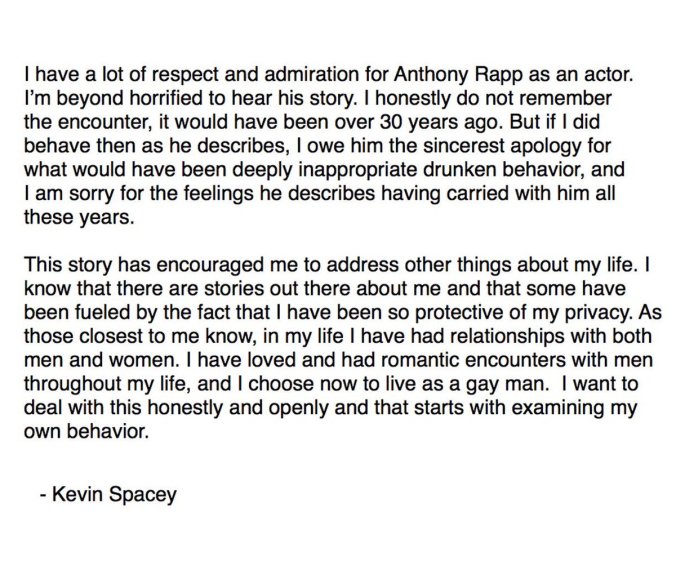
  • Upon examination, Spacey’s response was a mistake and an ethics botch on multiple levels. Here it is again:

First, here we have another example of why Twitter is dangerous. Spacey is a smart guy, yet he foolishly, in his rush to deal with this crisis, authored his own rapid response on social media. In the old days, as my late friend Bob McElwaine, Hollywood publicist for Danny Kaye, Dean Martin, Robert Mitchum and many other stars, told me, he job was to make sure nothing attributed to his Hollywood clients was authored by them. Continue reading →

Ethics Quiz: The Weinsteining Of Kevin Spacey

This latest boxcar on the Harvey Weinstein Ethics Train Wreck contains an ethics quiz because I have such mixed feelings about it.

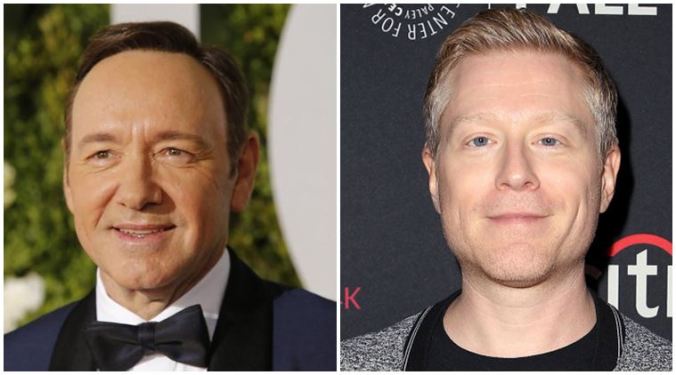
Yesterday, actor and former child performer Anthony Rapp told Buzzfeed that in 1986, when Kevin Spacey was 26,  Rapp was 14, and both were appearing in Broadway plays, Spacey invited Rapp over to his apartment for a party. At the end of the evening, Rapp says, Spacey picked Rapp up, put him on his bed, and climbed on top of him. Rapp says he managed to squirm away and locked himself in the bathroom. Eventually he left Spacey’s residence, and never had any further contact with him.

Rapp is now 46. He says that before talking to Buzzfeed, he never told anyone about the traumatic  experience. However, Spacey’s success in his career constantly reminded Rapp of the incident.  “My stomach churns,” Rapp said. “I still to this day can’t wrap my head around so many aspects of it. It’s just deeply confusing to me.”

Rapp said he felt obligated to finally tell his story in the wake of the new awareness of the sexual harassment and sexual abuse culture in  the entertainment industry, sparked by Harvey Weinstein’s fall.

“And not to simply air a grievance, but to try to shine another light on the decades of behavior that have been allowed to continue because many people, including myself, being silent. … I’m feeling really awake to the moment that we’re living in, and I’m hopeful that this can make a difference.”

Spacey immediately tweeted an apology, and more:

Your Ethics Alarms Ethics Quiz of the Day:

Is Rapp’s public accusation fair, responsible, and ethical?

Continue reading →

Ethics Quote Of The Week, And A Few Related Diversions

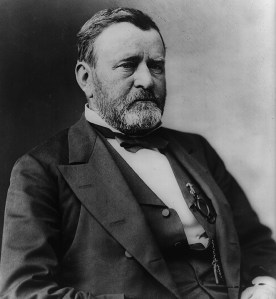
My son is named after this President, incidentally.

The quote itself is by Ron Chernow, the historian who authored the recent well-reviewed biography of out 18th President, “Grant,”  “Hamilton,” the biography that inspired, we are told, the mega-hit musical. and “Washington” (won’t somebody send a copy to the fools at Christ Church?) was given to an interviewer as his description of another book, the Philip Roth’s historical novel  “The Plot Against America”:

[A] democracy can be corrupted, not by big, blaring events, but by a slow, insidious, almost imperceptible process, like carbon monoxide seeping in under the door.

Some random thoughts on this statement, which I believe is exactly right, and a lot more interesting than the more frequently used analogy about boiling a frog slowly:

  • Grant, as Chernow’s book (among others of recent vintage) documents, was present at one of those points when democracy seemed to be in the process of being poisoned, and acted forcefully.

By 1868, when Grant was elected to succeed Andrew Johnson, who had done everything he could to allow the South to resist extending civil rights to the newly freed slaves, the KKK had evolved into a powerful terrorist organization that referred to itself as  “The Invisible Empire of the South.” Under the  Klan’s first  “Grand Wizard,” the brilliant former Confederate cavalry general  Nathan Bedford Forrest, whites from all classes of Southern society joined the Klan’s ranks. They attacked and punished newly freed blacks for crimes like  behaving in an “impudent manner” toward whites, brutalized the teachers of  schools for black children, and burned schoolhouses. It also terrorized and often murdered Republican party leaders those who voted for Reconstruction policies.  In Kansas over 2,000 murders were committed as the 1868 election approached; in Louisiana, a thousand blacks were killed in the same period.

Grant entered office knowing that the Civil War victory could come apart. He made some bad appointments–Grant was naive about politics and trusted too easily—but his choice as Attorney General, Amos T. Akerman, was masterful. With Grant’s support, and the with the help of the newly created Justice Department under Grant, he vigorously worked to enforce the Fifteenth Amendment, which gave the vote to black men in every state, and the First Reconstruction Act of 1867, which placed tough restrictions on the South and closely regulated the formation of their new state governments. Between 1870 and 1871, the Republican Congress passed and Grant signed into law the Enforcement Acts, which made it a crime to interfere with registration, voting, officeholding, or jury service by blacks. Congress also passed the Ku Klux Klan Act, which allowed the government to act against terrorist organizations.

  • When I was growing up and becoming interested in the Presidents, a life-long passion that led me to both law and ethics, Grant was routinely listed as one of the worst in the line. All one heard from historians was about the financial scandals that rocked his administration. Grant’s great success in subduing the Klan was literally never mentioned. The main Presidential historian then was Arthur Schlesinger Jr., a member of Jack Kennedy’s inner circle. His job as he saw it was to minimize the contributions of any Republican President, like Teddy Roosevelt (“near great” in his rankings), Eisenhower (“below average”) and Grant (“failure’). Meanwhile, Woodrow Wilson, who dragged the U.S, into the first World War, botched the Versailles Treaty and who actively revived the Klan, being a stone-cold racist, was “great.” Naturally, I believed all of his distortions, which were largely those of the historians at the time, then, as now, often partisans and propagandists. It took me a while to realize that this had been my first encounter with the Left attempting to alter present perception by controlling the past.

That is one of the major sources of Chernow’s carbon monoxide today, except that the disinformation now emanates from the schools, colleges, and the news media. Continue reading →

Abashed Morning Ethics Warm-Up, 10/28/17 [Updated]

Good Morning!

1 Following a day in which various exigencies and responsibilities, plus fatigue and distraction, caused me to whiff on getting up at least three posts I thought were worthy of consideration, yesterday I failed to get any up at all. This makes me very unhappy, and I apologize. A fly-in, fly-out assignment in New York City had me up early and back late, whereupon I had my son’s birthday to acknowledge, the World Series to scrutinize and some aching feet to attend to. Priorities can’t be ignored, and being able to recognize when something you want to do and are devoted to doing just cannot be done well in the time allowed is a matter of life competence. Yet I hate failing loyal readers who care about ethics issues and rely on Ethics Alarms to explore them, and feel negligent when this occurs…fortunately, not very often.

Still too often, however.

2. The emergence of Hollywood director James Toback as a serial sexual harasser (at least) had me preparing a post about why theatrical directors are especially prone to this conduct. The gist of it was that in college, where participation in theater is often more social than aesthetic, directors forming romantic relationships with their cast members is neither taboo nor typically exploitative. Similarly, in community theater such relationships are not unusual or unethical, unless they interfere with a director’s artistic duties: casting an inferior performer because she’s your girl friend or because you want her to be is per se unethical. These are the cultures that produce many directors, and they enter professional theater, and later films, with bad habits that cannot be tolerated or continued in a professional context. Similarly, performers also come out of that culture. It may be difficult for some of them to comprehend that what is arguably acceptable in amateur settings is becomes unconscionable in a professional one.

However, this cannot explain Toback’s conduct. An astounding 200 plus women now say they were harassed or assaulted by him, and the list filled up in less than week. Compared to Toback, Harvey Weinstein and Bill Cosby seem restrained.

Actress Selma Blair, for example, says her agent arranged for her to meet Toback for a possible role in one of his films after her career had begun with promise. Blair says the meeting was scheduled at a hotel restaurant, but  when she arrived the hostess told her that Toback wanted to meet in his hotel room. There, Toback asked her to perform a monologue nude, directed her to have sex with him, and said he would not let her leave until he “had release.” Then the actress says, he simulated sexual intercourse on her leg. 

I begin my sexual harassment seminars by stating that the problem is one of ethics. If you have respect for human beings regardless of gender, if you are fair to people you interact with, if you are caring toward them and obey the Golden Rule, if you apply the three basic ethics alarms checks (“Does this seem right? Could I tell my mother about this? Would I want this on the front page of my local newspaper?”), then you won’t be a harasser. But I can’t begin to explain how someone reaches the point of depravity and utter contempt for women that he would behave the way Blair describes Toback behaving. This is, to understate it, uncivilized. Was he raised by wolves? I suspect even wolves would be horrified by his behavior. My father never had to sit me down at 13 and say, “Jack, it’s time for a talk. It’s never right to simulate sexual intercourse on a woman’s leg when she has come to interview for a job.” I didn’t need to be told this. Who needs to be told this who isn’t already a dangerous sociopath?

Somehow, the culture of Hollywood devolved to such a state that abuse of power and women became a social norm, and even conventionally acculturated adults had their values erased and replaced. That is the only way the Tobacks and Weinsteins could come to exist. That culture is now too sick and entrenched to be wiped clean by a few scandals. It is going to take a long time to change it, if indeed it can be changed. Continue reading →

Morning Ethics Warm-Up, 10/19/2017: #MeToo, A Fact-Denying Fact-Check, And A “Resistance” Hit Job

Good Morning to you!

1 The contrived anti-Trump controversy over his conversation with a Gold Star widow is so disgusting and cynical that I hesitate to comment on it. This was so obviously a set-up: an anti-Trump woman, angry and grieving over the death of her husband, allowed a virulently anti-Trump Democratic Congresswoman to listen in on the call, then collaborated to make the accusation that Trump’s words that her husband “knew what he was signing up for” were a calculated insult. The New York Times somehow found this worthy of an above the fold article. No other President would ever be subjected to this kind of despicable “gotcha!” attack. No matter how clumsy Trump’s words might have been, and we can only take the word of two women who were predisposed to interpret them in the worst light imaginable, a President must be accorded a presumption of good will in such a situation. This, however, has been withheld from him in all situations by major segments of the Left from the beginning. Representative Fredricka Wilson (D-Fla) boycotted the President’s inauguration, and has made her motives and character explicit by laughing about how this latest controversy has made her a “rock star.” Well, maybe in “the resistance”–I have a somewhat different description for her. Now she’s race-baiting too, calling John Kelly a racist for referring to her, in his defense of the President, as an “empty barrel” who “makes noise.” Yup, I remember hearing stories about Klansmen calling blacks “Empty barrels.”

What did the wife of La David Johnson expect such a partisan, vicious hack like Wilson to do when she chose her to listen to the conversation with the President? It was another episode in the fake “the President is a white supremicist” pageant, and to anyone with a scintilla of objectivity, a blatant one. The Washington Post’s resident race-baiter, affirmative action Pulitzer Prize winner Eugene Robinson, wrote an unforgivable column calling Trump’s comment “mindless cruelty”he never never made a genuine case that there is anything wrong with what Trump said…because, you see, there isn’t. If the wife of a soldier doesn’t understand that when he enlisted in the armed services he was putting his life on the line for his country and knew it, then that’s her misconception. My father, who had his foot blown up in World War II, made this point more than once: if you enlist to fight, you can’t say you didn’t know that the possibility of being killed or wounded wasn’t part of the decision. If it wasn’t, there would be no innate courage in volunteering for service. This, like so much else that the President does and says, is only wrong because it is him saying it. This is the plan. This is how “the resistance,’ Democrats and their core seeks to cripple the government and undermine the President of the United States. They don’t even hesitate to politicize a simple condolence call and the death of a soldier toward that un-American end.

I think my favorite part of the negative spin put on Trump’s conversation with Mrs. Johnson was that “he appeared not to know the name” of the fallen soldier. Any parent who can’t resist excessive creativity and who names a boy “La David” has condemned him to having everyone hesitate to say his name for the rest of his life, as “Wait, this can’t be right…” locks their brains. This is Naming Ethics. Similarly, don’t name your girl “Mister Nancy.”

Accolades are due to another Gold Star widow, Natasha De Alencar, who has released the audio of a call the President made to her in April after her husband, a  member of the 1st Battalion, 7th Special Forces Group (Airborne) became the first American killed in combat in Afghanistan this year. That conversation shows the President as compassionate and willing to spend all the time necessary to express his respect—and she and her were Hispanic, and we all know that Trump just hates Hispanics. That call alone should ensure the President the benefit of any doubt regarding whether he would “insult” a military widow, but it won’t; not for those who want to assume the worst, and want to  make as many people as possible believe that the President of the United States is a monster.

This was an unconscionable hit job. The Democrats and the news media seem incapable of comprehending that the more ruthless, unjust and vicious they behave in their opposition to Trump, the more those who are not already incurable Trump-haters will conclude that their cure is worse than the disease. Continue reading →

Morning Ethics Warm-Up, 10/11/2017: Words, Debt, And Costumes

Good morning from Richmond, Va.!

1 Passengers keep piling onto the Harvey Weinstein Ethics Train Wreck:

  • Fashion designer Donna Karan, questioned about Weinstein at an event, said in part:

“I also think how do we display ourselves? How do we present ourselves as women,” Karan said to the Daily Mail. “What are we asking? Are we asking for it by presenting all the sensuality and all the sexuality?”

Then she pointed to Weinstein’s achievements, and said Weinstein and his wife were “wonderful people.”

(Note to the designer: men who use their power to harass and assault women are not wonderful people by definition.)

After the predictable response to these idiotic comments, Karan protested that her quote was taken out of context, as if the context wasn’t Harvey Weinstein, and issued a low level apology that could only mean, “I’m deeply sorry I said something in public that reveals the miserable level of my values.”

  • Lindsay Lohan, currently in exile in Great Britain and Dubai, used social media to remind her fans in the US that she is, after all, a moron, writing on Instagram,

“I feel very bad for Harvey Weinstein right now. I don’t think it’s right what’s going on….He’s never harmed me or did anything to me – we’ve done several movies together.I think everyone needs to stop – I think it’s wrong. So stand up.”

One of the real benefits of social media is that it reveals the total lack of ethics comprehension, reasoning ability and life competence that inflict so much of the public, including celebrities. With clarity of thought like that, is there any mystery regarding how the once rising star managed to mangle her career despite beauty, talent, and early success?

  • NBC was presented with the Weinstein story before it was broken by the New York Times, says Ronan Farrow, the author of a new Weinstein investigative piece in The New Yorker. The network hasn’t said why. Does it have to? Weinstein was close to both the Clintons and the Obamas, and the scandal directly implicates the Democratic party and its core supporters….like NBC. It is fascinating to watch cable and network anchors and guests desperately try to analogize Weinstein to President Trump, but the Hollywood mogul was enabled by self-righteous liberals and was given the King’s Pass (with an assist from the Saint’s Excuse) because he gave to Planned Parenthood and Hillary, making him, in Donna Karan’s words, “wonderful” by definition. The analogy is Bill Clinton, of course, and any journalist who refuses to acknowledge that has confessed crippling partisan bias.

2. This brings us to a quote by blogger Ann Althouse:

“My hypothesis is that liberals — including nearly everyone in the entertainment business — suppressed concern about sexual harassment to help Bill Clinton. Giving him cover gave cover to other powerful men, and the cause of women’s equality in the workplace was set back 20 years.”

Her hypothesis is correct, and I said so when the liberals, feminists, abortion zealots, artistic community and others circled their wagons around Clinton during the Lewinsky scandal. This is one reason why Hillary’s campaign stance as standard-bearer for women’s rights and victims of sexual assault was so grotesque.

Here’s another quote from Althouse that I like:

“Who are the women who accepted the deal as offered by Harvey Weinstein? Will their names be kept out of the press? Should they?…

…So much silence facilitating so much harm! Should the women who took the bargain and got what they wanted out of it be regarded as victims and entitled to keep their names secret, or are they part of a system that hurt many others, and subject to outing.”

I’ve answered this question in various comments on previous posts, much to the unhappiness of readers who believe that victims who remains silent and thus allow evil to continue shouldn’t be criticized. The women are part of the system, and accountable. Continue reading →