Legal Ethics Quiz: The Bean Bag Tossing Defense Lawyer

" I swear, you can do this in court. I saw it on "Ally McBeal"...

” I swear, you can do this in court. I saw it on “Ally McBeal”…

Holy crap! Here is a courtroom stunt you don’t see everyday…or ever.

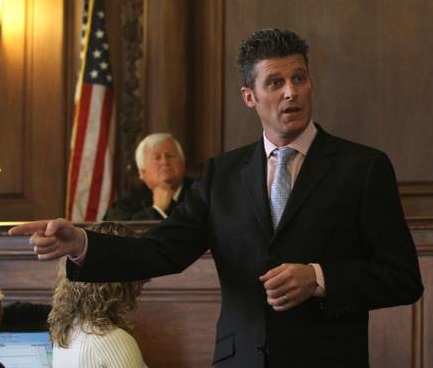
The dramatic bribery trial of Rhode Island defense lawyer Donna Uhlmann and co-defendant Jamaal Dublin took a hard left turn into “Boston Legal” territory and beyond with the, well, creative closing argument of Dublin’s lawyer, Christopher T. Millea. It was so creative, he was nearly held in contempt of court.

“You see, all of this has to do with the throwing of feces,” said Millea, cleverly reminding the jury of the bizarre conduct of a key state witness who once threw his own excrement at a prison guard.  “The state wants to throw as much against the wall to see what sticks, just like Michael Drepaul throwing his feces …”

With that introduction, Millea took two bean bags out of a box he had placed in front of the jury, and threw them at the courtroom door. Then he retrieved the turd stand-ins and placed them in another box near the door, and placed that box next to the one in front of the jury, which, it was later discovered, read “Reasonable doubt,” though only the jury could see the words. The first box was labelled, “State’s case.” Continue reading

More Interview Ethics: Janet Mock Ambushes Piers Morgan

janet_mock_piers_morgan_1_16x9_1600

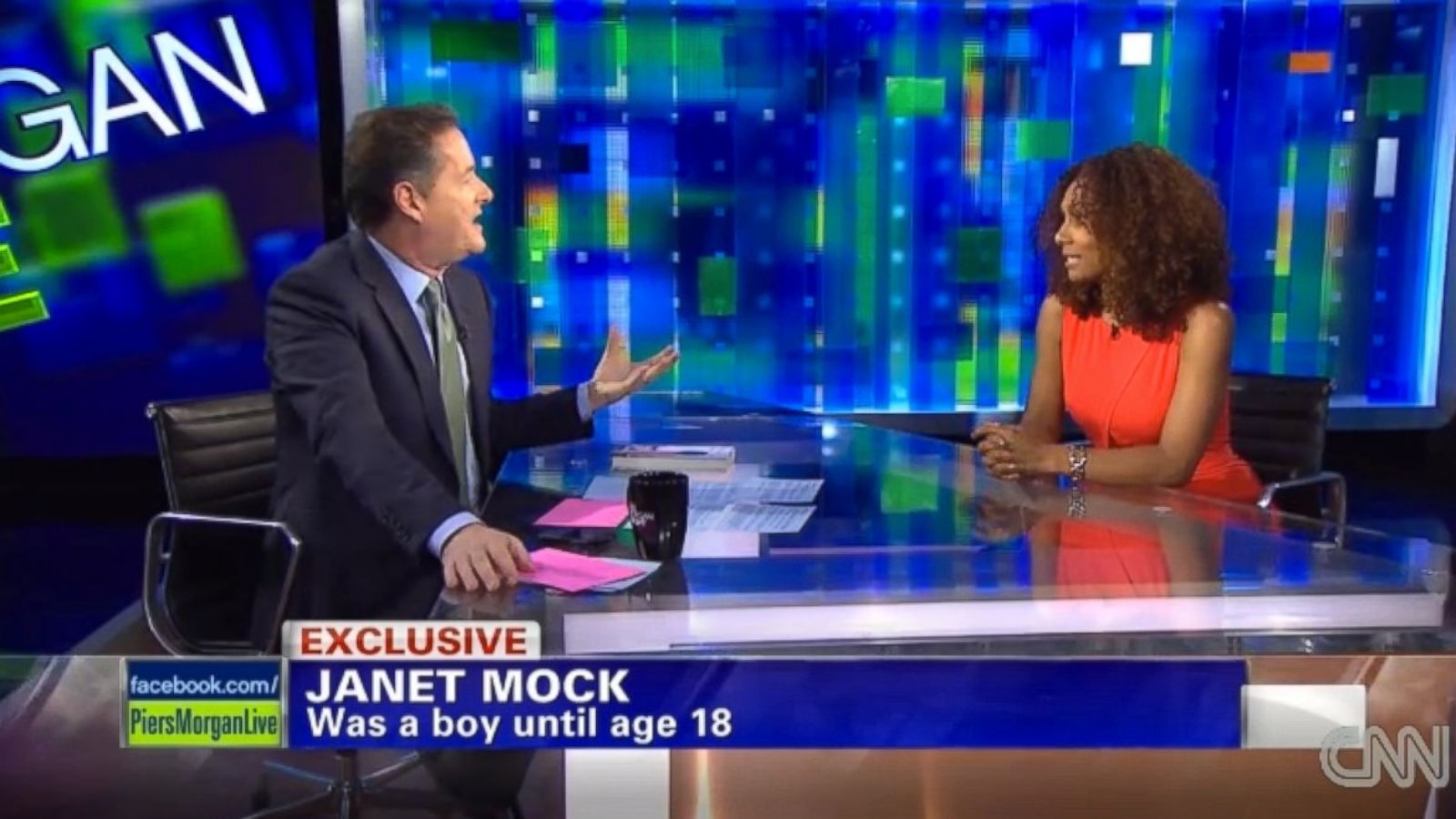
Piers Morgan, CNN’s imported British tabloid reporter turned Larry King replacement, invited trans author and activist Janet Mock on his show to promote her new memoir, “Redefining Realness: My Path to Womanhood, Identity, Love & So Much More.” As I watched the interview (because of Mock and not Morgan, who makes my skin crawl), I was struck by how far such interviews have come since David Susskind would invite transgendered individuals on his PBS show—this was classy, remember—and essentially hold them out as freaks. Morgan was respectful and supportive, though the sensationalist aspect was still there but muted: the text under Mock during her interview read “BORN A BOY,” and “was a boy until age 18,” which are, though accurately describing how most CNN viewers would understand Mock’s journey, over-simplified and counter to how Mock describes herself.

Mock seemed happy, Morgan seemed gracious. Then Mock went on Twitter and Buzzfeed to pronounce Morgan a clueless, ignorant, biased jerk.  He was, shockingly, “trying to do infotainment” Mock said. Morgan’s show is the epitome of infotainment, and everybody knows it. She criticized him for “sensationalizing” transgender people while neglecting a substantive discussion about her book. The sales of Mock’s memoir depend on its sensational aspects, again, as she and her publisher well know. Mock accused Morgan of asking the same kinds of embarrassing questions about body parts and boy friends that non-trans people are inevitably curious about. Well, of course he did…because that’s what his audience is curious about.

None of this was communicated to Morgan either before, during, or after the interview. Morgan, who is no Sam Rubin, was incensed, and struck back via Twitter, since that is the forum where Mock chose to publicly attack him. In various tweets and exchanges he called Mock cowardly, “churlish,” and shameful, and criticized her allies as well, as she successfully brought down the progressive hoards on Morgan’s head. The same week, he invited her back to on the show along with a panel so he could defend himself while assailing her conduct. You can read the transcript of that show here.

What’s going on here? Continue reading

Rubin-Jackson Revisited: Gibbs’ Rules #6 and The Harmful Apology

Sam Rubin is no Jethro Gibbs. Unfortunately.

Sam Rubin is no Jethro Gibbs. Unfortunately.

Samuel Jackson’s reckless and unjustified attack on KTLA entertainment reporter Sam Rubin (which, incredibly, continues to be misrepresented by most of the news media, internet and social media) is an excellent example of how relatively trivial incidents can teach important ethics lessons. One of those lessons I did not discuss in the previous post about this episode involves the phenomenon of the gratuitous or needless apology.

To briefly recap: Rubin’s celebrity guest, Samuel L. Jackson, falsely and obnoxiously accused Rubin of confusing him with another black actor, Laurence Fishburne, thus asserting that Rubin 1) thought all blacks looked alike 2) was impliedly a bigot or racist as a result, 3) was  unprepared  for the interview, and 4) was unprofessional and should lose his job. Rubin apologized twice, first during Jackson’s unprovoked rant (for Rubin had not confused him with Fishburne, and it was Jackson who was confused and unprepared for the interview), and later, to everyone else, after headlines that his “racist mistake” had justly provoked Jackson were being repeated everywhere. Rubin said:

“We start right now with the beauty and the occasional pain of live television. First and foremost, I do know who Samuel L. Jackson is. I’ve interviewed him several times over the years, but never quite like the conversation we just had. I indicated to Samuel that I’d seen him during the Super Bowl, and he thought that I had confused him with the commercial Laurence Fishburne had done for a car company. Of course a “Captain America” ad had also run during the Super Bowl, but I immediately felt so dumb, I didn’t bring that up — and he gave me the shellacking that was well deserved. I pride myself on the fact — that unlike a lot of people who do this kind of work — more often than not, I really do know what I’m talking about. But I didn’t 30 minutes ago, and I’m really embarrassed about it, and I very much apologize to Samuel L. Jackson and anyone else who was offended for what was a very amateur mistake.”

This kind of apology, a coerced, false apology for conduct that warrants no apology, regret or forgiveness at all, does not appear on the Ethics Alarms Apology Scale, because while it looks and sounds like an apology, it is something else entirely. The Apology Scale ranks the intent, sincerity, honesty and effectiveness of apologies for actual wrongdoing or harm. The coerced and false apology is wrongdoing that causes harm, and is the product of wrongdoing itself. Continue reading

Samuel L. Jackson Was Wrong and Behaved Like A Jerk: Why Is Sam Rubin The One Who Is Apologizing?

Sam Rubin, entertainment reporter for KTLA in Los Angeles, is being ridiculed far and wide for “mistaking Samuel L. Jackson for Laurence Fishburne – while interviewing Jackson on live TV!”

Bulletin: That’s not what occurred.

Jackson was wrong, Rubin was correct, and Jackson’s long riff, funny as it was, about how white guys can’t tell black actors apart was both a cheap shot and viciously unfair. Rubin made no such mistake. Jackson owes him an apology. Watch this  trailer:

Did you see that black actor in two places in the video? That was Samuel L. Jackson, not Laurence Fishburne. That video di run during the Super Bowl, and was obviously what Rubin was referring to when he began his question with “You’re working for Marvel…” Marvel Comics, the creators of Captain America, in which Laurence Fishburne has no role. Continue reading

Unethical and Unjust Firing of the Week: The MSNBC Cheerios Tweeter

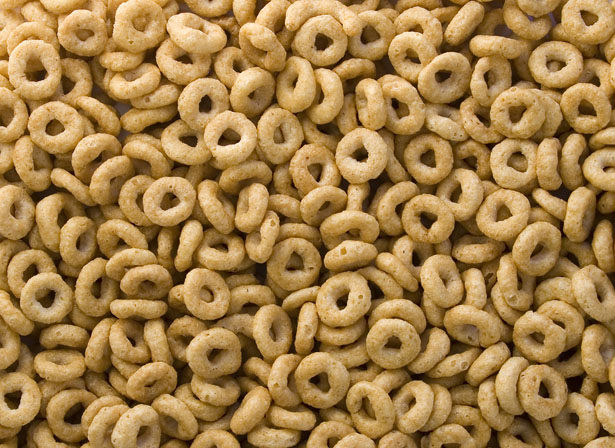
CheeriosWhen reader Scott Jacobs sent me a link to the now infamous MSNBC tweet that presumed that all “right-wingers,” which in MSNBC Universe means anyone who doesn’t want to put Barack Obama on Mount Rushmore, were horrified by the very existence of bi-racial families, I honestly didn’t understand what he was telling me.  MSNBC’s official position is that Republicans are racists, so he couldn’t have been referring to that….everybody knows that. (“But did you know Old McDonald was a really bad speller?”) And what racists approve of bi-racial families? So the tweet wasn’t illogical or dealing in rationalizations. The tweet—oh, here it is:

“Maybe the rightwing will hate it, but everyone else will go awww: the adorable new #Cheerios ad w/ biracial family” Continue reading

Virginia’s McDonnells, Masters Of Rationalization

Former_Governor_Indicted

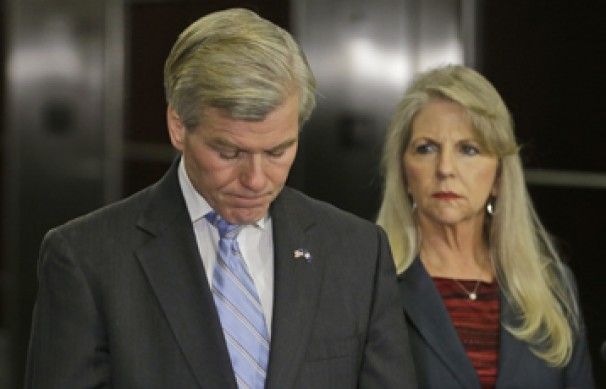
The only question regarding the multiple count federal corruption indictment of Virginia’s most recent ex-Governor Bob McDonnell (R) and his wife is whether or not the relevant laws are so porous that they can’t be convicted on the evidence. Did they use McDonnell’s high office for personal enrichment? Yes. Did they go to great lengths to disguise the fact? Yes. Did the Governor betray the public trust? Yes. Were the gifts, loans and cash, totaling at least $165,000, received from a dietary supplements company CEO essentially bribes? Of course they were. This is another excellent example of why the admonition that the accused are innocent until proven guilty is often technical rather than true. Based on irrefutable facts, the Virginia’s former First Couple is guilty as hell—of dishonesty, greed, corruption, obstruction of justice, bribery, betrayal of trust, the appearance of impropriety and outrageously unethical conduct. They just may not have broken any of the laws regulating those actions.

The legal case will ultimately rest on whether there was a specific, provable quid pro quo, which is to say, were the gifts and loans from Jonnie Williams Sr., former CEO of Star Scientific, expressly made in exchange for the governor’s assistance in helping his company in the state? Williams, who has made a deal, will testify that this was his understanding; why else would he allow himself to be used as a piggy bank by McDonnell and his wife? But in politics, as we all know, the myth is otherwise. Big companies give lawmakers big campaign contributions out of the goodness of their hearts and patriotic fervor, and it’s just a coincidence that those same lawmakers subsequently support laws that make those same companies millions, or block laws that would get in their way. It’s a coincidence! The Feds are going to have to show that what McDonnell did was significantly more sleazy than what virtually the entire population of Congress does by reflex, and also a clear violation of law. Continue reading

Ethics Observations On Sticks, Leadership, And Chris Christie’s Vindictive Bridge Closing Scandal

Christie apologizes

Before we delve into the starting point for most ethics inquiries—What’s going on here?— a summary…

Last September, the Port Authority of New York and New Jersey closed all but one lane of the George Washington Bridge , horrifically tangling commuter transportation in Fort Lee, New Jersey, just across bridge from Manhattan. The lane closures  delayed emergency responders to four calls, and may have resulted in at least one death. New Jersey Governor Chris Christie’s office had attributed the lane closures to a traffic study.  But smoking gun e-mails emerged proving beyond the shadow of a doubt that the bridge closing was far more sinister: top Christie aides engineered the gridlock specifically to cause problems for Fort Lee, whose mayor had angered the Governor by refusing to endorse him for re-election. It was political payback of a particularly brutal and Machiavellian sort.

“Time for some traffic problems in Fort Lee,” wrote Bridget Anne Kelly, a deputy chief of staff to Christie, in an email on Aug. 13 to David Wildstein, Christie’s appointee at the Port Authority. Wildstein resigned in December after news of the scandal first broke; he has since refused to answer questions in a hearing on the matter, citing the Fifth Amendment. Christie fired Kelly yesterday, and in a long and emotional press conference, profusely apologized while insisting that he knew nothing of the plot, but accepted responsibility for the actions of his staff. The incident is attracting national interest because Christie, a Republican,  is an intriguing and controversial  potential candidate for a 2016 Presidential run.

Observations:

  • This is bad, and there is no defense for it. Government power should never be abused like this, by anyone. Distorting one’s duties to the public to harm members of the public out of such motives as spite, revenge, retribution, intimidation or personal and political gain is the moral equivalent of a crime.
  • In fact, it should be a crime. It can’t be, because the problem is that some degree of such distortions of the duty to act in the public’s best interest are essential political tools that cannot be jettisoned without undermining effective leadership as well. Politics works through the carrot and the stick, and the stick virtually always causes collateral damage. At every level of government, refusing to do what a powerful leader wants must have negative consequences, or nobody will do what the leader wants, and he or she will no longer be effective. That, in the end, hurts the public too–presumably more seriously than the short-term harm from political payback. Continue reading

Melissa’s Apology, Take #2: Much Better!

Melissa finally realized that this photo isn't funny.

Melissa finally realized that this photo isn’t funny.

I posted earlier about the sub-par apologies offered by the infamous MSNBC Three, who decided to indulge their hate for Mitt Romney and Republicans by ridiculing the fact that Romney’s family now includes an adopted African American infant. Either Melissa Harris-Perry got a Martin Bashir memo, or she sincerely decided that she had not adequately communicated regret for the ethically indefensible segment. What she delivered, on the air this time rather than through Twitter, arguable qualifies as a Level #1 apology [“An apology motivated by the realization that one’s past conduct was unjust, unfair, and wrong, constituting an unequivocal admission of wrongdoing as well as regret, remorse and contrition, as part of a sincere effort to make amends and seek forgiveness.”]:

“Without reservation or qualification, I apologize to the Romney family. Adults who enter into public life implicitly consent to having less privacy. But their families, and especially their children, should not be treated callously or thoughtlessly. My intention was not malicious, but I broke the ground-rule that families are off-limits. And for that I am sorry. Also, allow me to apologize to other families formed through trans-racial adoption, because I am deeply sorry that we suggested that interracial families are in any way funny or deserving of ridicule. On this program, we are dedicated to advocating for a wide diversity of families. It is one of our core principles. And I am reminded that when we are doing so, it must always be with the utmost respect. We’re genuinely appreciative of everyone who offered serious criticisms of last Sunday’s program, and I am reminded that our fiercest critics can sometimes be our best teachers.”

Harris-Perry deserves special credit for the last sentence. She didn’t have to say that, and it is an excellent point for her to make, especially on her network, where some critics have been told that someone needs to shit in their mouths. Continue reading

Natasha Leggero’s Stand: Protecting The Jester’s Privilege


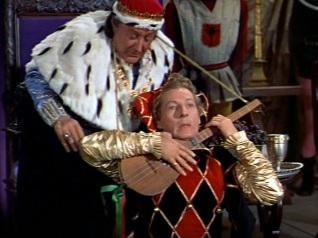
"Sing what you like, Fool. Just make sure I laugh."

“Sing what you like, Fool. Just make sure I laugh.”

In days of old when knights were bold, it is said, the King’s Fool was able to safely say outrageous, disrespectful things to the sovereign that might get anyone else drawn and quartered. This lucky exemption came to be known as the Jester’s Privilege, and it existed, and exists, for valid reasons. Humor, satire and all the other permutations of comedy are essential to societal sanity, and it makes sense to give the broadest discretion to practitioners of the craft in their efforts to provoke laughter—which is, as Reader’s Digest still reminds us monthly, “the best medicine.” That means that comics should not fear decapitation if their inspiration of the moment fails to provoke the desired mirth, or touches an audience member’s sensitive areas. In addition, the jester is sometimes able to expose a truth that will not be reached any other way.

It sounds like a good rule, and it is a good rule, but as with most ethics-related rules, applying it is difficult. Who gets the Jester’s Privilege…only professional comics, or does it apply to amateurs too? What about non-jesters just trying to be funny? “It was just a joke!” is a classic excuse invoked by insensitive and vicious people, including politicians, when they say something outrageous, as they try to use the privilege without a license, and in so doing, make it less effective for the humorists who really need its protection. Not everyone should assume that they have the full armor of the Jester’s Privilege. Mockery and ridicule are too often used as political weapons of targeted destruction.

Should some subjects be exempt from the Jester’s Privilege? The official position of comics, comedians, wags and wits has long been “No,” but even in Ye Olde Days, jesters sometimes went too far, and ended up with their heads on pikes. The problem any humorless king had after doing this, of course, was finding a jester willing to hazard a joke more edgy than “Why did the king cross the road?” For that reason, I think it’s vital that the Jester’s Privilege be strong and a near absolute. The sin that matters is not being funny, which means topics of unusual sensitivity take care of themselves.For centuries, for example, comics imitated and mocked those afflicted with speech impediments, especially stuttering, with big laughs guaranteed. Somewhere along the line, though, Porky Pig stopped being funny. The absence of laughs was enough to retire him; no heads had to roll.

On NBC’s New Year’s Eve show, the following exchange occurred between host Carson Daly, comic actress Jane Lynch and rising comedienne Natasha Leggero:

CARSON DALY: SpaghettiOs on Pearl Harbor Day, they sent out a tweet featuring their mascot holding an American flag asking people to quote “take a moment to remember #PearlHarbor with us.” It offended a lot of people, corporations glomming on to, you know, sentimental American historic traditions, seemingly looking for people in business. It wasn’t good. But you were offended for another reason.

JANE LYNCH: I’m offended because they were referring to SpaghettiOs as pasta.

NATASHA LEGGERO: I mean, it sucks that the only survivors of Pearl Harbor are being mocked by the only food they can still chew. It’s just sad.

Hilarity ensued, as the NBC gang laughed uproariously. Almost immediately, Leggero was getting flamed all over the social media and the wbs for denigrating the Greatest Generation. Steve Martin, I assume, would have humbled himself and apologized immediately, but not Leggero. Continue reading

Shia LaBeouf, Plagiarism Addict, With Much Worse To Come

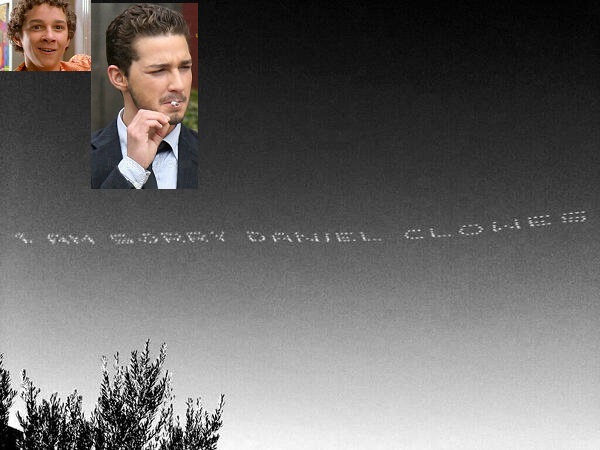
Shia past and present, with apology...

The child star past and present, with apology…

Actor Shia LaBeouf, known to Disney Channel aficionados as the annoying little brother on “Even Stevens” and to movie fans as Indiana Jones’ son and the Transformers Guy, is so much more, and not in a good way. His rapidly expanding list of reckless and socially-clueless episodes, including the obligatory misconduct behind the wheel of an expensive car, signals that he may be the new Lindsay Lohan, a talented former child-star raised to adulthood without basic life-skills, respect for others, and an appreciation of the difference between right and wrong. This is a tragic scenario that we are cursed to witness again and again—we saw it in 2013 in the increasingly obnoxious and desperate conduct of pop star Justin Bieber. Give a child wealth, power and adulation without first imbuing him or her with values, discipline and humility and what do you get? A menace.

As LaBeouf’s acting career has waned with his growing reputation as an untrustworthy (and sometimes violent) jerk, he has refashioned himself into an aspiring artist. Unfortunately, he lacks some basic traits of successful artists, like integrity and creativity. His inclination, being raised, like most child stars, in an unstable environment by self-absorbed and dysfunctional parents, is to cheat. In 2012, LaBeouf attached his name to three short graphic novels and a webcomic series. This year, we learned that at least two of the graphic novels contained text plagiarized from other writers. Then LaBeouf attached his name as writer to the short film (which he also directed) called “HowardCantour.com,” which was unveiled at the Cannes Film Festival and received some praise there. The  short, about an online film critic, included a strong resemblance to Daniel Clowes’ 2007 comic “Justin M. Damiano,” as well as large sections of dialogue directly lifted from it. No one picked up on the plagiarism until LaBeouf  released his film online.  Continue reading