The Fifth Annual Ethics Alarms Awards: The Best of Ethics 2013

Ethics Story 2013

I decided to start with the Best in Ethics this year, in contrast to other years, on the theory that it would get things off to a positive start in 2014. What it did, instead, was make me realize how negative Ethics Alarms was in 2013. Either there wasn’t much positive going on in ethics, or I wasn’t seeing it. My thanks to those of you who send me nominations for Ethics Heroes (and other stories); even when I don’t write about them, they are valuable. Please keep them coming. In the meantime, I pledge to try to keep the jaundice out of my eye in 2014. Things just can’t be as dire as they seemed last year.

Could they?

Here are the 2013 Ethics Alarms Awards for the Best in Ethics:

Most Important Ethical Act of the Year:

The U.S. Supreme Court declared the Defense of Marriage Act unconstitutional, paving the way for the universal legalization of gay marriage. Yes, it was a legal decision, but it was also based, as all such culturally important decisions are, on a societal recognition that what was once thought to be wrong and immoral was, in fact, not. This is ethics, an ongoing process of enlightenment and wisdom about what is right and wrong, and the U.S. Supreme Court did its part. Continue reading
Update: Apology Scores For The MSNBC Vicious Three

deanpia

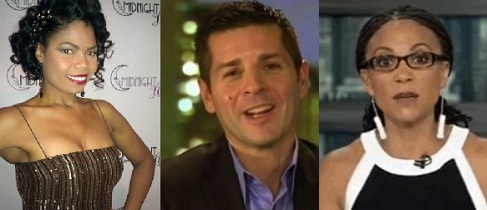
Several readers have asked for the Ethics Alarms Apology Scale scores for the three MSNBC creeps who decided to use a loving, non-political family photo featuring Mitt Romney’s newly adopted grandchild as an opportunity to sneer at the family, Mitt and the GOP, and engage in some unprovoked race-baiting. It was such an ugly display that decent human beings a) would never have engaged in it at all and b) wouldn’t have required a wave of criticism to wash over them to realize apologies were in order, but they did. Why? Because they are hateful people, unsavory and loathsome. As such, I really had decided that mucking around in MSNBC swill wasn’t worth a second post, but since you asked, here are the scores. The best apologies are in category #1…no danger of that with this sorry trio.

Apology 1: Dean Obeidallah Continue reading

Ethics Dunce: Steve Martin (Coward, Too)

Life imitates art.

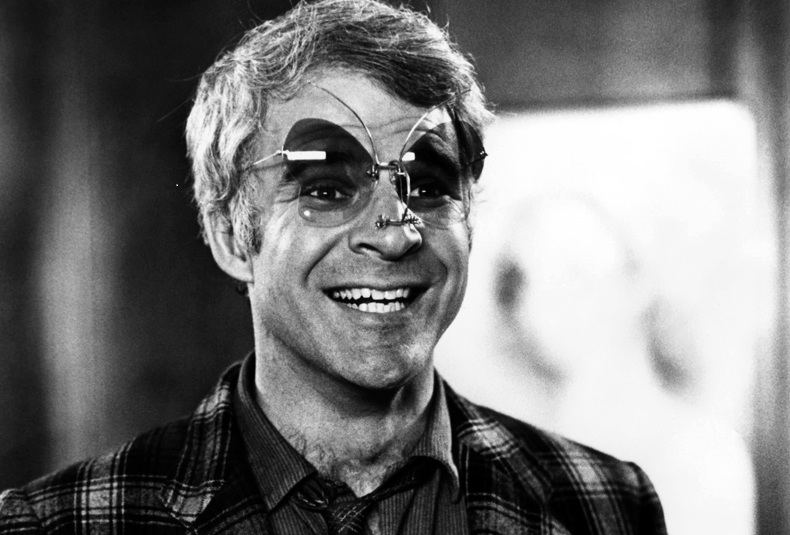
Shame on Steve Martin. He is a comedian. He tweets jokes. He tweeted a joke that was not racist in the least. (Everything that comments humorously on cultural quirks isn’t racist.) The political correctness bullies jumped on him too, because they nailed Phil Robertson and destroyed Justine Sacco. Martin, a novelist, a playwright, a TV writer, a comic and an actor, should have the integrity to stand up to this suffocating and unethical phenomenon. He has the stature to make a difference. He doesn’t have that integrity. He took the path of least resistance. He is a coward. He groveled. He apologized. The Blaze headlined that he “had to apologize,” No he didn’t. What he had to do was show some principle and strength of character when being manipulated and unfairly attacked, and he wasn’t up to the task.

By giving them what they crave, Steve Martin made the censors, bullies, cyber mobs and political correctness dictators more powerful, and hungrier still.

Without champions who will fight for free thought and expression, we will lose them. Martin and people of his intelligence and credibility have an obligation to be such champions, and he failed us all.

__________________________________

Spark and Pointer: The Blaze

Ethics Dunce: University of Alabama Student NewsPaper Editor Maizie Bryant

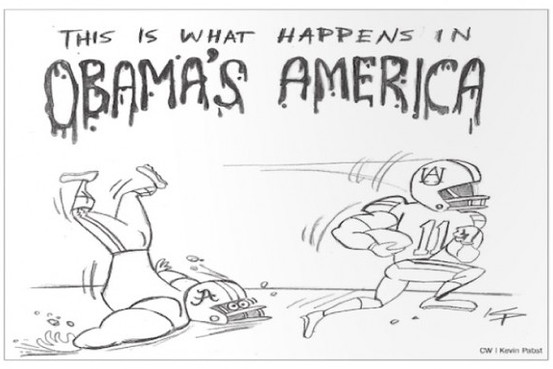
Ala Cartoon

I hate to criticize the ethical instincts of a college student, but Maizie Bryant’s school obviously isn’t doing its job regarding ethics instruction, so it is up to the rest of us.

Last week, following the epic and shocking finish to the Alabama Auburn football game—Auburn’s Chris Davis turned defeat into victory by grabbing an ill-advised Alabama field goal attempt with one second left and running it back 109 yards for a game-winning touchdown—the University of Alabama’s cartoonist drew the cartoon above. The message to anyone familiar with the devices of satire  and sarcasm was obvious: this was intended as mockery for the perceived tendency of the President’s critics to blame all misfortunes and problems on Obama. I think it’s a misguided cartoon, in that the message–the “joke”— follows the persistent defensive spin of the Obama Administration, its protective media and the President himself that critics unfairly hold him responsible for those matters  for which he is accountable and should be. (If the cartoon was going to be accurate, it would have shown the President attributing Alabama’s loss to George W. Bush.) Whatever its virtues and deficits, however, one thing the cartoon was not is racist.

How could it be racist? It is not racist to criticize Obama even for those things he is not responsible for—such criticism goes with the office. And the cartoon does exactly the opposite anyway. There is nothing whatsoever racial about the drawing. Anyone who perceives racism in this cartoon is

1. Unable to comprehend satire.

2. Unable to comprehend cartoons.

3. Race-baiting, and/or

4. Nuts. Continue reading

The Ethics Duncehood Of WaPo Blogger Eric Wemple, And Martin Bashir’s Forced Apology For, Uh, Saying That Someone Should Defecate In Sarah Palin’s Mouth

When is an apparent #1 class apology not good enough? Well, in the case of the matter at hand, there are two reasons.

The apology in question came from Martin Bashir, who, as I mentioned in a previous post, used his MSNBC show to suggest that Sarah Palin’s overblown analogy between the financial burden on future generations created by U.S. debt and actual slavery warranted her having to submit to someone expelling excrement into her mouth, and urinating on her as well. He really did say this. On the air. Carefully and deliberately.

See? Yet suddenly, after the weekend, Bashir was contrite, and delivered as elegant and sincere-sounding apology as one could imagine:

“I wanted to take this opportunity to say sorry to Mrs. Palin and to also offer an unreserved apology to her friends and family, her supporters, our viewers, and anyone who may have heard what I said. My words were wholly unacceptable. They were neither accurate, nor fair. They were unworthy of anyone who would claim to have an interest in politics, and they have brought shame upon my friends and colleagues at this network, none of whom were responsible for the things that I said. I deeply regret what I said, and that I have learned a sober lesson in these last few days. That the politics of vitriol and destruction is a miserable place to be, and a miserable person to become. And I promise that I will take the opportunity to learn from this experience.” Continue reading

Now THAT’S An Apology: Chuck Klosterman (“The Ethicist”) Shows The Way

Chuck Klosterman, "The Ethicist," stands tall.

Chuck Klosterman, “The Ethicist,” stands tall.

In the past I have been very critical of  The New York Times’ current writer of  its “The Ethicist” column,  but there is no denying that Chuck Klosterman knows how to make an apology. Indeed, responding to a sensitive situation, he may have offered the most exemplary apology I have ever heard or read.

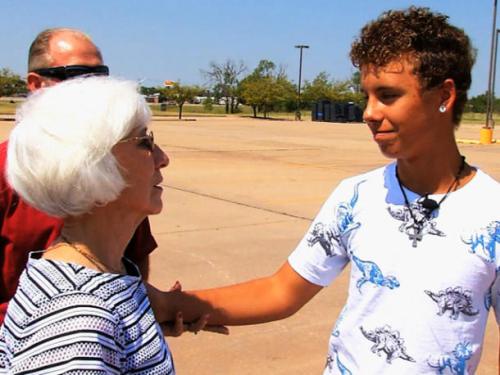
“A Typical Son” is a perceptive and moving blog that documents the life experiences of a young boy with Down Syndrome and his parents. His mother occasionally  posted an open letter to Mr. Klosterman on the blog, citing his multiple uses of the words “retard” and “retarded” in various published works (Chuck was a film and TV reviewer prior to “The Ethicist” gig) over the past decade. She wrote in part…

“…Today people with cognitive disabilities and their allies are asking members of society to refrain from using the word “retarded” (along with all mutations of the word)… My question to you: Is it ethical to contribute to the denigration of the vulnerable? I am particularly interested because you, Chuck Klosterman, are The Ethicist for the New York Times” and the author of the following [examples of denigrating or mocking references to the mentally handicapped]…. Mr. Klosterman, you appear to be an unrepentant hater of people with cognitive disabilities. You are not using the word in an “I don’t mean it like that way…” sort of ignorance which I think would be much easier to redress. You are using the word in a “Those people are exactly who I am talking about” way.

Please enlighten me: What are the ethics of using the R-word? I am the mother of a seven-year-old son who has Down syndrome.  I believe your response to my question could make all the difference in the world.”

Here is Klosterman’s remarkable response: Continue reading

Examining The President’s Non-Apology Obamacare Apology

sorry

Those of you who have emailed concern that my field, this blog and the task of exploring the depths of dishonesty in our national politics will make me cynical, I can officially assure you that so far, I am unsullied. Here’s the proof: I am actually surprised that the national news media so eagerly accepted whatever it was the President said in mitigation of his 3.5 year long Affordable Care Act lie as an “apology.”

It was clearly not an apology. Yet in a rare show of solidarity, reporters right and left rushed to their respective keyboards to dash out “President apologizes!”  The solidarity was illusory, of course: while the Right wanted to say the President apologized as proof that all the rationalizations, excuses and tortured explanations from Obama’s allies and enabler were as phony as his assurances, and now, by apologizing, the President had admitted it, the Left’s motive was to pronounce the scandal over so the President could “move on.” Okay, he’s apologized; what more do you want? This is confirmation bias, leading to different mistaken conclusions: both conservatives and liberals heard what they wanted to hear. What they should have heard was an incoherent expression of regret without accountability, retraction, admission, or contrition…in short, not an apology at all.

On the Ethics Alarms Apology Scale, I see no way to rank what the President actually said to NBC’s Chuck Todd as anything better than a 9 or 10 (I’d call it an ugly  hybrid of the two), on the scale, the Stygian realm where dishonest, manipulative, non-apology apologies dwell:

#9. Deceitful apologies, in which the wording of the apology is crafted to appear apologetic when it is not (“if my words offended, I am sorry”). Another variation: apologizing for a tangential matter other than the act or words that warranted an apology.

#10. An insincere and dishonest apology designed to allow the wrongdoer to escape accountability cheaply, and to deceive his or her victims into forgiveness and trust, so they are vulnerable to future wrongdoing.

Here is the section of the interview that generated the “apology.” Todd, who has said that he felt he had to pull an apology out of the President, began the “apology’ sequence (emphasis is mine): Continue reading

Ethics And Civility 101: Rep. Joe (“You Lie!”) Wilson Has NOT Been Vindicated

Shut up, Joe.

Shut up, Joe.

Sometimes really incompetent and corrupting ethical verdicts run through the media and the culture like a bad flu, sickening our values and weakening our comprehension of what “good” is. These come with equal frequency from the Right and the Left—right now, they are flying in from both directions, which means that the United States is likely to get even sicker that it already is from an ethical perspective, and it is perilously ill already. From the Left, we have choruses proclaiming that the President apologized for lying to the public about how the Affordable Care Act would work, when he did nothing of the sort by any reasonable and honest analysis based on what an apology is. (I’ll discuss that in an upcoming post.)

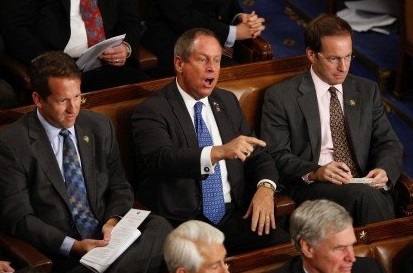
From the Right, we are now hearing that because it is past denying that the President in fact did lie about Obamacare, Rep. Joe Wilson (R-S.C.) is owed an apology (as long as he gets as much of an apology as the faux example the President offered on Wednesday, I might not object too much) for the criticism he received after shouting out “You lie!”  as President Obama was giving his 2009 address touting his health care legislation to Congress.  Wilson is not owed any apology, nor has he been “vindicated,” as thousands of commenters on websites and bloggers have been claiming for weeks. Continue reading

Jimmy Kimmel, Child Abuse, And Signature Significance

In Jimmy's defense, Japan thought "Kill the Chinese!" was funny too...

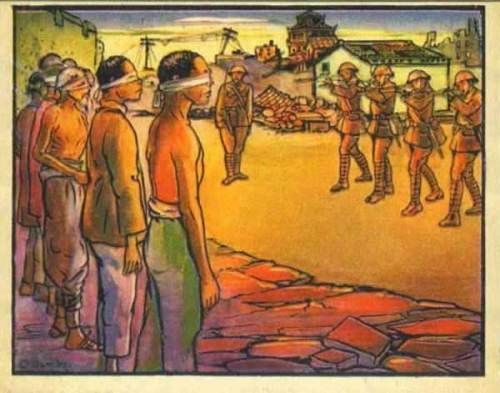
In Jimmy’s defense, Japan thought “Kill the Chinese!” was funny too…

What a surprise—Jimmy Kimmel did something despicable involving children.

This time, the smug and unethical-to-his-very-DNA ABC late night host may have also triggered an ethics train wreck. Perhaps at last the network and his tasteless, enabling viewers will finally conclude what has been obvious for years—that Jimmy is a cultural corrupter whose miserable methods and values should be rejected, condemned, and sent packing to an obscure corner of table TV!

Nah.

Kimmel’s latest hilarious stunt aired on Oct. 16, in a segment called “Kids Table,” where Funny Uncle Jimmy asks small children who have no idea what is going on or  that a creepy middle-aged man is luring them into saying things that will haunt them on Youtube until the day they die to comment on issues of the day. This time, Mirthful Machiavellian Jimmy caught comedy gold: when he asked a six-year-old how the U.S. could solve the $1.3 trillion trade imbalance, the giggling answer came back, “Kill everyone in China!”

Nice. Continue reading

Case Study: The Botched DP, Baseball, Ethics Evolution, and “Getting It Right”

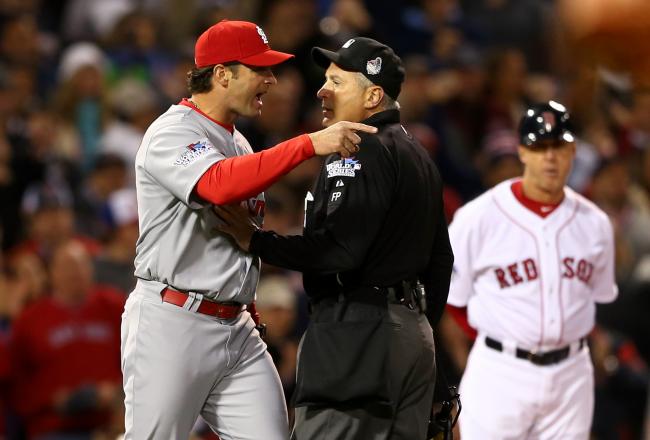
manager-mike-matheny-argues

I know this is a long essay.

Yes, it involves baseball.

Bear with me. I think it is worth your time.

Last night, in Game 1 of the 2013 World Series, embarrassingly kicked away by the St. Louis Cardinals and won handily by some team called the Boston Red Sox,  an intricate ethics drama appeared, allowing us to see the painful process whereby a culture’s ethical standards evolve and change in response to accumulated wisdom, altered attitudes and changing conditions. An obviously mistaken umpire’s call was reversed by the other umpires on the field as the Cardinals manager argued not that the original call had been correct, but that reversing it was a violation of tradition, established practice and precedent….in other words, doing so was wrong, unfair, unethical because “We’ve never  done it this way,” a variation of the Golden Rationalization, “Everybody does it.”   You should not have to appreciate baseball (but if you don’t, what’s the matter with you?) to find the process illuminating and thought-provoking. Continue reading