Musings On The Clarence Thomas Affair and Insideous, Unavoidable, Rationalization Eleven

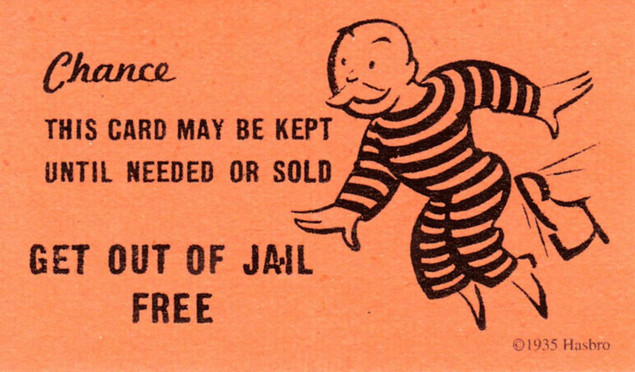
If you are good enough and valuable enough, do you deserve one of these?

If you are good enough and valuable enough, do you deserve one of these?

A recent—and off-topic—comment caused me to begin thinking about “The King’s Pass,” #11 on the Ethics Alarms Rationalization hit parade,and perhaps the most perplexing of them all. The commenter referenced the 2010 discovery that Supreme Court Justice Clarence Thomas had inexplicably neglected to mention his activist wife’s annual income on his annual financial disclosure filings, meaning that he had filed a false affidavit and violated the law. Thomas claimed that he had made a careless mistake—for five years—and the matter was allowed to drop except for the angry agitating of the Anti-Clarence Thomas Furies, who are constantly searching for any way to get a conservative black justice off the Supreme Court short of assassination.

The episode had left a bad taste in my mouth, and I was happy to be reminded of it, bad mouth tastes being essential to triggering ethics alarms. I went back to read my post on the matter, and sure enough, I had followed the principle of rejecting The King’s Pass, and asserted that Thomas should be punished appropriately and formally…but that really ducked the question. Lawyers have lost their licenses to practice for single episodes of swearing to false information when it was far more obvious that a mistake had been made than in Thomas’s case, as when a hapless Maryland lawyer carelessly signed a legal document that had misrecorded  his address. The logic of this no-tolerance ruling was that a lawyer, above all people, should never swear to a falsehood, and that doing so, even once, was a serious breach of duty calling into question his fitness to practice law. I think the penalty for this particular act was excessive—it is cited locally as a cautionary tale—but I agree with its underlying principle, which should apply with even more vigor when the lawyer in question is a judge, and not merely a judge, but a Supreme Court Justice.
Continue reading

Betrayal of Trust: The Turncoat Virginia State Senator

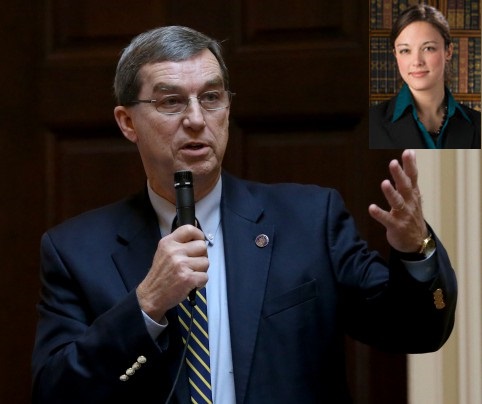
Senator Puckett and daughter: 'Anything for little girl...even screwing over my constituents...'

Senator Puckett and daughter: ‘Anything for my little girl…even screwing over my constituents…’

Virginia Republicans are preparing for a show-down with Democratic Governor Terry McAuliffe over the state budget and the expansion of Medicare to handle uninsured Virginians under the provisions of the Affordable Care Act. Unfortunately for them, Democrats hold the majority in the state Senate, or did, until some smoke-filled room maneuvering persuaded a conflicted Democratic state senator to resign, giving the GOP control of the chamber, at least for a while. Democratic Sen. Phillip P. Puckett ’s unexpected departure gives Republicans a 20-to-19 majority.

The Washington Post reported that Puckett (D-Russell) will announce his resignation from the Virginia Senate, effective immediately, paving the way for his daughter to continue as a district judge and for Puckett to take the job of deputy director of the state tobacco commission. Rationalizations for the move are flying, particularly as it affects Puckett’s daughter. Martha Puckett Ketron is already a Juvenile and Domestic Relations District Court judge. Circuit Court judges in Southwestern Virginia gave her a temporary appointment last year while the General Assembly, which approves judicial appointments for the state, was in recess. The Virginia House of Delegates approved her appointment to a six-year term when it reconvened earlier this year, but the Senate rejected the appointment because of its standing policy against appointing the relatives of active legislators to the bench. (It’s a good policy.) Thus, you see, Daddy’s resignation directly benefits his little girl, though it stabs his party and his constituents right in their backs.

This is known as a conflict of interest. The soon-to-be ex-senator needs to bone up on the concept and its ramifications.The ethical way to handle this conflict would be for Puckett to refuse to do anything to influence the resolution of his daughter’s appointment whatsoever.

“It [that is, the resignation] should pave the way for his daughter,” said Republican Delegate Terry Kilgore, who sure looks like the architect of this smelly deal.  “She’s a good judge. . . . I would say that he wanted to make sure his daughter kept her judgeship. A father’s going do that.”

Not if he’s ethical, he won’t. The spin Republicans are putting on this is that Puckett is resigning for his daughter, and after that decision was made, Kilgore, who serves as the chairman of the state tobacco commission, offered him the post of deputy director. Not as a quid pro quo, mind you. Because he was qualified for the job.

Right.

Even if this was the actual sequence, and I doubt it, it has the appearance of impropriety and undermines public trust. That makes it the kind of transaction legislators are bound to avoid. The Huffington Post’s headline on the story is “GOP Straight Up Bribes Democratic Senator In Effort To Block Obamacare,” which is stating one interpretation of an ambiguous sequence of events as fact….lousy and unethical journalism, but as I said, this is the Huffington Post.

It could be that Puckett, on his own or even at the behest of his daughter, resigned so he could stay a judge, and then, realizing that Republicans would benefit and that he would be a pariah in his own party, negotiated the deal that got him his new job. It could also be that the Republicans, seeking a Senate majority, cooked this up, offered Puckett a package he couldn’t refuse (because he’s a corrupt and disloyal public servant), and thus it really was a quid pro quo deal. Note that Huffpo, biased as it is, frames this so the GOP is the villain.

This is not technically bribery, which is a crime. This is slimy, nauseating politics, but classic sausage-making: the Affordable Care Act owes its very existence to these kind of deals and worse. The question isn’t whether these maneuvers are ethical–they are not— but whether politics can exist without them, and whether one can have a functioning adversary party system without them. My guess is no. If you like the results of such old-fashioned hard-ball politics, then this is utilitarian: “Lincoln” showed how the 13th Amendment was passed by Lincoln’s operatives and lobbyists picking off weak and conflicted legislators like lions targeting wounded water buffalo. If you object to the results, well then, it’s dirty politics, and an unethical display of “the ends justify the means” at its worst.

But one man, had he integrity and proper respect for the job he had been entrusted by his constituents to do, could have made the whole matter academic by just performing the job he had been elected for, and subordinating his daughter’s career aspirations to his duty. Instead, Phillip P. Puckett betrayed his party, his post, his constituency and his state.

And one more thing: if his daughter were ethical, as judges are supposed to be, she would refuse to keep her judgeship this way.

__________________________

Sources: Washington Post, Huffington Post
Now THIS Is An Unethical Sentence!

This time, it's the Judge who has "affluenza"...

This time, it’s the Judge who has “affluenza”…

He’s not a juvenile. He’s a middle-aged man, and a DuPont heir, living off of his trust fund. He’s also a child rapist, and the child he raped was his daughter, who was three.

Nonetheless, Delaware Judge Jan Jurden sentenced Robert H. Richards IV to treatment rather than jail.

Continue reading

A Good Reason To Question Chris Christie’s Ethics

Thank you for that completely voluntary and generous contribution to the new ethics center at  my alma mater! You can leave your cell now."

Thank you for that completely voluntary and generous contribution to the new ethics center at my alma mater! You can leave your cell now.”

In a long report published in the Washington Post a week ago, New Jersey Governor Chris Christie’s conduct as a federal prosecutor was examined, under the headline, “Chris Christie’s long record of pushing boundaries, sparking controversy.” This is euphemistic, to say the least. What the report describes is clear-cut, undeniably unethical practices by Christie. They were arguably legal and technically permitted at the time (though no longer), but never mind: they were unethical, and would quickly set off the ethics alarms of any ethical lawyer or politician. For Christie, they did not.

I’ll focus only on the main practice in question. The Post’s Carol Morello and Carol D. Leonnig write,

“As the top federal prosecutor in New Jersey, Chris Christie struck an unusual deal with Bristol- Myers Squibb. In exchange for not charging the drugmaking giant with securities fraud, Christie’s office would require it to fund a professorship at Seton Hall University’s law school — Christie’s alma mater.The $5 million gift, one component of a larger agreement between the company and prosecutors, was hailed by the school, in South Orange, N.J., as a cornerstone of its new center on business ethics.”

Now there’s irony for you: a center on business ethics funded with an unethical gift from security fraudsters. For the passage above just as easily, and more accurately, might have read: Continue reading

Virginia’s McDonnells, Masters Of Rationalization

Former_Governor_Indicted

The only question regarding the multiple count federal corruption indictment of Virginia’s most recent ex-Governor Bob McDonnell (R) and his wife is whether or not the relevant laws are so porous that they can’t be convicted on the evidence. Did they use McDonnell’s high office for personal enrichment? Yes. Did they go to great lengths to disguise the fact? Yes. Did the Governor betray the public trust? Yes. Were the gifts, loans and cash, totaling at least $165,000, received from a dietary supplements company CEO essentially bribes? Of course they were. This is another excellent example of why the admonition that the accused are innocent until proven guilty is often technical rather than true. Based on irrefutable facts, the Virginia’s former First Couple is guilty as hell—of dishonesty, greed, corruption, obstruction of justice, bribery, betrayal of trust, the appearance of impropriety and outrageously unethical conduct. They just may not have broken any of the laws regulating those actions.

The legal case will ultimately rest on whether there was a specific, provable quid pro quo, which is to say, were the gifts and loans from Jonnie Williams Sr., former CEO of Star Scientific, expressly made in exchange for the governor’s assistance in helping his company in the state? Williams, who has made a deal, will testify that this was his understanding; why else would he allow himself to be used as a piggy bank by McDonnell and his wife? But in politics, as we all know, the myth is otherwise. Big companies give lawmakers big campaign contributions out of the goodness of their hearts and patriotic fervor, and it’s just a coincidence that those same lawmakers subsequently support laws that make those same companies millions, or block laws that would get in their way. It’s a coincidence! The Feds are going to have to show that what McDonnell did was significantly more sleazy than what virtually the entire population of Congress does by reflex, and also a clear violation of law. Continue reading

The Fifth Annual Ethics Alarms Awards: The Worst of Ethics 2013 (Part Two of Three)

Snowden

The Ethics Alarms review of a truly disheartening year in ethics continues with fallen heroes, ficks, fools and follies with Part Two of the 2013 Worst of Ethics awards….and there’s one last section to come. Be afraid..be very afraid:

Fallen Hero of the Year

Edward Snowden, whose claim to civil disobedience was marred by his unwillingness to accept the consequences of his actions, whose pose as a whistle-blower was ruined by the disclosure that he took his job with the intention of exposing national secrets, and whose status as a freedom-defending patriot lies in ruins as he seeks harbor with not only America’s enemy, but a human rights-crushing enemy at that. The NSA’s over-reach and mismanagement is a scandal, but Snowden proved that he is no hero.

Unmitigated Gall of  The Year

Minnesota divorce lawyer Thomas P. Lowes not only violated the bar’s ethics rules by having sex with his female  client…he also billed her his hourly fee for the time they spent having sex , a breach of the legal profession’s rule against “unreasonable fees.” Yes, he was suspended. But for not long enough…

Jumbo Of The Year

(Awarded To The Most Futile And Obvious Lie)

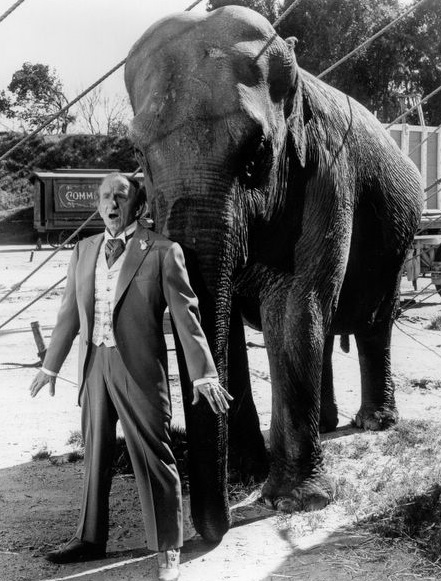
Jumbo film

“Now, if you had one of these plans before the Affordable Care Act came into law and you really liked that plan, what we said was you can keep it if it hasn’t changed since the law passed.”

—–President Obama

2013 Conflicts of Interest of the Year Continue reading

Dear Legal Profession: How Can We Respect And Trust You When You Police Yourself Like THIS?

Justice_broken3

I’ve been defending my profession a lot here lately, but I also recognize that there is a very good reason why such incidents as the surprisingly generous sentence in the “Affluenza” case and the drug court judge who suffered an alcoholic relapse on the bench are wrongly interpreted as proof of inequities and double standards in the legal system. The reason is that those who oversee the system do inexplicable things that appear to the outside world as not only a lack of integrity but also the apparent inability to realize how such conduct undermines the public trust.

Both of these recent news stories are cases in point:

I. The Imaginary Government Lawyer

In 2012, the Nebraska state supreme court disbarred lawyer David Walocha for not paying his bar dues and proceeding to practice law for 13 years with a suspended license. At the end of 2013, the District of Columbia Bar had to decide what to do with former Justice Department attorney Laura Heiser, who practiced 21 years with a suspended license in the District. What was her punishment? She received an informal admonition, which is the least severe form of disciplinary action.  Continue reading

What Do You Do With The Drunken Judge? Media Distortion And Judge Gisele Pollack

Broward County (Florida) Judge Gisele Pollack, a recovering alcoholic, showed all the signs of suffering a relapse during her session on the bench two weeks ago, when she abruptly ended the day’s proceedings after an hour and a half that featured the judge slurring her words and acting erratically. She presides over misdemeanor drug court, a program she established shortly after being elected as a county judge.  Her program offenders to have their charges dismissed and their drug records erased after six months of treatment.

After staying away from work for a day, Judge Pollack returned to the bench in the late afternoon, and presided over a courtroom packed with about a hundred drug offenders, along with  their friends and their families. The event marked the completion of rehab for dozens of offenders and the dismissal of their misdemeanor marijuana charges.“You’ve got to remain vigilant,” she told the graduates, emphasizing that they had to work hard to avoid relapses that would  place them back in front of her, and perhaps in jail.

After court, she acknowledged her own health crisis and announced that she was going into an outpatient rehab program. An attorney retained by the judge in the wake of her conduct attributed her relapse to personal issues, telling reporters that she has  “had some severe personal tragedy in her life. Her mother recently passed away, and they were very close. It’s been really devastating for her.” Apparently her son is also suffering from a serious illness. Broward Public Defender Howard Finkelstein, a longtime friend, told reporters, 

“If this causes the people to not have faith and not have trust in what goes on in that drug courtroom, then she will have to step aside,’ he said. ‘My hope is is people will wrap their ever-loving arms around Judge Pollack just as she has wrapped her arms around thousands of people.”

What’s going on here? I think it’s pretty obvious: a recovering alcoholic in a critical position of public trust suffered a relapse, as alcoholics are wont to do. If one is an alcoholic, this is a symptom of a very persistent, pernicious and incurable disease that kills many Americans every year, does horrific damage to families, businesses, governments and the economy, and that is incurable. Being an alcoholic is not an ethical violation for a judge or a lawyer, nor is having a relapse. Allowing that relapse to affect the competent performance of one’s duties, however, is an ethical violation that calls into question a legal professional’s ability to do her job. It could trigger professional sanctions; it certainly should trigger an official inquiry. A Florida judge appearing drunk on the bench, just once, is still a massive ethical breach. It arguably violates the first five Canons of Judicial Ethics a Florida judge is bound to follow… Continue reading

Cuomo Interviewing Cuomo? Of Course It’s A Conflict!

The interesting question isn’t whether CNN’s Chris Cuomo blithely interviewing the Governor of New York Andrew Cuomo—who happens to be his brother–is a conflict of interest and an example of unethical journalism. Of course it is. The interesting question is what it tells us about the state of U.S. journalism that such an interview could even occur.

Here are two prominent provisions of the Society of Professional Journalists Code of Ethics, requiring that ethical journalists…

  • “Avoid conflicts of interest, real or perceived.”
  • “Remain free of associations and activities that may compromise integrity or damage credibility.”

Is there any question that a CNN anchor man interviewing his brother regarding anything whatsoever violates both of these? Real or perceived? Compromise integrity or damage credibility? Seriously?

Cuomo the Anchorman was interviewing Cuomo the Governor regarding the recent train accident. Conflict? Sure: the journalist is supposed to have only one duty, and that is to his audience. But Cuomo the Anchorman obviously has another, potentially confounding duty of loyalty to his interview subject, and this he must not have. It calls into question his willingness to probe and, if the facts warrant it, to ask uncomfortable questions of his subject. If Chris Cuomo’s duty to his audience unexpectedly requires him to breach his loyalty to his own brother, which will he choose? We don’t know. Perhaps Cuomo himself doesn’t know. He was obligated not to place himself in a situation where the question even needed to be asked.

The various defenses being offered are, I have to say, misguided and disturbing. The usually sensible Joe Concha of Mediaite writes that the controversy is “much ado about nothing.” His reasons are … Continue reading

The Cesspool of Government Ethics: Louisiana Edition


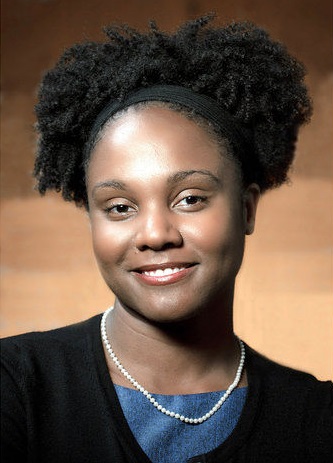
Comparing ethics to Ms. Jones' position is apples to Oranges...

Comparing ethics to Ms. Jones’ position is apples to Oranges…

Are government ethics at all levels really getting worse, or is it just that we have more and easier access to the evidence than we used to? I hope it’s the latter. I fear it’s the former. Certainly I have never seen anything as disgusting as San Diego Mayor Filner’s determination to stay in office as evidence mounts that he is a serial sexual harasser and a menace to any woman who is unfortunate enough to come within arm’s reach. Despite the fact that the number of women coming forward to accuse him has reached eleven (actually I haven’t checked since last night…it’s probably more by now), and despite polls that show that two-thirds of the city’s voters think he should resign ( the other third are Democrats, which should, but won’t, cause some critical self-examination by the party that claims to be on the right side in “the war against women”), Filner refuses to do the honorable thing, and instead will force the city to spend millions on a recall.

The carnivals of the shameless in San Diego and New York have been keeping less spectacular but equally troubling tales elsewhere from getting proper attention. In Louisiana, for example, where ethics has always meant something other than, well, ethics, we have this  sequence of events.

Orange Jones is the executive director for the New Orleans chapter of  Teach For America. Which she was elected to the state Board of Elementary and Secondary Education, the state’s Ethics Board chose to declare, in opposition to the recommendation of its own attorneys, that the obvious conflict of interest—Teach For America bids on state teaching contracts, which are awarded by the board—wasn’t one, on the disingenuous theory that Jones was only the head of the city’s Teach For America operations, not the whole state’s. Continue reading