The Destructive, Useful, Unethical Presumption of Bigotry, Part 2: The Oscar “Snub”

selma-4

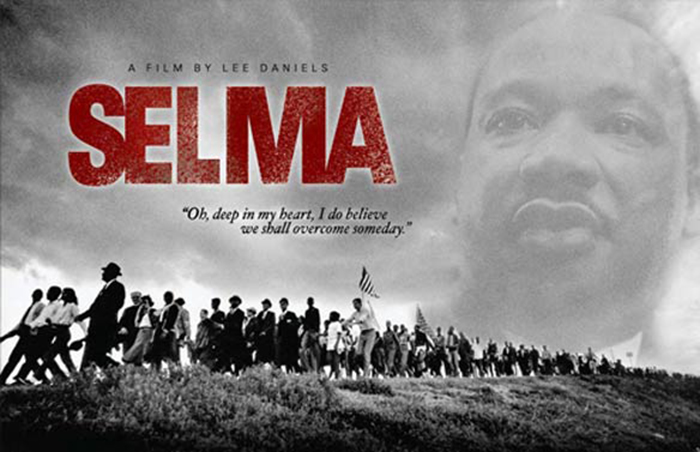
For the second time in nearly two decades, and for the first time since 1998, the Oscars will be awarded to only white acting nominees. This, then, if you listen to the caterwauling race-baiters, is because Hollywood is racist. The Academy’s voters just hid it well since 1998, that’s all. Does that make any sense to you?

There are few more infuriating and transparently illogical examples of an unfair slapping down of the race card than looking for bigotry in the notoriously arbitrary, bias-soaked, essentially meaningless choices for “best” in the various Academy Award movie-making categories. Yet the race card sharks were up to the task.  Naturally, the authority on the subject was Al Sharpton, he whose own performance quality on his MSNBC TV show is so amateurish that it would be shut out in any community theater awards.

“In the time of Staten Island and Ferguson, to have one of the most shutout Oscar nights in recent memory is something that is incongruous,” Sharpton told The Daily News. Wait, what??? Incongruous is the assertion that the nominations for film-making excellence should be influenced in any way by how many blacks are killed resisting arrest. Anyone who finds that to be a logical argument for why more black actors should have been nominated for Oscars is useless to any rational discussion of the issue. I want a show of hands. Continue reading

Professional Chauvinism At “Above The Law”

Clooneys

Lawyers really need to get over themselves. This post, by Staci Zaretski at the legal gossip site “Above the Law,” was introduced in my e-mail inbox with this line:

“Amal Clooney’s lifetime achievements are far greater than those of her husband, George Clooney. Where’s her award?”

The flip answer would be: “George Clooney.” But to the point: one has to have an enhanced regard for the profession of the law and a dismissive and culturally ignorant attitude towards the arts to state that “Amal Clooney’s lifetime achievements are far greater” than those of George Clooney.” Zaretski is welcome to her biases, but by any fair measure, the lifetime achievements of an actor of Clooney’s popularity, daring and prominence far outstrips those of a lawyer like Amal Alamuddin Clooney.  “Above the Law” makes its case thusly:

“Amal is a human rights lawyer who worked on the Enron case, was an adviser to Kofi Annan regarding Syria, and was selected to a three-person U.N. commission investigating rules of war violations in the Gaza Strip.”

Hundreds of lawyers worked on the Enron case(s): you will have to prove to me that she had some special impact that another lawyer with similar skills, and there are thousands, would not have. So she was an adviser to Kofi Annan regarding Syria: is Zaretsky aware that Annan’s misguided and naive efforts to broker a Syrian peace saved not a single life, and may well have blocked more substantive and effective initiatives? Then she served on a commission “investigating rules of war violations in the Gaza Strip.” Translation: she is a willing participant in the U.N. effort to demonize Israel for defending itself from Hamas shelling.  She also is defending Julian Assange. I don’t hold that against her: he’s a criminal, but he deserves a defense. Would he have not gotten one without Amal Clooney? Of course he would have. Continue reading

Ethics Quote Of The Month: Washington Post Film Critic Ann Hornaday on “Selma”

selma-movie

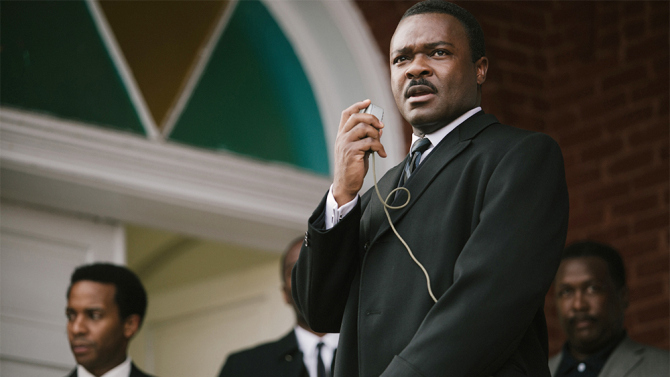
“How to reconcile facts and feelings, art and fealty to the truth? When filmmakers recall with pride about the deep reporting and research they’ve done for their projects, then they deserve to be held accountable for their projects. For fact-based films, accuracy becomes a formal element, along with acting, design and cinematography. It’s up to each viewer to identify the threshold where artistic license compromises the integrity of the entire endeavor. Cinema has more responsibility in this regard precisely because of its heightened realism, its ability to burrow into our collective consciousness and memory, where the myth has a tendency to overpower settled fact. But viewers have responsibilities, too. If accuracy has become a formal element of historical dramas, then the ensuing fact-checks have become just as integral a part of how we view them. That means it’s incumbent on audiences to engage in a mode of spectatorship that, rather than decide who’s right, can listen to and respect expert critiques, and still open themselves up to a piece of filmed entertainment that speaks to less literal, more universal truths.”

—–Ann Hornaday, Washington Post film critic, on the controversy regarding the counter-factual treatment of President Lydon Johnson in the new film, “Selma.”

The question of whether film makers have an ethical obligation to fairly represent history, and particularly individual historical figures, in their movies has been a topic visited frequently at Ethics Alarms, and I’m not going to re-hash conclusions that have been thoroughly discussed before, such as

…here, regarding the casting of “The Impossible” with a gleamingly light-skinned central family and the changing of the real life heroine from Spanish to British

…here,  discussing complaints that a fictional event was not portrayed accurately in “Noah”

…here, exploring the many falsehoods, some quite despicable, in James Cameron’s “Titanic”

…here, regarding unfair criticism of “Argo”

and here, discussing “Lincoln” screenwriter, playwright Tony Kushner’s inexcusable choice to represent a real life former Congressman voting against the Thirteenth Amendment abolishing slavery when in fact he voted for it.

The conclusion of that last one sums up the lessons of the rest, I think. Kushner’s defense against criticism of the collateral damage his invented facts wreaked was to argue that they were legitimate tactics in the pursuit of drama and “greater truths.” He then compared smearing the reputation of a Congressman, to the detriment of his descendants, to misrepresenting the kinds of socks Lincoln wore. (Kushner can be a brilliant writer, but his ideological utilitarianism is repellant.) I wrote:
Continue reading

“Argo” and the Horrible Thought

Thanks a bunch, Ben.

Thanks a bunch, Ben.

“Argo” prompted a disturbing thought that has been haunting me since I saw the picture. I am sorry that I had the thought, and hoped that it had been successfully banished by time and hope. Unfortunately, the juxtaposition of “Argo” winning the Best Picture Oscar combined with the inappropriate and intrusive appearance of Michelle Obama to announce it, complete with a politics-tinged speech that was as gratuitous as it was manipulative, caused that thought to begin burning in my brain again. Alas, here it is.

At the conclusion of “Argo,” former President Carter is heard emphasizing the obvious, that in 1980 he would have loved to have taken credit for the audacious  rescue of the six American Embassy workers from Iran that was engineered by his CIA. But, Carter says, do so would have endangered the remaining hostages, and though it would have helped his politically besieged Presidency (which was lost to Ronald Reagan that same year, in part because of Carter’s perceived weakness in handling the hostage crisis), giving all of the credit to Canada was the right and responsible thing to do.

I am no admirer of Jimmy Carter’s policies, personality, Presidency or leadership. He is, however, an ethical man. He was President before the hyper-partisanship that has rotted our politics, before the “perpetual campaign” style of leadership launched by Clinton, and before every act by every main stage player in Washington appeared to be dictated by the need to hold power, rather than by the needs of the people. My horrible thought is that I believe the current President and his  Machiavellian political advisors would not have done as Carter did, if the “Argo” scenario played out in 2012, as that Presidential election approached. This White House, facing the prospect of defeat, would find a way to leak its participation in the successful rescue, judging its retention of power a higher goal than protecting the hostages that may well have died anyway.

I wish I didn’t have this thought, but I cannot banish it. The unseemly chest-thumping and credit-grabbing over the killing of Bin Laden, the leaking of details about the deliberations leading to it, the deceptive handling of the Benghazi disaster, and yes, the inability of the President’s political strategists to resist attaching the President or his wife to anything remotely positive—even the Academy Awards— while refusing to accept responsibility for any mistake, miscalculation or failure (See Bob Woodward on the disinformation campaign regarding the looming sequester, beginning with Obama’s outright lie in the third Presidential debate, “The sequester is not something that I’ve proposed.”), all have me convinced that the days when we can trust a President to risk his own grip on power for the good of the country are gone, perhaps forever.

As I said, it is a horrible thought, and I fervently wish I didn’t have it. I want to trust and admire our nation’s leaders, the President most of all. But the leaders of both parties have earned this level of distrust, and I see no signs that they are capable of making that horrible thought, and other too, go away.
The Oscar Nominee Truth Squad Goes After “Argo”

argo-poster

The ethics of using artistic license in films based on fact isn’t only being debated in the case of “Lincoln” as we approach the Oscar ceremonies: “Argo” is also under fire.

For some reason conservative radio hostess Laura Ingraham is fond of James Lipton, the unctuous host of PBS’s “Actor’s Studio” interview program. He sounds off frequently on her show, usually about films, and in his most recent gig was pontificating about the Academy Awards. Lipton seems to believe that bias is a condition one is helpless to adjust for: he kept announcing his preferences for various nominees based solely on their association with him or the Actor’s Studio, and explaining his choices by saying, “I’m biased, you see.”

Recognizing bias is just half the job, James. The other half is getting over it. Continue reading