
It was tough giving my dog the bad news that the AP had screwed up…
Over the local evening news came a stunning report: Terry McAuliffe the Democratic candidate for Governor of Virginia, where I vote and make my home, had been accused in federal documents of lying to investigators checking the facts behind a Rhode Island death benefits scheme. Confirmation bias being what it is, I had no trouble giving the report full credence ( I long ago concluded that McAuliffe is sleazy and will lie whenever there is a perceived up-side for him, though I never thought he was stupid), and informed my dog, Rugby, for whom I am organizing a write-in campaign, that his chances of being Governor were looking up. Then, less than two hours later, I was preparing to write about this latest development in the most ethics-free governor’s race in the country, and checked online for more details. I discovered only this:
RICHMOND, Va. (AP) — The Associated Press has withdrawn its story about documents in a federal fraud case alleging that Virginia Democratic gubernatorial nominee Terry McAuliffe lied to a federal official investigating a death benefits scheme. The indictment did not identify McAuliffe as the “T.M.” who allegedly lied to investigators.
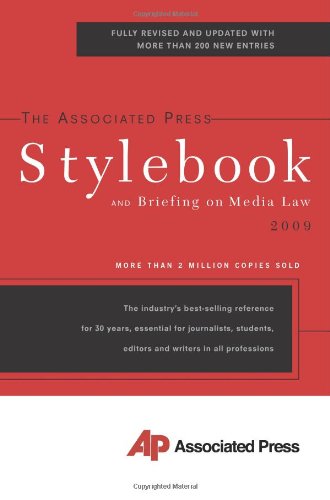
Wait…how could this happen? How could the Associated Press, the nation’s premiere news agency, essentially accuse a candidate for high office in a highly contested election of a felony less than a month before votes are cast, just in time for the story to be the lead story all over the state in question, and then withdraw it shortly thereafter? Don’t tell me about “mistakes”: the AP and the profession of journalism have standards and procedures of long-standing that, if followed diligently, ensure that this never happens. Facts must be checked and confirmed by reliable sources. Supposition must not be stated as truth. Here is the AP’s distillation of its ethical framework: Continue reading
 Ethics Alarms