This Is The Way It’s Done, Ethics Warriors….Well, ALMOST

Quit being distracting, Triana...

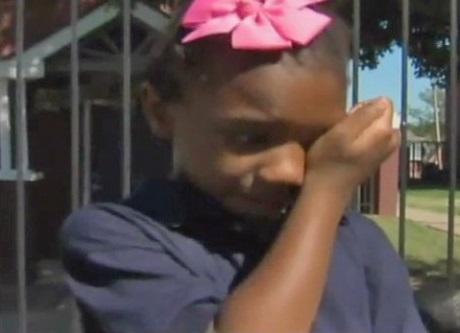
“Quit being so distracting, Triana…”

Deborah Brown Community School in Tulsa, Oklahoma forbids its students from wearing their hair in dreadlocks, afros “and other faddish styles.” Terrence Parker, a barber, challenged the rule by sending his 7-year-old daughter Tiana to class there wearing her hair in dreadlocks. She was told that she could not attend school with her hair in a (stupid and ignorant) rule-violating style. Tiana is now attending another school, while the story, reported on the web in various sources, is holding the school up to well-earned ridicule for a dress code that if not racist in intent, is racist in impact. Eventually, I would think, the school will be shamed into seeing the error of its ways, which is enforcing an inappropriately narrowly-viewed, culturally-biased interpretation of what constitutes a “presentable” hairstyle as opposed to one that might “distract from the respectful and serious atmosphere [the school] strives for.”

This is the way unethical rules get changed. Parker confronted the rule by violating it, and accepted the penalty while publicizing the unjust rule to the greater community, which is making its disapproval known. Continue reading


ARRRGH! Outrageous Ethics Malpractice By “The Ethicist”!!!!

Well, you did it again, Chuck..you made my head explode. But now I have a place to keep my keys...

Well, you did it again, Chuck..you made my head explode. But now I have a place to keep my keys…

It’s time for Chuck Klosterman, the New York Times’ designated amateur who now handles “The Ethicist” advice column, to hang it up, and let some randomly chosen unemployed New Yorker take a shot at the job. Since assuming his post, Chuck has had good moments and bad, but this botch is embarrassing, and signature significance—no one who isn’t a bona fide Ethics Dunce could make such a terrible call.

Get this: Klosterman was asked whether surreptitiously taking cuttings from plants owned by a shopping center was unethical:

“…While walking through our local shopping center, we noticed a particular plant that we both liked and decided to get it for our patio….My wife thought she could grow it from cuttings, so we went back and took about three or four cuttings from one of the many plants that were scattered around the shopping center. The plant was not hurt or damaged in any manner or form, but my gut instinct told me that this was wrong. Was it?”

Does this question really need asking? Apparently, because the fraud masquerading as an ethicist at the Times thinks it’s a “thorny” question (Chuck likes puns…maybe the column should be called “The Punster”) about an “unethical act that has a positive impact.” ( Helpful hint to Chuck: the issue is stealing.Klosterman then embarked on a rationalization orgy: Continue reading

The Zumba Instructor’s List and Public Shaming In Maine: Choose Your Ethical System

What those Zumba ads never told you…

Kennebunk, Maine’s popular Zumba dance instructor Alexis Wright and her “business partner” are being charged with solicitation and prostitution. Now the Maine Supreme Judicial Court is about to decide whether  Wright’s substantial client list should go on the public record, as it will unless the court agrees to put it and its names under seal.  Defense attorneys will argue that the harm that will result from allowing Wright’s “johns” to be outed to their families, employers and neighbors is too great. “We think there’s a really important principle at stake here: These people are presumed innocent,” defense attorney Stephen Schwartz said. “Once these names are released, they’re all going to have the mark of a scarlet letter, if you will.” Continue reading

The Offensive Battle Over “Seven in Heaven Way”

"There goes Fred, getting all religious again...."

With some hesitation, I must re-open the issue of officious inter-meddlers and grievance-mongerers who get satisfaction and empowerment from claiming to be offended by things that could not possibly harm them or genuinely infringe on their rights. The atheists are at it again.

My position has been stated here and elsewhere many times: in the absence of genuine long or short term harm, the ethical human response to a symbolic grievance is to keep one’s response proportional to the offense, which sometimes means considering how many individuals will be made miserable in order to satisfy one individual or a small group, and letting it go. Forcing a university to change the long-standing name of its football team based on a dubious argument that the name is an offense to Native Americans when most Native Americans couldn’t care less, for example, is wrong. Forcing a school to stop teaching kindergarteners to sing “Rudolf the Red-nosed Reindeer” because a Jewish parent thinks the song promotes Christianity is wrong.

Now a group of New York City atheists is demanding that their city re-name a street that was dedicated to the memory of seven firefighters killed in the Sept. 11, 2001, terrorist attacks.  Continue reading

Loop-Hole Ethics and The New York Times

The NYT’s website paywall plan floats in a sea of holes.

Ariel Kaminer, author of “The Ethicist” column in The New York Times Magazine, made an interesting assertion in her answer to a reader who asked about whether he could exploit several loop-holes in the Times’ new paywall plan for its website.

Noting that he was a struggling freelance journalist who visits the Times website often, he asked if it was unethical for him to use his parents’ free access to the content, since they are subscribers.  Then he Mused about other scenarios. “If I buy online access, can I share the password with my live-in girlfriend, even if I move to New York for the summer? What about our other housemates?” Continue reading

Civility, Stupidity, Art, and “The King’s Speech”

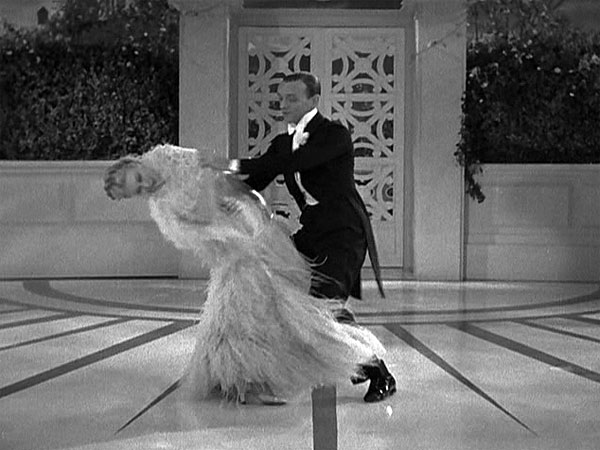
"Frankly, my dear, I don't!" (United Airlines version)

I was stunned and amazed to find that United Airlines was uncharacteristically showing a good movie on my six-hour flight, the Academy Award-winning “The King’s Speech.”

Good, and in the case of “The King’s Speech,” arguably great, movies, however, are owed some respect.  If United is going to show it, United has an obligation to be fair to the film and fair to its audience by not showing it in a manner that diminishes the movie’s quality or the audience’s enjoyment. Thus I was also stunned and amazed when the famous sequence in which the Duke of York, soon to be King George VI, angrily demonstrates that he does not stammer when swearing by shouting “Fuck!” repeatedly, was mangled by United’s language police. Continue reading

Blogger’s Ethical Dilemma: The New York Times’ New Plan

I'm gonna hate to lose you guys!

The New York Times announced yesterday that it will begin charging for content on its website. After 20 articles have been read by any user within a month, that user will be required to purchase a $15 a month access fee, or forgo the “Grey Lady,” online at least. (Subscribers to the paper will have still have unlimited free access to the digital version.)

For bloggers like me, who rely on hundreds of on-line sources for my ethics commentary, the new Times plan poses an ethical dilemma. Continue reading

The Supreme Court Looks at Miranda and Ethics

The recent Supreme Court ruling in Berghuis v. Thompkins is another in the long line of opinions attempting to determine what the familiar words (to all you “Law and Order” fans), “You have the right to remain silent” really mean. At its core, however, it is about ethics.

The various opinions interpreting the landmark 1966 case ruling in Miranda v. Arizona, which ended the common police practice of sweating, beating and otherwise coercing confessions from criminal suspects in marathon interrogation sessions had, amazingly, never before dealt with the wrinkle presented in Thompkins. The suspect in a shooting was given the Miranda warning, but never said that he wanted his lawyer or that he refused to testify, as he had the right to do. He just sat through almost three hours of questions without saying a word, and then, near the end, uttered a one word answer, “Yes,” to the question of whether he would pray to God for forgiveness for the shooting.

This admission helped convict him at trial. Continue reading